Table of Contents
Dropshipping looks simple from the outside.
You list products.
A supplier ships them.
You keep the margin.
But in 2026, the real game is marketing, not sourcing.
Industry estimates show most dropshippers operate on gross margins of around 20–30%, with higher margins only when they choose smart niches and execute strong marketing. At the same time, the global dropshipping market passed $365 billion in 2024 and is projected to grow over 20% annually towards 2030.
So money is flowing into the model.
Most people still fail.
Why? Because they lack core marketing skills.
Multiple studies and breakdowns of failed dropshipping businesses point to the same culprits: poor marketing, weak niche research, bad branding, and no data-driven decisions.
If you want to be on the winning side, you must treat yourself as a marketer first, store owner second.
Skill 1: Customer & Market Research – pick battles you can win

Most dropshippers lose before they launch.
They chose the wrong niche.
Common failure patterns:
- They pick products only because they are “trending” on AliExpress or TikTok.
- They ignore search demand, competition and margins.
- They never define who they are selling to or why that person should buy from them.
Research on dropshipping failures keeps repeating the same point: starting with the wrong niche, doing little research, and offering generic products are top reasons for failure.
You avoid this with basic but focused market research skills.
What good research looks like
You answer four simple questions:
- Who is my customer?
You define age range, location, income, interests, daily struggles, and preferred platforms. - What painful problem or desire am I solving?
You focus on real use cases: back pain at a desk, pet hair on furniture, messy kitchen drawers, travel organisation, etc. - Is there meaningful demand?
You check:
- Search volumes for related keywords.
- Existing brands and competitors.
- Engagement around similar products on TikTok, Instagram or YouTube.
- Search volumes for related keywords.
- Do the numbers make sense?
You estimate:
- Product + shipping cost.
- Potential selling price (based on competitors).
- Expected gross margin (you aim for 20–30% or more).
- Product + shipping cost.
This is marketing skill, not guesswork.
GEO angle: research for Indian and regional markets
If you sell into India or specific geographies, you:
- Look for local pain points: monsoon, small homes, local commuting styles, festivals.
- Check for local buying power and pricing expectations.
- Validate whether people in your region prefer COD, UPI, wallets, or prepaid cards.
A dropshipper who knows their customer deeply always beats the one who just copies products.
Join Our Online Digital Marketing Course & Learn the Fundamentals!
Skill 2: Performance Ads – turn attention into controlled experiments
1: What is the primary goal of SEO (Search Engine Optimization)?
SEO is slow.
Organic social is unpredictable.
Ads are your fast testing engine.
Digital marketing experts repeat the same message: online channels are powerful because they are scalable, targeted and measurable. That is exactly what you need when you are validating a dropshipping product.
Why performance ads are non-negotiable
If you cannot run ads, you:
- Cannot test offers quickly.
- Cannot control the volume or type of traffic hitting your store.
- Cannot scale profitably when a product works.
You do not have to become a media agency.
You do have to understand how performance ads work.
Core concepts you must master
- Campaign objectives
You choose the right goal: conversions, sales, leads. You do not “boost posts” blindly. - Audience targeting and structure
- Prospecting campaigns: cold audiences, interest or lookalike based.
- Retargeting campaigns: people who visited, added to cart, or watched your videos.
- Prospecting campaigns: cold audiences, interest or lookalike based.
- Creative testing
You test multiple angles, not just colours:
- Problem/pain angle
- Transformation angle
- Social proof angle
- Offer/discount/urgency angle
- Problem/pain angle
- Budget control and scaling
You start with small test budgets.
You increase spend only when CAC (Customer Acquisition Cost) and ROAS (Return on Ad Spend) hit profitable levels.
Analytics tools from Meta, Google and TikTok let you track campaign performance in real time. You use those numbers to decide what to kill and what to scale.
AI and performance ads
AI already reshapes advertising. It creates creatives, suggests audiences and optimises bids. Platforms like Meta are rolling out even more AI-driven tools that build whole ad flows from simple prompts.
You stay in control when you:
- Use AI to generate ideas and variations,
- but apply your human judgement to approve, refine and align with your brand and audience.
This is exactly the type of workflow an AI-focused digital marketing course should teach you.
Become an AI-powered Digital Marketing Expert
Master AI-Driven Digital Marketing: Learn Core Skills and Tools to Lead the Industry!
Explore CourseSkill 3: Conversion-Focused Copywriting & Creatives – make people care and click
You can send 10,000 people to your store.
If nobody feels like buying, you pay for nothing.
Copywriting and creatives are not “nice to have”.
They are the words and visuals that print your revenue.
Why this skill is so powerful
Studies of failed dropshipping stores almost always mention weak branding, poor product pages and low conversion rates as key issues.
You fix this with conversion-focused communication.
What good copy and creatives do
They follow a simple pattern:
- Hook attention
The first line or first three seconds of your video talk about the customer’s problem or desired outcome, not about you. - Show a clear benefit
You explain how life improves after using your product.
Less pain. More comfort. More time. More confidence. - Prove your claims
You use:
- Reviews
- UGC clips
- Before/after visuals
- Simple data (e.g., “over 2,000 orders shipped”).
- Reviews
- Remove friction
You address doubts:
- Shipping times
- Returns
- Cash on Delivery or UPI availability (for India and similar markets).
- Shipping times
- Give a clear next step
You use simple, direct CTAs: “Shop now”, “Try it today”, “Claim today’s offer”.
Practical writing habits for dropshippers
- Use short sentences and everyday words.
- Write for one person, not “everyone”.
- Focus on benefits before features:
- Instead of “stainless steel 304”, say “rust-free, easy-to-clean steel that lasts years”.
- Instead of “stainless steel 304”, say “rust-free, easy-to-clean steel that lasts years”.
- Keep each landing page focused on one core idea.
AI can help brainstorm hooks and outline product descriptions. But you keep ownership of tone, accuracy and persuasion. AI in marketing is powerful, but human creativity and authenticity still matter, especially as audiences push back against generic or fake-feeling ads.
Courses like Entri’s AI Powered Digital Marketers Course guide you on how to blend AI assistance with your own persuasive style, so your copy and creatives stand out.
Skill 4: SEO & Content Marketing – build long-term, low-cost demand
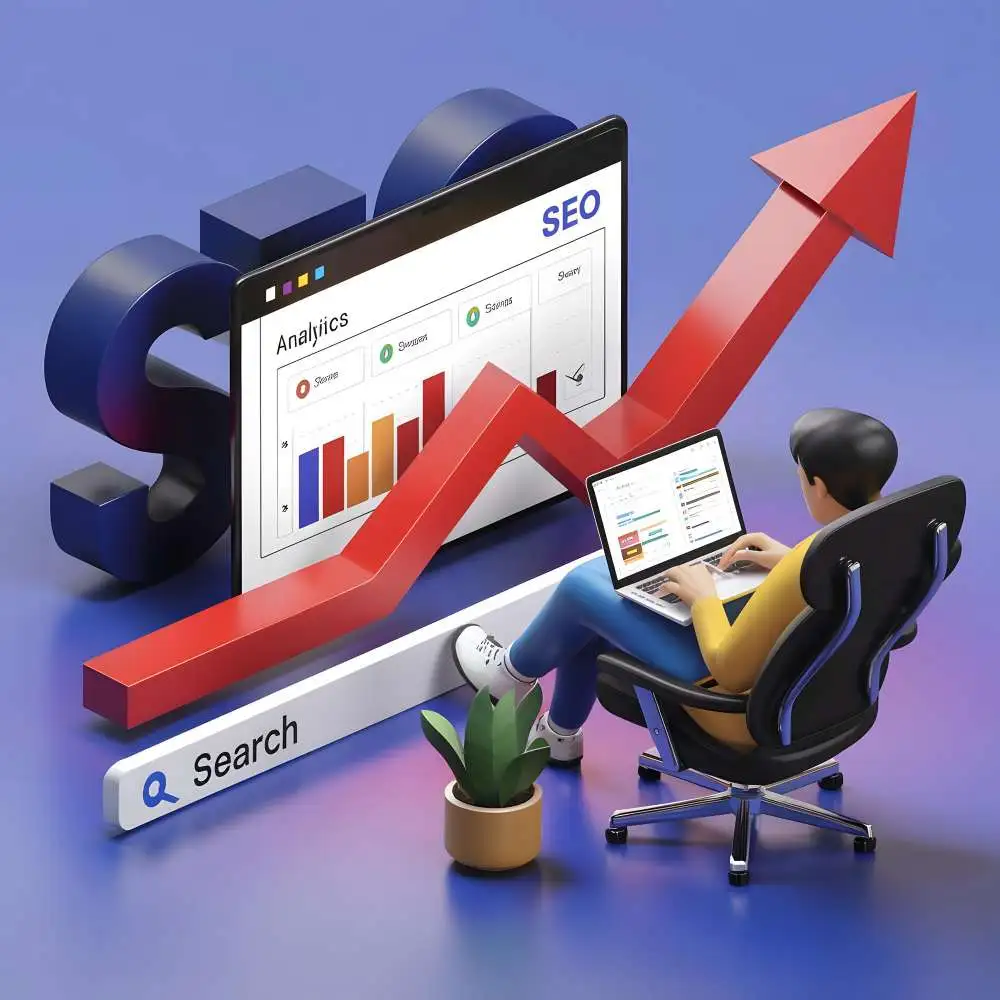
Ads give you speed.
SEO gives you stability.
Digital marketing guides consistently highlight SEO as a foundation for organic reach and long-term brand visibility. In dropshipping, SEO and content marketing help you:
- Attract buyers who are already searching for solutions.
- Reduce dependence on paid ads.
- Build credibility around your niche.
Simple SEO framework for dropshippers
You can treat SEO as three layers.
1. Product page optimisation
You optimise:
- Page titles and H1 tags with buyer keywords:
- “Ergonomic Laptop Stand for Home Office – India COD”
- “Ergonomic Laptop Stand for Home Office – India COD”
- Meta descriptions that promise value and mention key benefits.
- Image alt text that describes the product and use case.
2. Category and collection pages
You group products into clear themes: “Pet Hair Solutions”, “Back Pain Relief Tools”, “Travel Organisers”.
You add short intros that explain who the category is for and why it matters.
3. Blog and content hub
You write content that helps your ideal customer even if they are not ready to buy today:
- “How to set up a pain-free home office on a budget”
- “7 ways to keep your car clean if you have kids”
- “Best gifts under ₹1,500 for dog parents in India”
Well-planned content answers questions people actually type into Google. This supports your SEO and warms up future buyers.
SEO tools and analytics show you which pages bring traffic, how long people stay, and what they do next. You use this data to rewrite weak pages and build more of what works.
GEO-aware SEO
If you operate in India or any specific region:
- Use local intent keywords: “online”, “near me”, city names, currency, and local payment terms.
- Mention shipping options, delivery timelines and COD/UPI clearly.
- Consider content in local languages if that matches your audience.
SEO is not a hack.
It is a slow, compounding channel that makes your paid campaigns cheaper over time.
Skill 5: Analytics, Optimisation & AI – run your store like a data-driven lab
This is the skill that ties everything together.
Without analytics, you fly blind.
Modern digital marketing is powerful because it is measurable. Businesses can track campaign performance, user behaviour and ROI across channels in detail.
For dropshippers, this matters even more because margins are tight.
The core numbers you must track
You focus on a small, powerful set of metrics:
- Conversion Rate (CVR) – orders ÷ sessions
- Average Order Value (AOV) – revenue ÷ orders
- Customer Acquisition Cost (CAC) – ad spend ÷ new customers
- Return on Ad Spend (ROAS) – revenue ÷ ad spend
- Net Profit Margin – (revenue − all costs) ÷ revenue
- Customer Lifetime Value (LTV) – total profit per customer over time
Analytics and e-commerce research emphasise that data-driven optimisation improves growth, pricing, inventory and customer experiences.
When you understand these numbers, you make clear decisions:
- “This campaign brings sales but loses money. I stop it.”
- “This audience has higher AOV. I show them bundles.”
- “This product has a high refund rate. I fix quality or remove it.”
How AI multiplies your analytics power
AI in digital marketing now helps you:
- Analyse datasets quickly.
- Spot trends in campaigns.
- Forecast customer behaviour and demand.
AI does not replace thinking. It augments it:
- You ask better questions.
- You get patterns faster.
- You use your judgement to decide actions.
Analytics plus AI turns your dropshipping store into a test-and-learn machine, not a guessing game.
A course like Entri AI Powered Digital Marketers focuses on exactly this layer:
- Reading dashboards confidently.
- Building simple reports.
- Using AI tools to summarise, cluster and interpret marketing data.
That skill set is valuable whether you run your own store or work as a digital marketer for clients.
Become an AI-powered Digital Marketing Expert
Master AI-Driven Digital Marketing: Learn Core Skills and Tools to Lead the Industry!
Explore CourseKey Takeaways – how to act on this now
You do not need to master everything today.
You do need to move with intent.
Here are the key points you can act on immediately:
- Think like a marketer, not just a store owner.
Dropshipping is competitive. Margins around 20–30% only turn into real profit when you choose smart niches and run smart marketing. - Master customer and market research first.
You pick battles you can win. You know your audience, their problems and your numbers before you run ads.
- Treat performance ads as structured experiments.
Use clear objectives, multiple creatives, controlled budgets and data-based decisions. No random boosting.
- Invest in conversion-focused copy and creatives.
Words and visuals drive clicks and purchases. You talk about benefits, outcomes and trust, not just features.
- Build SEO and content for the long term.
You create helpful content for real questions. You optimise product pages. You think about local intent and language.
- Use analytics and AI to control your destiny.
You track CVR, AOV, CAC, ROAS, LTV and profit. You use AI to analyse, not to guess. You adjust based on evidence.
- Upskill deliberately, not randomly.
Free videos are fine, but a structured learning path like the Entri AI Powered Digital Marketers Course helps you connect SEO, ads and analytics into one coherent system, tailored for real-world e-commerce and dropshipping.
If you focus on these five marketing skills over the next 6–12 months, you give yourself a real chance to build a profitable, resilient dropshipping business – or a strong digital marketing career – instead of another “I tried dropshipping once” story.
Frequently Asked Questions
What marketing skills does a dropshipper need the most?
A dropshipper needs skills in customer research, paid ads, copywriting, SEO, and analytics to attract, convert and retain customers effectively.
Why is digital marketing important for dropshipping?
Digital marketing drives traffic, improves conversions and reduces acquisition costs. Without it, even strong products struggle to sell.
Do I need to learn ads to succeed in dropshipping?
Yes. Ads help you validate products quickly, reach targeted audiences and scale profitable campaigns.
How does SEO help a dropshipping store?
SEO brings free, intent-driven traffic, builds trust and reduces dependency on paid ads, improving long-term profitability.
What is the role of copywriting in dropshipping?
Copywriting influences how people perceive your product. Strong, benefit-driven copy improves engagement and increases conversions.
How does analytics impact dropshipping success?
Analytics helps you track conversion rate, CAC, ROAS, and profit. It shows what’s working, what’s failing, and where to optimise.