Table of Contents
Mechanical engineering offers a wide range of career opportunities across core industries such as manufacturing, automotive, energy, aerospace, and construction, as well as emerging fields like automation, robotics, and data-driven engineering roles. With a strong foundation in design, analysis, and problem-solving, mechanical engineers can adapt to diverse job profiles in both technical and managerial domains.
However, in today’s highly competitive job market, a basic degree is often not enough. Rapid technological advancements and industry 4.0 practices have made upskilling essential for mechanical engineering graduates. Acquiring specialized skills through certification courses, hands-on training, and industry-oriented programs helps bridge the gap between academic knowledge and real-world requirements, significantly improving employability and career growth.
Choosing the right course in Chennai plays a crucial role in this upskilling journey. As a major industrial and educational hub, Chennai offers access to reputed training institutes, manufacturing clusters, and multinational companies. Selecting a course that aligns with current industry demands, provides practical exposure, and offers placement support can make a significant difference in shaping a successful mechanical engineering career.
Join our MEP Course Online and Build a Successful Career!
Why Do a Course After Mechanical Engineering?
One of the main reasons to pursue a course after mechanical engineering is the noticeable skill gap between academic learning and industry expectations. While college curricula focus on theoretical fundamentals, industries look for practical skills, hands-on experience, and familiarity with modern tools, software, and technologies. Specialized courses help bridge this gap by providing real-world exposure and job-oriented training.
Another key benefit is access to better job opportunities and faster salary growth. Candidates with additional certifications and in-demand skills are often preferred by employers and are more likely to secure higher-paying roles compared to those with only a basic degree. Upskilling also opens doors to roles in reputed companies and increases chances of career advancement.
Doing a course after mechanical engineering also provides exposure to new domains and emerging technologies such as automation, robotics, data analytics, electric vehicles, and artificial intelligence. This exposure helps engineers stay relevant in a rapidly evolving job market and prepares them for future-focused roles.
Finally, additional courses enable career diversification. Mechanical engineers are no longer limited to core mechanical roles; they can transition into IT, software, data science, project management, operations, and business-oriented positions. With the right course, graduates can choose a career path that best matches their interests, strengths, and long-term goals.
Top Courses to Do After Mechanical Engineering in Chennai
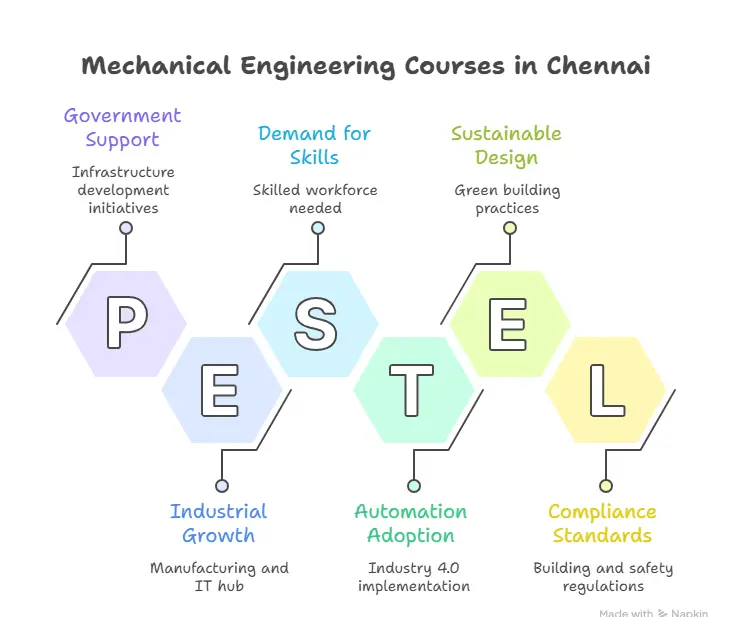
Chennai is one of India’s major hubs for manufacturing, construction, IT services, and emerging technologies. Because of this strong industrial ecosystem, mechanical engineers in Chennai have access to a wide range of career-oriented courses that can significantly enhance employability and long-term growth.
1. MEP Design Course
MEP (Mechanical, Electrical, and Plumbing) design focuses on planning and designing building services such as HVAC systems, electrical layouts, fire fighting systems, water supply, and drainage. The course trains engineers to work on real-time building projects using design standards, drawings, and software tools.
Career Scope
MEP professionals are highly in demand in the construction and infrastructure sector. Chennai’s rapid growth in residential complexes, commercial buildings, IT parks, metros, airports, and hospitals has created consistent demand for skilled MEP engineers.
Average Salary
-
Entry-level: ₹3 – ₹5 LPA
-
Mid-level: ₹6 – ₹10 LPA
-
Senior roles: ₹12+ LPA (depending on project experience)
Suitable Roles
-
MEP Engineer
-
MEP Design Engineer
-
Building Services Engineer
-
Site MEP Coordinator
2. HVAC Design Course
HVAC (Heating, Ventilation, and Air Conditioning) design courses focus on thermal comfort, cooling load calculations, duct design, equipment selection, and industry-standard design software. This course builds strong expertise in climate control systems used in buildings and industries.
Career Scope
HVAC engineers are required in commercial buildings, malls, hospitals, data centers, hotels, and industrial plants. Chennai’s hot and humid climate further increases the demand for efficient HVAC system design and maintenance.
Average Salary
-
Fresher: ₹3 – ₹4.5 LPA
-
Experienced professionals: ₹6 – ₹9 LPA
Suitable Roles
-
HVAC Design Engineer
-
HVAC Project Engineer
-
HVAC Site Engineer
-
Maintenance & Commissioning Engineer
3. CAD / CAM / CAE (AutoCAD, SolidWorks, CATIA, NX)
CAD (Computer-Aided Design), CAM (Computer-Aided Manufacturing), and CAE (Computer-Aided Engineering) courses train mechanical engineers in 2D drafting, 3D modeling, product design, simulation, and manufacturing processes using industry-standard software.
Career Scope
These skills are essential for core mechanical careers in automotive, aerospace, manufacturing, heavy engineering, and product development companies. Chennai, being an automobile and manufacturing hub, offers strong opportunities in this domain.
Average Salary
-
Entry-level: ₹2.5 – ₹4 LPA
-
With experience: ₹5 – ₹8 LPA
Suitable Roles
-
Design Engineer
-
CAD Engineer
-
Product Design Engineer
-
Manufacturing Engineer
4. Data Science / Data Analytics
Data Science and Data Analytics courses focus on data processing, statistics, programming, machine learning, and business insights. Mechanical engineers with analytical thinking can easily transition into this tech-driven field.
Career Scope
This course enables a shift from core engineering to analytics and IT-based roles. Industries like manufacturing analytics, finance, healthcare, e-commerce, and IT services actively hire data professionals.
Average Salary
-
Entry-level: ₹5 – ₹8 LPA
-
Experienced professionals: ₹10 – ₹15+ LPA
Suitable Roles
-
Data Analyst
-
Data Scientist
-
Business Analyst
-
Operations Analyst
5. Robotics and Automation
Robotics and automation courses focus on PLC, SCADA, industrial robots, sensors, control systems, and smart manufacturing technologies. This field plays a key role in Industry 4.0.
Career Scope
With increasing automation in factories, robotics professionals are in high demand in automotive, electronics, FMCG, and manufacturing industries. Chennai’s industrial belt provides strong job opportunities in this area.
Average Salary
-
Fresher: ₹3.5 – ₹6 LPA
-
Experienced roles: ₹8 – ₹12 LPA
Suitable Roles
-
Automation Engineer
-
Robotics Engineer
-
PLC Programmer
-
Control Systems Engineer
6. Supply Chain & Operations Management
This course focuses on procurement, inventory management, logistics, production planning, and distribution strategies. Mechanical engineers with process and system understanding excel in this domain.
Career Scope
Supply chain professionals are in demand across manufacturing, automotive, FMCG, and e-commerce sectors. Chennai’s ports, logistics hubs, and manufacturing units make it an ideal location for such roles.
Average Salary
-
Entry-level: ₹4 – ₹6 LPA
-
Mid to senior level: ₹8 – ₹12 LPA
Suitable Roles
-
Supply Chain Analyst
-
Operations Manager
-
Production Planner
-
Logistics Manager
7. Project Management (PMP / Primavera / MS Project)
Project management courses train engineers in planning, scheduling, budgeting, risk management, and execution of projects using globally recognized tools and certifications.
Career Scope
Project managers are needed across construction, IT, manufacturing, and infrastructure projects. This course is ideal for engineers aiming to move into leadership and coordination roles.
Average Salary
-
Entry-level: ₹5 – ₹7 LPA
-
Senior project roles: ₹10 – ₹15+ LPA
Suitable Roles
-
Project Engineer
-
Project Manager
-
Planning Engineer
-
Program Manager
8. MBA After Mechanical Engineering
An MBA equips mechanical engineers with business, leadership, and strategic skills. Popular specializations include Operations, Marketing, Finance, HR, and Business Analytics.
Career Scope
MBA graduates can move into managerial, consulting, and corporate leadership roles across industries. This path offers long-term career growth and higher decision-making authority.
Average Salary
-
Entry-level: ₹6 – ₹10 LPA
-
Senior management roles: ₹15 – ₹25+ LPA
Suitable Roles
-
Operations Manager
-
Business Analyst
-
Marketing Manager
-
Product Manager
-
General Manager
Master MEP Design with Industry-Leading Training!
Gain in-depth knowledge of Mechanical, Electrical, and Plumbing (MEP) Design with expert-led courses. Learn HVAC, fire safety, sustainable building strategies, and BIM applications to excel in the construction industry.
Know MoreBest Institutes in Chennai for These Courses
Chennai offers a strong mix of private training institutes, deemed universities, and business schools, making it one of the best cities in India for mechanical engineers to upskill. Below is a clear breakdown to help you choose the right institute and learning mode.
Entri App – Learn MEP Design Course in Tamil & Get Placed
Entri App’s MEP Design Course is a job-oriented program designed specifically for mechanical and civil engineering graduates who prefer learning in Tamil. The course focuses on real-time MEP design concepts used in construction projects, making it easier for learners to understand complex technical topics through their native language.
Key Highlights:
-
Classes conducted fully in Tamil
-
Industry-relevant MEP curriculum
-
Beginner-friendly and easy-to-follow explanations
-
Practical training with real-world project examples
-
Placement assistance after course completion
What You Will Learn:
-
Basics of MEP systems (Mechanical, Electrical & Plumbing)
-
HVAC system design fundamentals
-
Fire fighting systems and safety standards
-
Water supply and drainage design
-
Reading and understanding construction drawings
-
Industry practices followed in real projects
Career Scope
With Chennai’s growing construction, real estate, and infrastructure sectors, trained MEP professionals are in high demand. Completing this course can help candidates enter the construction industry with job-ready skills, especially in residential, commercial, and industrial projects.
Average Salary
-
Freshers: ₹3 – ₹5 LPA
-
With experience: ₹6 – ₹10 LPA
Best for: Mechanical engineers, civil engineers, diploma holders, and fresh graduates looking to start a career in the construction and MEP domain with clear guidance and local-language support.
Training Institutes in Chennai (Skill-Oriented & Job-Focused)
Training institutes are ideal for engineers who want practical skills, software expertise, and faster job placement.
Popular Domains Covered
-
MEP & HVAC Design
-
CAD / CAM / CAE
-
Robotics & Automation
-
Project Management Tools
-
Data Analytics
Key Advantages
-
Industry-oriented curriculum
-
Hands-on projects and real-time case studies
-
Shorter duration (3–6 months)
-
Placement assistance and internships
Well-Known Training Institutes in Chennai
-
CADD Centre – CAD/CAM/CAE, MEP, HVAC
-
Livewire – Automation, Robotics, Data Science
-
Technocrat Automation – PLC, SCADA, Industrial Automation
-
DLK Technologies / FITA Academy – Data Analytics, IT transition courses
-
Skill-Lync – Automotive, CAE, EV, and core mechanical specialization
Universities & Colleges in Chennai (Academic & Long-Term Growth)
Universities are suitable for those looking for recognized degrees, research exposure, and structured learning.
Popular Courses Offered:
-
MBA (Operations, Analytics, Finance)
-
M.Tech / MS (Mechanical, Robotics, Manufacturing)
-
PG Diploma programs
Reputed Universities in Chennai:
-
Anna University
-
IIT Madras
-
SRM Institute of Science and Technology
-
VIT Chennai
-
Hindustan Institute of Technology
-
Loyola Institute of Business Administration (LIBA) – MBA
Key Advantages
-
Strong academic credibility
-
Campus placements
-
Long-term career and leadership growth
Best for: Students planning higher education, research, or management careers.
3. Certification vs Diploma vs Degree Courses
Understanding the difference helps you choose the right path based on time, cost, and career goals.
Certification Courses:
-
Duration: 1–6 months
-
Focus: Specific skills (AutoCAD, HVAC, Data Analytics, PLC)
-
Cost: Affordable
-
Outcome: Skill enhancement and job readiness
Best for: Quick upskilling and immediate employment.
Eligibility Criteria & Duration
Who Can Apply?
The MEP Design Course is suitable for both freshers and working professionals who want to build or upgrade their careers in the construction and building services domain.
Eligible Candidates Include:
-
Mechanical Engineering graduates (BE / BTech / ME / MTech)
-
Civil Engineering graduates interested in MEP roles
-
Diploma holders in Mechanical or Civil Engineering
-
Freshers looking for their first job in MEP, HVAC, or building services
-
Working professionals from construction, HVAC, maintenance, or site engineering backgrounds who want to upskill or move into design roles
No prior experience in MEP is mandatory, as the course starts from basic concepts and gradually advances to industry-level applications.
Course Duration & Learning Mode
Course Duration:
-
Typically ranges from 3 to 6 months, depending on the depth of the curriculum and learning pace
-
Some programs may offer fast-track options for learners who want to complete the course quicker
Learning Mode:
-
Online classes with live and recorded sessions
-
Training conducted in Tamil, making it easy to understand technical concepts
-
Access through mobile and desktop devices
-
Flexible schedule suitable for students and working professionals
Training Approach:
-
Concept-based learning + practical examples
-
Real-world project discussions
-
Design-oriented focus aligned with industry standards
Career Opportunities After Completing These Courses
Completing a specialized course after mechanical engineering significantly improves employability by aligning your skills with industry needs. Whether you are a fresher or an experienced professional, these courses open doors to diverse job roles across multiple industries.
Job Roles & Industries
1. Construction, Infrastructure & Real Estate
Relevant Courses: MEP Design, HVAC Design, Project Management
Job Roles:
-
MEP Design Engineer
-
HVAC Engineer
-
Site Engineer
-
Planning Engineer
-
Project Coordinator
Industries:
-
Residential and commercial construction
-
Infrastructure projects (metros, airports, hospitals, IT parks)
-
Real estate development firms
2. Manufacturing & Core Mechanical Industries
Relevant Courses: CAD/CAM/CAE, Robotics & Automation, Supply Chain Management
Job Roles:
-
Design Engineer
-
Manufacturing Engineer
-
Automation Engineer
-
Production Planner
-
Quality Engineer
Industries:
-
Automotive and auto components
-
Heavy engineering
-
FMCG manufacturing
-
Electronics and industrial equipment
3. Automation, Robotics & Industry
Relevant Courses: Robotics and Automation, PLC/SCADA, Smart Manufacturing
Job Roles:
-
Automation Engineer
-
PLC Programmer
-
Robotics Engineer
-
Control Systems Engineer
Industries:
-
Smart factories
-
Automotive manufacturing plants
-
Process industries
-
Industrial automation solution providers
4. IT, Data & Analytics Sector
Relevant Courses: Data Science, Data Analytics, Business Analytics
Job Roles:
-
Data Analyst
-
Data Scientist
-
Business Analyst
-
Operations Analyst
Industries:
-
IT services and consulting
-
E-commerce
-
Manufacturing analytics
-
Banking, healthcare, and logistics
5. Operations, Supply Chain & Management
Relevant Courses: Supply Chain Management, MBA, Project Management
Job Roles:
-
Operations Executive
-
Supply Chain Analyst
-
Logistics Manager
-
Project Manager
-
Operations Manager
Industries:
-
Manufacturing and production
-
E-commerce and logistics
-
Retail and FMCG
-
Infrastructure and construction
Entry-Level vs Experienced Professional Paths
Entry-Level Career Path (Freshers)
For freshers, these courses help in securing the first job by providing job-ready skills and practical exposure.
Typical Entry-Level Roles:
-
Junior MEP Engineer
-
HVAC Trainee Engineer
-
CAD Engineer
-
Junior Data Analyst
-
Automation Trainee
Career Focus:
-
Learning industry standards
-
Gaining hands-on experience
-
Understanding tools and workflows
Salary Range:
-
₹2.5 – ₹5 LPA (varies by course and industry)
Experienced Professional Path (1–5+ Years Experience)
For experienced professionals, these courses support career growth, role transition, or specialization.
Typical Mid-to-Senior Roles:
-
Senior Design Engineer
-
Project Manager
-
Lead Automation Engineer
-
Data Science Consultant
-
Operations Manager
Career Focus:
-
Managing projects and teams
-
Handling complex systems and decision-making
-
Strategic and leadership responsibilities
How to Choose the Right Course After Mechanical Engineering
Choosing the right course is a crucial decision that directly impacts your career satisfaction, growth, and earning potential. The ideal course should match your interest, aptitude, long-term goals, and market demand, not just current trends.
1. Choose Based on Interest & Aptitude
Start by understanding what you enjoy and where your strengths lie.
If You Enjoy Design & Technical Work
-
Prefer working with drawings, calculations, and software
-
Like understanding how machines or systems work
Best Courses:
-
CAD / CAM / CAE
-
MEP Design
-
HVAC Design
Career Fit: Core mechanical and construction-based roles
If You Enjoy Data, Logic & Problem-Solving
-
Comfortable with numbers, patterns, and analysis
-
Interested in software and technology
Best Courses:
-
Data Science
-
Data Analytics
-
Business Analytics
Career Fit: IT and analytics-driven roles
If You Enjoy Machines, Controls & Innovation
-
Interested in automation, robotics, and smart systems
-
Like hands-on industrial environments
Best Courses:
-
Robotics and Automation
-
PLC / SCADA
-
Industry 4.0 programs
Career Fit: Manufacturing, smart factories, and automation roles
If You Enjoy Planning, Coordination & Leadership
-
Like managing people, schedules, and resources
-
Interested in decision-making roles
Best Courses:
-
Project Management (PMP, Primavera, MS Project)
-
Supply Chain & Operations Management
-
MBA
Career Fit: Managerial and leadership positions
2. Core Engineering vs IT vs Management Paths
Understanding these three career paths helps in making a clear decision.
Core Engineering Path
Focus: Technical expertise and domain specialization
Courses:
-
MEP Design
-
HVAC Design
-
CAD / CAM / CAE
-
Robotics & Automation
Pros:
-
Strong technical foundation
-
Stable demand in construction and manufacturing
Cons:
-
Growth may be slower without continuous upskilling
IT / Analytics Path
Focus: Technology, data, and software-driven roles
Courses:
-
Data Science
-
Data Analytics
-
Business Analytics
Pros:
-
Higher starting salaries
-
Faster career growth
-
Global opportunities
Cons:
-
Requires continuous learning
-
Less connection to core mechanical work
Management Path
Focus: Strategy, operations, and leadership
Courses:
-
MBA
-
Project Management
-
Supply Chain Management
Pros:
-
Higher long-term salary ceiling
-
Leadership and decision-making roles
Cons:
-
Longer learning period
-
Higher investment (time and cost)
3. Long-Term Growth & Market Demand
Before finalizing a course, evaluate future demand and sustainability.
High Long-Term Demand Fields
-
MEP & HVAC (urbanization, infrastructure growth)
-
Automation & Robotics (Industry 4.0)
-
Data Analytics & AI (data-driven decision making)
-
Supply Chain Management (global logistics and e-commerce)
Future Scope for Mechanical Engineers
Mechanical engineering continues to evolve with rapid technological advancements and large-scale infrastructure development. For engineers who continuously upskill, the future offers diverse, high-growth career opportunities, especially in a city like Chennai.
Emerging Technologies & Future Roles
1. Industry 4.0 & Smart Manufacturing
The integration of automation, IoT, AI, and data analytics is transforming traditional manufacturing into smart factories.
Future Roles:
-
Automation Engineer
-
Smart Manufacturing Engineer
-
Industrial IoT Specialist
-
Digital Manufacturing Engineer
2. Robotics & Artificial Intelligence
Robotics combined with AI is being widely adopted in automotive, electronics, healthcare equipment, and logistics.
Future Roles:
-
Robotics Engineer
-
AI-enabled Automation Specialist
-
Control Systems Engineer
3. Electric Vehicles (EV) & Sustainable Mobility
With the global shift towards electric vehicles, mechanical engineers play a key role in EV design, thermal management, battery systems, and manufacturing.
Future Roles:
-
EV Design Engineer
-
Battery Thermal Engineer
-
Powertrain Engineer
4. Renewable Energy & Sustainability
Mechanical engineers are crucial in solar, wind, energy efficiency, and green building technologies.
Future Roles:
-
Renewable Energy Engineer
-
Energy Management Engineer
-
Sustainability Consultant
5. Building Services & Smart Infrastructure
Urbanization is increasing demand for energy-efficient HVAC, MEP systems, and smart buildings.
Future Roles:
-
MEP Design Engineer
-
HVAC Energy Analyst
-
Green Building Consultant
6. Data-Driven Engineering & Analytics
Mechanical engineers with data skills can combine domain knowledge with analytics for predictive maintenance and optimization.
Future Roles:
-
Manufacturing Data Analyst
-
Reliability Engineer
-
Operations Analytics Specialist
Chennai’s Industrial & Infrastructure Growth
Chennai is one of India’s strongest ecosystems for mechanical engineers due to its diverse industrial base and continuous infrastructure expansion.
Key Growth Drivers in Chennai
-
Automobile and auto-component manufacturing hub
-
Expanding EV manufacturing clusters
-
Major ports and logistics centers
-
Ongoing metro rail, smart city, and airport expansion projects
-
Rapid growth in commercial buildings, IT parks, and residential projects
Industries Creating Future Demand
-
Automotive & EV manufacturing
-
Construction & infrastructure
-
Heavy engineering & fabrication
-
Automation and industrial solutions
-
IT and analytics services
Long-Term Career Outlook
Mechanical engineers who adapt to new technologies can expect:
-
Stable and diversified career options
-
Opportunities in both core engineering and IT-driven roles
-
Global job prospects
-
Higher salary growth with specialization
Join our MEP Course Online and Build a Successful Career!
Conclusion
Mechanical engineering continues to offer strong and diverse career opportunities, especially for those who are willing to adapt and upskill. With rapid advancements in technology and changing industry demands, pursuing the right course after mechanical engineering has become a strategic step rather than an optional one.
Chennai, with its robust presence in manufacturing, construction, automation, IT, and infrastructure development, provides an ideal environment for mechanical engineers to grow. From core engineering roles like MEP, HVAC, CAD, and automation to emerging fields such as data analytics, robotics, and management, there are multiple career paths available to suit different interests and aptitudes.
The key to long-term success lies in choosing the right course based on personal interest, market demand, and future growth potential, along with selecting a reputed institute that offers practical training and placement support. Continuous learning, hands-on experience, and adaptability will ensure sustained career growth and higher earning potential.
Master MEP Design with Industry-Leading Training!
Gain in-depth knowledge of Mechanical, Electrical, and Plumbing (MEP) Design with expert-led courses. Learn HVAC, fire safety, sustainable building strategies, and BIM applications to excel in the construction industry.
Know MoreFrequently Asked Questions
Which course is best after mechanical engineering?
There is no single “best” course for everyone. The best course depends on your interest and career goal.
-
For core engineering: MEP Design, HVAC, CAD/CAM/CAE, Robotics & Automation
-
For IT and analytics: Data Science, Data Analytics
-
For management roles: MBA, Project Management, Supply Chain Management
What are the best job-oriented courses for mechanical engineers in Chennai?
Job-oriented courses include MEP Design, HVAC Design, CAD/CAM/CAE, Robotics & Automation, and Data Analytics. These courses focus on practical skills, industry tools, and real-time projects, making candidates job-ready.
Are short-term courses better or long-term courses?
Both have their advantages.
-
Short-term courses (3–6 months) are ideal for quick upskilling and faster job entry.
-
Long-term courses (1–2 years) such as MBA or M.Tech are better for leadership roles and long-term career growth.
Which courses offer the highest salary after mechanical engineering in Chennai?
Courses with higher salary potential include Data Science, Robotics & Automation, Project Management, and MBA. Salary depends on skills, experience, and the organization rather than the course alone.
Which courses are best for freshers after mechanical engineering?
Freshers should choose MEP Design, HVAC Design, CAD/CAM/CAE, Robotics & Automation, or Data Analytics. These courses start from basics and provide hands-on training suitable for beginners.
Can mechanical engineers move into IT roles?
Yes, mechanical engineers can transition into IT roles by learning Data Analytics, Data Science, or Business Analytics. Strong logical thinking and problem-solving skills make this transition easier.
Is Chennai a good city for mechanical engineering jobs?
Yes, Chennai is one of the best cities for mechanical engineers due to its automobile industries, manufacturing hubs, construction projects, ports, and growing IT sector.
Do certification courses really help in getting jobs?
Yes, industry-recognized certification courses help bridge the gap between academics and industry. When combined with practical projects and placement support, certifications significantly improve job opportunities, especially for freshers.