
Table of Contents
Cracking the PTE Speaking section isn’t just about fluency—it’s about confidence, clarity, and smart practice. If you want to boost your score and sound natural under exam pressure, practising the right questions makes all the difference. In this blog, we’ve curated the Top 30 PTE Speaking Questions You Must Practise to help you sharpen your responses, improve pronunciation, and master test-day strategies. Whether you’re aiming for a high band score or retaking the exam for better results, these must-practise questions will give you the competitive edge you need to speak with precision and confidence.
Join Enrtri PTE Coaching Course
Introduction
The PTE Speaking section is often considered one of the most challenging parts of the exam—not because the questions are difficult, but because they test multiple skills at the same time. Your pronunciation, fluency, vocabulary, grammar, and ability to think quickly are all evaluated within a few seconds. Many test-takers struggle not due to a lack of English knowledge, but because they are unfamiliar with the types of questions asked and how to respond effectively under time pressure.
That’s why focused and strategic practice is essential. Instead of practising random questions, you need to concentrate on high-frequency and exam-relevant speaking tasks that repeatedly appear in the PTE exam. From Read Aloud and Repeat Sentence to Describe Image and Retell Lecture, each task follows a specific pattern. Once you understand these patterns and practise the right questions, your confidence naturally improves—and so does your score.
In this blog, we bring you the Top 30 PTE Speaking Questions You Must Practise, carefully selected to help you master every speaking task type. These questions will help you improve fluency, reduce hesitation, and develop clear, well-structured responses. Whether you are a first-time test taker or aiming to boost your previous score, this guide will serve as a complete starting point to strengthen your PTE Speaking preparation and perform with confidence on exam day.
Understanding the PTE Speaking Section
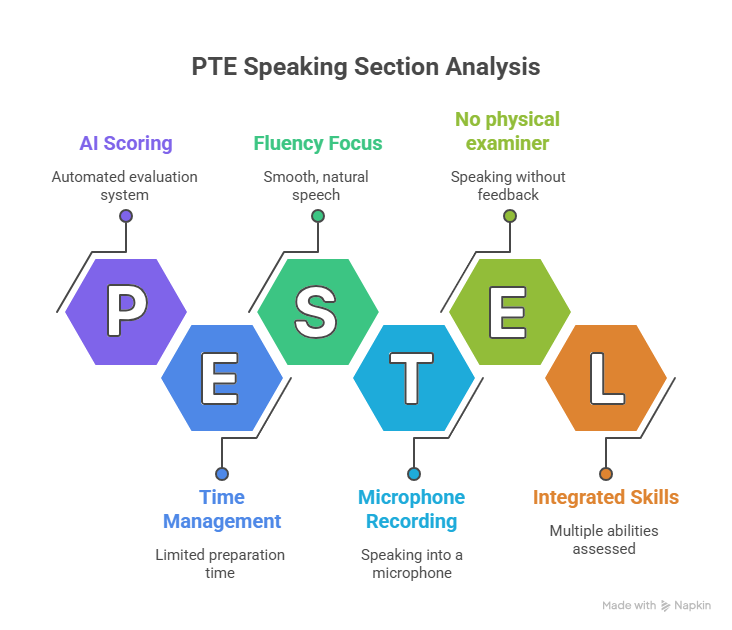
The PTE Speaking section is designed to evaluate how effectively you can communicate in English in academic and real-life contexts. Instead of speaking to an examiner, you respond into a microphone, and your answers are scored by an AI system. This section does not test speaking alone—it also assesses listening and reading skills, along with pronunciation, fluency, grammar, vocabulary, and content. Because of this integrated scoring, clear pronunciation and smooth, continuous speech play a major role in achieving a high score.
The speaking section includes task types such as Read Aloud, Repeat Sentence, Describe Image, Retell Lecture, and Answer Short Question, each testing different abilities under strict time limits. Since preparation time is minimal, practising common question patterns is essential. The AI scoring system rewards steady pace, clarity, and confidence more than complex vocabulary or perfect grammar. By understanding how each task works and focusing on fluency, you can approach the PTE Speaking section with confidence and perform effectively on exam day.
What Is the PTE Speaking Section?
The PTE Speaking section is designed to measure how effectively you can communicate in English in academic and everyday situations. Instead of speaking face-to-face with an examiner, you record your answers using a microphone. This format allows the test to evaluate your speaking ability objectively, but it also requires you to be comfortable speaking clearly and confidently without feedback from a listener.
Skills Tested in the PTE Speaking Section
PTE Speaking does not test speaking alone. It is an integrated-skills section, meaning multiple language abilities are assessed at the same time. Your responses are evaluated based on:
-
Pronunciation – how clearly you pronounce words
-
Fluency – how smoothly and naturally you speak
-
Vocabulary – your word choice and accuracy
-
Grammar – correct sentence structure
-
Content – how relevant and accurate your response is
Because of this, improving fluency and clarity can significantly improve your overall score.
Types of Speaking Tasks
The PTE Speaking section includes several task types, each focusing on different skills:
-
Read Aloud: Tests pronunciation and reading fluency as you read a text displayed on the screen.
-
Repeat Sentence: Measures listening skills and memory by asking you to repeat a sentence exactly as you hear it.
-
Describe Image: Assesses your ability to organize ideas and speak fluently while explaining visual information like graphs or charts.
-
Retell Lecture: Evaluates listening comprehension and your ability to summarize spoken content.
-
Answer Short Question: Tests quick thinking and basic vocabulary through simple, direct questions.
Understanding the pattern of each task helps you respond more confidently and efficiently.
Time Management and Pressure Handling
Each speaking task comes with limited preparation and response time. This means you must think quickly and speak without hesitation. Long pauses, self-corrections, or unclear speech can negatively affect your score. Regular practice helps you manage time better and reduces exam stress.
How the PTE Speaking Section Is Scored
One unique feature of the PTE exam is its AI-based scoring system. Your responses are scored automatically, which means consistency is key. Speaking at a steady pace with clear pronunciation is more important than using advanced vocabulary. Simple, fluent, and well-structured answers usually score higher than complex but hesitant responses.
Why Practice Is Essential
Practising regularly helps you become familiar with question types, improve fluency, and build confidence. When you know what to expect, you can focus more on delivering your response smoothly rather than worrying about the format.
Tips for Preparing Effectively
Preparing for the PTE Speaking section requires more than just knowing English—it requires smart practice, consistency, and the right strategy. Below are some effective and practical tips to help you prepare confidently and improve your speaking score.
1. Understand the Exam Format First
Before you start practising, make sure you clearly understand each speaking task type. Knowing what is expected in Read Aloud, Repeat Sentence, Describe Image, and other tasks will help you avoid confusion during the actual exam and save valuable time.
2. Focus on Fluency Over Perfection
Many test-takers lose marks because they focus too much on grammar or complex vocabulary. In PTE, fluency and pronunciation matter more. Speak smoothly and naturally, even if you use simple words. Avoid long pauses, hesitation, or restarting sentences.
3. Practise High-Frequency Questions
Not all questions are equally important. Some question types appear more frequently in the exam. Practising high-scoring and repeated question patterns will give you a strong advantage and improve your confidence.
4. Record and Evaluate Your Answers
Always practise with a microphone and record your responses. Listening to your own answers helps you identify pronunciation errors, unnecessary pauses, and speed issues. This self-evaluation is one of the fastest ways to improve.
5. Improve Listening Skills Alongside Speaking
Tasks like Repeat Sentence and Retell Lecture depend heavily on listening skills. Regularly practise listening to English podcasts, lectures, or news to improve your ability to understand and respond accurately.
6. Learn Simple Templates and Structures
Using basic templates for tasks like Describe Image and Retell Lecture can save time and reduce stress. Templates help you organize your thoughts quickly and deliver structured responses without hesitation.
7. Practise Under Exam Conditions
Simulate real exam conditions while practising. Sit in a quiet place, use a timer, and speak confidently into the microphone. This helps reduce anxiety and prepares you mentally for the test day environment.
8. Be Consistent and Patient
Consistency is key. Even 20–30 minutes of daily speaking practice can bring noticeable improvement over time. Don’t rush the process—gradual and steady practice leads to better results.
Join Enrtri PTE Coaching Course
Top 30 PTE Speaking Questions (With Sample Types)
The PTE Speaking section may appear short, but it plays a crucial role in determining your overall PTE score. Each speaking task is carefully designed to test multiple skills at once, such as pronunciation, fluency, listening, and content. Because the question formats are repeated in every exam, practising the top 30 speaking questions based on these task types helps you become comfortable with real exam conditions. It also reduces hesitation, improves confidence, and allows you to respond more naturally on test day.
Below is a detailed explanation of the most important PTE Speaking task types, along with the kind of questions you can expect in the exam.
1. Read Aloud (Sample Type: 6–7 Questions)
In the Read Aloud task, a short passage appears on the screen. You are given a few seconds to prepare before the microphone opens. Your goal is to read the text clearly, smoothly, and confidently. This task mainly tests pronunciation and oral fluency, but it also affects your reading score.
The text is usually academic or informational in nature and may include complex sentence structures. The key to scoring well is maintaining a steady pace, stressing important words, and avoiding unnecessary pauses or repetition. Even small pronunciation mistakes can affect your score, so clarity is more important than speed.
2. Repeat Sentence (Sample Type: 10–12 Questions)
Repeat Sentence is one of the most scoring yet challenging tasks in PTE Speaking. You hear a sentence only once and must repeat it exactly as you hear it. This task tests listening accuracy, memory, and speaking fluency simultaneously.
The sentences may be long and include unfamiliar vocabulary or complex grammar. Instead of trying to remember every word individually, successful test-takers focus on understanding the sentence as a whole and repeating it naturally. Practising this task regularly improves both listening concentration and spoken rhythm.
3. Describe Image (Sample Type: 3–4 Questions)
In this task, you are shown an image such as a bar chart, pie chart, line graph, map, or process diagram. You have limited time to analyze the image and then describe it aloud.
The examiner expects you to highlight the main features, such as trends, comparisons, or key stages, rather than describing every detail. A clear structure—introduction, key points, and a brief conclusion—helps you speak fluently and confidently. This task mainly evaluates fluency, content, and organization.
4. Retell Lecture (Sample Type: 1–2 Questions)
Retell Lecture requires you to listen to a short academic lecture and then summarize it in your own words. Topics often include science, education, technology, or history.
This task tests your listening comprehension and speaking ability together. You are not expected to remember every detail; instead, focus on the main idea and two or three key points. Clear summarization and smooth delivery are more important than perfect grammar.
5. Answer Short Question (Sample Type: 3–4 Questions)
These are quick and simple questions that require short, direct answers, usually one or two words. They test basic listening skills, vocabulary, and quick thinking.
The questions are based on everyday topics or general knowledge. Because the response time is very short, staying calm and responding immediately is essential.
How to Practise for Maximum Improvement
Effective PTE Speaking preparation is not about practising more—it’s about practising the right way. When your practice is structured and focused, you can see noticeable improvement in fluency, pronunciation, and confidence in a much shorter time. Below are proven strategies to help you get the maximum benefit from your practice sessions.
1. Practise by Task Type, Not Randomly
Start by practising each speaking task separately. Focus on Read Aloud for pronunciation, Repeat Sentence for listening and memory, and Describe Image for fluency and structure. This targeted approach helps you identify your weak areas and improve them faster.
2. Use a Microphone and Record Yourself
Always practise with a microphone, just like the real exam. Recording your answers allows you to listen to your speech and notice problems such as long pauses, unclear pronunciation, or speaking too fast. Self-evaluation is one of the most powerful ways to improve.
3. Focus on Fluency First
In PTE, fluent speech matters more than perfect grammar. Train yourself to speak continuously without hesitation. Even if you make a small grammatical mistake, keep going smoothly. Avoid stopping or restarting sentences.
4. Learn Simple Templates
For tasks like Describe Image and Retell Lecture, using simple templates saves time and reduces stress. Templates help you organize ideas quickly and deliver structured answers, which leads to better fluency and confidence.
5. Improve Listening Along with Speaking
Many speaking tasks depend heavily on listening. Regularly practise listening to English podcasts, news, or short lectures. This will improve your ability to understand accents, sentence structure, and key ideas.
6. Practise Under Real Exam Conditions
Simulate the exam environment during practice. Sit in a quiet room, use a timer, and avoid pausing the audio. This prepares your mind for pressure and helps you stay calm on the actual test day.
7. Practise Consistently, Not Occasionally
Consistency is more important than long study sessions. Even 20–30 minutes of daily speaking practice can bring strong improvement over time. Regular practice builds confidence and muscle memory.
Join Enrtri PTE Coaching Course
Conclusion
Mastering the PTE Speaking section is not about learning hundreds of questions—it’s about practising the right ones. The top 30 PTE Speaking questions, based on repeated task types like Read Aloud, Repeat Sentence, Describe Image, Retell Lecture, and Answer Short Question, cover the core patterns you will face in the real exam. When you practise these questions consistently, you train your mind to respond quickly, clearly, and confidently under time pressure.
Regular practice with these key question types helps improve fluency, pronunciation, listening accuracy, and overall speaking confidence. More importantly, it reduces exam anxiety because you know exactly what to expect on test day. By focusing on structure, clarity, and smooth delivery rather than perfection, you can significantly boost your speaking score.
Ace Your PTE Exam with Confidence!
Unlock your potential with our expert-led PTE preparation course. Achieve your dream score and open doors to global opportunities!
Start Your PTE Preparation Today!Frequently Asked Questions
Why should I focus on the top 30 PTE Speaking questions?
The PTE Speaking section follows a fixed set of task types, and most questions are repeated in pattern rather than content. The top 30 speaking questions represent these high-frequency task types. Practising them helps you become familiar with exam structure, improve fluency, and reduce hesitation, which directly impacts your score.
How are the top 30 PTE Speaking questions selected?
These questions are selected based on exam relevance and scoring weight. They cover all major speaking tasks such as Read Aloud, Repeat Sentence, Describe Image, Retell Lecture, and Answer Short Question. Together, they represent the most important speaking tasks you will face in the actual exam.
Which speaking task carries the highest weight in PTE?
Repeat Sentence and Read Aloud carry the highest scoring impact because they assess multiple skills, including speaking, listening, and reading. That’s why a large portion of the top 30 questions comes from these task types.
How often should I practise these 30 questions?
You should practise them daily. Repeating the same question types helps build muscle memory, improve pronunciation, and increase speaking speed. Even 20–30 minutes of focused practice each day can bring noticeable improvement within a few weeks.
Is it necessary to memorise answers for PTE Speaking?
No, memorising full answers is not recommended. The PTE exam uses AI-based scoring, which values natural fluency and clarity over memorised responses. Instead, practise understanding patterns and using simple structures to respond naturally.
How can I improve fluency while practising these questions?
To improve fluency, focus on speaking continuously without pauses, even if your grammar is not perfect. Use simple vocabulary, speak at a steady pace, and practise with a microphone. Recording and reviewing your responses also helps identify fluency issues.
Can practising these questions improve other PTE sections?
Yes. Many speaking tasks are integrated, meaning they also affect your listening and reading scores. For example, practising Repeat Sentence improves listening accuracy, while Read Aloud improves reading and pronunciation. This makes the top 30 questions highly beneficial overall.
How long does it take to see improvement with focused practice?
With consistent practice, most test-takers notice improvement in fluency and confidence within 2–3 weeks. Score improvement depends on your starting level, but regular practice of the top 30 speaking questions significantly increases your chances of achieving a high PTE score.