Table of Contents
If you’re thinking about starting a dropshipping business in 2026 – or you already run a store – you’ve probably heard these lines a thousand times:
- “Just find a winning product”
- “Copy this ad, and you’ll make lakhs”
- “Use this supplier, and you’re sorted”
But look at what’s happening around you:
- Global dropshipping is booming – the market is expected to grow from around $418 billion in 2025 to over $3.3 trillion by 2035, at a CAGR of about 23%.
- E-commerce overall keeps expanding – over 20% of all global retail sales now happen online, and e-commerce sales are expected to cross $6.8 trillion in 2025.
- In India alone, e-commerce is projected to grow at a CAGR of ~27% to 2026, with steady growth beyond 2030.
So, demand is not the problem.
The real problem is this:
Most dropshippers don’t know how to get traffic, convert it, and scale profitably.
They don’t have digital marketing skills – they only have a Shopify login.
That’s why every serious dropshipper today MUST become a digital marketer.
Dropshipping Is Growing – But So Is Competition
Let’s be very clear:
Dropshipping is not dead. It’s evolving.
Recent market research shows:
- The global dropshipping market was roughly $365–418 billion in 2024–25, and is expected to cross $1.2 trillion by 2030 and $3.3 trillion by 2035, depending on the forecast.
At the same time:
- There are tens of millions of e-commerce stores globally, with more added every day.
So what does this mean?
- There is room to win – buyers are there, and money is flowing online.
- But there is no room to be average – everyone has access to products and platforms.
The only sustainable way to stand out is better marketing – better targeting, better creatives, better funnels, better customer experience.
And that’s exactly what digital marketing is.
Why Every Dropshipper Needs to Learn Digital Marketing in 2026
1: What is the primary goal of SEO (Search Engine Optimization)?

And why “just launching a store” is no longer enough
If you strip away the hype, dropshipping is simple on paper:
- You list products on your store
- A supplier ships them directly to your customer
- You keep the difference between what the customer pays and what you pay the supplier
But here’s the uncomfortable truth in 2026:
Most dropshippers don’t fail because of suppliers or platforms.
They fail because they don’t understand digital marketing.
Studies and industry reports estimate that 80–90% of dropshipping stores don’t survive, largely thanks to poor marketing, weak research and bad customer experience.
At the same time, healthy dropshipping businesses still see average profit margins around 15–30% — when they pick smart products and run the numbers correctly.
So the model itself isn’t dead. What changed is the skill level required to win.
That’s why, if you’re serious about dropshipping, learning digital marketing is non-negotiable. And if you want to shortcut that learning curve, a structured program like the Entri AI-Powered Digital Marketers Course is worth putting right at the top of your upskilling list, it’s built around exactly the skills modern dropshippers need: performance ads, analytics, funnels, and AI-driven optimisation.
Let’s break down why digital marketing is now the real engine of a profitable dropshipping business.
Become an AI-powered Digital Marketing Expert
Master AI-Driven Digital Marketing: Learn Core Skills and Tools to Lead the Industry!
Explore CourseDropshipping in 2026: Low Risk, Thin Margins, Brutal Competition
A few things are true at the same time:
- Dropshipping is still a low-risk, low-inventory way to start an online business. Shopify’s latest guides still present dropshipping as a viable model, provided you focus on marketing, branding and suppliers.
- Average profit margins hover around 15–20%, sometimes up to 30% or more for well-run stores and high-value products.
- Around 80–90% of dropshipping stores fail within the first year, mainly due to poor marketing, bad research and unreliable operations, not because the model is “fake”.
In other words:
The model is real.
The math is tight.
And the only way to make the math work is with solid digital marketing.
You can’t “wing it” anymore with a basic store and random Facebook ads. Let’s see why.
What “Digital Marketing” Actually Means for a Dropshipper
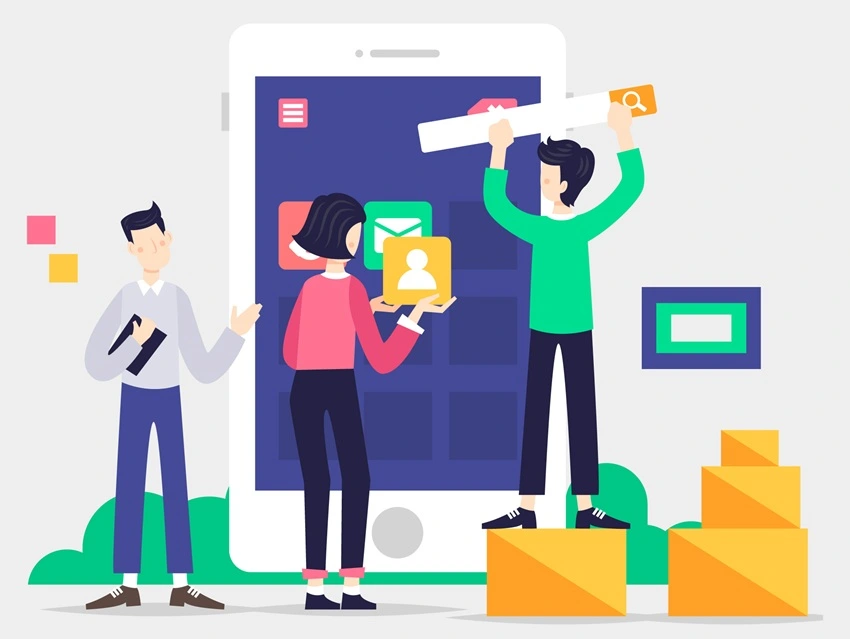
When people hear digital marketing, they often think “Facebook ads” or “posting Reels”. In reality, for a dropshipping business, digital marketing is the full system that:
- Bring the right people to your store
- Persuades them to buy now
- Encourages them to buy again
- Gives you data so you can spend smarter next month
Shopify’s own definition is simple: digital marketing lets brands reach their audience through online platforms and stand out in a crowded marketplace where a large share of commerce has moved online.
For you as a dropshipper, that includes:
- Paid ads (Meta, TikTok, Google)
- Social media & influencer marketing
- SEO and content marketing
- Conversion rate optimisation (CRO)
- Email / WhatsApp / SMS marketing
- Analytics and data-driven decisions
If that sounds like a lot, don’t panic, you don’t need to master everything on day one. But you do need a working understanding of how these pieces fit together.
Join Our Online Digital Marketing Course & Learn the Fundamentals!
1: You’ll Choose Better Niches and Products
Most failing stores crash at step one: niche and product selection.
Common failure patterns:
- Jumping into ultra-saturated niches with no angle
- Selling products with horrible margins
- Ignoring whether anyone actually searches for or shares the product
Many breakdowns of dropshipping failure explicitly list “doing little research” and “wrong niche selection” in the top reasons people lose money.
Digital marketing skills fix that:
- Audience research lets you understand who you’re selling to, their pain points, platforms, language and price sensitivity. Shopify recommends building a clear picture of your ideal customer for better product selection and marketing choices.
- Keyword and trend research shows if people actually search for the product and whether interest is rising or falling.
- Competitor analysis reveals pricing anchors, offer structures and how crowded your niche is.
If you can think like a marketer before ordering a single sample, you’ll avoid half the traps beginners walk into.
Become an AI-powered Digital Marketing Expert
Master AI-Driven Digital Marketing: Learn Core Skills and Tools to Lead the Industry!
Explore Course2: Traffic is No Longer “If You Build It, They Will Come”
You can have the most beautiful Shopify or WooCommerce store in the world; but without traffic, it’s a museum.
Modern ecommerce and dropshipping guides are blunt: once your store is live, marketing is the main job. Shopify literally lists “market your dropshipping business” as one of the essential steps, recommending paid ads, influencers, content and email as core channels.
Digital marketing teaches you how to drive that traffic deliberately:
- Paid advertising – learning how to run Meta, TikTok and Google ads without burning your budget in three days.
- Social media marketing – using short-form video, UGC (user-generated content) and trends strategically, not randomly.
- SEO & content – turning blogs, YouTube videos or how-to guides into steady, free traffic over time.
Without this, you’re depending on luck.
3: You Need Data to Protect Your Profit Margins
Because average dropshipping margins are relatively thin, every mistake in your numbers hurts more.
Industry references put “healthy” gross margins in the 15–30% range, which only matter if your customer acquisition cost (CAC) doesn’t eat them alive.
If you don’t understand digital marketing metrics, you’ll:
- Scale unprofitable campaigns because “sales look good”
- Ignore CAC, ROAS and LTV (lifetime value)
- Forget to include refunds, chargebacks and tools in your profit calculations
Digital marketing – especially the data side – helps you:
- Track CAC by channel (Meta vs TikTok vs Google)
- Measure ROAS and profit, not just revenue
- Improve campaigns using real numbers instead of vibes
Modern ecommerce resources emphasise how digital marketing gives data-driven insights so businesses can make better strategic decisions and improve growth.
For a dropshipper, that’s the difference between:
- “We sold ₹5 lakh last month… I think we did okay?”
- Versus: “We did ₹5 lakh in revenue, ₹90k in net profit, 2.8x LTV/CAC. Let’s scale the TikTok campaigns and cut the bad ad sets.”
4: Conversion Rate Optimisation (CRO) Is Pure Digital Marketing
A lot of beginners obsess over traffic and forget conversion.
If 1,000 people visit your store and only 5 buy, you don’t have a traffic problem; you have a conversion problem.
Research on digital entrepreneurship and ecommerce underlines the importance of user experience (UX), mobile responsiveness, and social proof for competitiveness online.
Digital marketing skills here mean:
- Knowing how to structure a high-converting product page
- Using landing page frameworks instead of random sections
- Adding social proof, urgency, guarantees and clear calls-to-action
- Testing copy, images, page layouts and bundles (A/B testing)
If you double your conversion rate, you effectively halve your CAC (or double your revenue at the same ad spend). That’s pure digital marketing leverage.
5: Brand, Trust and Retention Come from Marketing, Not Suppliers
Most dropshippers obsess over “winning products”. The stores that last obsess over brand.
Reviews and breakdowns of failed dropshipping businesses repeatedly cite lack of branding and poor marketing as central reasons for failure.
Learning digital marketing teaches you how to:
- Define a clear brand promise (what you stand for beyond products)
- Build trust via consistent design, messaging, testimonials and policies
- Use email, WhatsApp, SMS and remarketing to drive repeat purchases
Digital marketing guides for dropshipping stress that good strategies build trust, keep customers engaged and promote repeat purchases, exactly what you need for long-term profit.
When everyone else is fighting over first-order profits, you’ll be making your real money on second, third and fourth orders.
6: AI Has Changed the Game, And Marketers Who Know It Have an Edge
The last few years have completely changed how campaigns are run:
- Ad platforms rely heavily on machine learning for bidding and optimisation
- AI tools help with creative generation, copywriting, audience research and analytics
- Brands that adopt AI workflows test more ideas with less money and time
Recent digital marketing explainers call out personalisation, data and flexibility as key advantages of digital over traditional marketing. AI multiplies that advantage.
For a dropshipper, AI-assisted digital marketing means you can:
- Generate multiple ad creatives and hooks in minutes instead of days
- Analyse performance data faster and spot patterns you’d miss manually
- Build segmented email/WhatsApp flows based on behaviour, not guesswork
A course like Entri’s AI-Powered Digital Marketers Course is specifically designed around these realities: you’re not just learning “ads”, you’re learning how to use AI tools responsibly to:
- Test more creatives
- Lower your CAC
- Make sense of your store’s data
That’s a serious competitive edge in a crowded dropshipping space.
Join Our Online Digital Marketing Course & Learn the Fundamentals!
7: Digital Marketing Is the Only Way to Scale Sustainably
You can get your first sales with basic tactics and luck.
But scaling from:
- 5 orders/week → 50 orders/week → 500 orders/week
…demands systems.
Shopify’s latest tips for dropshipping openly say: as your business grows, you should use marketing and customer data tools to stay in touch with shoppers and conquer your niche.
Scaling requires:
- Structured campaign frameworks (testing, scaling, retargeting)
- Lookalike and interest stacking with real data
- Retention systems (email flows, loyalty, subscriptions)
- Offer iteration (bundles, upsells, cross-sells)
Those are all digital marketing skills. If you don’t learn them, you’ll either:
- Get stuck at small revenue levels, or
- Scale up and then collapse under rising ad costs and refund rates
How the Entri AI-Powered Digital Marketers Course Fits Into This
Let’s tie it all together.
You now know why digital marketing is essential. The next question is how to learn it without wasting years.
A structured program like the Entri AI-Powered Digital Marketers Course is designed to compress that journey, especially for:
- Aspiring digital marketers who want skills clients will pay for
- Dropshippers and ecommerce founders who want to run their own performance marketing
- Side-hustlers and small business owners who can’t afford a full-time agency.
If you’re already running (or planning) a dropshipping store, this isn’t “extra”. It’s the operating system of your business.
Key Takeaways:
Let’s bring it home:
- Dropshipping is still viable, but margins are thin, and competition is intense. Average profit sits around 15–30%, which means you can’t afford sloppy marketing.
- Most failures happen due to weak marketing, poor research and bad customer experience, not because the model is a scam.
- Digital marketing helps you:
- Pick the right products and audience
- Drive targeted traffic from multiple channels
- Protect your profit margins with data-driven decisions
- Improve conversion rates through UX, copy and social proof
- Build a brand that earns repeat purchases, not just one-time sales
- Pick the right products and audience
- AI is now part of the game. Marketers who know how to use AI tools for creative testing and analytics will outrun those who don’t.
Frequently Asked Questions
Why do dropshippers need to learn digital marketing?
Because marketing drives traffic, conversions, and repeat purchases. Without digital marketing skills, even great products fail to sell consistently.
Can I succeed in dropshipping without digital marketing skills?
Unlikely. Most dropshipping failures come from poor marketing, weak targeting, bad creatives and not understanding analytics.
What marketing skills are most important for dropshipping?
Ad creation, audience targeting, funnel building, SEO basics, email/SMS automation, and reading data like CAC, ROAS and LTV.
Does learning digital marketing help reduce ad costs?
Yes. Better targeting, creative optimisation and funnel design help reduce CAC (customer acquisition cost) and improve ROAS.
How does digital marketing help with product selection?
Marketing research tools help validate demand, analyse competition and forecast margins so you choose high-potential, low-risk products.
Why is AI important for dropshipping marketing?
AI helps generate creatives, improve copy, analyse ad performance, forecast trends and automate testing, saving time and money.
Can learning digital marketing help me scale my store?
Absolutely. Scaling requires structured ad testing, retargeting, funnel optimisation and retention systems, all marketing-driven.
What marketing tools should dropshippers learn?
Meta Ads Manager, TikTok Ads, Google Ads, Shopify/WooCommerce analytics, email automation tools, and basic AI content tools.
Do digital marketing skills help with customer retention?
Yes. Email flows, WhatsApp campaigns, remarketing and customer segmentation all come from digital marketing, and boost repeat sales.
How can the Entri AI-Powered Digital Marketers Course help dropshippers?
It teaches AI-driven advertising, creative testing, analytics, funnel optimisation, and e-commerce marketing, skills essential for running a profitable dropshipping business in 2026.