Table of Contents
A social media manager plays a vital role in shaping how a brand communicates, engages, and grows across digital platforms. From planning content calendars and creating posts to analyzing engagement metrics and responding to audiences, the role blends creativity with strategy. In this blog, we’ll take a closer look at a day in the life of a social media manager, exploring daily tasks, essential tools, key skills, and the career path that makes this role one of the most dynamic and in-demand positions in digital marketing today.
Join Our Online Digital Marketing Course & Learn the Fundamentals!
Introduction
In today’s digital-first world, social media has become one of the most powerful channels for brands to connect with their audience, build trust, and drive business growth. Behind every engaging post, trending reel, or timely brand response is a social media manager who plans, executes, and monitors a brand’s online presence across platforms like Instagram, Facebook, LinkedIn, X (Twitter), and more. This role goes far beyond posting content—it involves understanding audience behaviour, shaping brand voice, tracking performance, and adapting quickly to trends and platform changes.
A social media manager’s day is fast-paced and constantly evolving. From brainstorming creative ideas and managing content calendars to analyzing insights and handling community interactions, the role demands a balance of creativity, communication, and analytical thinking. It also requires staying updated with algorithm changes, platform features, and digital trends to ensure content remains relevant and effective.
In this blog, we’ll walk you through a day in the life of a social media manager, breaking down daily tasks, commonly used tools, essential skills, and the career path in detail. Whether you’re a student, fresher, or someone considering a career in digital marketing, this guide will help you understand what the role truly involves and whether it aligns with your interests and strengths. By the end, you’ll have a clear picture of what it takes to succeed as a social media manager and how you can start or grow your career in this dynamic field.
Daily Routine of a Social Media Manager
1: What is the primary goal of SEO (Search Engine Optimization)?
The daily routine of a social media manager is dynamic and structured around monitoring performance, creating and publishing content, and staying updated with the latest trends. While no two days are exactly the same, most social media managers follow a flow that helps them balance creativity, strategy, and analysis throughout the day.
Morning: Engagement and Analytics
The day usually begins with reviewing notifications, messages, and comments across all active social media platforms. Responding to audience interactions is a top priority, as timely replies help build trust, improve brand perception, and boost engagement rates. Social media managers check mentions, direct messages, and comments to address queries, resolve concerns, and engage with followers in a consistent brand voice.
After engagement, attention shifts to analytics. Managers review performance metrics such as reach, impressions, engagement rate, follower growth, and link clicks. Using platform insights or tools like Meta Business Suite, they identify which posts performed well and which didn’t. This analysis helps them understand audience behaviour and refine content strategies for upcoming posts. Morning analytics reviews also help spot sudden drops or spikes in engagement that may need immediate action.
Afternoon: Content Posting and Planning
Afternoons are typically reserved for execution and planning. This includes publishing scheduled posts, stories, reels, or updates across platforms. Social media managers ensure that visuals, captions, hashtags, and links are aligned with campaign goals and brand guidelines before posting.
Content planning is also a major focus during this time. Managers work on content calendars, brainstorm creative ideas, and collaborate with designers, copywriters, or marketing teams. They plan upcoming campaigns, product launches, or promotional activities, ensuring content is balanced between promotional, educational, and engaging posts. This phase requires creativity, coordination, and attention to detail to maintain consistency across platforms.
Evening: Trend Research and Learning
Evenings are often dedicated to trend research and continuous learning. Social media managers track trending hashtags, viral content formats, platform updates, and competitor activity. Staying updated with trends helps brands remain relevant and participate in timely conversations.
This time is also used to experiment with new content ideas, analyze competitor strategies, and learn about algorithm changes or new platform features. Trend research ensures that future content aligns with audience interests and platform behaviour.
Become an AI-powered Digital Marketing Expert
Master AI-Driven Digital Marketing: Learn Core Skills and Tools to Lead the Industry!
Explore CourseTools Used by a Social Media Manager
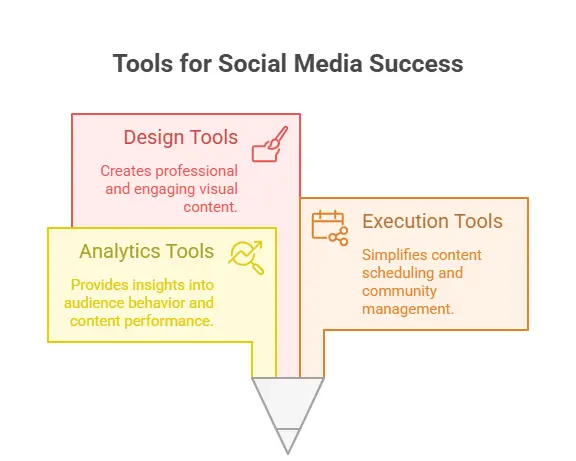
To manage multiple platforms, audiences, and content formats efficiently, a social media manager relies on a set of essential tools. These tools help track performance, publish content, design creatives, and optimize overall social media strategy. Mastering the right tools not only saves time but also ensures consistency and measurable results.
Analytics Tools: Platform Insights
Analytics is the foundation of effective social media management. Most social media managers use platform insights provided by networks like Instagram, Facebook, LinkedIn, and X (Twitter). These built-in analytics tools offer detailed data on reach, impressions, engagement, follower growth, audience demographics, and content performance.
By reviewing platform insights regularly, managers can understand what type of content resonates with their audience, the best posting times, and which formats—such as reels, carousels, or stories—perform best. Analytics also help in measuring campaign success and identifying areas for improvement. Data-driven insights allow social media managers to adjust strategies, refine messaging, and improve overall engagement over time.
Execution Tools: Meta Business Suite
For execution and management, Meta Business Suite is one of the most widely used tools, especially for Facebook and Instagram. It allows social media managers to schedule posts, manage comments and messages, monitor performance, and handle ad-related activities from a single dashboard.
Meta Business Suite simplifies daily workflows by enabling content scheduling in advance, reducing manual effort, and ensuring consistent posting. It also helps manage community interactions by centralizing messages and comments, making it easier to respond promptly. For brands running ads, the tool provides performance data that helps align organic and paid strategies effectively.
Design Tools: Canva
Visual content plays a major role in social media success, and Canva is a go-to design tool for social media managers. It offers ready-made templates for posts, stories, reels covers, banners, and ads, making it easy to create professional-looking designs without advanced graphic design skills.
Canva allows managers to maintain brand consistency by using predefined colour palettes, fonts, and layouts. It also supports quick edits, resizing designs for different platforms, and collaborating with team members. This tool is especially useful for creating engaging visuals efficiently, even with tight deadlines.
Challenges Faced by a Social Media Manager
While social media management can be exciting and creative, it also comes with significant challenges. The fast-paced nature of platforms, constant demand for fresh content, and reliance on ever-changing algorithms make the role both mentally and strategically demanding. Two of the most common challenges social media managers face are burnout and algorithm dependency.
Burnout: The Always-On Pressure
Burnout is a major challenge in social media management. Unlike many roles with fixed working hours, social media often feels “always on.” Audiences engage with content 24/7, and notifications, comments, and messages can arrive at any time. Social media managers are expected to respond quickly, manage crises, and stay active during trends—even outside regular working hours.
The constant need to create new, engaging content also adds pressure. Brainstorming ideas, designing creatives, writing captions, and tracking performance every day can become mentally exhausting. When combined with tight deadlines, client expectations, and performance targets, this continuous cycle can lead to creative fatigue and stress.
To manage burnout, social media managers must set boundaries, use scheduling tools, plan content in advance, and take regular breaks. Time management and realistic expectations are essential for maintaining long-term productivity and creativity in this role.
Algorithm Dependency: Limited Control Over Reach
Another major challenge is heavy dependency on platform algorithms. Social media platforms frequently update their algorithms, affecting how content is distributed and who sees it. A strategy that worked well one month may suddenly stop delivering results due to an algorithm change.
Social media managers often face situations where high-quality content receives low reach or engagement, not because of poor execution but due to algorithm shifts. This lack of control can be frustrating, especially when performance metrics are closely tied to job evaluations or client satisfaction.
To adapt, managers must continuously analyze performance data, test new formats, and stay updated with platform changes. Diversifying content types, focusing on community engagement, and building loyal audiences can help reduce over-reliance on algorithms.
Managing These Challenges
Both burnout and algorithm dependency highlight the need for balance and adaptability. Successful social media managers prioritize mental well-being, plan strategically, and remain flexible in their approach. Continuous learning, experimentation, and clear communication with stakeholders also help manage expectations during performance fluctuations.
Career Growth: Executive → Specialist → Manager
A career in social media management follows a clear growth path, allowing professionals to move from execution-focused roles to strategic and leadership positions. As experience increases, responsibilities shift from handling daily tasks to planning campaigns, managing teams, and driving brand growth through social media.
Social Media Executive
Most professionals start their journey as a Social Media Executive. This role is primarily execution-based and focuses on handling daily social media activities. Executives work under the guidance of senior team members and are responsible for implementing planned strategies.
Key responsibilities include:
-
Posting content across platforms as per the content calendar
-
Responding to comments, messages, and audience interactions
-
Assisting in basic analytics and reporting
-
Coordinating with designers and content teams
This stage is crucial for learning platform behaviour, understanding audience engagement, and building hands-on experience.
Social Media Specialist
With experience and consistent performance, professionals move into the Social Media Specialist role. Specialists take ownership of specific platforms or campaigns and contribute more strategically.
Key responsibilities include:
-
Planning content strategies and campaign ideas
-
Analyzing performance metrics and optimizing content
-
Managing paid and organic social media efforts
-
Collaborating closely with marketing and branding teams
At this stage, professionals develop stronger analytical skills, creative thinking, and platform expertise.
Social Media Manager
The final growth stage is Social Media Manager, a leadership role focused on strategy and management. Managers oversee multiple platforms, campaigns, and team members while aligning social media goals with business objectives.
Key responsibilities include:
-
Developing long-term social media strategies
-
Managing and mentoring executives and specialists
-
Coordinating with clients or internal stakeholders
-
Reporting performance and ROI to leadership
Become an AI-powered Digital Marketing Expert
Master AI-Driven Digital Marketing: Learn Core Skills and Tools to Lead the Industry!
Explore CourseSalary in India
Salary in social media management grows steadily with experience, skills, and specialization. While freshers start with modest packages, consistent performance and niche expertise can significantly increase earning potential over time.
Fresher: Entry-Level Range
Freshers usually enter the field as Social Media Executives or Junior Social Media Managers. At this stage, the role focuses on daily execution, content posting, engagement handling, and basic reporting.
-
Average salary range: ₹2.5 LPA to ₹4 LPA
-
Agency roles may start slightly lower but offer faster learning
-
In-house roles may offer stability and structured growth
Entry-level salaries are designed around learning and exposure rather than immediate high compensation. However, this phase is crucial for building platform knowledge and hands-on experience.
Growth with Specialization
As professionals gain 2–4 years of experience and move into specialist or managerial roles, salaries increase significantly. Specializing in areas such as platform-specific growth (Instagram, LinkedIn, YouTube), paid social media, analytics, or content strategy makes professionals more valuable.
-
Mid-level professionals: ₹5 LPA to ₹8 LPA
-
Senior specialists/managers: ₹9 LPA to ₹15 LPA or higher
Those who can demonstrate measurable results—such as engagement growth, lead generation, and campaign ROI—often earn more. Experienced professionals can also explore freelancing or consulting, which further boosts income potential.
Fresher vs Experienced Social Media Professionals
The responsibilities, expectations, and impact of a social media professional change significantly with experience. While freshers focus on execution and learning, experienced professionals handle strategy, decision-making, and performance ownership. Understanding this difference helps aspiring social media managers set realistic expectations and plan their career growth effectively.
Fresher: Execution and Learning Focus
Freshers usually begin as Social Media Executives or junior-level professionals. Their role is task-oriented and designed to build practical knowledge of platforms and workflows. At this stage, the focus is on understanding how social media works rather than driving large-scale strategy.
Freshers typically handle daily activities such as posting content according to a calendar, responding to comments and messages, and assisting with basic analytics. They may also help with hashtag research, content scheduling, and coordination with designers or copywriters. Most decisions are guided by seniors, allowing freshers to learn best practices, platform rules, and brand tone.
This phase is essential for building foundational skills like time management, content consistency, and basic data interpretation. Mistakes are expected, and learning through execution is encouraged.
Experienced: Strategy, Ownership, and Optimization
Experienced social media professionals, such as specialists or managers, take on a more strategic role. Instead of just executing tasks, they plan content strategies, campaign objectives, and growth initiatives. They analyze performance metrics deeply to understand what drives engagement, reach, and conversions.
Experienced professionals also manage brand voice, handle complex community interactions, and respond to crises or negative feedback with confidence. They collaborate with marketing, sales, and leadership teams to align social media goals with business objectives. Additionally, they mentor juniors, review content, and ensure quality and consistency across platforms.
Their decisions directly impact brand growth, making accountability and analytical thinking critical at this stage.
Role Fit: Is Social Media Management Right for You?
The role of a social media manager is best suited for individuals with creative, energetic, and adaptable personalities. It is a fast-paced position that requires quick thinking, strong communication skills, and the ability to switch between tasks smoothly. If you enjoy working in dynamic environments where no two days are the same, social media management can be a highly fulfilling career.
Creativity is at the core of this role. Social media managers constantly generate ideas for posts, captions, reels, stories, and campaigns that capture attention and encourage engagement. This requires an understanding of audience preferences, visual storytelling, and brand voice. Professionals who enjoy experimenting with formats, playing with trends, and thinking outside the box often thrive in this field.
At the same time, the role demands speed and adaptability. Trends can emerge and disappear within hours, and social media managers need to act quickly to stay relevant. Whether it’s responding to viral moments, handling audience feedback, or adjusting content strategies based on performance, the ability to make fast, informed decisions is essential. Individuals who are comfortable with rapid change and multitasking tend to perform well in this environment.
Strong communication skills also play a major role in determining fit. Social media managers represent a brand’s voice online, interacting with audiences through comments, messages, and posts. They must communicate clearly, professionally, and empathetically while maintaining consistency with brand guidelines. Those who enjoy engaging with people and building online communities often find this aspect rewarding.
However, this role may not suit individuals who prefer highly predictable routines or slow-paced work environments. Social media management requires continuous learning, openness to feedback, and resilience when content performance fluctuates.
How to Become a Social Media Manager
Becoming a social media manager is not about jumping straight into strategy or big campaigns. It is a gradual process that involves learning the basics, gaining real-world exposure, and growing through execution-based roles. This structured path helps you build confidence, creativity, and decision-making skills over time.
Step 1: Learn the Basics of Social Media Marketing
The journey starts with understanding how social media platforms function and why brands use them. You should learn the fundamentals of major platforms such as Instagram, Facebook, LinkedIn, and X (Twitter). This includes knowing different content formats (posts, reels, stories, carousels), platform algorithms, hashtag usage, engagement metrics, and audience behaviour.
At this stage, it’s also important to understand basic concepts like brand voice, content calendars, community management, and performance tracking. You don’t need advanced tools initially—experimenting with your own social media accounts can help you understand what works and what doesn’t. Online courses, blogs, and tutorials can strengthen your foundation and give you industry context.
Step 2: Gain Hands-On Experience Through an Internship
After learning the basics, practical experience becomes essential. Internships bridge the gap between theory and real-world execution. As an intern, you’ll likely assist with tasks such as content scheduling, caption writing, comment moderation, hashtag research, and performance reporting.
Internships also expose you to teamwork and workflows. You’ll learn how content is approved, how deadlines are managed, and how strategies are adjusted based on performance. This phase is crucial because it teaches you how social media management works in real business environments, whether in agencies or in-house teams.
Step 3: Enter an Execution-Based Role
With foundational knowledge and internship experience, you can move into an execution role such as social media executive or junior social media manager. Here, you’ll be responsible for day-to-day tasks like posting content, engaging with audiences, tracking insights, and supporting campaigns.
This role helps you refine your creative thinking, improve time management, and understand analytics more deeply. Over time, consistent execution and learning prepare you for strategic and leadership responsibilities.
Join Our Online Digital Marketing Course & Learn the Fundamentals!
Conclusion
A career as a social media manager is dynamic, creative, and constantly evolving. From managing daily engagement and creating content to analyzing performance and staying ahead of trends, the role offers hands-on exposure to how brands build visibility and connect with audiences online. It is a profession that blends creativity with strategy, making it both challenging and rewarding.
For beginners, social media management provides a strong entry point into digital marketing, with clear growth from execution roles to specialist and managerial positions. With consistent learning, adaptability, and a results-driven mindset, professionals can build long-term careers in this field. If you enjoy fast-paced environments, creative problem-solving, and working closely with digital audiences, social media management can be a fulfilling and future-ready career path.