Table of Contents
Key Takeaways:
- Emergency care helps save lives in hospitals
- First aid and CPR are very important skills
- Quick action is needed in all emergencies
- Good communication helps fast treatment
- Infection control keeps patients and staff safe
Introduction
Basic emergency care is very important for all healthcare workers. It helps them act quickly during sudden health problems or accidents. In hospitals, emergencies can happen anytime. Patients may need fast help for injuries, breathing problems, bleeding, or sudden illness. Knowing basic emergency care helps workers save lives and reduce risk. This blog explains simple emergency steps every healthcare worker should know.
Explore Your Future in Hospital Administration! Enroll now
What is Basic Emergency Care?
Basic emergency care means giving quick help to a patient in a sudden health problem or accident. It is the first help given before full medical treatment.
👉 It helps save life and reduce danger.
Basic emergency care is used when:
- A person is injured
- A person is unconscious
- A person has trouble breathing
- A person is bleeding heavily
- A person suddenly becomes very sick
👉 Quick action is very important in emergencies.
Why It Is Important
- Saves life in emergency situations
- Reduces serious health risks
- Helps patient stay stable
- Gives time for doctors to treat
👉 Fast help can make a big difference.
Who Should Know It
- Doctors
- Nurses
- Hospital staff
- First aid workers
- Healthcare students
👉 Every healthcare worker should know basic emergency care.
What It Includes
- First aid treatment
- CPR (basic life support)
- Controlling bleeding
- Helping breathing problems
- Calling emergency help
👉 It is simple but very important care steps.
Importance of Emergency Response in Healthcare
Emergency response means giving fast help when a patient is in danger. In hospitals, quick action can save lives and prevent serious problems.
👉 Fast response is very important in healthcare.
Saves Patient Lives
- Quick help can save a life
- Stops condition from getting worse
- Helps in critical situations like heart attack or accident
👉 Fast action can prevent death.
Reduces Health Risks
- Stops small problems from becoming big
- Controls bleeding or breathing issues quickly
- Helps patient stay stable
👉 Early care reduces danger.
Improves Recovery
- Early treatment helps faster healing
- Reduces complications
- Patient gets better quickly
👉 Quick care improves recovery speed.
Helps Doctors and Nurses
- Gives time to prepare proper treatment
- Reduces pressure during emergencies
- Helps team work better
👉 Emergency response supports hospital staff.
Increases Patient Safety
- Patients feel more safe in hospitals
- Reduces chances of mistakes
- Ensures proper care at the right time
👉 Safety improves with fast action.
Better Hospital Performance
- Smooth handling of emergencies
- Improves hospital reputation
- Builds patient trust
👉 Good response improves hospital quality.
Essential First Aid Skills for Healthcare Workers
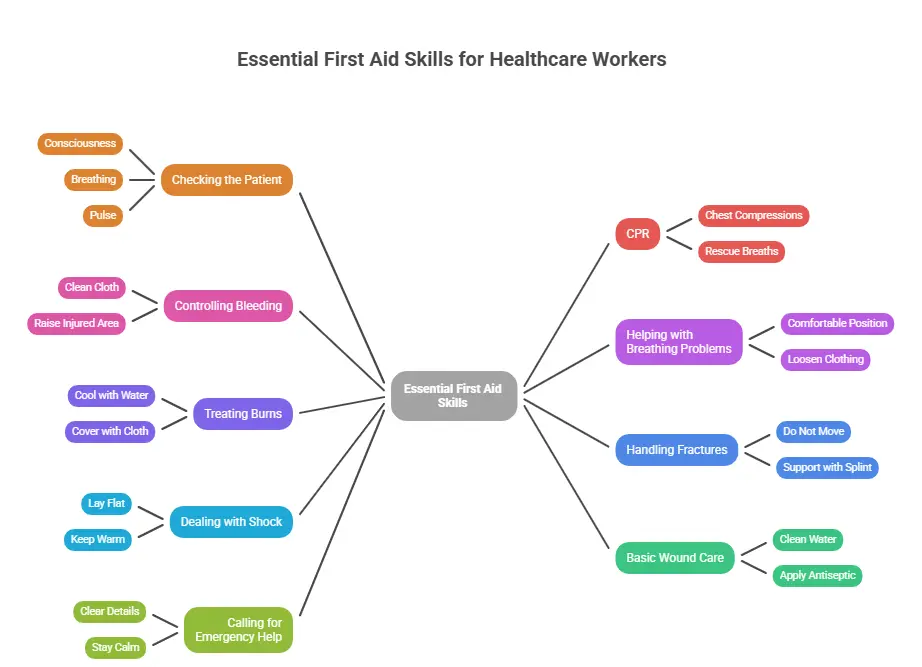
First aid means giving basic help to a patient before full medical treatment. Healthcare workers must know simple first aid skills to handle emergencies quickly.
1. Checking the Patient
- First, check if the patient is conscious
- Ask simple questions
- Check breathing and pulse
- Look for injuries or bleeding
👉 This helps understand the patient’s condition.
2. CPR (Cardiopulmonary Resuscitation)
CPR is used when a person is not breathing.
- Press the chest to help blood flow
- Give rescue breaths if trained
- Continue until help arrives
- Helps restart breathing and heart function
👉 CPR can save lives in emergencies.
3. Controlling Bleeding
- Press the wound with clean cloth
- Raise the injured area if possible
- Apply bandage or dressing
- Do not remove soaked cloth, add more on top
👉 This helps stop blood loss.
4. Helping with Breathing Problems
- Make the patient sit in a comfortable position
- Loosen tight clothing
- Give oxygen if available
- Call for emergency help
👉 This helps the patient breathe better.
5. Treating Burns
- Cool the burn with clean water
- Do not apply oil or cream
- Cover with clean cloth
- Avoid touching the burned area
👉 Proper care reduces pain and damage.
6. Handling Fractures (Broken Bones)
- Do not move the injured part too much
- Support the area with a splint
- Keep patient still
- Take patient to hospital carefully
👉 This prevents further injury.
7. Dealing with Shock
Shock happens when the body is not getting enough blood flow.
- Lay the patient flat
- Keep legs slightly raised
- Keep patient warm
- Do not give food or drink
👉 Quick care can prevent danger.
8. Basic Wound Care
- Clean small wounds with clean water
- Apply antiseptic if available
- Cover with bandage
- Keep wound clean and dry
👉 This helps prevent infection.
9. Calling for Emergency Help
- Contact doctors or emergency team quickly
- Give clear patient details
- Stay calm and explain situation
- Follow instructions from seniors
👉 Fast communication is very important.
CPR Basics Everyone Should Know
CPR (Cardiopulmonary Resuscitation) is a simple emergency skill. It is used when a person is not breathing or the heart stops. CPR helps save life until medical help arrives.
👉 CPR can save a person’s life in an emergency.
What is CPR?
- CPR is a first aid method
- It helps restart breathing and blood flow
- It is used in emergency situations
- It is done before doctors arrive
👉 CPR gives quick life support.
When to Use CPR
CPR is needed when a person:
- Is not breathing
- Has no pulse
- Suddenly collapses
- Is unconscious and not responding
👉 Quick action is very important.
Steps of CPR (Simple Method)
1. Check the Person
- Check if the person is conscious
- Shake gently and call their name
- Look for breathing
👉 First check the situation.
2. Call for Help
- Call emergency services immediately
- Ask someone nearby for help
- Inform doctors or hospital staff
👉 Help should come fast.
3. Start Chest Compressions
- Place hands in the center of the chest
- Push hard and fast
- Keep rhythm steady
- Do not stop until help arrives
👉 Chest pressure helps blood flow.
4. Give Rescue Breaths (If Trained)
- Tilt the head back gently
- Give mouth-to-mouth breaths
- Watch chest rise
- Continue with compressions
👉 Breathing helps oxygen flow.
5. Continue CPR
- Keep doing CPR without stopping
- Only stop when medical help arrives
- Or when the person starts breathing
👉 Continuous effort is very important.
Handling Common Medical Emergencies
Medical emergencies are sudden health problems that need quick action. Healthcare workers must know simple steps to handle them safely.
👉 Fast action can save a patient’s life.
1. Fainting (Sudden Loss of Consciousness)
- Make the patient lie down
- Lift legs slightly up
- Loosen tight clothes
- Give fresh air
- Check breathing
👉 Helps the person recover quickly.
2. Heavy Bleeding
- Press the wound firmly with clean cloth
- Do not remove soaked cloth
- Raise the injured area
- Apply bandage if possible
- Call for emergency help
👉 Stops blood loss and saves life.
3. Breathing Difficulty
- Help patient sit upright
- Loosen tight clothing
- Give oxygen if available
- Keep patient calm
- Call doctor immediately
👉 Helps patient breathe better.
4. Heart Attack Symptoms
- Chest pain or pressure
- Shortness of breath
- Sweating and weakness
What to do:
- Keep patient calm
- Make them sit comfortably
- Call emergency help fast
- Do not give food or drink
👉 Fast action is very important.
5. Seizures (Fits)
- Do not hold the patient
- Remove sharp objects nearby
- Turn patient to side
- Keep head safe
- Do not put anything in mouth
👉 Protect patient from injury.
6. Burns
- Pour cool clean water on burn
- Do not apply oil or cream
- Cover with clean cloth
- Do not touch blisters
👉 Reduces pain and damage.
7. Fractures (Broken Bones)
- Do not move injured area
- Support with cloth or splint
- Keep patient still
- Take to hospital carefully
👉 Prevents further injury.
8. Shock Condition
- Lay patient flat
- Raise legs slightly
- Keep body warm
- Do not give food or water
- Call emergency help
👉 Helps stabilize the patient.
9. Poisoning
- Call emergency services immediately
- Do not make patient vomit
- Give clean water only if advised
- Take poison details if possible
👉 Quick treatment is very important.
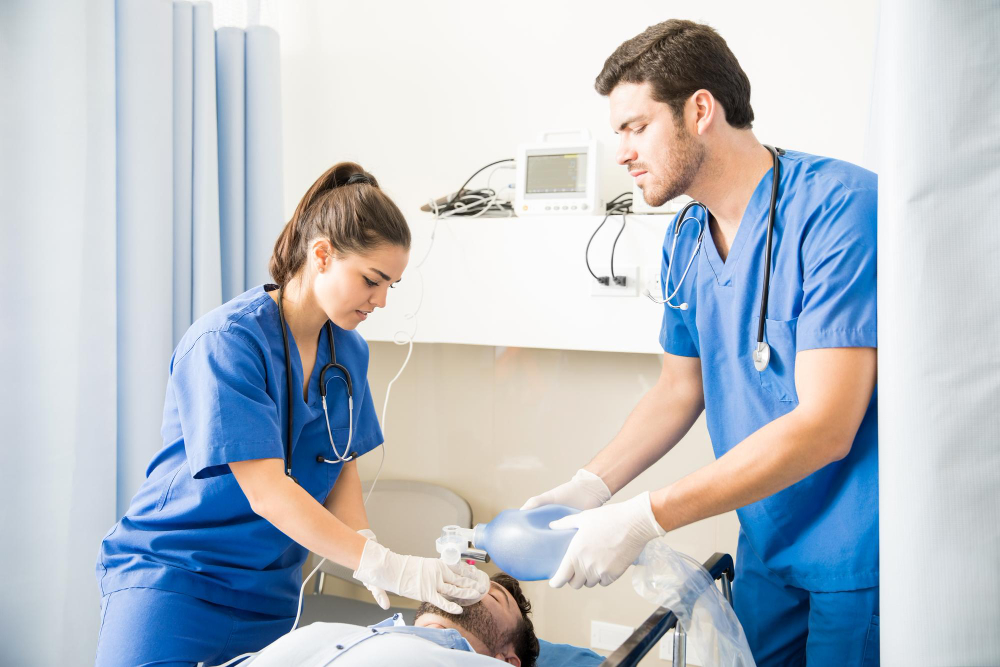
Infection Control and Safety Measures
Infection control means stopping the spread of germs in hospitals. Safety measures help protect patients, doctors, nurses, and all healthcare workers from infections.
👉 Good infection control keeps hospitals clean and safe.
Why Infection Control is Important
- Stops spread of diseases
- Protects patients and staff
- Keeps hospital environment clean
- Reduces hospital infections
- Improves patient safety
👉 Clean care saves lives.
Hand Hygiene
- Wash hands often with soap and water
- Use hand sanitizer when needed
- Clean hands before and after patient care
- Do not touch face with dirty hands
👉 Clean hands prevent infection.
Use of Gloves and Masks
- Wear gloves while touching patients
- Use masks in infection areas
- Change gloves after each patient
- Do not reuse disposable items
👉 Protective items stop germs.
Cleaning and Disinfection
- Clean hospital surfaces daily
- Disinfect medical tools properly
- Clean beds, tables, and equipment
- Use approved cleaning chemicals
👉 Clean environment reduces germs.
Safe Disposal of Waste
- Separate medical waste properly
- Use bins for different waste types
- Do not mix sharp and normal waste
- Dispose safely according to rules
👉 Safe waste handling is very important.
Personal Protective Equipment (PPE)
PPE includes:
- Gloves
- Masks
- Face shields
- Gowns
👉 PPE protects healthcare workers from infection.
Patient Safety Measures
- Keep patients in clean rooms
- Isolate infected patients if needed
- Monitor patient health regularly
- Avoid cross infection between patients
👉 Safety protects everyone in hospital.
Respiratory Hygiene
- Cover mouth while coughing or sneezing
- Use tissue or elbow
- Dispose tissues safely
- Wear mask if sick
👉 Prevents spread of air infections.
Safe Handling of Equipment
- Clean instruments after use
- Sterilize medical tools properly
- Do not share unclean equipment
- Store tools safely
👉 Safe tools reduce infection risk.
Emergency Communication Protocols
Emergency communication means sharing important information quickly during a medical emergency. In hospitals, clear and fast communication helps save lives and avoid confusion.
👉 Good communication is very important in emergencies.
Why Emergency Communication is Important
- Helps save patient life quickly
- Reduces confusion in hospital
- Helps doctors and nurses act fast
- Improves teamwork
- Prevents mistakes
👉 Fast communication improves patient safety.
Who Should Be Contacted First
- Doctor on duty
- Emergency team
- Nurse in charge
- Hospital control room
- Ambulance (if needed)
👉 Always contact the right person quickly.
How to Give Clear Information
- Speak slowly and clearly
- Give patient name and age
- Explain the problem simply
- Share symptoms (breathing, bleeding, pain)
- Give exact location of patient
👉 Clear details help faster treatment.
Use of Emergency Codes
Many hospitals use simple codes like:
- Code Red (fire or danger)
- Code Blue (patient emergency)
- Code Yellow (urgent case)
👉 Codes help staff understand quickly.
Calling Emergency Services
- Dial emergency number immediately
- Give correct hospital address
- Explain patient condition
- Stay on call until guided
👉 Quick calling saves time.
Internal Hospital Communication
- Use intercom or phone system
- Inform nearest nurse or staff
- Send message to emergency team
- Follow hospital reporting system
👉 Internal communication should be fast.
Written or Digital Reporting
- Record emergency details
- Write time and situation
- Update patient condition
- Use hospital software if available
👉 Records help future treatment.
Team Communication
- Share information with all staff
- Work together during emergency
- Follow instructions from senior doctor
- Avoid confusion or delay
👉 Teamwork improves emergency care.
Stay Calm During Communication
- Do not panic
- Speak clearly
- Listen carefully
- Follow instructions properly
👉 Calm communication avoids mistakes.
Explore Your Future in Hospital Administration! Enroll now
Conclusion
Emergency care is very important in healthcare. It helps save lives during accidents and sudden illness. Healthcare workers must know basic emergency steps like first aid, CPR, infection control, and quick communication. Fast and simple action can make a big difference in patient safety. Good training, calm behavior, and teamwork help handle emergencies better.
Hospital Administration Course with Assured Career Growth
Hospital Administration Course by Entri App: Master essential healthcare management skills, gain certification, and secure top roles in leading hospitals
Join Now!Frequently Asked Questions
What is basic emergency care?
Basic emergency care means giving quick help to a patient who is in danger. It is the first help given before full medical treatment.
- It is used in sudden illness or accidents
- It helps save life and reduce damage
- It is done before doctor treatment
👉 It is fast and simple life-saving care.
Why is emergency care important in healthcare?
Emergency care is very important because it helps patients in critical condition.
- Saves patient lives
- Prevents condition from getting worse
- Helps doctors start treatment quickly
- Improves patient safety
👉 Quick action can save life.
What are common medical emergencies?
Healthcare workers often see many emergencies such as:
- Heavy bleeding
- Breathing problems
- Fainting
- Heart attack
- Seizures (fits)
- Burns and injuries
👉 Each case needs fast action.
What is CPR and why is it important?
CPR means Cardiopulmonary Resuscitation. It is used when a person stops breathing or the heart stops.
- Helps restart breathing
- Helps blood flow in the body
- Done until medical help arrives
- Can save life in emergency
👉 CPR is a very important life-saving skill.
What are basic first aid skills?
First aid means giving simple treatment before doctors arrive.
- Stopping bleeding
- Cleaning and covering wounds
- Helping breathing problems
- Treating burns
- Supporting injuries
👉 First aid helps prevent serious damage.
What should healthcare workers do first in an emergency?
The first steps are very important.
- Stay calm
- Check patient condition
- Call for help quickly
- Start basic care like CPR or first aid
- Inform emergency team
👉 Fast action is very important.
Why is infection control important in emergencies?
Infection control stops the spread of germs in hospitals.
- Protects patients and staff
- Keeps hospital clean
- Prevents disease spread
- Improves safety
Important steps include:
- Hand washing
- Wearing gloves and masks
- Cleaning tools and surfaces
👉 Clean care saves lives.
Who should know basic emergency care?
Everyone working in healthcare should know emergency care.
- Doctors
- Nurses
- Hospital staff
- Medical students
- First aid workers
👉 It helps everyone handle emergencies safely and quickly.