Table of Contents
Introduction
Early childhood is important for brain development. Kids learn quickly between 2-6 years. Learning happens through play and communication daily. Healthy habits build strong brain connections naturally.
Simple activities improve learning and memory greatly. Creativity and emotional growth also improve naturally. Parents play an important role during these years.
Key Takeaways
- Early childhood affects brain development.
- Play improves learning and thinking skills.
- Communication supports language development naturally.
- Healthy habits improve memory. It also increases focus.
- Nutrition and sleep are important.
- Positive parenting provide emotional growth.
Unlock your passion for education and shape young minds as a Montessori teacher!
Kids learn a lot during childhood. Language and movement develop very quickly. Problem-solving and emotional skills also improve gradually. Healthy routines build stronger learning foundations naturally.



Get Certified & Start Your Montessori Career
Montessori Teacher Training Course by Entri App: Gain expert skills, earn certification, and kickstart your teaching career.
Join Now!Frequently Asked Questions
Why is brain development important during ages 2–6?
Brain development is very rapid during early childhood years. Learning, communication, emotional growth, memory, and social skills all develop strongly during this stage.
Which activities improve brain development in young children?
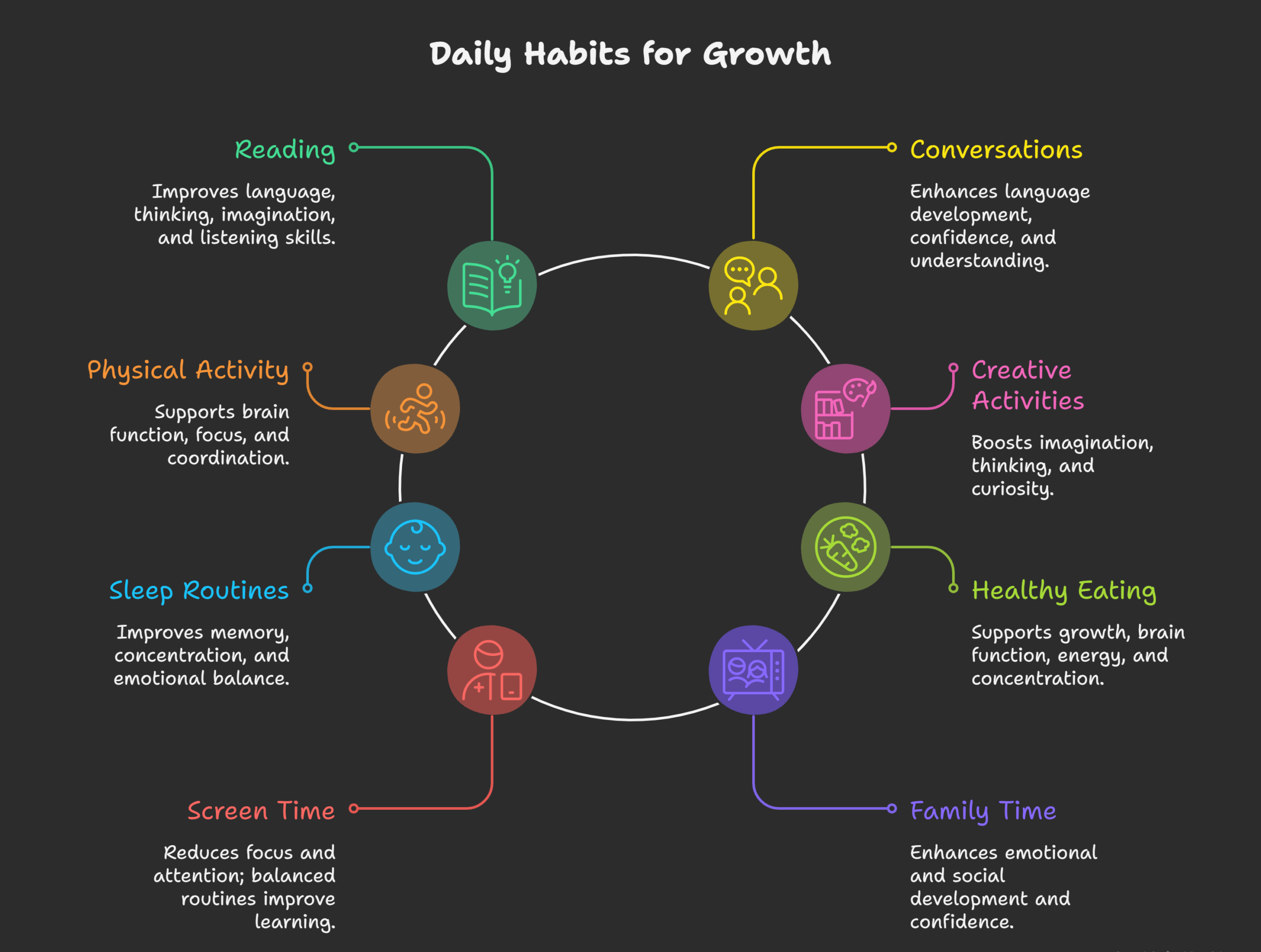
Activities like reading, puzzles, music, storytelling, outdoor play, and creative games support healthy brain growth. These activities improve memory, curiosity, concentration, and problem-solving skills naturally.
How does play help brain development?
Play improves creativity, imagination, communication, and emotional development greatly. Active play also strengthens thinking skills and social interaction naturally.
Why is reading important for children aged 2–6?
Reading improves vocabulary, listening abilities, imagination, and memory skills strongly. Daily reading also supports language development and communication confidence naturally.
How does nutrition affect brain development?
Nutritious foods provide energy for memory, concentration, and healthy brain function. Balanced diets support emotional balance and learning abilities during childhood.
Why is sleep important for brain growth?
Good sleep improves memory, learning, concentration, and emotional regulation greatly. Well-rested children usually show better attention and learning performance daily.
Can screen time affect brain development?
Excessive screen time may reduce focus, communication, and sleep quality negatively. Balanced screen habits support healthier emotional and intellectual development.
How can parents support brain development daily?
Parents can encourage reading, conversations, creative play, healthy routines, and emotional support regularly. Positive family interaction also improves confidence and communication skills naturally.
Which foods are best for brain development in children?
Healthy foods like fruits, vegetables, eggs, nuts, whole grains, and milk products support healthy brain growth. Proper hydration is also very important for concentration and learning.
Why are early childhood years important for learning?
Most brain growth happens during early childhood years. Strong learning foundations for future academic and emotional development are built during this stage.