
Table of Contents
Color matching activities build early learning skills. Children learn through observation and play. These activities strengthen color recognition. They also improve concentration and memory. Montessori methods make learning hands-on. Children learn best through exploration.
Key Takeaways
- Builds color recognition skills.
- Strengthens visual discrimination.
- Improves observation abilities.
- Supports language development.
- Encourages independent learning.
- Improves concentration levels.
- Strengthens memory skills.
- Makes learning enjoyable.
- Supports school readiness.
- Fits home and classroom settings.
Unlock your passion for education and shape young minds as a Montessori teacher!
🌟 Introduction
Colors surround children every day. They appear in toys. Colors appear in books. They appear in nature and during play. Early exposure supports learning.
Preschool years are important. Children learn rapidly during this stage. Sensory experiences support development. Hands-on activities improve understanding. Learning happens through exploration. Play remains an important tool.
Color matching activities support many skills. Children identify similarities. They identify differences and compare objects carefully. They sort items accurately. Observation improves naturally.
Montessori education values sensory learning. Children learn through direct experiences. Activities encourage independence. Materials support self-discovery. Learning feels meaningful. Confidence grows steadily.
Color matching activities require simple materials. Most activities need little preparation. Children usually enjoy participation. Parents can use them easily. Teachers use them regularly. Learning becomes enjoyable and effective.
🎨 Why Color Recognition Matters
1: What is the primary focus of the first plane of development in the Montessori method?
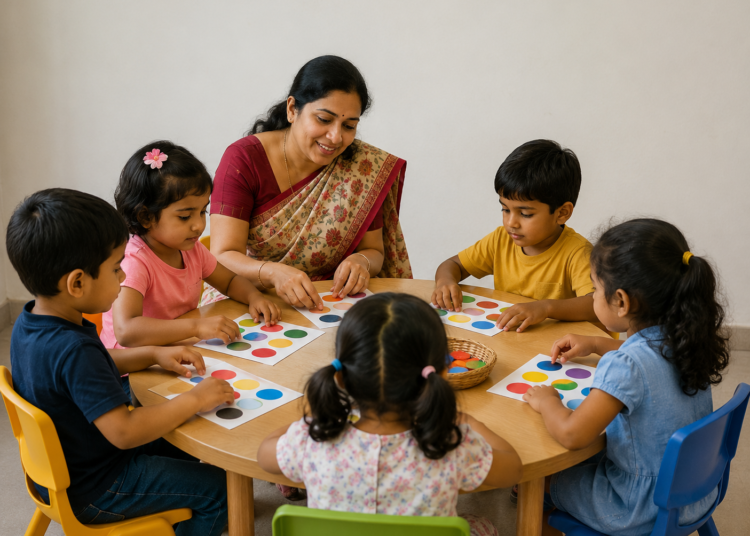
Color recognition is an early learning skill. Children identify colors daily. They notice colorful objects. They compare different shades and learn color names. Recognition improves gradually.
Color recognition supports communication. Children describe objects accurately. Vocabulary develops naturally. Conversations become more detailed. Expression becomes easier. Confidence improves steadily.
Children use color recognition everywhere. They sort toys correctly. They follow classroom instructions. Kids complete learning activities and organize materials independently. Everyday tasks become easier.
Strong color recognition supports future learning. Reading materials contain colors. Mathematics uses color-coded resources. Science activities use observation. Art projects require color awareness. Early practice creates advantages.
🧠 How does Color Recognition Support Brain Development?
Young brains form connections rapidly. Sensory experiences strengthen these connections. Color activities provide stimulation. Observation becomes more detailed. Information processing improves. Learning becomes more effective.
Children compare visual information constantly. They notice similarities and differences. They identify patterns. Pattern recognition supports thinking. Cognitive development improves naturally.
Color recognition also strengthens memory. Children remember color names. They remember matching activities. Repetition improves retention. Learning becomes more permanent. Confidence increases over time.
Benefits for Brain Development
- Supports visual processing.
- Strengthens memory skills.
- Improves pattern recognition.
- Encourages observation.
- Supports cognitive growth.
- Improves learning readiness.
🗣️ How does Color Recognition Improve Language Skills?
Colors provide new vocabulary. Children learn color names. They describe objects frequently. Communication becomes more detailed. Speaking confidence increases. Language develops naturally.
Teachers ask descriptive questions. Children answer thoughtfully. Discussions create learning opportunities. New words appear regularly. Vocabulary expands gradually. Communication improves through practice.
Children also learn comparisons. They discuss similarities and differences. They explain observations clearly. Language becomes more expressive. Conversations become richer.
Language Skills Supported
- Color vocabulary.
- Descriptive language.
- Speaking confidence.
- Listening abilities.
- Communication skills.
- Verbal expression.
🎯 Why is Color Recognition Important for School Readiness?
Many classroom activities involve colors. Teachers use color instructions frequently. Children must follow directions. Recognition supports participation. Learning becomes easier. Confidence improves naturally.
Art activities require color knowledge. Sorting activities use colors often. Educational materials contain colors. Children interact with colors daily. Recognition supports classroom success. School readiness improves steadily.
Color recognition also supports organization. Children sort materials correctly. They complete tasks independently. They understand instructions quickly. Learning becomes more efficient. Independence develops naturally.
School Readiness Benefits
- Supports classroom participation.
- Improves instruction following.
- Encourages independence.
- Strengthens organization skills.
- Improves task completion.
- Builds learning confidence.
📊 Why Color Recognition Matters
| Area | Benefit |
|---|---|
| Language Development | Better communication. |
| Brain Development | Stronger visual processing. |
| School Readiness | Improved participation. |
| Daily Activities | Easier organization. |
| Learning Confidence | Greater independence. |
Get Certified & Start Your Montessori Career
Montessori Teacher Training Course by Entri App: Gain expert skills, earn certification, and kickstart your teaching career.
Join Now!🌈 Benefits of Color Matching Activities
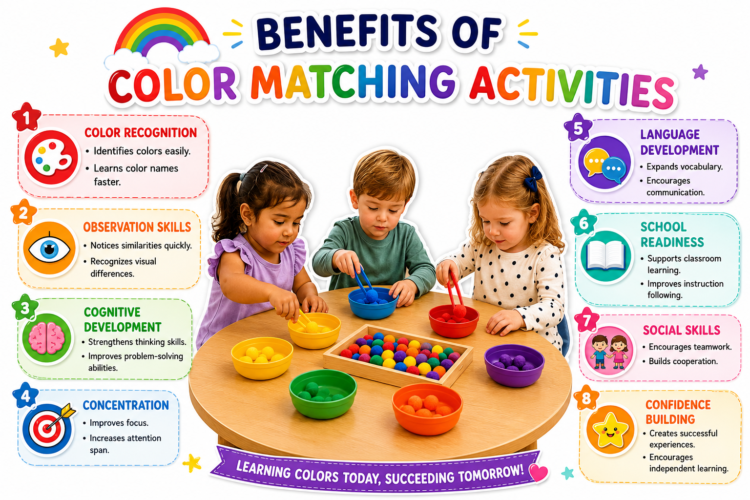
Color matching activities offer many benefits. Learning remains playful and engaging. Children stay actively involved. Several skills develop together. Progress occurs naturally. Activities remain enjoyable.
👀 How do Color Matching Activities Improve Observation Skills?
Observation plays a major role. Children compare objects carefully. They notice color differences. They identify matching items. Small details become important. Observation improves steadily.
Matching activities encourage attention. Children focus on tasks. They search carefully. They compare visual information. Accuracy improves gradually. Learning becomes more effective.
Observation skills support future learning. Science requires observation. Mathematics requires observation. Reading also requires observation. Early practice creates advantages. School tasks become easier.
Observation Benefits
- Improves attention to detail.
- Encourages careful comparison.
- Supports visual discrimination.
- Strengthens accuracy.
- Builds observation habits.
- Improves learning readiness.
🧠 How do Color Matching Activities Improve Thinking Skills?
Matching requires decision-making. Children compare different options. They identify correct matches. They evaluate information carefully. Reasoning skills improve naturally. Thinking becomes more organized.
Children learn classification skills. They group similar items. They recognize patterns and sort objects correctly. Organization improves gradually. Logical thinking develops steadily.
Problem-solving also improves. Children analyze visual clues. They eliminate incorrect choices. They identify solutions independently. Confidence grows through success. Learning feels rewarding.
Thinking Benefits
- Improves logical reasoning.
- Supports classification skills.
- Encourages decision-making.
- Develops problem-solving.
- Strengthens pattern recognition.
- Builds independent thinking.
🎯 How do Color Matching Activities Improve Concentration?
Color matching requires focus. Children pay attention carefully. They compare objects repeatedly. Distractions become less important. Concentration improves naturally. Attention spans grow longer.
Children remain engaged during activities. Matching feels like a game. Success encourages participation. Motivation stays high. Practice strengthens focus. Learning becomes more effective.
Strong concentration benefits future learning. Reading requires focus. Writing requires focus. Mathematics requires focus. Early practice supports success. Classroom performance improves.
Concentration Benefits
- Improves focus.
- Encourages patience.
- Builds persistence.
- Reduces distractions.
- Strengthens attention control.
- Supports classroom learning.
🤝 How do Color Matching Activities Support Social Learning?
Many activities involve groups. Children work together often. They share materials fairly. They discuss color choices. Communication improves naturally. Social confidence increases.
Group activities encourage cooperation. Children take turns. They listen carefully. They help classmates occasionally. Positive interactions increase. Learning becomes collaborative.
Social skills support classroom success. Children participate confidently. They communicate effectively. They build friendships naturally. Group learning feels enjoyable. Confidence grows steadily.
Social Benefits
- Encourages teamwork.
- Supports communication.
- Builds cooperation.
- Improves listening skills.
- Strengthens participation.
- Develops confidence.
Get Certified & Start Your Montessori Career
Montessori Teacher Training Course by Entri App: Gain expert skills, earn certification, and kickstart your teaching career.
Join Now!Frequently Asked Questions
What are color matching activities for preschoolers?
Color matching activities help children identify, compare, and match similar colors. These activities make learning fun while strengthening observation, concentration, and visual discrimination skills.
Why is color recognition important for preschoolers?
Color recognition is an essential early learning skill for young children. It supports communication, visual development, classroom learning, and everyday problem-solving activities.
At what age should children start learning colors?
Most children begin recognizing colors between the ages of two and four. Regular exposure to colorful objects and playful activities helps improve their understanding over time.
How do color matching activities support cognitive development?
Children sort, compare, and classify objects during color matching activities. These processes strengthen memory, logical thinking, pattern recognition, and problem-solving abilities.
Can color matching activities improve concentration?
Yes, color matching activities require children to focus carefully on details. Repeated practice helps improve attention span, patience, and task completion skills.
What materials can be used for color matching activities?
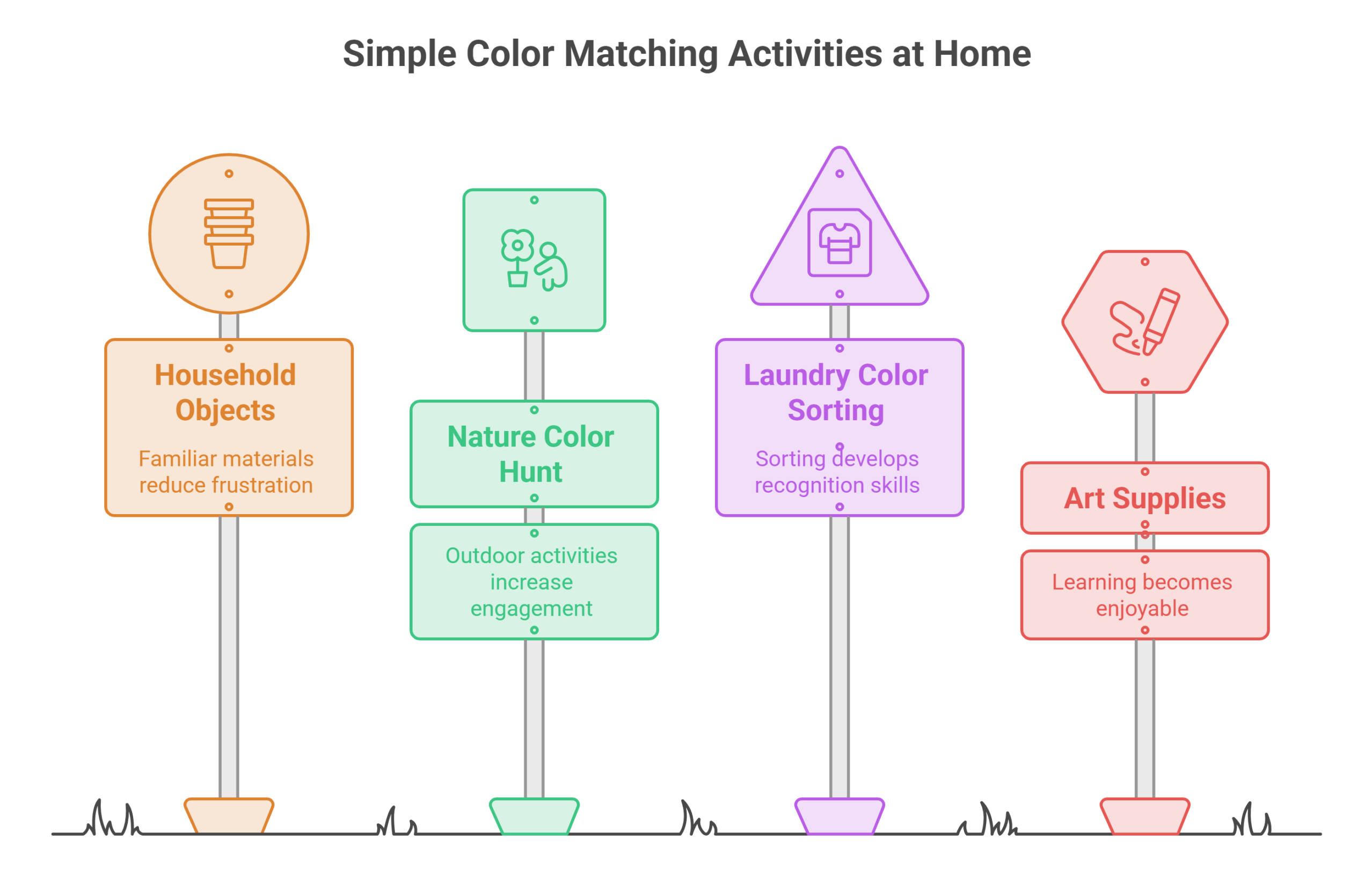
Many simple materials can be used for color matching games. Colored blocks, cups, toys, paper pieces, buttons, pom-poms, and household objects work very well.
How does the Montessori approach teach colors?
The Montessori approach teaches colors through hands-on learning and sensory exploration. Children learn by matching, sorting, comparing, and identifying colors independently.
What are Montessori Color Tablets?
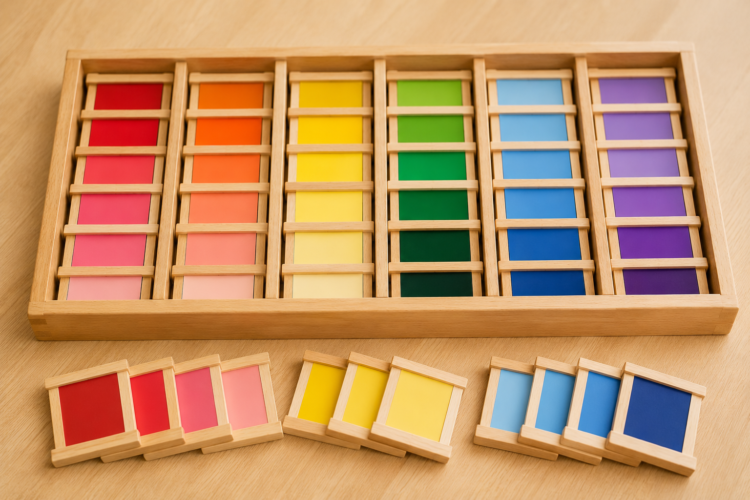
Montessori Color Tablets are specially designed learning materials used for color education. They help children recognize colors, compare shades, and develop visual discrimination skills.
Can color matching activities be done at home?
Yes, color matching activities are easy to conduct at home using everyday objects. Parents can create simple games that support learning through play and exploration.
What skills do children develop through color matching activities?
Children develop color recognition, observation, concentration, and classification skills through these activities. They also improve vocabulary, communication, confidence, and school readiness skills.