Table of Contents
Key Takeaways
Introduction
Muscle injuries happen when muscles are stretched too much or used the wrong way. They can cause pain, swelling, or stiffness.
These injuries can happen in exercise, sports, or normal daily work.
It is important to know about them so we can avoid them and keep our body safe and healthy.
- Muscles can get hurt if used too much
- It can cause pain or tight feeling
- It can happen in sports or daily work
- Wrong movement can cause injury
- Safe habits stop injuries
- Careful movement keeps body healthy
Become a General Fitness Trainer and turn your passion into a Profession!
Why Muscle Injuries Occur
Muscle injuries happen when muscles are not used in the right way. They can also happen when the body is tired or forced too much.
These injuries are common in sports, exercise, and daily activities. Simple mistakes can lead to pain or strain in muscles.
🔷Overuse of Muscles
Using muscles too much without rest can cause injury.
👉Example:
- Long workout without break
- Repeating same movement many times
👉Result:
- Muscle pain
- Muscle tiredness
🔷Sudden Movements
Fast or sudden movements can hurt muscles.
👉Example:
- Quick running without warm-up
- Sudden jumping or lifting
👉Result:
- Muscle pull
- Sharp pain
🔷Not Warming Up
Cold muscles get hurt easily.
👉Example:
- Starting exercise directly
👉Result:
- Muscle strain
- Stiff body
🔷Wrong Exercise Technique
Doing exercise in wrong way can damage muscles.
👉Example:
- Wrong lifting posture
- Bad body form during workout
👉Result:
- Injury risk increases
- Muscle stress
🔷Muscle Fatigue (Tired Muscles)
Tired muscles are weak and easily get injured easily.
👉Example:
- Exercising when body is very tired
👉Result:
- Loss of control
- Higher injury chance
🔷Lack of Flexibility
Stiff muscles get injured faster.
👉Example:
- No stretching before activity
👉Result:
- Tight muscles
- Easy strain
🔷Heavy Load on Body
Lifting too much heavy weight can harm muscles.
👉Example:
- Carrying heavy bags or weights
👉Result:
- Muscle pull
- Back or shoulder pain
Most Common Muscle Injuries
Muscle injuries are very common in daily life, sports, and exercise. They happen when muscles are stretched too much, pulled, or used in the wrong way.
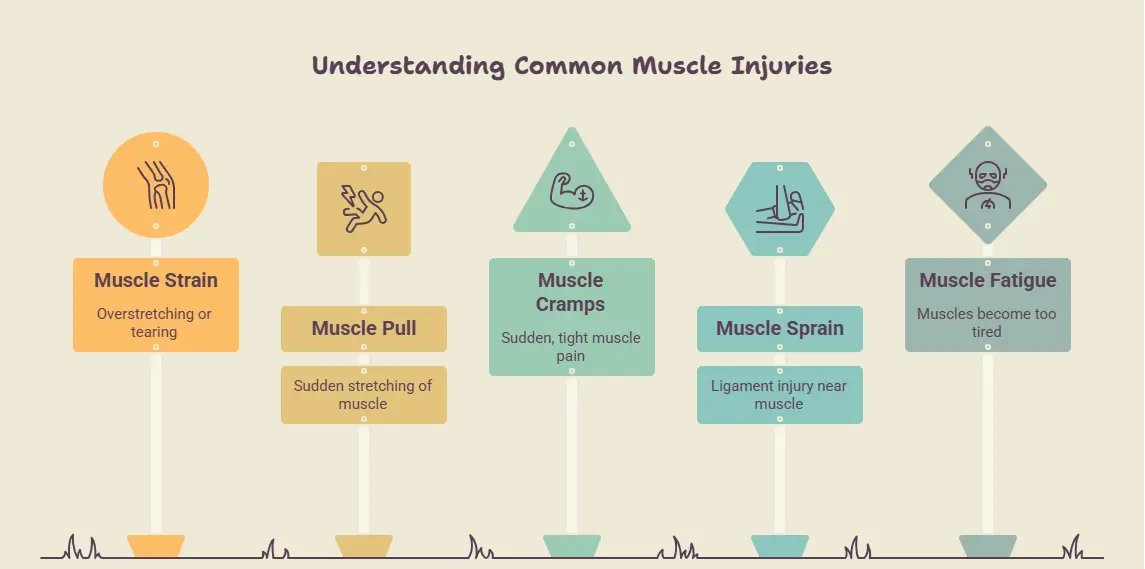
🔶Muscle Strain
Muscle strain means stretching the muscles too much or slightly torn.
👉Example:
- Heavy lifting
- Sudden running or jumping
👉Signs:
- Pain in muscle
- Tight feeling
- Weak movement
🔶Muscle Pull
Mucsle pull may happens when the muscle is stretched suddenly.
👉Example:
- Fast sprinting
- Sudden body movement
👉Signs:
- Sharp pain
- Difficulty moving
- Muscle stiffness
🔶Muscle Cramps
Cramps are sudden tight pain in muscles.
👉Example:
- Exercise without water
- Long walking or standing
👉Signs:
- Sudden pain
- Hard muscle feel
- Temporary stiffness
🔶Muscle Sprain (Related Injury)
Sprain happens when ligaments near muscles get stretched or injured.
👉Example:
- Twisting ankle
- Falling suddenly
👉Signs:
- Swelling
- Pain near joint
- Weak movement
🔶Muscle Fatigue Injury
This happens when muscles become too tired.
👉Example:
- Long workout without rest
👉Signs:
- Weakness
- Heavy feeling
- Slow movement
Warning Signs of Injury
Your body always gives small signals when something is wrong. These signs show that a muscle or body part may be getting hurt.
🔵Pain in the Muscle
Muscle pain is one of the first warning sign.
It feels like:
- Sharp pain
- Dull pain
- Pain while moving
👉Means:
- Muscle is stressed or injured
🔵Swelling
The area looks bigger than normal.
It feels like:
- Puffy muscle
- Tight skin
👉Means:
- Body is trying to heal injury
🔵Stiffness
Muscle feels tight and hard to move.
It feels like:
- Difficulty in bending
- Tight movement
👉Means:
- Muscle is overworked or strained
🔵Weakness
Muscle does not feel strong.
It feels like:
- Less power
- Trouble lifting or moving
👉Means:
- Muscle is tired or damaged
🔵Limited Movement
You cannot move normally.
It feels like:
- Hard to stretch
- Pain while moving
👉Means:
- Injury may be present
🔵Muscle Spasm
Muscle moves or tightens suddenly.
It feels like:
- Sudden twitch
- Hard muscle contraction
👉Means:
- Muscle is stressed or tired
🔵Redness or Warm Feeling
Skin looks red or feels hot.
It feels like:
- Warm area
- Red skin
👉Means:
- Inflammation in the muscle
Prevention Through Proper Warm-Up
A good warm-up makes your body loose, active, and safe. It also helps reduce the chance of muscle injury.
👉Benefits:
- Prepares muscles for work
- Improves blood flow in body
- Makes movement easier
- Reduces injury risk
- Improves performance
1. Light Body Movement
Move your body slowly to start.
👉Examples:
- Walking
- Slow jogging
- Easy arm swings
👉Benefit:
- Body becomes active
2. Stretching Exercises
Stretch helps muscles become flexible.
👉Examples:
- Arm stretch
- Leg stretch
- Side stretch
👉Benefit:
- Reduces muscle tightness
3. Joint Movement
Move your joints gently.
👉Examples:
- Shoulder rotation
- Neck rotation
- Wrist movement
👉Benefit:
- Improves joint flexibility
4. Gradual Increase in Speed
Start slow, then go faster.
👉Examples:
- Slow walk → fast walk
- Light jog → normal run
👉Benefit:
- Body adjusts safely
5. Activate Core Muscles
Wake up your core muscles before exercise.
👉Examples:
- Light plank
- Gentle crunch
👉Benefit:
- Better balance and support
Important Tips
- Never skip warm-up
- Do it for 5–10 minutes
- Move slowly at the start
- Do not rush
- Keep body relaxed
Importance of Recovery and Rest
Rest and recovery mean giving your body time to relax after exercise or hard work. During rest, your muscles repair and become stronger.
👉Benefits:
- Muscles repair themselves
- Body gets energy back
- Reduces pain and tiredness
- Prevents injuries
- Improves fitness results
🔶Muscle Repair
Muscles heal when you rest.
👉What happens:
- Small muscle damage gets fixed
- Muscles become stronger
👉Result:
- Better strength over time
🔶Energy Recovery
Rest brings back lost energy.
👉What happens:
- Body refills energy
- You feel fresh again
👉Result:
- Better performance next time
🔶Injury Prevention
Rest protects your body from injury.
👉What happens:
- Tired muscles get time to relax
- Less strain on body
👉Result:
- Lower injury risk
🔶Better Workout Results
Rest helps improve fitness results.
👉What happens:
- Muscles grow stronger
- Body adapts to exercise
👉Result:
- Faster progress
🔶Mental Relaxation
Rest also helps your mind.
👉What happens:
- Stress reduces
- Mind feels calm
👉Result:
- Better focus and motivation
Important Tips for Recovery
- Sleep well every night
- Take rest days between workouts
- Drink enough water
- Eat healthy food
- Do light stretching if needed
Role of Nutrition and Hydration
Nutrition and hydration mean eating good food and drinking enough water. They help your body stay strong, active, and healthy.
Why Nutrition is Important
Food gives fuel to your body.
👉Benefits:
- Gives energy for exercise
- Helps muscles grow strong
- Repairs damaged muscles
- Improves body strength
- Keeps body healthy
🔷Energy for Workouts
Food gives power to move.
👉Examples:
- Running
- Exercise
- Daily activities
👉Result:
- Less tired feeling
🔷Muscle Growth and Repair
Good food helps muscles heal.
👉What happens:
- Muscles fix small damage
- Muscles become stronger
👉Result:
- Better body strength
🔷Body Strength
Healthy food makes body strong.
👉Examples:
- Fruits
- Vegetables
- Protein foods
👉Result:
- Strong muscles
Why Hydration is Important
Water keeps your body active and cool.
👉Benefits:
- Prevents dehydration
- Reduces muscle cramps
- Helps body function well
- Keeps energy level high
🟠Prevents Muscle Cramps
Water stops sudden muscle pain.
👉Result:
- Less cramping
- Smooth movement
🟠Keeps Body Cool
Water controls body heat.
👉Result:
- No overheating during exercise
🟠Improves Performance
Water helps you perform better.
👉Result:
- Better stamina
- Less tiredness
Safe Training Practices
Safe training means doing exercise in a careful way. It helps you stay safe and avoid injuries. It also helps your body get stronger step by step.
👉Benefits:
- Prevents injuries
- Keeps muscles safe
- Improves exercise results
- Builds strength slowly
- Makes training easy and smooth
🔵Start Slowly
Do not rush exercise.
- Begin with easy movements
- Increase slowly
👉Result:
- Body adjusts safely
🔵Use Correct Form
Do exercise the right way.
- Keep body posture correct
- Follow proper steps
👉Result:
- Less injury risk
🔵Do Warm-Up Before Training
Prepare your body before exercise.
- Light movements
- Simple stretches
👉Result:
- Muscles become ready
🔵Take Rest Between Exercises
Do not overwork your body.
- Take short breaks
- Relax muscles
👉Result:
- Less tiredness
🔵Do Not Lift Too Heavy Weight
Start with light weight.
- Use easy weights first
- Increase step by step
👉Result:
- Safe muscle growth
🔵Listen to Your Body
Pay attention to body signals.
- Stop if you feel pain
- Rest when tired
👉Result:
- Avoid injuries
🔵Stay Hydrated
Drink enough water.
- Sip water during exercise
👉Result:
- Better performance
- Less cramps
When to Seek Medical Help
Sometimes muscle pain or injury is not normal. It may become serious and need a doctor’s help. Knowing the right time to get medical help is very important for safety.
If you ignore strong pain or swelling, it can become worse.
Why Medical Help is Important
Doctors help you treat serious injuries properly.
👉Benefits:
- Stops injury from getting worse
- Gives proper treatment
- Reduces long-term pain
- Helps faster healing
- Keeps body safe
🔶Strong or Constant Pain
Pain that does not go away is a warning.
- Pain for many days
- Pain even while resting
👉Meaning:
- Possible serious muscle injury
🔶Big Swelling
Too much swelling is not normal.
- Area looks very puffy
- Swelling keeps increasing
👉Meaning:
- Internal injury or inflammation
🔶Cannot Move Properly
Body movement becomes very hard.
- Difficulty walking or bending
- Weak or blocked movement
👉Meaning:
- Muscle or joint damage
🔶Sudden Sharp Pain
Very fast and strong pain is a warning.
- Pain starts suddenly
- Pain is very strong
👉Meaning:
- Muscle tear or strain
🔶No Improvement After Rest
Pain should reduce with rest.
- Pain stays same after rest
- Condition not improving
👉note:
- Needs medical check
🔶Fever with Muscle Pain
Body pain with fever is serious.
- Muscle pain + fever
- Weak feeling
👉Meaning:
- Infection or serious issue
Become a General Fitness Trainer and turn your passion into a Profession!
Turn Your Passion for Fitness into a Profession
Learn practical skills, get certified, and step into the growing fitness industry with confidence.
Join the CourseConclusion
Muscle injuries can happen in daily life and exercise. They often come from wrong movement, overuse, or no rest.
You can avoid most injuries by warming up, training safely, resting well, and eating healthy food. If pain is strong or does not go away, always take medical help.
| Related Links | |
| Importance of Hydration in Fitness | Keto vs Balanced Diet: Which Is Better? |
Turn Your Passion for Fitness into a Profession
Learn practical skills, get certified, and step into the growing fitness industry with confidence.
Join the CourseFrequently Asked Questions
What are common muscle injuries?
Common muscle injuries include muscle strain, muscle pull, cramps, and overuse injuries. They happen when muscles are stretched too much, used wrongly, or not given enough rest.
What causes muscle injuries?
Muscle injuries can happen due to sudden movements, heavy lifting, no warm-up, poor exercise form, or overusing the same muscle without rest.
How do I know if I have a muscle injury?
You may feel pain, swelling, stiffness, or weakness in the muscle. Sometimes movement becomes difficult or painful.
What is the best way to prevent muscle injuries?
The best ways are warming up before exercise, using correct body form, starting slow, and not overworking your muscles
Why is warm-up important?
Warm-up prepares your muscles for activity. It improves blood flow, makes muscles flexible, and reduces the chance of injury.
Can rest help muscle injuries?
Yes, rest is very important. It allows muscles to heal, recover energy, and become stronger. Without rest, injuries can get worse.
When should I see a doctor for muscle pain?
You should see a doctor if pain is strong, does not go away, or if there is heavy swelling or difficulty in movement.
Can proper exercise prevent all muscle injuries?
Proper exercise reduces the risk but may not prevent all injuries. Safe practice, rest, and correct technique together help keep muscles healthy and safe.