
Table of Contents
-Safe packing, labelling, handling and transportation of dangerous goods via air route is ensured by DGR guidelines.
-The general guidelines for the classification, handling, packaging, documentation and shipping of dangerous materials are provided in the IATA DGR
– Regulatory compliance helps the professionals to ensure overall safety and security
Dangerous Goods Regulations (DGR)
Dangerous goods regulations, otherwise known as DGR, are the rules that are applicable for the packing, labelling, storing and handling, documentation, transportation and distribution of the goods that pose a serious threat to human life, are hazardous to the environment and harmful to property. These are materials or substances that create serious safety and health concerns which revolve around the air transportation system.
DGR should be considered seriously, as it is a highly sensitive matter. The DGR should be followed by cargo handlers, airlines, shippers, freight forwarders and other personnel who are involved in the transportation and handling of dangerous goods.
These goods are of solid, liquid and gaseous form, which include flammable liquids or materials, gases, explosives, lithium batteries or corrosive substances.
The International Civil Aviation Organisation (ICAO) has strictly ensured the international standards to meet the requirements while transporting these goods via air route. The IATA Dangerous Goods Regulations are strictly published and adhered to by the International Air Transport Association.
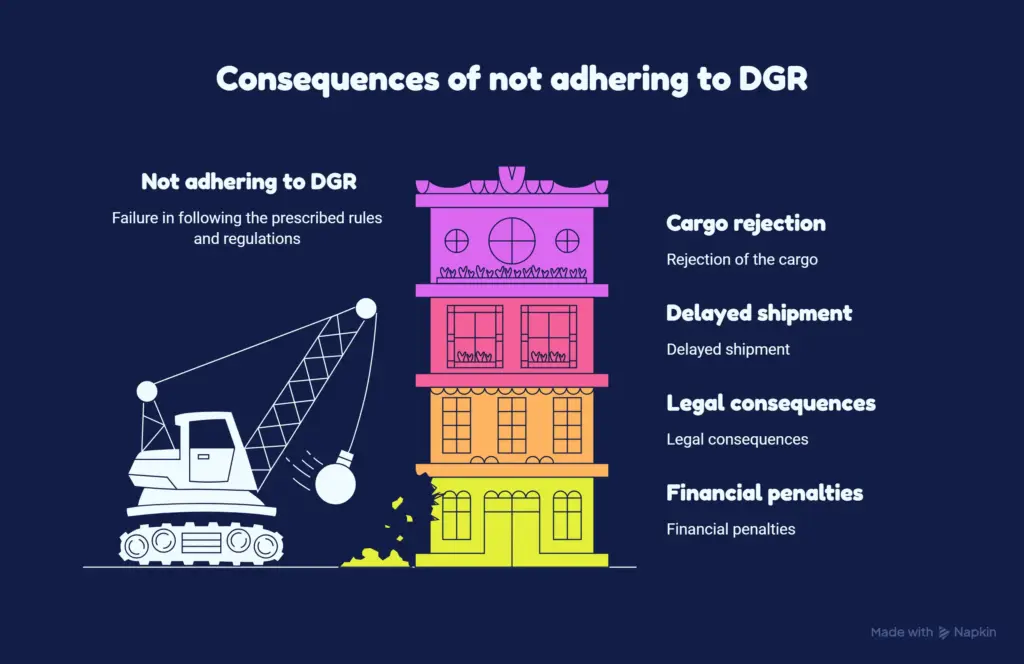
The financial penalties, legal consequences, delayed shipment and rejection of the cargo are the aftermath of not adhering to the DGR or failure in following the prescribed rules and regulations while handling the DGR goods.
Since it is a matter of human safety, the handling of DGR goods must be done with utmost caution.
Join Entri Airport Management Course in Kerala
What Are Dangerous Goods Regulations (DGR)?
Dangerous Goods Regulations are mandatory rules and restrictions on the transportation of hazardous materials that pose safety threats. Such materials should be transported without disturbing the safety of human lives and should avoid posing unnecessary threats or risks.
There are specifications on how the dangerous items shall be identified and classified. There are instructions even to ensure the labelling, classification, marking, documenting, packing and storing of the substances before and after the shipment of the goods.
The aviation industry considers this a really important requirement, as the aircraft operates under particular environmental conditions, and one wrong move can lead to serious consequences. Even slight variations in air pressure, with respect to leakage, fire, chemical reactions or pressure variations, can affect the quality of the movement of the aircraft.
DGR guidelines should be strictly followed while transporting the goods and materials. Whether a good is good to carry, transport, or ship from one area to another can be determined with the guidelines.
The professionals can determine whether the restrictions are applicable and appropriate to the specific goods by understanding the DGR. It can also help you understand whether the restrictions are applicable to the products or goods that are transported through an air route and take necessary steps or actions to ensure the safety and security of the passengers at the airport.
For instance, based on the composition of the lithium battery aerosols, paints, and certain cleaning chemicals, the packaging, storage, or use should be kept under watch.
The classification is given for each component since not all the goods are treated with the same intensity. All the potentially hazardous materials are treated separately from other components, and the perfect classification is provided in DGR.
✈️ Start Your Aviation Career Today
Explore career-focused insights on airport jobs, ground staff roles, and aviation training. Learn about salaries, skills, certifications, and hiring trends to start and grow your career in the aviation industry.
Join NowUnderstanding the Different Classes of Dangerous Goods
Under the international dangerous goods classification system, the dangerous goods are divided into nine major categories and some into subcategories. Clarity on this matter is really important while dealing with goods that are dangerous in nature.
This classification is done based on the quality of the material along with the nature of the material. The properties of a material are considered while classifying the goods into the dangerous levels. Some goods come under the exception or exemption category, while some other products are highly dangerous to handle.
| Class | Category |
| 1 | Explosive |
| 2 | Gases |
| 3 | Flammable liquids |
| 4 | Flammable solids |
| 5 | Oxidising substances |
| 6 | Toxic and infectious substances |
| 7 | Radioactive materials |
| 8 | Corrosive substances |
| 9 | Miscellaneous dangerous goods |
If you are a professional working in air cargo, freight forwarding or logistics, understanding the classification is really important. These classifications help you in determining the nature of the goods that you encounter in the air routes, and actions can be ensured if any of the rules are being violated.
Join Entri Airport Management Course in Kerala
How Do Dangerous Goods Regulations Work?
The transportation risks can be minimised by strictly following the structured procedures, rules and regulations. The process includes a structured plan for the
Transportation is based on the requirements applicable for each type of goods. The process of transportation of the classified goods involves-
Identification and classification
Identify the exact nature of the goods and determine the level of classification based on the characteristics of the substance.
Packaging
Choose the packaging that meets the compatibility requirements and meets the performance criteria. ia
Marking and labelling
The display of labels that point out the hazardous nature of the substance and mark the package with warnings to keep a distance from the substance
Documentation
Carry the declaration certificate for dangerous goods and other supporting documents to substantiate your argument.
Inspection
Check for the relevant requirements that are met for the shipment before preparing it for transportation.
Handling and transportation
Wherever applicable, follow the storage, segregation, loading and handling procedures and instructions while you plan to transport the items.
Make sure you depend on the updated rules and regulations on the transportation of the goods and items. Missing labels, incorrect declarations, or bad packaging can prevent the goods from being transported, along with facing legal repercussions.
What Is IATA DGR?
International Air Transport Association Dangerous Goods Regulations ( IATA DGR) is popularly recognised for the transportation of dangerous goods via air route. IATA DGR provides practical guidance, including packaging instructions, limitations on quantity, labelling, marking, documentation and shipment requirements are clearly stated.
The additional operational requirements issued by ICAO, along with the technical instructions, are also provided for reference. These guidelines prevent the risky delivery of harmful goods and materials from one place to another.
The rules and regulations should be checked on a regular basis, as new additions and updates are mentioned. The air route safety standards are strictly enforced by the airlines, freight forwarders, shippers or ground handling companies with the aid of IATA DGR regulations to ensure that the shipments follow the guidelines that help in maintaining the basic standards for goods transportation safety.
The professionals responsible for handling the matters revolving around the dangerous materials shipment and transportation safety should check the rules and regulations and keep a strict eye on the records to meet the requirements for transportation. Serious hazards can be averted if things are kept under strict scrutiny and observation.
Join Entri Airport Management Course in Kerala
✈️ Start Your Aviation Career Today
Explore career-focused insights on airport jobs, ground staff roles, and aviation training. Learn about salaries, skills, certifications, and hiring trends to start and grow your career in the aviation industry.
Join NowWho Needs Dangerous Goods Regulations (DGR) Training?
The Dangerous Goods Regulations training is intended for the responsible professionals who handle, accept, prepare, and transport the goods that pose risks and threats to human safety. The training is mandatory to ensure the smooth flow of operations. The roles include air cargo agents who check the shipment details and documentation of necessary files.
Airline cargo staff
Shipment papers are reviewed against the requirement guidelines.
Freight forwarders
Cargo movement and delivery coordination and ensuring policy adherence.
Shippers and packaging personnel
Packaging and classification of the goods based on the level of danger and the marking and declaration of the goods based on the nature
Ground handling personnel
Responsible for handling the cargo and loading and storing the goods under strict safety measures.
Warehouse and logistics professionals
The procedures for handling and storage of the dangerous goods are basically the responsibility of the professionals.
Based on the applicable regulatory framework and actual responsibility of each professional, training should be provided. Considering the major tasks assigned to the professionals, training should be done appropriately for their job roles.
Their functions should be brought into focus, and manual-based strict training should be provided. Their functions should be trained in an appropriate manner and condition at required intervals. For those who are interested in aviation and logistics careers, understanding the core elements of DGR can help to enhance their knowledge of cargo safety and security.
Join Entri Airport Management Course in Kerala
DGR Compliance: What Businesses and Professionals Need to Know
Businesses revolving around the transportation of dangerous goods should strictly adhere to the rules and regulations governing the use, transportation, handling and storage of the goods and make sure to follow all the procedures. The professionals should also make sure that the employees involved in the goods transportation know the key responsibilities while handling dangerous goods.
Key compliance practices involve:
- Use of the latest applicable rules and regulations along with the packing instructions.
- Before accepting the cargo, make sure to check the information regarding classification and shipping. Role-appropriate training should be provided to the employees.
- Check the packaging and labels. Marking and documentation of the goods
- Strictly follow the national regulations and airline-specific guidelines during transportation.
- Maintain the records for reference.
- Review the procedures and understand the requirements before starting the procedures.
- Compliance is not only about the documentation. It is purely based on the coordination of the tasks between the teams assigned to the specific tasks.
The errors should be identified, corrected and documented to prevent non-compliant goods from entering the transportation chain.
Dangerous Goods Regulations vs Other Shipping Regulations
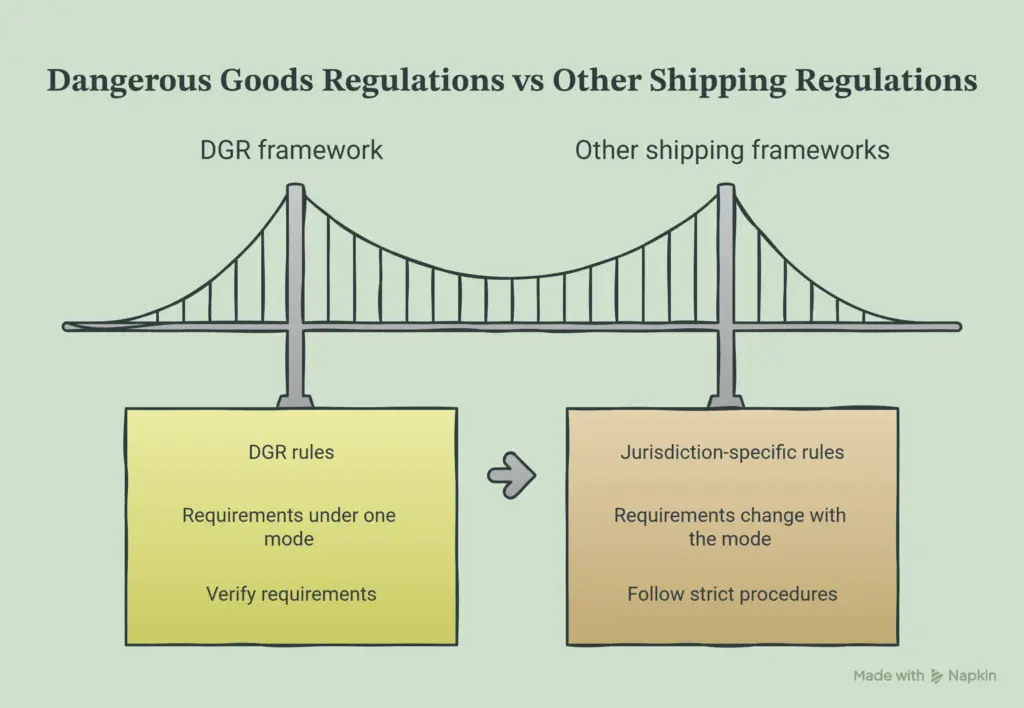
The DGR is one of the main regulatory frameworks that governs the movement of the goods. The rules of transportation of the goods differ from one jurisdiction to another.
If the mode of transportation changes, the shipment requirements will also change when the framework changes. For each stage of the transportation, it is important to verify the requirements and follow the strict procedures.
Advantages and Challenges of Following DGR
The safety measures can be improved with the aid of DGR, which helps organisations improve the shipment process while meeting the regulatory requirements.
- Low risk for the workers, passengers, crew and cargo
- Transparency in documentation and parking
- Lower rate of shipment delays
- Preventable rejections on shipment
- Enhanced reliability in operational areas
- Improved compliance with safety standards
Challenges-
- Additional cost for training and compliant packaging
- Regulations are updated periodicallyand are detailed
- Incorrect classification leads to unnecessary costs
- Additional requirements for different carriers
Proper training and follow-up on the procedures will allow you to manage the challenges more systematically and effectively.
Practical Example: How a Dangerous Goods Shipment Is Handled
Consider a situation where lithium batteries are transported via air route. The shipper should understand the nature and type of the battery and confirm its classification category. Whether the goods are classified under the current rules and whether the requirements should be satisfied before the dispatch of the goods.
Check the packaging instructions, quantity limits, labels, and standards. Check the documentation requirements and send it across for shipment requirements review; the applicable criteria.
While checking if the shipment labels or details are missing or incorrect, or if the packaging is unsuitable or incorrect documentation. In any such cases, the shipment will be rejected until the issue is resolved. The challenges or hazards during transportation can be easily avoided by following the right steps.
Conclusion
Dangerous goods regulations help in ensuring that the goods transported do not cause health risks or safety concerns. The professionals in aviation departments should make sure that the proper classification, packaging, labelling, handling and documentation are done without errors.
Understanding the DGR helps in building a stable career. Knowing the procedure and ensuring the training to update yourself can help in handling the DGR goofs responsibly. The goods should be transported safely by adhering to safety rules and regulations to ensure a smooth and proper operation that concerns human safety.
| Related Links | |
| How to Become an Air Hostess (2026) | Self-Grooming Tips for Airport Ground Staff |
| Cabin Crew Salary in Kerala | Aviation Certification Course vs Degree: What’s Better? |
✈️ Start Your Aviation Career Today
Explore career-focused insights on airport jobs, ground staff roles, and aviation training. Learn about salaries, skills, certifications, and hiring trends to start and grow your career in the aviation industry.
Join NowFrequently Asked Questions
What is DGR?
Dangerous goods regulations, otherwise known as DGR, are the rules that are applicable for the packing, labelling, storing, handling, documentation, transportation and distribution of the goods that pose a threat to human existence
What is IATA DGR?
International Air Transport Association Dangerous Goods Regulations ( IATA DGR) is popularly recognised for the transportation of dangerous goods via air route.
What is the key responsibility of business involving DGR?
Businesses revolving around the transportation of dangerous goods should strictly adhere to the rules and regulations governing the use, transportation, handling and storage of the goods and make sure to follow all the procedures.
Why would DGR training given to shippers and packaging professionals?
Packaging and classification of the goods based on the level of danger and the marking and declaration of the goods based on the nature
Which DGR good comes under the 1st category?
Explosive goods come under the first DGR category.