Table of Contents
If you look at where the world is heading – self-driving cars, drones, factory automation, service robots, smart appliances – two career paths keep appearing again and again:
- Embedded Systems
- Robotics
Both sound exciting. Both deal with hardware, software, and “intelligent” machines.
But when it comes to choosing a course or career, the questions start:
- “Should I start with Embedded Systems or directly go for Robotics?”
- “Which has more jobs in India?”
- “What skills do I actually need for each?”
- “If I choose one, can I later move into the other?”
This blog is written to give you honest, practical clarity, especially if you are:
- A student (Diploma / B.Tech / BSc)
- A working engineer wanting to move into core tech
- A career switcher from IT/CS/software into hardware-oriented careers
Embedded Systems vs Robotics – Simple Explanation
Let’s start without buzzwords or jargon.
What Are Embedded Systems?
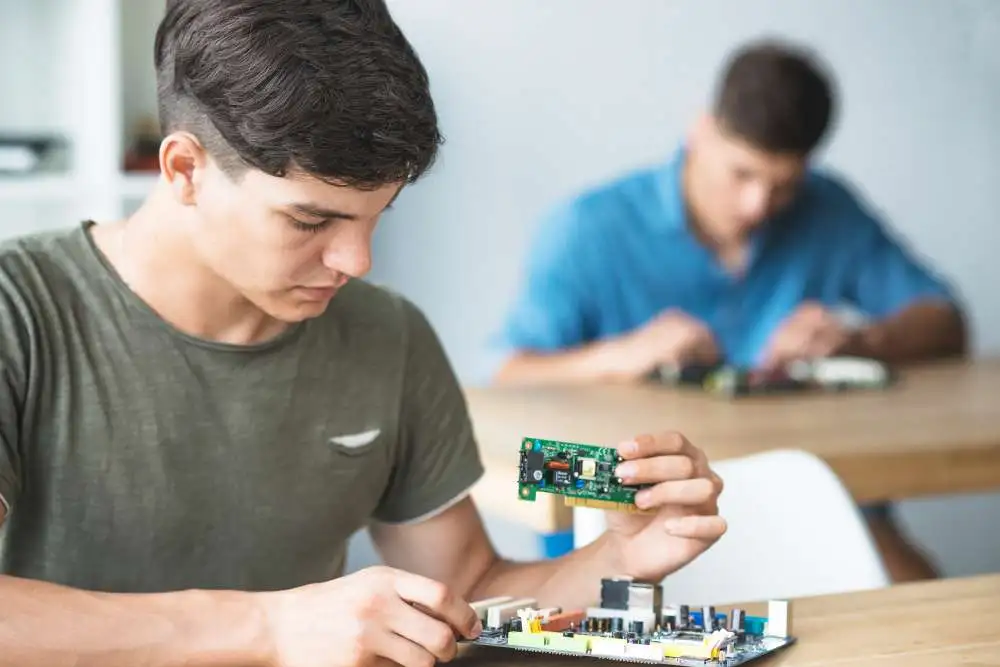
An embedded system is a small computer inside a device, built for a specific purpose.
Examples you see every day:
- Washing machine control boards
- Car control units (ABS, airbag, engine control, EV battery management)
- Smart TVs, set-top boxes, routers, printers
- Medical devices, industrial controllers, access control systems
Embedded engineers:
- Program microcontrollers and processors using languages like C and C++
- Read data from sensors (temperature, pressure, motion, etc.)
- Control actuators (motors, relays, valves, displays)
- Make systems work reliably in the real world (noise, heat, voltage variation)
You can think of embedded systems as the brain inside any mechatronic or electronic product.
What Is Robotics?
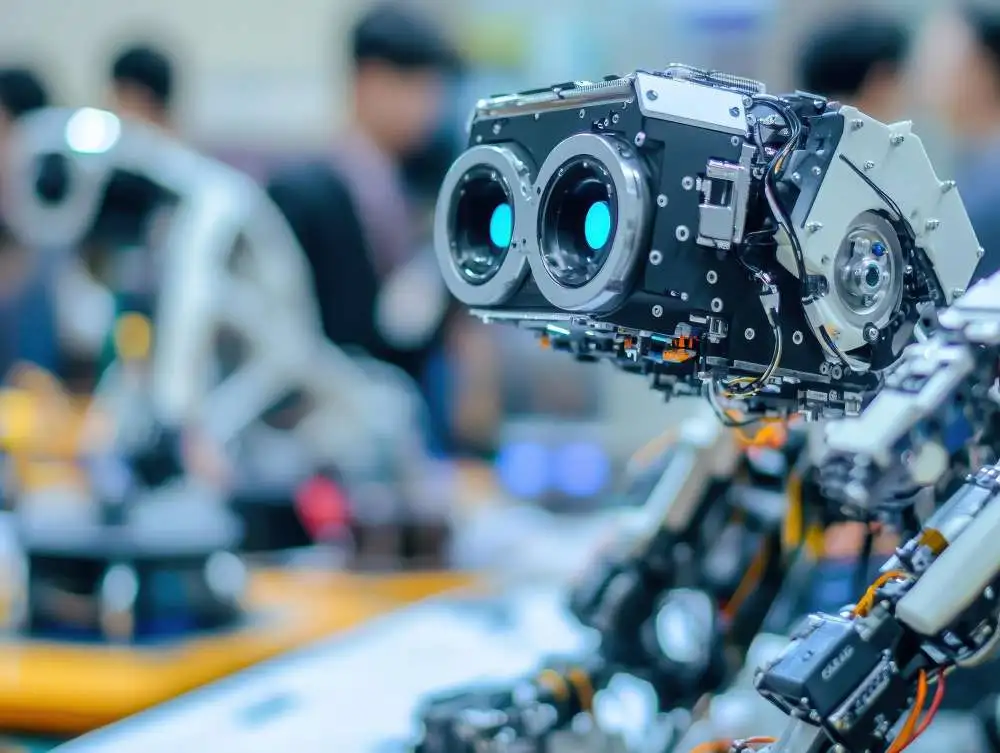
Robotics is about designing and building machines that sense, think, and act in the real world – often moving, manipulating objects, or interacting with humans.
Examples:
- Industrial robot arms welding or assembling products
- Mobile robots transporting goods in warehouses
- Humanoid robots or service robots
- Drones used for agriculture, surveillance, or mapping
- Small educational robots used in schools and labs
Robotics brings together:
- Embedded Systems (firmware on boards and motor controllers)
- Mechanical design (frames, joints, linkages, materials)
- Electronics (sensors, drivers, power circuits)
- Control systems and kinematics
- Increasingly, AI and computer vision
So in simple terms:
Embedded Systems = The “mini-computer + firmware” inside a device
Robotics = A full machine that combines mechanics + electronics + embedded systems + control and sometimes AI
You can build embedded systems that are not robots.
But you cannot build a robot without some embedded system inside it.
Kickstart your embedded systems career and turn your tech passion into high-demand skills!
How Are Embedded Systems and Robotics Connected?
This is important: Robotics is not a replacement for Embedded Systems.
Robotics depends on Embedded Systems.
Inside almost every robot, you will find:
- One or more microcontrollers or Single Board Computers (SBCs) like STM32 / Arduino / ESP32 / Raspberry Pi
- Motor drivers controlled by embedded firmware
- Sensors (encoders, IMUs, distance sensors, cameras) read by embedded code
- Real-time control loops implemented in software running on those embedded platforms
That means:
- Embedded Systems is a core foundation.
- Robotics is a multi-disciplinary application area, built on that foundation.
So if you build solid embedded skills first, you will find it much easier to move into robotics later.
Master Embedded Systems Programming!
Launch your tech career with our Embedded Systems Course, designed for hands-on learning and industry readiness.
Know MoreWhat Does an Embedded Systems Engineer Do?
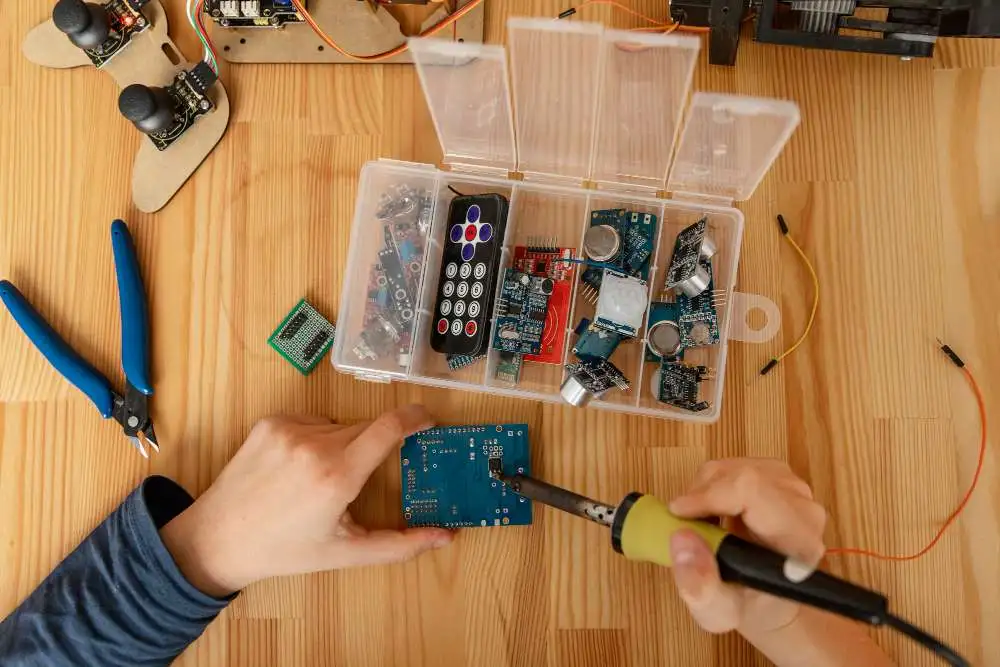
An embedded engineer’s daily life usually includes:
- Studying product requirements: for example, “We need a motor controller for an EV scooter,” or “We need a smart energy meter.”
- Selecting or working with teams to choose microcontrollers and components.
- Writing firmware in C/C++ to implement features.
- Interfacing sensors (temperature, pressure, gyroscope, proximity, etc.) and actuators (motors, relays, buzzers, displays).
- Debugging issues using debuggers, serial logs, oscilloscopes, and logic analyzers.
- Ensuring reliability, safety, and compliance with standards.
They work very close to the hardware but think in terms of logic, timing, and system behaviour.
What Does a Robotics Engineer Do?
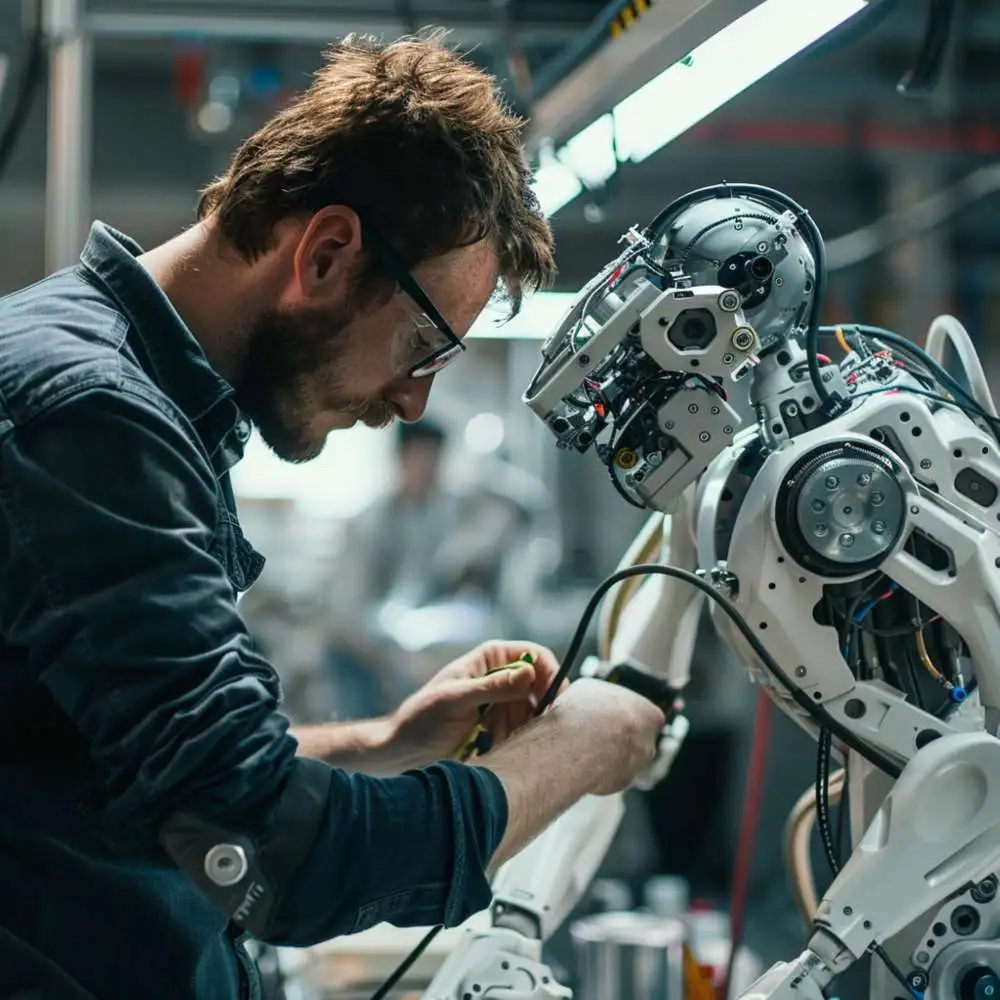
A robotics engineer’s role can vary a lot depending on the company, but usually includes:
- Designing robot mechanical structures (or working with mechanical engineers to integrate control).
- Selecting motors, gearboxes, belts, and other actuation systems.
- Choosing and integrating sensors – encoders, IMUs, force sensors, LiDAR, depth cameras.
- Writing software to control motion – trajectory planning, kinematics, PID control, etc.
- Sometimes working at a higher level using tools like ROS (Robot Operating System).
- Testing robots in real environments: factories, warehouses, labs, outdoors.
Many robotics roles are system-level: you think about how the whole robot behaves, not just one microcontroller.
Skills Needed – Embedded Systems vs Robotics
Let’s break down the skill sets side by side.
Core Skills for Embedded Systems
You will typically focus on:
- Programming
- Strong C (mandatory)
- Often C++, and sometimes Python for testing
- Strong C (mandatory)
- Microcontrollers
- ARM Cortex-M, AVR, PIC, ESP32, etc.
- GPIO, timers, PWM, ADC, interrupts
- ARM Cortex-M, AVR, PIC, ESP32, etc.
- Electronics
- Basic circuits – resistors, capacitors, transistors, regulators
- Sensor interfacing and power supply considerations
- Basic circuits – resistors, capacitors, transistors, regulators
- Communication Protocols
- UART, SPI, I²C, CAN, LIN, Modbus
- Real-Time Concepts
- Interrupt-driven programming
- Basics of RTOS (tasks, scheduling, semaphores)
- Interrupt-driven programming
- Debugging & Tools
- IDEs (Keil, STM32CubeIDE, MPLAB, etc.)
- Debuggers, multimeters, oscilloscopes, logic analyzers
- IDEs (Keil, STM32CubeIDE, MPLAB, etc.)
Core Skills for Robotics
Robotics demands a wider mix of skills:
- Embedded & Electronics Basics
- Microcontrollers or SBCs (Arduino, STM32, Raspberry Pi)
- Motor drivers, encoders, power circuits
- Microcontrollers or SBCs (Arduino, STM32, Raspberry Pi)
- Mechanics & Mechatronics
- Links, joints, DOF (degrees of freedom)
- Mechanical constraints and design awareness
- Links, joints, DOF (degrees of freedom)
- Control Systems
- PID control
- Motion control, trajectory following
- Kinematics (especially for robot arms)
- PID control
- High-Level Programming
- Python and C++
- ROS (Robot Operating System) for many modern robotics projects
- Python and C++
- Sensors & Perception
- Working with IMUs, LiDAR, depth cameras, ultrasonic sensors
- Sometimes computer vision using OpenCV / AI tools
- Working with IMUs, LiDAR, depth cameras, ultrasonic sensors
- System Integration
- Bringing hardware, firmware, and algorithms together
- Testing in real environments and debugging complex behaviour
- Bringing hardware, firmware, and algorithms together
Robotics needs you to be comfortable with multiple domains. It’s exciting – but also more complex.
Master Embedded Systems Programming!
Launch your tech career with our Embedded Systems Course, designed for hands-on learning and industry readiness.
Know MoreCareer Opportunities in India – Embedded vs Robotics
Embedded Systems – Where Are the Jobs?
In India, embedded engineers are required in:
- Automotive & EV companies
- Tier-1 suppliers building ECUs and electronic control units
- Consumer electronics brands and manufacturers
- Industrial automation and robotics companies (on the controller side)
- Medical device manufacturers
- IoT startups and smart device companies
Job titles might include:
- Embedded Systems Engineer
- Firmware Engineer
- Automotive Embedded Engineer
- IoT Device Engineer
- Embedded Software Developer
- Embedded Test Engineer
There are many mid-level and entry-level opportunities, especially if you can show real projects and solid C + microcontroller skills.
Robotics – Where Are the Jobs?
Robotics roles in India are growing but are more concentrated in:
- Industrial automation companies (robot arms, pick-and-place, welding, assembly)
- Warehouse and logistics robotics (AGVs, AMRs)
- Startups working on drones, service robots, inspection robots, and agricultural robots
- Research labs and R&D centres
- MNCs working on automation systems and smart manufacturing
Job titles might include:
- Robotics Engineer
- Robotics Software Engineer
- Mechatronics Engineer
- Motion Control Engineer
- Autonomous Systems Engineer
- Drone Engineer
Robotics roles tend to be in fewer companies, often requiring strong multi-disciplinary skills or experience.
Which Has Better Scope: Embedded Systems or Robotics?
Instead of a one-word answer, let’s break this into practical realities.
From a Job Volume and Accessibility Point of View
- Embedded Systems has more job openings, across more sectors and cities.
- You can start with smaller projects and grow into bigger roles.
- Many companies hire embedded engineers for firmware and product development.
So if your priority is:
“I want to get into a core technical job as soon as possible,”
Then, Embedded Systems generally offers a better and more accessible scope, especially in the Indian market.
From a Future Trend and Excitement Point of View
- Robotics is central to Industry 4.0, smart factories, automation, drones, and future mobility.
- It is exciting, visible, and often at the cutting edge of tech.
- But it usually demands strong foundations in embedded, controls, and often mechanical concepts.
If your priority is:
“I want to work on advanced systems like robots, drones, AGVs and don’t mind a longer learning curve,”
Then robotics can be very rewarding, but you should be ready for a deeper multi-disciplinary journey.
The Most Practical Path for Most Learners
For many students and working engineers in India, the safest and smartest route looks like this:
Step 1: Build strong foundations in Embedded Systems
Step 2: Use those skills to enter core product/embedded roles
Step 3: Gradually add Robotics-specific skills – motion control, ROS, perception
Step 4: Transition into more specialised Robotics roles if you still love that direction
This way, you are not blocked if robotics roles are fewer in your city or domain. You remain employable while you climb up the skill ladder.
Personality Fit: What Kind of Person Thrives in Each Field?
Sometimes the question is not “Which is better?” but “Where will you be happier?”
Embedded Systems Might Suit You If:
- You enjoy working with low-level code and hardware.
- You like carefully debugging signals, registers, and timing issues.
- You want to build stable products that may ship in mass volumes.
- You’re okay if your work is inside boxes and control units that most people don’t see directly – but that are absolutely critical.
Robotics Might Suit You If:
- You love seeing moving systems and physical interactions.
- You are excited by the idea of a robot responding to the environment.
- You’re comfortable juggling mechanical, electronic, and software concepts.
- You like testing in the lab or real spaces – not just on a bench.
Remember:
You don’t have to pick one forever.
But you do need to pick where to start.
Why Starting with an Embedded Systems Course Is a Strong Decision
Whether you want to become an embedded engineer or a robotics engineer later, a solid embedded foundation is non-negotiable.
This is where a structured program like the Entri Embedded System course fits in.
Instead of learning randomly from scattered videos and blogs, Entri’s program typically helps you:
- Start from fundamental C programming tailored for embedded use.
- Understand microcontrollers and their peripherals step by step.
- Work with sensors and actuators in real circuits.
- Learn practical communication protocols like UART, SPI, I²C.
- Implement mini-projects that simulate real-world applications.
With this kind of training:
- If you choose to stay in Embedded Systems, you’re job-ready in a field that has wide scope.
- If you later want to move into Robotics, you already understand how the robot’s “brain” works and can focus on control, mechanics, and higher-level algorithms.
In other words, Entri’s Embedded Systems course acts like a strong launchpad – whether your rocket flies into embedded product engineering or advanced robotics is your choice.
Step-by-Step Roadmap: Embedded Systems vs Robotics
Here’s a clear roadmap you can follow:
If You Start with Embedded Systems
- Learn C for Embedded deeply – pointers, structures, bitwise operations.
- Practise on one or two microcontroller platforms (like STM32, AVR, ESP32).
- Build small projects: sensor-based systems, motor control, basic automation.
- Learn debugging with serial logs and basic instruments.
- Apply for embedded/firmware roles in product, automotive, IoT, or industrial companies.
- Later, if you wish, start learning:
- Motion control
- ROS
- Robotics-specific mechanics and algorithms
- Motion control
If You Aim Directly for Robotics (But Smartly)
- Still build a minimum embedded foundation, so you are not blind at the hardware level.
- Learn Python and C++ for higher-level robotics work.
- Explore ROS, simulation tools (like Gazebo, Webots), and simple robotics frameworks.
- Work on robot kits or projects: line-following robots, robotic arms, mobile robots.
- If possible, do internships or projects in automation or robotics labs.
- Be prepared for a bit longer initial journey; roles may be more competitive and specialised.
Either way, embedded skills will help you.
Kickstart your embedded systems career and turn your tech passion into high-demand skills!
Key Takeaways – Choosing Your Career Path
Let’s summarise the core message of this blog.
- Embedded Systems focuses on programming the “brains” inside devices.
- Robotics focuses on creating systems that can sense, think, and act in the physical world – built on top of embedded systems.
- Embedded jobs in India are more numerous and widely spread, especially in automotive, consumer products, IoT, and industrial automation.
- Robotics jobs are growing in automation, drones, and advanced manufacturing, but they’re more niche and often demand multi-disciplinary expertise.
- If you want maximum flexibility and faster entry into core tech, Embedded Systems is generally the better first step.
- If you dream of robots and are ready for a longer, more complex learning curve, you can grow into Robotics – ideally starting from embedded foundations.
- A structured course like the Entri Embedded System course can give you the exact foundation you need to:
- Enter the embedded job market confidently
- Or later branch into Robotics, IoT, or automation with a solid base
- Enter the embedded job market confidently
Master Embedded Systems Programming!
Launch your tech career with our Embedded Systems Course, designed for hands-on learning and industry readiness.
Know MoreFrequently Asked Questions
Which is better- Embedded Systems or Robotics?
It depends on what you enjoy. Embedded Systems is ideal if you like firmware, hardware interaction and device-level development. Robotics suits those who enjoy perception, motion control, algorithms and building intelligent machines.
Is Robotics harder than Embedded Systems?
Robotics is broader because it includes embedded skills plus control systems, computer vision, sensor fusion and mechanical considerations. Embedded is more focused and easier to enter quickly.
Which field has more job opportunities in India?
Embedded Systems has wider job availability across IoT, automotive, consumer electronics and industrial automation. Robotics openings are growing but more concentrated in specialised companies and research-driven environments.
Do I need to know C for Robotics?
Yes. Robotics uses embedded programming for motor drivers, sensor interfaces and real-time tasks. Higher-level robots use Python, C++ and ROS, but C fundamentals are still valuable.
What skills do I need for an Embedded Systems job?
Knowledge of C, microcontrollers, communication protocols (UART, SPI, I²C), RTOS basics, debugging tools and electronics fundamentals. Courses like the Entri Embedded Systems program help build these skills.
What skills do I need to become a Robotics Engineer?
Control theory, ROS/ROS2, kinematics, computer vision, sensor fusion, Python/C++, and practical experience with simulation tools like Gazebo or Webots.
Which pays better- Embedded or Robotics?
Both offer strong salaries. Embedded engineers earn stable pay across product companies. Robotics engineers, especially those skilled in perception and control, can command higher salaries in specialised industries like automation, drones and autonomous systems.
Can I start in Embedded Systems and move to Robotics later?
Absolutely. Many robotics engineers begin in embedded systems because it builds core fundamentals like microcontrollers, real-time programming and sensor integration.
Are Robotics jobs only available in big cities?
Most robotics roles are in hubs like Bengaluru, Pune, Chennai and Hyderabad. Embedded jobs, however, are available more widely across manufacturing, IoT startups and product firms even in Tier-2 cities.
Which course is best if I choose Embedded Systems?
A practical, project-driven course like the Entri Embedded Systems course is ideal. It covers C, microcontroller programming, RTOS, debugging, protocols and real-time projects to help you become job-ready.