Table of Contents
🎯 The Answer
Fat loss training and muscle gain training have different goals. Fat loss training reduces body fat. Muscle gain training builds muscle size and strength. Both need exercise, nutrition, and recovery. However, each approach uses different methods.
The right goal depends on individual needs. Current fitness levels also matter. Body composition is another important factor. Understanding these differences helps create better plans. It also encourages realistic expectations and lasting results.
Key Takeaways:
- Fat loss reduces body fat levels.
- Muscle gain increases muscle mass.
- Calorie intake differs for each goal.
- Strength training benefits both approaches.
- Nutrition plays a major role.
- Recovery supports progress.
- Cardio is used differently.
- Protein remains important.
- Goal selection matters.
- Consistency drives success.
Become a General Fitness Trainer and turn your passion into a Profession!
📝 Introduction
Many people start exercising with clear goals. Some want to lose excess body fat. Others want to build muscle. Both goals improve health and fitness. However, the path toward each goal differs.
Training methods are not identical. Nutrition strategies also vary. Recovery needs may change as well. Understanding these differences helps people avoid confusion. It also helps create effective fitness plans.

Turn Your Passion for Fitness into a Profession
Learn practical skills, get certified, and step into the growing fitness industry with confidence.
Join the Course🔥 Understanding Fat Loss Training
Fat loss training focuses on reducing body fat. The goal is improving body composition. Successful fat loss requires consistency and patience.
What Is Fat Loss Training?
Fat loss training combines exercise and nutrition strategies.
Main objectives include:
- Reduce stored body fat.
- Maintain lean muscle.
- Improve fitness levels.
- Support long-term health.
Why People Choose Fat Loss Training
Many people pursue fat loss goals.
Common reasons include:
- Improved health.
- Better mobility.
- Increased confidence.
- Greater energy levels.
- Enhanced physical appearance.
Characteristics of Fat Loss Programs
Most fat loss plans include:
- Regular exercise.
- Strength training.
- Cardiovascular activity.
- Increased daily movement.
- Nutrition planning.
Importance of Daily Activity
Exercise sessions matter. Daily movement matters too.
Examples include:
- Walking more.
- Taking stairs.
- Household activities.
- Active hobbies.
- Standing regularly.
Small actions can increase calorie expenditure.
Benefits Beyond Appearance
Fat loss provides many advantages.
Physical Benefits
- Easier movement.
- Improved endurance.
- Better flexibility.
- Increased energy.
- Improved posture.
Lifestyle Benefits
- Better sleep quality.
- Greater confidence.
- Improved productivity.
- Better exercise performance.
Popular Fat Loss Exercises
Full-Body Exercises
These exercises use many muscles.
Examples include:
- Squats.
- Deadlifts.
- Push-ups.
- Lunges.
- Rows.
Cardio Activities
Cardio supports calorie expenditure.
Examples include:
- Walking.
- Cycling.
- Running.
- Swimming.
- Hiking.
Factors Influencing Fat Loss
Many factors affect results.
Important Variables
- Calorie intake.
- Exercise frequency.
- Sleep quality.
- Hydration levels.
- Stress management.
- Daily activity.
Signs of Progress
Progress involves more than scale weight.
Other indicators include:
- Better clothing fit.
- Increased stamina.
- Improved movement.
- Greater workout capacity.
- Visible body changes.
💡 Pro Tip
Focus on sustainable habits. Quick fixes rarely last.
💪 Understanding Muscle Gain Training
Muscle gain training focuses on increasing muscle mass. It also improves strength and physical performance.
What Is Muscle Gain Training?
This training style stimulates muscle growth.
Primary goals include:
- Build muscle tissue.
- Increase strength.
- Improve performance.
- Enhance physique development.
Why People Pursue Muscle Gain
Muscle-building goals remain popular.
Common reasons include:
- Greater strength.
- Improved athletic ability.
- Better posture.
- Increased confidence.
- Improved body composition.
Characteristics of Muscle Gain Programs
Most programs include:
- Resistance training.
- Structured progression.
- Planned recovery.
- Nutritional support.
- Consistent scheduling.
Benefits of Increased Muscle Mass
Building muscle offers several advantages.
Performance Benefits
- Increased strength.
- Better power output.
- Improved stability.
- Enhanced movement quality.
- Better sports performance.
Everyday Benefits
- Easier lifting tasks.
- Improved posture.
- Better physical function.
- Greater movement control.
Types of Muscle-Building Exercises
Compound Movements
Compound exercises train multiple muscles.
Examples include:
- Squats.
- Bench presses.
- Pull-ups.
- Deadlifts.
- Rows.
Isolation Movements
Isolation exercises target specific muscles.
Examples include:
- Bicep curls.
- Leg curls.
- Tricep extensions.
- Calf raises.
- Lateral raises.
Why Progressive Overload Matters
Muscles adapt to challenges.
Progressive overload creates new demands.
Methods include:
- Adding weight.
- Increasing repetitions.
- Performing more sets.
- Improving technique.
- Reducing rest periods.
Recovery and Muscle Growth
Recovery supports adaptation.
Important recovery habits include:
- Quality sleep.
- Proper hydration.
- Balanced nutrition.
- Rest days.
- Stress management.
Common Signs of Muscle Growth
Progress may appear gradually.
Signs include:
- Increased strength.
- Better exercise performance.
- Improved muscle definition.
- Greater training capacity.
- Enhanced confidence.
💡 Pro Tip
Muscle growth takes time. Consistency matters more than speed.
⚖️ Key Differences Between Fat Loss and Muscle Gain
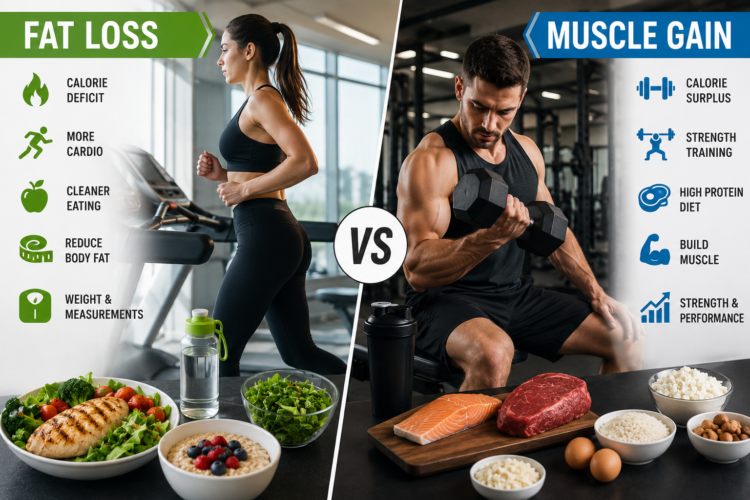
Both goals use exercise and nutrition. However, their priorities differ.
Primary Objective
Fat Loss
Main focus:
- Reduce body fat.
- Improve body composition.
- Maintain muscle tissue.
Muscle Gain
Main focus:
- Increase muscle size.
- Improve strength.
- Support growth.
Energy Balance
Fat Loss
Typically requires:
- Fewer calories.
- Controlled portions.
- Consistent eating habits.
Muscle Gain
Typically requires:
- More calories.
- Additional nutrients.
- Higher food intake.
Cardio Requirements
Fat Loss
Cardio often plays a larger role.
Benefits include:
- Increased calorie expenditure.
- Improved endurance.
- Better cardiovascular health.
Muscle Gain
Cardio remains useful.
However, resistance training receives greater emphasis.
Also read: How Often Should You Do Cardio Exercise?
Expected Rate of Progress
Results vary between individuals.
Fat loss progress depends on:
- Calorie balance.
- Activity levels.
- Consistency.
Muscle gain progress depends on:
- Training quality.
- Recovery.
- Nutrition.
Mindset Differences
Goal selection influences planning.
Fat loss often requires:
- Patience.
- Portion control.
- Lifestyle changes.
Muscle gain often requires:
- Progressive training.
- Increased food intake.
- Recovery management.
📊 Fat Loss vs Muscle Gain Comparison
Turn Your Passion for Fitness into a Profession
Learn practical skills, get certified, and step into the growing fitness industry with confidence.
Join the Course🍽️ Nutrition Requirements for Each Goal
Nutrition influences every fitness goal. Food choices affect performance and recovery.
Nutrition for Fat Loss
Fat loss requires careful calorie management.
Main Priorities
- Protein intake.
- Portion control.
- Nutrient quality.
- Consistency.
Helpful Food Choices
- Lean proteins.
- Vegetables.
- Fruits.
- Whole grains.
- Healthy fats.
Nutrition for Muscle Gain
Muscle gain requires additional fuel.
Main Priorities
- Sufficient calories.
- Adequate protein.
- Recovery nutrition.
- Balanced meals.
Helpful Food Choices
- Lean meats.
- Dairy products.
- Rice.
- Potatoes.
- Oats.
- Nuts.
Importance of Protein
Protein supports both goals.
Benefits include:
- Muscle repair.
- Recovery support.
- Muscle preservation.
- Growth support.
Importance of Hydration
Water supports performance and recovery.
Benefits include:
- Better energy.
- Improved exercise capacity.
- Temperature regulation.
- Recovery support.
Meal Timing Considerations
Meal timing may support performance.
Helpful practices include:
- Eating before training.
- Refueling after workouts.
- Maintaining consistency.
- Meeting daily nutrition goals.
Become a General Fitness Trainer and turn your passion into a Profession!
🏋️ Training Methods Compared
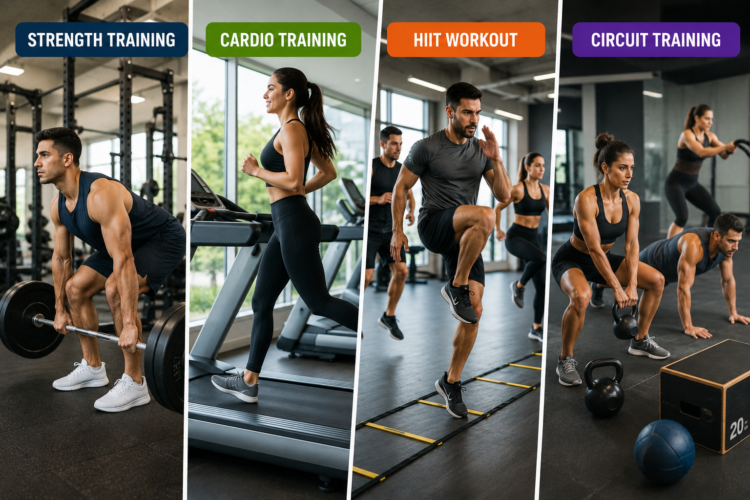
Training styles differ between goals. Workout structure often changes. Exercise selection may also vary. Volume and intensity can differ significantly.
Fat Loss Training Methods
Fat loss programs often prioritize energy expenditure.
Common Approaches
- Circuit training.
- Full-body workouts.
- High-volume sessions.
- Moderate rest periods.
- Activity-focused routines.
Advantages of Full-Body Training
Full-body workouts remain popular.
Benefits include:
- More calories burned.
- Greater exercise variety.
- Improved efficiency.
- Better weekly frequency.
- Easier scheduling.
Role of Cardiovascular Exercise
Cardio often supports fat loss.
Popular options include:
- Brisk walking.
- Jogging.
- Cycling.
- Stair climbing.
- Swimming.
Muscle Gain Training Methods
Muscle-building programs emphasize growth.
Common Approaches
- Resistance training.
- Split routines.
- Progressive overload.
- Controlled repetitions.
- Planned recovery.
Popular Muscle-Building Splits
Different routines suit different individuals.
Upper-Lower Split
Example:
- Upper body days.
- Lower body days.
Push-Pull-Legs Split
Example:
- Push workouts.
- Pull workouts.
- Leg workouts.
Body-Part Split
Example:
- Chest day.
- Back day.
- Leg day.
- Shoulder day.
Differences in Workout Focus
Fat Loss Programs
Often prioritize:
- Movement frequency.
- Daily activity.
- Calorie expenditure.
- Workout density.
Muscle Gain Programs
Often prioritize:
- Muscle stimulation.
- Strength progression.
- Recovery quality.
- Training volume.
📊 Training Comparison
| Factor | Fat Loss | Muscle Gain |
|---|---|---|
| Workout Style | Full Body | Split Routines |
| Cardio Use | Frequent | Moderate |
| Main Focus | Activity | Growth |
| Rest Periods | Shorter | Longer |
| Progress Measure | Fat Reduction | Strength Increase |
💡 Pro Tip
Training quality matters more than complexity.
🔄 Can You Build Muscle and Lose Fat Simultaneously?
Many people ask this question. The answer is yes. However, results depend on several factors.
What Is Body Recomposition?
Body recomposition means changing body composition.
The goal includes:
- Losing body fat.
- Building muscle.
- Improving overall physique.
Who Benefits Most?
Certain groups respond better.
Beginners
Beginners often see rapid changes.
Reasons include:
- New training stimulus.
- Faster adaptation.
- Untapped potential.
Returning Exercisers
Previous experience helps.
Benefits include:
- Faster muscle regain.
- Improved movement skills.
- Better exercise familiarity.
Individuals With Higher Body Fat
Additional stored energy may help.
Potential advantages include:
- Improved recomposition potential.
- Better response to training.
- Greater visible changes.
Requirements for Body Recomposition
Several factors matter.
Training Factors
- Consistent workouts.
- Progressive overload.
- Proper exercise selection.
- Balanced programming.
Nutrition Factors
- Adequate protein.
- Balanced meals.
- Consistent eating habits.
- Appropriate calorie intake.
Recovery Factors
- Quality sleep.
- Hydration.
- Stress management.
- Rest days.
Challenges of Recomposition
Progress often occurs slowly.
Common challenges include:
- Slower visible changes.
- Greater patience requirements.
- Complex nutrition planning.
- Recovery management.
Signs of Successful Recomposition
Progress may appear through:
- Better clothing fit.
- Increased strength.
- Improved muscle definition.
- Reduced waist size.
- Better exercise performance.
⚠️ Expectations Matter
Results vary widely.
Important reminders:
- Progress takes time.
- Consistency remains essential.
- Quick fixes rarely work.
- Patience supports success.
🎯 Which Goal Should You Prioritize?
Goal selection depends on circumstances. There is no universal answer. Individual needs remain important.
Consider Current Body Composition
Body composition influences priorities.
Higher Body Fat Levels
Fat loss often becomes the focus.
Potential benefits include:
- Improved health.
- Easier movement.
- Better fitness capacity.
- Enhanced confidence.
Leaner Individuals
Muscle gain may become appropriate.
Potential benefits include:
- Greater strength.
- Improved physique.
- Better athletic ability.
- Increased muscle definition.
Consider Fitness Experience
Experience level matters.
Beginners
Beginners often benefit from:
- Learning exercise technique.
- Building consistency.
- Improving movement patterns.
- Developing healthy habits.
Advanced Individuals
Advanced trainees may require:
- More specialized plans.
- Structured programming.
- Precise nutrition strategies.
- Greater recovery attention.
Consider Lifestyle Factors
Daily life affects goal selection.
Important considerations include:
- Work schedule.
- Family commitments.
- Recovery opportunities.
- Training availability.
- Stress levels.
Questions to Ask Yourself
Before choosing a goal:
- What motivates progress?
- What feels sustainable?
- What supports long-term success?
- What fits current circumstances?
- What matches personal priorities?
Goal Prioritization Checklist
Choose fat loss if:
- Body fat remains high.
- Health improvement matters most.
- Mobility feels limited.
- Energy levels feel low.
Choose muscle gain if:
- Strength development matters.
- Muscle size remains the priority.
- Body fat remains moderate.
- Recovery habits remain strong.
💡 Pro Tip
Choose the goal you can sustain.
⚠️ Common Mistakes to Avoid
Many people make avoidable mistakes. These mistakes often slow progress.
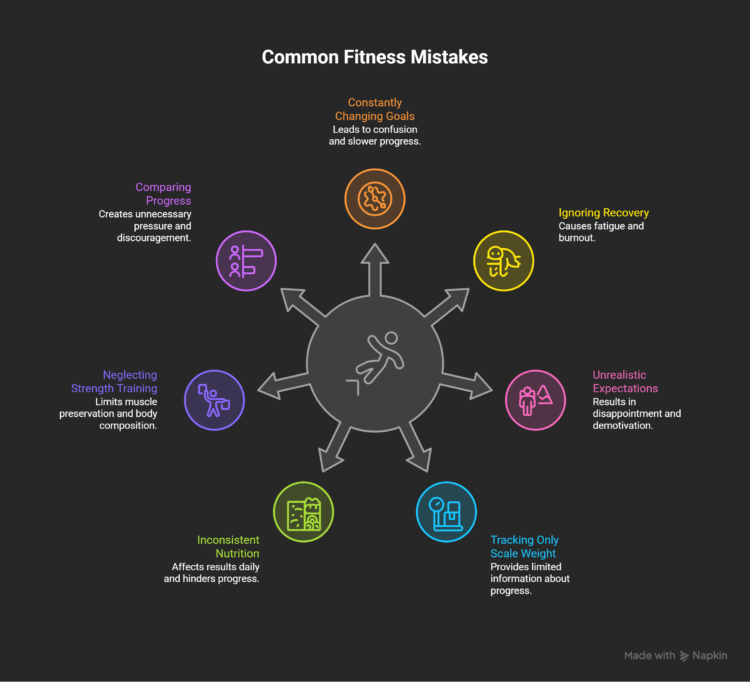
Mistake 1: Constantly Changing Goals
Frequent changes create confusion.
Potential issues include:
- Inconsistent training.
- Unclear nutrition.
- Slower progress.
- Reduced motivation.
Mistake 2: Ignoring Recovery
Recovery supports adaptation.
Common problems include:
- Persistent fatigue.
- Reduced performance.
- Increased soreness.
- Burnout risk.
Mistake 3: Unrealistic Expectations
Many expect immediate changes.
Reality often involves:
- Gradual progress.
- Small improvements.
- Consistent effort.
- Long-term commitment.
Mistake 4: Tracking Only Scale Weight
Scale weight provides limited information.
Other measurements include:
- Progress photos.
- Strength levels.
- Body measurements.
- Clothing fit.
Mistake 5: Inconsistent Nutrition
Nutrition affects results daily.
Common issues include:
- Skipping meals.
- Poor planning.
- Irregular eating habits.
- Insufficient protein.
Mistake 6: Neglecting Strength Training
Strength training benefits both goals.
Advantages include:
- Muscle preservation.
- Strength development.
- Improved body composition.
- Better physical function.
Mistake 7: Comparing Progress
Everyone progresses differently.
Results depend on:
- Genetics.
- Experience.
- Lifestyle.
- Consistency.
- Recovery.
🚫 Habits That Limit Results
Avoid these habits:
- Excessive restriction.
- Random workout changes.
- Poor sleep routines.
- Inadequate hydration.
- Unrealistic timelines.
🏆 Conclusion
Fat loss training and muscle gain training serve different purposes. Each approach requires specific strategies. Training, nutrition, and recovery should match the chosen goal. Understanding these differences helps improve decision-making.
Neither goal is better universally. The best choice depends on current needs. Fitness experience also matters. Lifestyle factors influence results as well. Sustainable habits remain the foundation of success.
Consistency drives long-term progress. Patience supports lasting results. Realistic expectations help maintain motivation. Whether pursuing fat loss or muscle gain, structured planning often produces the best outcomes.
Turn Your Passion for Fitness into a Profession
Learn practical skills, get certified, and step into the growing fitness industry with confidence.
Join the CourseFrequently Asked Questions
What is the difference between fat loss and muscle gain training?
Fat loss training focuses on reducing body fat while maintaining lean muscle. Muscle gain training focuses on increasing muscle size and strength through resistance training, proper nutrition, and recovery. Although both use exercise, their primary goals and calorie requirements differ.
Is fat loss training only about doing cardio?
No, fat loss training involves more than cardiovascular exercise. Strength training is equally important because it helps preserve muscle mass while reducing body fat. Combining resistance training, daily activity, and proper nutrition usually produces better results.
Why is strength training important for muscle gain?
Strength training creates the stimulus needed for muscle growth. Exercises such as squats, deadlifts, bench presses, and rows challenge muscles and encourage adaptation over time. Consistent progression helps increase muscle size and strength.
Can cardio affect muscle gain?
Cardio can be included in a muscle gain program when performed in moderation. It supports heart health and endurance without necessarily interfering with muscle growth. Excessive cardio, however, may make it harder to consume enough calories for muscle-building goals.
How important is protein for both goals?
Protein is essential for both fat loss and muscle gain. During fat loss, it helps preserve lean muscle tissue. During muscle gain, it supports muscle repair and growth after training sessions. Consistent protein intake contributes to better recovery and performance.
How do I know whether to focus on fat loss or muscle gain first?
The decision depends on factors such as body composition, fitness level, and personal goals. Individuals with higher body fat levels often prioritize fat loss, while leaner individuals may focus on muscle gain. Choosing a realistic and sustainable goal usually leads to better results.
Can beginners lose fat and build muscle at the same time?
Yes, beginners often experience body recomposition, where fat loss and muscle gain occur simultaneously. This happens because the body responds strongly to new training and nutrition habits. Consistent exercise, adequate protein, and proper recovery improve the chances of success.
How long does it take to see results from fat loss or muscle gain training?
The timeline varies among individuals. Factors such as consistency, training quality, nutrition, sleep, and genetics influence progress. Some people notice small improvements within a few weeks, while significant changes may take several months.
What are the biggest mistakes people make when pursuing these goals?
Common mistakes include changing goals too often, neglecting recovery, following unrealistic diets, and expecting rapid results. Many people also ignore strength training or fail to maintain consistency with nutrition and exercise habits. These mistakes can slow progress significantly.
Which is more important for success: training or nutrition?
Both are important and work together. Training provides the stimulus for fat loss or muscle growth, while nutrition supplies the energy and nutrients needed for recovery and adaptation. Consistent habits in both areas usually produce the best long-term results.