Table of Contents
Key Takeaways:
- Early math skills are important because they help children develop problem-solving and logical thinking from a young age.
- Building a strong foundation with basic concepts like numbers, shapes, and patterns makes future learning easier.
- Fun activities and Montessori methods make math enjoyable, interactive, and easier for children to understand.
- Parents play an important role by practicing simple math activities at home and supporting their child with patience.
- With the right guidance and regular practice, children can overcome common challenges and grow confident in math.
Introduction
Math can be fun and exciting for children when they are introduced to it in the right way. In the early years, kids are naturally curious and eager to explore the world around them. This is the perfect time to build a strong foundation in math through simple and engaging activities. Instead of focusing only on numbers, children can learn math through everyday experiences like sorting objects, recognizing patterns, and counting things they see around them.
Foundation activities help children understand basic concepts step by step, without feeling pressured or confused. When learning feels like play, children enjoy the process and develop confidence in their abilities. These early experiences not only make math easier to understand but also improve problem-solving and thinking skills.
In this blog, we will explore easy and fun ways to help children improve their math skills using simple activities, Montessori methods, and practical tips that parents can try at home.
Register for the Entri Elevate Montessori Teacher Training Program! Join Now!
Why Early Math Skills Are Important for Children
1: What is the primary focus of the first plane of development in the Montessori method?
Early math skills are not just about numbers—they help children think better, feel confident, and understand the world around them. With the right guidance and fun learning methods, children can build a strong and lasting foundation.
1. Builds Strong Thinking and Problem-Solving Skills
Early math learning helps children develop logical thinking from a young age. When kids engage in activities like counting, sorting, or solving simple puzzles, they learn how to think step by step. This improves their ability to solve problems not just in math, but in everyday situations as well.
2. Creates a Strong Foundation for Future Learning
Basic math concepts such as numbers, shapes, patterns, and measurements form the base for more advanced topics. When children understand these early, they find it easier to learn complex math in school. A strong foundation reduces confusion and builds confidence as they progress.
3. Encourages Confidence and Positive Attitude
When children start understanding math at an early stage, they feel more confident in their abilities. This removes the fear often associated with math. A positive early experience helps them stay motivated and open to learning new concepts.
4. Improves Daily Life Skills
Math is a part of everyday life. Early skills help children understand simple concepts like more or less, big or small, and time or quantity. These skills make daily activities like sharing, organizing, and making decisions easier and more meaningful.
5. Supports Overall Brain Development
During early childhood, the brain develops rapidly. Learning math helps strengthen memory, concentration, and reasoning skills. It also supports the development of other areas like language and communication, as children learn to describe and explain their thinking.
6. Helps in Identifying Learning Gaps Early
Introducing math early makes it easier for parents and teachers to notice if a child is facing difficulties. This allows timely support and guidance, ensuring the child does not fall behind as learning becomes more advanced.
Foundation Math Concepts for Young Learners
Foundation math concepts help children understand the basics in a fun and easy way. With regular practice and playful learning, children develop confidence and a strong base for future math skills.

1. Counting and Number Recognition
Counting is one of the first math skills children learn. It begins with counting everyday objects like toys, fruits, or steps. This helps children understand how numbers relate to quantity. Along with counting, children also learn to recognize numbers when they see them, which builds a strong base for future math learning.
2. Understanding Shapes and Patterns
Young learners start noticing shapes like circles, squares, and triangles in their surroundings. Recognizing shapes helps improve their observation skills. Patterns, such as repeating colors or objects, teach children to predict what comes next, which strengthens logical thinking.
3. Sorting and Classifying Objects
Sorting is a simple but powerful activity. Children learn to group objects based on color, size, or type. For example, they may separate big and small blocks or arrange toys by color. This helps them understand similarities, differences, and organization.
4. Basic Measurement Concepts
Children are introduced to simple measurement ideas like big and small, tall and short, heavy and light. These concepts are usually learned through comparison in daily activities. It helps children describe and understand the physical world around them.
5. Understanding Quantity and Comparison
Concepts like more and less, equal and unequal are very important in early math learning. Children begin to compare groups of objects and understand which has more or fewer items. This builds their number sense and reasoning ability.
6. Numbers in Everyday Life
Math becomes more meaningful when children see it in their daily routine. Counting snacks, sharing toys, or setting the table helps them understand how numbers are used in real life. This makes learning natural and enjoyable.
7. Developing Problem-Solving Skills
Simple activities like puzzles, matching games, or building blocks help children think and find solutions. These activities improve their thinking ability and make them more confident learners.
Fun Math Activities for Preschool Children
Fun activities make math enjoyable and stress-free for preschool children. When learning feels like play, children become more interested and confident in their math skills.
1. Counting with Everyday Objects
One of the easiest ways to teach math is by using things children see daily. You can ask kids to count their toys, fruits, or even steps while walking. This makes counting feel natural and fun instead of like a lesson.
2. Shape Hunt Around the House
Turn learning into a game by asking children to find different shapes around them. For example, a clock can be a circle, a book can be a rectangle. This activity helps children recognize shapes while staying active and curious.
3. Sorting and Matching Games
Give children a mix of objects like buttons, blocks, or toys and ask them to sort by color, size, or type. Matching games, such as pairing socks or cards, also help improve their thinking and observation skills.
4. Fun with Patterns
Create simple patterns using colors, beads, or blocks and ask children to repeat them. For example, red-blue-red-blue. This helps them understand sequences and improves their memory and focus.
5. Simple Measuring Activities
Involve kids in activities like pouring water into cups or comparing the height of objects. You can ask questions like “Which is taller?” or “Which is heavier?” This introduces basic measurement concepts in a playful way.
6. Math Through Songs and Rhymes
Children enjoy music, so using counting songs and rhymes is a great way to teach numbers. Songs like “One, Two, Buckle My Shoe” make learning easy and enjoyable.
7. Building with Blocks and Puzzles
Blocks and puzzles are excellent tools for learning math. They help children understand shapes, sizes, and problem-solving while keeping them engaged for a long time.
8. Role Play and Real-Life Activities
Simple role-play games like playing shopkeeper can teach counting and basic addition. Children can “buy” and “sell” items using pretend money, which makes math practical and fun.
Montessori Methods to Teach Math
Montessori methods make math learning easy, meaningful, and enjoyable by focusing on understanding, practice, and real-life connection.
1. Learning Through Hands-On Materials
In Montessori classrooms, children use special learning materials like number rods, beads, and counting blocks. These tools help them see and feel numbers, not just memorize them. This makes abstract concepts more real and easier to understand.
2. Learning at Their Own Pace
Every child learns differently, and Montessori respects that. Children are given the time they need to understand each concept without pressure. They can repeat activities until they feel confident, which helps build a strong foundation.
3. Step-by-Step Learning (Simple to Complex)
Montessori teaching follows a clear sequence. Children first learn basic skills like counting and number recognition. Once they are comfortable, they slowly move to addition, subtraction, and other advanced concepts. This gradual approach reduces confusion.
4. Real-Life Based Learning
Math is connected to everyday activities in Montessori methods. Children may count objects, measure ingredients, or sort items during daily tasks. This helps them understand how math is useful in real life.
5. Encouraging Independence
Children are encouraged to explore and learn on their own with gentle guidance. They choose activities and try to solve problems independently. This builds confidence and a sense of responsibility.
6. Focus on Understanding, Not Memorizing
Instead of rote learning, Montessori focuses on deep understanding. Children learn why and how things work, not just the answers. This helps them remember concepts for a longer time.
7. Building Confidence and Interest
Because learning is interactive and pressure-free, children enjoy math more. They feel confident in their abilities and develop a positive attitude towards learning new concepts.
Tips for Parents to Improve Kids’ Math Skills at Home
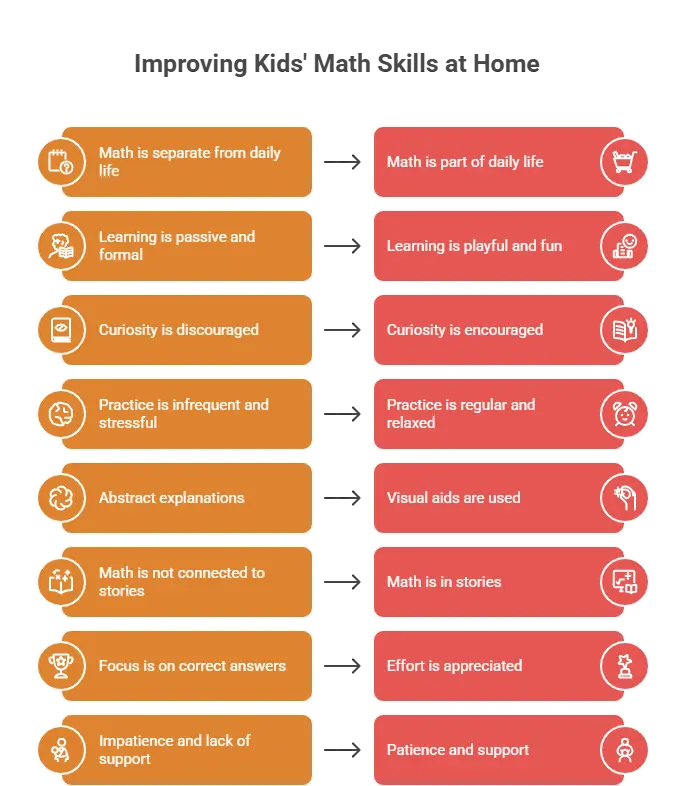
Parents can make a big difference by creating a positive and fun learning environment at home. Small efforts every day can help children build strong math skills with confidence.
1. Make Math a Part of Daily Life
You don’t need special tools to teach math. Involve your child in simple daily activities like counting fruits, setting the table, or measuring ingredients while cooking. This helps them see how math is used in real life.
2. Use Fun and Playful Activities
Children learn best through play. Use games like puzzles, board games, building blocks, or counting games to make math enjoyable. When learning feels like fun, children stay more interested and engaged.
3. Encourage Questions and Curiosity
Let your child ask questions and explore answers. If they are curious about numbers or patterns, guide them gently instead of giving direct answers. This helps improve their thinking and problem-solving skills.
4. Practice Regularly, Without Pressure
Short and simple practice sessions every day are more effective than long study hours. Keep the environment relaxed and positive so your child does not feel stressed or forced to learn.
5. Use Visual Aids and Objects
Children understand better when they can see and touch things. Use objects like toys, beads, or drawings to explain math concepts. Visual learning makes ideas clearer and easier to remember.
6. Read Math-Based Stories and Books
Storybooks that include numbers, counting, or patterns can make learning more interesting. It helps children connect math with language and imagination.
7. Appreciate Effort, Not Just Results
Encourage your child even if they make mistakes. Praise their effort and progress instead of focusing only on correct answers. This builds confidence and motivates them to keep trying.
8. Be Patient and Supportive
Every child learns at their own pace. Stay calm and supportive, especially when they find something difficult. Your encouragement helps them feel safe and confident while learning.
Common Challenges in Learning Math
Challenges are common, but with patience, encouragement, and the right approach, children can overcome them and feel more confident in learning math.
1. Fear and Lack of Confidence
Many children feel that math is difficult, especially if they don’t understand a topic the first time. This fear can slowly turn into a lack of confidence. When children start believing they are “not good at math,” they may avoid trying altogether.
2. Weak Basic Concepts
Math builds step by step. If a child does not clearly understand basics like counting, numbers, or simple addition, it becomes harder to learn advanced topics. This can make them feel confused and frustrated.
3. Learning by Rote Instead of Understanding
Sometimes, children are asked to memorize answers without really understanding the concept. This may help in the short term, but later they struggle to apply what they learned. Without clear understanding, math feels difficult and boring.
4. Lack of Interest or Engagement
If math is taught in a dull or repetitive way, children may lose interest. Worksheets alone may not be enough. Without fun activities or interaction, children may not feel motivated to learn.
5. Difficulty in Concentration
Math requires focus and step-by-step thinking. Some children find it hard to concentrate for long periods, which makes it difficult to follow and solve problems correctly.
6. Pressure and Comparison
Children may feel stressed when they are compared with others or expected to perform perfectly. This pressure can create anxiety and reduce their willingness to try and learn.
7. Limited Practice in Real-Life Situations
When math is not connected to daily life, children may not understand its importance. Without practical use, concepts may feel abstract and harder to remember.
8. Lack of Support and Guidance
Sometimes children do not get enough help at home or school when they struggle. Without proper guidance, small doubts can turn into bigger problems over time.
Register for the Entri Elevate Montessori Teacher Training Program! Join Now!
Conclusion
Helping children build strong math skills starts with simple and fun foundation activities. When kids learn through play, daily experiences, and hands-on methods like Montessori, math becomes easier and more enjoyable for them. With the right support from parents and teachers, children can slowly build confidence and develop a positive attitude towards learning.
Every child learns at their own pace, so patience and encouragement are very important. With consistent practice and a friendly approach, children can overcome challenges and grow comfortable with math. A strong foundation today will help them succeed in the future.
Get Certified & Start Your Montessori Career
Montessori Teacher Training Course by Entri App: Gain expert skills, earn certification, and kickstart your teaching career.
Join Now!Frequently Asked Questions
At what age should children start learning math?
Children can start learning basic math concepts as early as 2–3 years old. At this age, learning should be simple and fun, like counting objects, recognizing shapes, and identifying patterns through play.
What are foundation math skills for young children?
Foundation skills include counting, number recognition, shapes, patterns, sorting, and understanding concepts like big/small or more/less. These basics help children build a strong base for future learning.
How can parents make math fun at home?
Parents can use games, toys, and daily activities like counting fruits, cooking, or playing shop. Making math part of everyday life helps children learn naturally without feeling pressure.
Why are hands-on activities important in math learning?
Hands-on activities help children see and touch what they are learning. This makes it easier to understand concepts and remember them for a longer time compared to just reading or memorizing.
What are Montessori methods in math teaching?
Montessori methods use special learning materials and practical activities to teach math step by step. Children learn at their own pace and focus on understanding concepts instead of memorizing them.
What if my child finds math difficult?
It is normal for some children to struggle with math. Parents should be patient, encourage practice, and use simple, fun methods to explain concepts. Support and positivity can help children improve over time.
How often should children practice math?
Short daily practice is best. Even 10–15 minutes of fun activities or simple exercises can help children build strong math skills without feeling overwhelmed.