Table of Contents
Many professionals feel stuck in routine jobs. Growth feels slow and uncertain. Opportunities seem limited in traditional roles. Skills go unnoticed and underused. Many wonder about switching careers. The digital world offers new possibilities. One exciting path is social media. This guide explains How Non-IT Background Professionals Can Become Social Media Strategists.
Social media is growing every year. Brands compete for online attention. Businesses need smart digital planners. Strategy matters more than random posting. Creative thinkers are highly valued. Communication skills are powerful assets. Even non-technical professionals can succeed. With guidance, transition becomes easier. A clear roadmap makes success achievable.
Introduction
Career growth often slows in traditional structured roles. Many professionals feel limited by fixed workplace systems. Promotions depend mostly on hierarchy and long tenure. Creativity rarely finds full professional expression. Daily work becomes predictable and repetitive over time. Learning feels routine and lacks fresh challenges. Salary growth may not match rising expectations. This situation creates frustration and career uncertainty. Many professionals start searching for better opportunities. They want roles offering flexibility and innovation. They seek careers with faster growth potential.
Digital careers are expanding rapidly across India. Businesses invest heavily in online brand visibility. Customers spend more time on social platforms. Brands compete strongly for attention and engagement. This shift increases demand for skilled strategists. Companies need planners, not random content posters. Strategists align creativity with business objectives. Non-IT professionals already have valuable transferable skills. Communication, sales, and teaching support strategy roles. Learning tools and platforms builds strong confidence. Social media strategy rewards skill over background.
Join Our Online Digital Marketing Course & Learn the Fundamentals!
Who Is a Social Media Strategist?
1: What is the primary goal of SEO (Search Engine Optimization)?
A Social Media Strategist builds brand growth online through structured planning. The role focuses on setting clear goals and aligning content with business objectives. Audience behavior shapes communication and campaign direction. Creativity blends with analytical thinking for better outcomes. Consistency builds long-term brand visibility and trust. Purpose matters more than popularity or random posting.
Core Responsibilities
A strategist handles planning, content design, and performance evaluation. Each responsibility supports measurable business growth and brand development.
Planning Brand Direction
-
Maintains consistent brand voice across platforms.
-
Identifies audience segments with careful research.
-
Aligns content themes with business goals.
-
Connects campaigns directly with strategy objectives.
Designing Content Strategy
-
Selects suitable content formats thoughtfully.
-
Balances promotional and value-based content.
-
Uses storytelling to build emotional connection.
-
Plans seasonal and campaign-based content.
Performance Monitoring
-
Analyzes metrics for continuous improvement.
-
Identifies strengths and weaknesses clearly.
-
Uses data to guide planning decisions.
-
Adjusts strategy based on insights.
Key Characteristics
Successful strategists use analytical and creative skills together. They understand business needs and audience expectations. Innovation attracts attention and increases visibility. Logical thinking improves campaign performance. Experimentation supports continuous learning.
Business Impact and Summary
Strategic planning increases brand visibility and credibility. Consistent communication builds audience trust and loyalty. Lead generation becomes more focused and effective. Data-driven decisions ensure steady improvement. A Social Media Strategist drives measurable digital success.
Become an AI-powered Digital Marketing Expert
Master AI-Driven Digital Marketing: Learn Core Skills and Tools to Lead the Industry!
Explore CourseWhy Non-IT Professionals Are a Good Fit
Many believe digital careers require technical degrees. This belief creates unnecessary fear and hesitation. Social media strategy values human-centered skills strongly. Practical experience often outweighs academic specialization. Non-IT backgrounds build transferable professional strengths. Workplace exposure develops useful strategic abilities. Career diversity becomes a major advantage. Real-world interaction builds strategic maturity.
Key Strengths That Support Transition
Non-IT professionals already possess skills needed for strategy roles. These strengths align naturally with digital planning and execution.
Strong Communication Skills
-
Build clear and trusted brand messaging.
-
Improve tone adaptability for different audiences.
-
Support structured writing and presentation.
-
Enhance feedback handling and engagement.
-
Strengthen consistent brand voice online.
Understanding Consumer Psychology
-
Helps observe buying and hesitation patterns.
-
Improves emotional and persuasive messaging.
-
Supports trust-based content creation.
-
Encourages repeat engagement and loyalty.
-
Increases targeting and relevance accuracy.
Brand Awareness and Positioning
-
Develops sense of public image management.
-
Supports value-based and consistent messaging.
-
Improves competitive and market understanding.
-
Aligns communication with business objectives.
-
Strengthens long-term brand identity.
Storytelling and Creativity
-
Turns ideas into relatable narratives.
-
Improves emotional connection with audiences.
-
Supports campaign concept development.
-
Encourages experimentation with new formats.
-
Enhances content flow and structure.
Adaptability and Professional Discipline
-
Supports learning new tools and processes.
-
Builds accountability and time management.
-
Encourages calm handling of pressure.
-
Improves consistency in strategic planning.
-
Strengthens long-term career growth.
Overall Alignment
Non-IT professionals bring balanced and valuable capabilities. Communication builds trust and clarity. Psychology improves targeting precision. Brand awareness strengthens positioning. Creativity deepens engagement. Adaptability ensures sustainable growth. Background does not limit opportunity. Diverse experience creates strategic advantage. Human-centered skills drive digital success.
Join Our Online Digital Marketing Course & Learn the Fundamentals!
Frequently Asked Questions
Can a non-IT professional really become a social media strategist?
Yes, a non-IT professional can absolutely become a social media strategist. This field values communication, creativity, and analytical thinking more than technical coding skills. Many successful strategists come from backgrounds like sales, teaching, HR, and business development. Transferable skills such as storytelling, consumer understanding, and structured planning are highly relevant. With consistent learning and practical exposure, transitioning becomes realistic and achievable.
Do I need a digital marketing degree to enter this field?
A formal degree in digital marketing is not mandatory. Employers often focus more on skills and practical experience. Online certifications and short-term courses can build foundational knowledge. Managing sample projects and building a portfolio matters significantly. Demonstrating results and understanding strategy carries more weight than academic background alone.
How long does it take to transition into this career?
The transition timeline depends on learning pace and dedication. With focused effort, basic skills can be developed within three to six months. Gaining confidence may take additional practice time. Managing personal projects accelerates understanding. Within six to twelve months, many professionals become ready for internships or junior roles.
What are the most important skills to develop first?
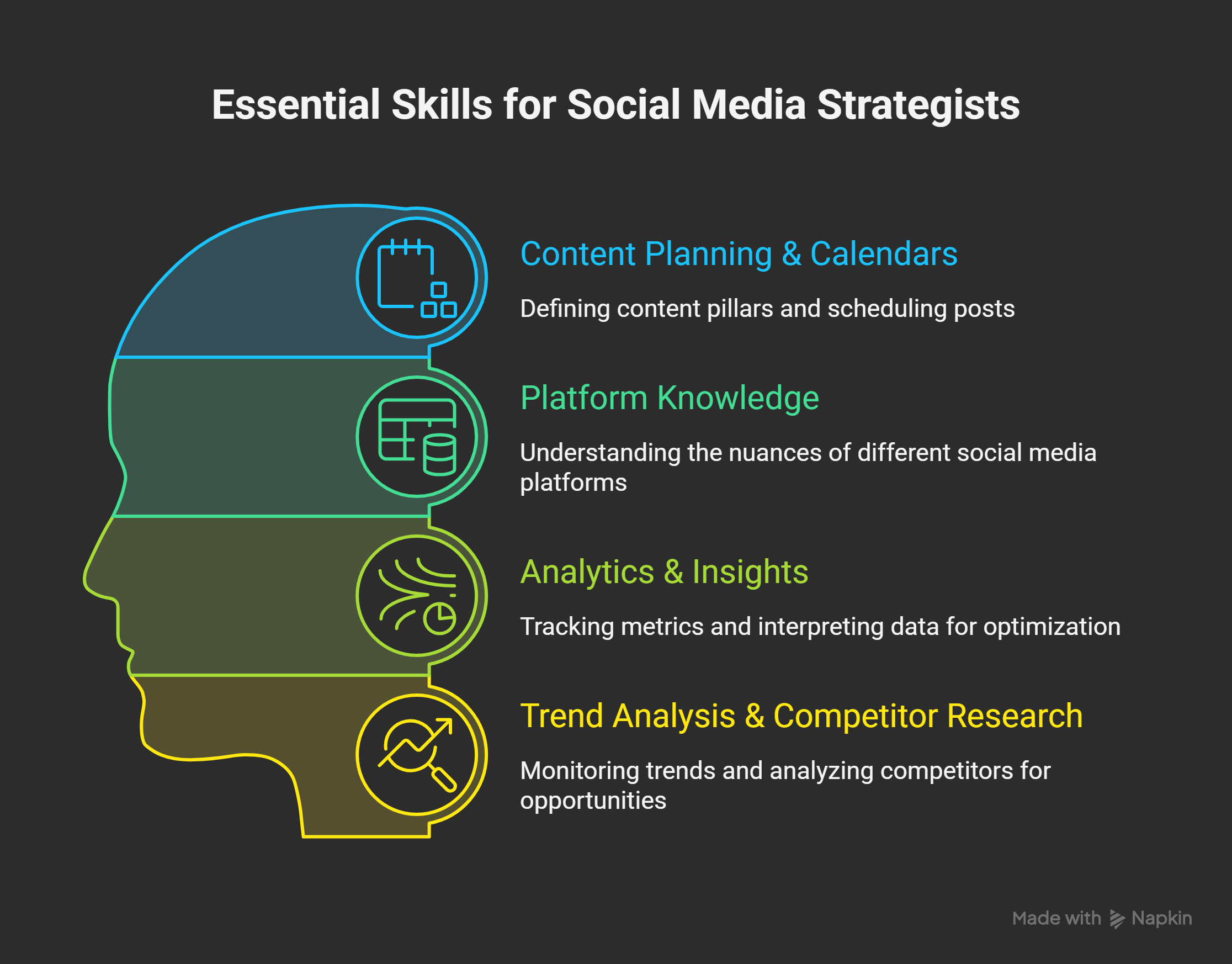
Start with content planning and platform understanding. Learn how different platforms function and what type of content performs well. Develop basic analytics reading skills to interpret performance data. Practice writing engaging captions and structured posts. Over time, build competence in trend analysis and competitor research.
Is coding required to become a social media strategist?
Coding is not required for this role. Social media strategy focuses on planning, creativity, analytics, and audience behavior. Most tasks involve using user-friendly digital tools. Understanding platform features and content optimization is more important than technical programming. Basic digital literacy is sufficient to begin.
How important is a portfolio for getting hired?
A portfolio is extremely important in this field. It demonstrates practical skills and strategic thinking. Employers want proof of content planning and measurable growth. Including analytics screenshots and campaign explanations strengthens credibility. A strong portfolio can compensate for limited professional experience.
What tools should beginners learn first?
Beginners should start with Meta Business Suite for platform management. Canva is useful for visual content creation. Hootsuite or Buffer helps manage multiple platforms efficiently. Basic Google Analytics knowledge connects social activity to website performance. Tool familiarity improves professional readiness significantly.
What salary can beginners expect in India?
Entry-level professionals usually earn between ₹15,000 and ₹25,000 per month. Annual packages range between ₹3 to ₹4.5 LPA. Salary depends on city, company size, and skill level. Metro cities often offer slightly higher compensation. Growth becomes faster with strong performance results.
Can I work as a freelancer instead of joining a company?
Yes, freelancing is a viable option. Many brands hire independent strategists for project-based work. Beginners may start with smaller projects to build experience. As expertise grows, monthly retainers increase significantly. Freelancing offers flexibility but requires strong self-discipline.
What are the long-term growth opportunities in this field?
Social media strategy offers strong long-term potential. Professionals can move into senior strategist roles with higher pay. Leadership positions such as digital marketing manager become possible. Some strategists start their own agencies or consulting services. Continuous learning ensures steady career advancement.