Table of Contents
To give your robotics career a solid start after getting your MTech, you’ve got three things to focus on: get a solid grounding in ROS (Robot Operating System), get your hands dirty with some hardware projects, and aim your sights on companies that are into automation or robot manufacturing – that’s probably where your skills are going to be in demand.
Key Takeaways
-
To start a robotics career after MTech, learn ROS and Python first. Complete two hardware projects before applying for jobs.
-
Your MTech degree already provides strong math and problem solving skills. Robotics simply asks you to apply them to hardware.
-
The best specializations for robotics are Control Systems, Embedded Systems, Mechanical, and Computer Vision. Other specializations can still enter with extra effort.
-
Top career paths include Robotics Software Engineer, Automation Engineer, and Application Engineer. Salaries range from 6 to 25 lakhs per year.
-
Common mistakes to avoid include ignoring software skills, doing only online courses, and targeting only top companies without experience.
New to Robotics? Start from the Basics. Join Now!
Why Robotics is a Strong Career Path After You Finish Your MTech Degree
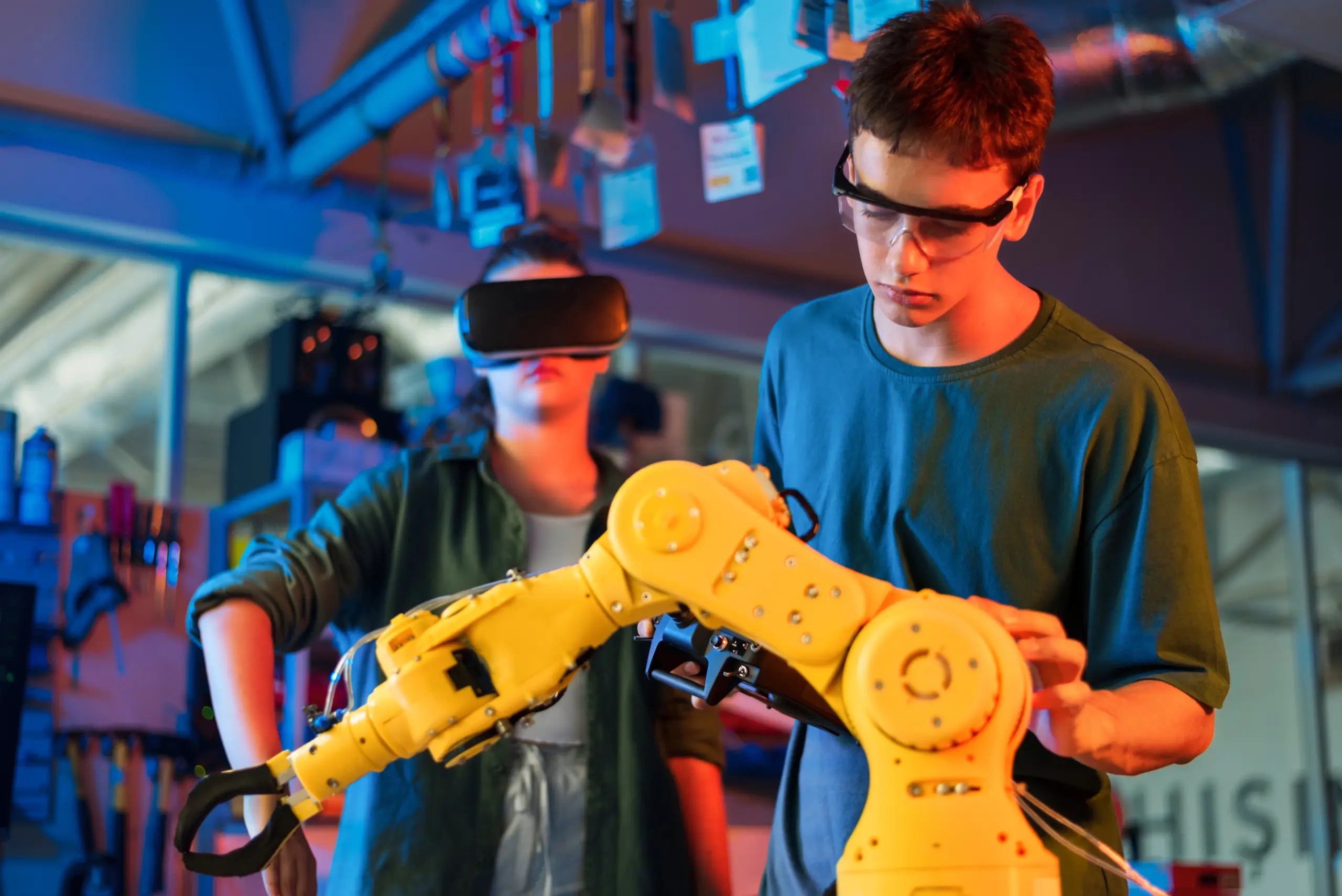
Robotics is booming right now. Factories are desperate for more automation. Hospitals are using surgical robots to save lives. Farms are using automated harvesters to get the harvest in faster. And it’s hard for companies to find smart, skilled robotics engineers to fill those gaps – which creates real opportunities for MTech graduates like you.
You’ve already got a great foundation from your postgraduate degree – strong analytical skills that are going to serve you well. And robotics is all about putting that theoretical knowledge into practice in a hands-on way. In India, the average robotics engineer can expect a salary of anywhere from 6 to 15 lakhs per year.
Experienced pros are raking in over 25 lakhs annually. And the job itself stays interesting because just when you think you’ve got it figured out, something new comes along and challenges you.
The State of the Robotics and Automation Job Market Right Now
The robotics market in India is growing at a whacking 15 percent every year. The demand is coming from manufacturing companies, and they’re using robots for all sorts of tasks – like welding and painting in car plants, or assembly in electronics plants.
Ecommerce warehouses are even using them to sort and pack all the packages they send out. And the big global players like ABB, Fanuc and Kuka aren’t the only ones – Indian companies like Addverb, GreyOrange and Sastra Robotics are hiring like there’s no tomorrow.
The government has even put some initiatives in place like the PLI schemes to encourage automation adoption – so that’s more jobs for people with a career in robotics after MTech.
Master Robotics and AI!
Ready to build the future? Join our comprehensive robotics course to bridge the gap between complex code and physical motion. You’ll gain hands-on experience giving you the technical edge needed to lead in the age of automation.
Know MoreBackground / Career Context
Most MTech graduates are left scratching their heads as they try to figure out how to transition into robotics. Their advanced engineering degree may cover all sorts of theoretical concepts, but in reality, robotics needs a different kind of skill set.
You need a mix of mechanical, electrical and software knowledge and often a lot of this knowledge isn’t taught in even the most advanced engineering courses. This confusion ends up putting a lot of people off from ever taking the first step.
The reality is, if you’re an MTech graduate, you already have a lot of the pieces of the puzzle. Your degree has taught you some really valuable skills, like control systems, signal processing, or embedded systems. The problem is that robotics is all about putting those skills to use in the real world, with real hardware and real programming.
But the good news is that this transition isn’t actually that hard – if you’re willing to put in the work, you should be able to pick up the rest of what you need in just 3-6 months.
What an MTech Graduate Can Bring to the Robotics Party
Now, you might be wondering what exactly an MTech graduate can bring to the table when it comes to robotics. Well, the answer is that your degree has given you a whole bunch of advantages. You can handle complex math and physics, you know how to read research papers and you know how to test and validate systems – all of which are essential skills when it comes to robotics.
And the truth is that it’s the deeper understanding and problem solving ability that you develop during your MTech that makes you so valuable to companies. A fresh Bachelors graduate might be able to program a robot arm, but it’s the MTech graduate who can figure out why that arm drifts over time and solve the problem that’s really going to get hired.
New to Robotics? Start from the Basics. Join Now!
Key Specializations that Align with Robotics
Now, not all MTech specializations are created equal when it comes to robotics – some are going to be a much better fit than others.
Best Specializations for a Robotics Career After MTech
- Control Systems – This one should be a no-brainer. If you’ve already got a handle on feedback loops and system stability, you’re halfway to being able to program a robot arm already.
- Embedded Systems – If you know your microcontrollers and are familiar with real time operating systems, you’re off to a great start when it comes to robotics.
- Mechanical Engineering – If you know your kinematics and dynamics, you’re going to be a natural fit for robot design.
- Computer Vision – With computer vision being one of the fastest growing areas of robotics, if you know your image processing, you’re in a great position to take advantage of this.
- VLSI and Chip Design – This one’s going to require a little bit of extra learning, but anyone with a VLSI background is going to be able to pick up any required development work in no time.
And the good news is that if your MTech specialization is a bit of an odd one out when it comes to robotics, you can still make it work. Focus on learning ROS and building two hardware projects, and you’ll be well on your way to becoming a robotics engineer.
A lot of successful robotics engineers haven’t even come from the most conventional backgrounds – if you’re a power systems engineer or a thermal engineer looking to make a change, don’t be afraid to take the leap.
Build Core Technical Skills
Focuses on skill building. Here is what you need to learn in order of priority.
First priority: ROS and Python
ROS is the standard operating system for robots. Learn ROS Noetic or ROS2. Practice by running simulations in Gazebo. Python is the main language for robotics. Master basic syntax, classes, and common libraries like NumPy.
Second priority: Sensors and Actuators
Learn how to work with common sensors like LIDAR, cameras, and IMUs. Understand how motors and servos work. Build a small project that reads sensor data and controls a motor.
Third priority: Robot Math
Review linear algebra and coordinate transforms. Learn quaternions for rotation. Understand forward and inverse kinematics. These topics feel hard at first. But they become easier with practice.
Fourth priority: Practical tools
Learn Linux command line. Git for version control. Docker for running software in containers. These tools appear in every robotics job.
Dedicate two hours daily for four months. Complete one online course on ROS. Build one hardware project like a line following robot or a robotic arm with servo motors. This combination of theory and practice will make you job ready.
Best Career Paths in Robotics After MTech
Different career paths suit different interests. Your robotics career after MTech can go in several directions.
-
Robotics Software Engineer
You write code that makes robots work. This includes perception algorithms, motion planning, and control logic. Most jobs fall in this category. Salary range is 8 to 18 lakhs per year.
-
Automation Engineer
You design and deploy robotic systems in factories. Work involves integrating robots with conveyor belts, sensors, and other machines. Travel to client sites is common. Salary range is 6 to 14 lakhs per year.
-
Robot Application Engineer
You help customers use specific robot products. This involves programming demo applications, troubleshooting issues, and training client teams. The role combines technical skills with customer interaction. Salary range is 7 to 15 lakhs per year.
-
Research Engineer (R&D)
You work on new robot capabilities. Companies like Tata Elxsi and Bosch hire research engineers. This role needs strong math and publication track record. Salary range is 10 to 25 lakhs per year.
-
Field Robotics Engineer
You work with drones, agricultural robots, or underwater vehicles. The work happens outdoors or in special environments. This path suits people who like practical testing. Salary range is 8 to 20 lakhs per year.
-
Robotics Consultant
You advise companies on automation strategies. This path requires five to seven years of experience first. But it pays well. Senior consultants earn 25 to 40 lakhs per year.
Advantages and Challenges of a Robotics Career
Advantages
Your work has visible impact. You can point to a robot and say “I made that move.” The field keeps you learning constantly. Boredom is rare.
Job security is strong. Automation is not a trend. It is a fundamental shift in how industries work. Companies will always need people who understand robots.
The pay grows quickly. Junior roles start moderate. But experienced robotics engineers earn as much as software engineers in top product companies.
Challenges
Hardware projects cost money. A basic robot kit costs 15,000 to 50,000 rupees. Not everyone can afford this. Solutions include university lab access, online simulators, or joining a robotics community with shared equipment.
Jobs are concentrated in cities. Bengaluru, Pune, Chennai, and Delhi NCR have the most opportunities. If you live in a smaller city, you might need to relocate.
Debugging is harder than software alone. A software bug crashes a program. A robotics bug can crash a physical robot. Broken hardware means repair costs. This pressure makes some people uncomfortable.
The learning curve feels steep initially. ROS has a reputation for being difficult. Many people quit in the first month. Those who push through succeed.
Master Robotics and AI!
Ready to build the future? Join our comprehensive robotics course to bridge the gap between complex code and physical motion. You’ll gain hands-on experience giving you the technical edge needed to lead in the age of automation.
Know MoreCommon Mistakes to Avoid After MTech

Mistake 1: Waiting for the perfect job
Some graduates spend months searching for a direct robotics role. They reject automation jobs or technician roles as beneath them. This is wrong. Any job that puts you near robots is valuable. You learn practical skills that lead to better roles later.
Mistake 2: Ignoring software skills
Many MTech graduates focus only on hardware. They learn mechanical design or motor control but avoid programming. This makes them less competitive. Modern robotics needs software skills. Learn to code even if it feels uncomfortable.
Mistake 3: Doing only online courses
Online courses teach theory. They do not teach troubleshooting. A robot never works perfectly the first time. You learn by fixing real problems. Complete at least two hardware projects before applying for jobs.
Mistake 4: Applying without portfolio
Resumes without project links get ignored. Create a GitHub repository with your code. Make a simple video of your robot working. Share these in your job applications. A portfolio proves you can do the work better than any degree.
Mistake 5: Targeting only top companies
New graduates want to join Google Robotics or Tesla. These companies reject most applicants. Start with system integrators or smaller robot startups. Get one year of experience. Then apply to bigger names. Your chances improve dramatically with real work experience.
New to Robotics? Start from the Basics. Join Now!
Conclusion
A robotics career after MTech is completely achievable. The path requires focus on ROS, Python, and hardware projects. You do not need a PhD or ten years of experience. You need consistent effort for four to six months.
Start this week. Install Ubuntu on your laptop. Run the ROS installation steps. Complete one tutorial every day. Join the Robotics India Discord community for support. By this time next year, you could be working on real robots in a company.
The demand for robotics engineers is rising. Companies cannot fill their open positions fast enough. This is your opportunity. Take the first step today.
Master Robotics and AI!
Ready to build the future? Join our comprehensive robotics course to bridge the gap between complex code and physical motion. You’ll gain hands-on experience giving you the technical edge needed to lead in the age of automation.
Know MoreFrequently Asked Questions
Is MTech necessary for a robotics career?
No. A Bachelors degree with strong projects can also work. But MTech gives you an advantage in theory and research roles.
Which programming language is most important for robotics?
Python. Learn it first. C++ is useful for performance critical systems but Python handles most robotics tasks.
How long does it take to transition from MTech to robotics?
Three to six months of focused effort. Spend two hours daily on ROS, Python, and hardware projects.
Do I need to buy expensive robot kits?
No. Start with simulators like Gazebo. Join university labs or robotics communities for hardware access.
Which cities have the most robotics jobs in India?
Bengaluru, Pune, Chennai, and Delhi NCR. Most opportunities are in these metropolitan areas.
Can I get a robotics job without knowing ROS?
Unlikely. ROS is the industry standard. Over 90 percent of robotics jobs require ROS knowledge.
What is the starting salary for a robotics engineer after MTech?
6 to 8 lakhs per year for freshers. Top performers with strong portfolios can start at 10 to 12 lakhs.
Which industries hire robotics engineers the most?
Automotive manufacturing, electronics assembly, ecommerce warehousing, and medical devices.
Should I do a PhD for better robotics career growth?
Not necessary for industry roles. A PhD helps only for research positions or teaching. Experience matters more.