Table of Contents
In the Indian banking industry that is advancing at a rapid pace, trust is undoubtedly its central pillar. However, that trust was recently tested when news of a massive financial irregularity involving one of the country’s most popular private lenders came out. The IDFC First Bank fraud, which amounts to a staggering ₹590 crore, has sent shockwaves through the financial markets. This incident has also raised serious questions about internal bank controls.
Centred at a single branch in Chandigarh, this fraud serves as a wake-up call for both institutional and retail depositors. Though the bank has acted quickly to contain the damage, the scale of the discrepancy, which at one point exceeded the bank’s entire quarterly profit brings to light how even modern, tech-savvy banks are not immune to old-school collusion and manual overrides.
Learn trading from experts! Join today to learn the fundamentals of trading!
What Exactly Happened?

The outside world came to know about the story of the IDFC First Bank fraud in mid-February 2026. Unlike sophisticated cyber-attacks that involve hackers and complex coding, this case appears to be a classic example of internal “collusion.”
The fraud was revealed when a Haryana state government department attempted to perform a routine banking task of closing an account and transferring the funds to a different bank. During this process, a massive mismatch was discovered. The government’s records showed one balance, while the bank’s internal systems showed another.
As the bank began a deeper reconciliation of accounts linked to the Haryana government, the gap widened. What started as a discrepancy of ₹490 crore soon climbed to ₹590 crore as more connected accounts were scanned.
The Modus Operandi
How does ₹590 crore simply “disappear” from a modern bank? According to preliminary investigations and statements from the bank’s CEO, the fraud was orchestrated through the following methods:
- Forged Cheques: Employees allegedly used forged physical cheques and “manual overrides” to siphon money out of government accounts.
- Bypassing the Maker-Checker System: In banking, every transaction usually requires a “Maker” (who initiates it) and a “Checker” (who verifies and approves it). In this instance, it appears multiple employees at the Chandigarh branch worked together to bypass these essential hurdles.
- Targeting Government Accounts: Government departments often hold large surpluses. Because these accounts may not be monitored with the same daily scrutiny as a private business account, they became an attractive target for the fraudsters.
The Immediate Impact: Market Crash and Recovery
The revelation of the IDFC First Bank fraud had a brutal impact on the bank’s valuation. On the Monday following the disclosure, the bank’s shares plummeted by nearly 20%, hitting the lower circuit. This single-day crash wiped out over ₹14,000 crore in investor wealth.

However, the response from both the state and the bank was exceptionally fast:
- Swift Recovery: Haryana Chief Minister Nayab Singh Saini informed the State Assembly that the bank returned nearly ₹556 crore (including ₹22 crore in interest) within just 24 hours of the incident coming to light.
- Total Settlement: By February 24, 2026, the bank confirmed it had paid out 100% of the principal and interest claimed by the relevant departments, totaling approximately ₹583 crore.
- Strict Action: Four employees were suspended immediately, an FIR was filed with the Anti-Corruption Bureau, and the bank appointed a global forensic firm to investigate the lapse.
Following IDFC Bank’s disclosure that it had paid the full principal and interest amount claimed by Haryana Government’s departments, the bank’s share price surged by 3% on Tuesday, February 24th.
Brokerages cut targets

As per the brokerages, apparently the incident is operational rather than structural. However, they are of the opinion that near-term earnings and sentiments would probably take a hit.
Axis Direct stated that though the fraud seems to be limited to a single branch and management does not expect any material escalation, there will be an impact on near-term profitability. In spite of cutting FY26 earnings sharply, Axis Direct broadly maintains FY 27-28 estimates. This is based on the assumption that there will not be any cascading impact from government-related business.
Emkay Global, another brokerage, has retained an ADD rating on IDFC First Bank. However, it has cut its target price by nearly 16% to Rs.80. The brokerage has valued the stock at 1.2x FY28E adjusted book value.
JP Morgan, a global brokerage, has communicated that it will retain its ‘Overweight’ rating on IDFC First Bank. The brokerage report says that IDFC is well capitalised with sufficient buffers to absorb an impact of this scale. For your information, the bank has a Capital Adequacy Ratio of 16.2% and a Liquidity Coverage Ratio of 115% as of Q3FY26. As per the report, a portion of the loss could be offset via employee dishonesty insurance and possible recovery actions. However, it also added that stock price would probably remain volatile in the near future with a gradual recovery as investors are waiting for further details from the forensic audit and other internal investigations that are yet to be completed.
Deep Dive: How the “Human Element” Overrides Technology
One of the most concerning aspects of the IDFC First Bank fraud is that there were no high-tech hacking tools involved. Instead, it relied on the oldest trick in the book: human manipulation.
The Breakdown of Internal Controls
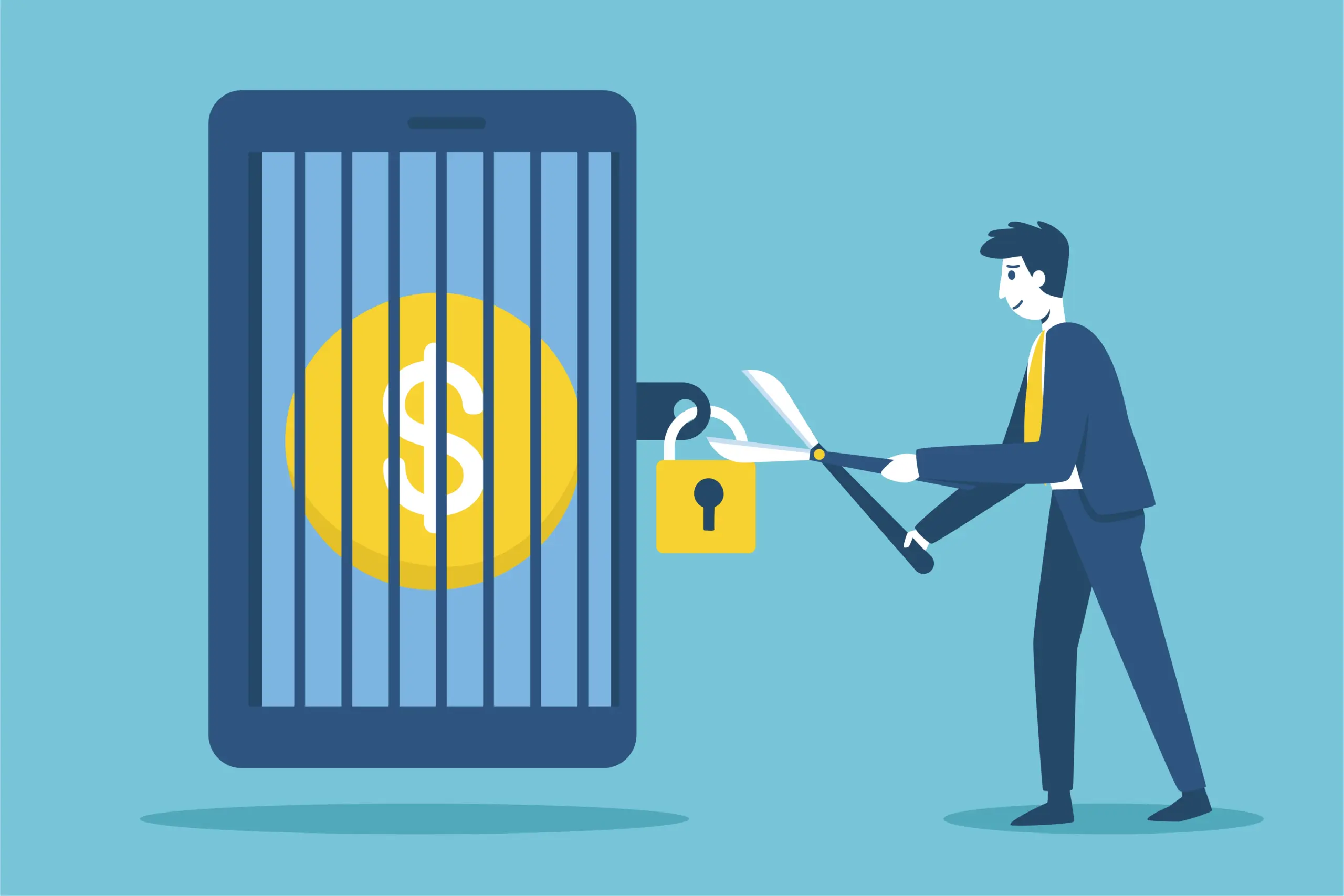
Modern banks use software that is designed to flag suspicious movements. However, when the very people hired to monitor these flags—the branch managers and operations heads—are part of the scheme, the software becomes a “silent witness.” In this case, the perpetrators reportedly utilized manual overrides. These are special permissions granted to bank staff to process transactions that might otherwise be blocked by the system (such as missing signatures or mismatched dates).
Why Government Accounts are Targets
Government accounts are often seen as “lazy capital.” Large sums of money, often from central grants or state tax collections, sit in these accounts for months before being spent on infrastructure or welfare. Unlike a private business owner who checks their balance daily via a mobile app, government departments often rely on monthly or quarterly manual reconciliations. This time gap gives fraudsters a window to move money, use it elsewhere, and sometimes even try to return it before the next audit.
How to Secure Your Own Bank Account
While this specific case involved a large government client, the methods used—like forged cheques and internal collusion—could theoretically be used against anyone. Here is how you can protect your money:
1. Enable “Positive Pay” for Cheques
Most Indian banks now offer a “Positive Pay” system. Whenever you issue a high-value cheque (usually above ₹50,000), you must re-confirm the details such as payee name, amount, date etc. through your mobile app. The bank will only honor the cheque if the physical leaf matches your digital entry.
2. Monitor “Maker-Checker” Alerts
If you run a business account, never give one person total control. Ensure your bank sends “Transaction Initiated” alerts to one mobile number and “Transaction Approved” alerts to another. This creates a digital audit trail that makes it tough for a single corrupt employee to hide.
3. Regular Reconciliation
Never make the mistake of waiting for the monthly statement. Check your transaction history weekly. In the IDFC First Bank fraud, the discrepancy was only caught when the client tried to close the account. The benefit of doing frequent checks is that it helps spot unauthorized debits early. If you come across a transaction that you do not recognize, report it within 48 hours to limit your liability.
4. Beware of “Internal” Social Engineering
Never share your OTP or login credentials with anyone, even if they claim to be a “Bank Manager” or “Relationship Manager.” Fraudsters often use the names of real employees to gain your trust. Remember, no bank official is authorized to ask for your password or OTP to “update your KYC” or “fix an error.”
5. Secure Your Physical Chequebook
Treat your chequebook like cash. Never leave blank, signed cheques in your drawer. If a leaf is lost or stolen, report it to the bank immediately to have that series blocked. Use “Account Payee” markings diligently to ensure the money can only be credited to a specific person’s bank account.
The Path Forward: Restoring Trust
The IDFC First Bank fraud has forced the banking industry to rethink its reliance on manual processes at the branch level. Moving forward, we are likely to see:
- Centralized Clearing: Shifting the power of cheque clearing away from local branches to centralized hubs where employees have no personal connection to the customers.
- AI Surveillance: Using artificial intelligence to monitor the behavior of bank employees, flagging those who frequently use “manual overrides” or access high-value accounts outside of regular patterns.
- Stricter Audits: More frequent surprise audits for government and high-net-worth accounts.
Learn trading from experts! Join today to learn the fundamentals of trading!
Key Takeaways
- Scale: The fraud involved approximately ₹590 crore siphoned from Haryana government accounts via the Chandigarh branch.
- Recovery: The bank has already refunded the entire principal and interest (approx. ₹583 crore) to the government to maintain its “Customer First” philosophy.
- Retail Safety: Individual savings accounts and FDs were not affected. The fraud was limited to a specific cluster of government accounts.
- The Cause: It was a case of internal employee collusion and forged physical documents, not a technical hack.
- Action: The RBI has stated there is no “systemic risk,” meaning the bank as a whole remains stable and well-capitalized.
Frequently Asked Questions
Was the IDFC First Bank fraud a cyber attack?
No. It was an operational fraud involving employee collusion and forged physical cheques, not a system hack or software breach.
I have a savings account with IDFC First Bank. Is my money safe?
Yes. The bank and RBI confirmed the fraud was isolated to specific government accounts in one branch. Retail deposits remain secure.
Has the money been recovered?
Yes. The bank has already credited back approximately ₹583 crore (principal plus interest) to the affected government departments.
Why did the stock price drop so much?
The market reacted to the “trust deficit” and the fact that the initial fraud amount exceeded the bank’s quarterly profit.
What is the "Positive Pay" system?
It is a security feature where you pre-confirm cheque details digitally via your mobile app to prevent forged cheques from being cleared.
Can I still use my IDFC First Bank credit card?
Yes, all digital services, credit cards, and UPI functions are working normally and were not impacted by this branch-level incident.
Who is investigating the case?
The Haryana Anti-Corruption Bureau (ACB), the bank’s internal teams, and an independent forensic agency are all investigating the matter.