Table of Contents
Key Takeaways:
- Eat in fixed time and fast for some hours
- It may help in weight loss and health
- It is not good for everyone
- Eat healthy food and drink water
- Start slowly and stay safe
Introduction
Intermittent fasting is a simple eating pattern where you cycle between eating and not eating for a fixed time. It does not focus on what foods you eat, but when you eat them. Many people follow it to improve health and manage weight in a natural way.
This method is becoming popular because it is easy to follow and does not need strict diet rules. Some people feel more energetic and focused while doing intermittent fasting. However, like any eating pattern, it also has some benefits and risks that you should understand before starting.
Become a General Fitness Trainer and turn your passion into a Profession!
What Is Intermittent Fasting?
Intermittent fasting is a simple way of eating where you follow a fixed time for eating and a fixed time for not eating. It is not about special foods.
In this method, you do fasting (no food) for some hours and then eat your meals in a limited time window. Many people use it to stay healthy and control weight.
Simple explanation:
- You eat only during a fixed time
- You do not eat for the remaining hours
- You repeat this cycle daily or weekly
How it works:
- During fasting time, you avoid all food
- During eating time, you eat normal healthy meals
Example:
- You may have your meals from 10 AM to 6 PM.
- Then you fast from 6 PM to next day 10 AM
Why people follow it:
- To reduce extra calorie intake
- To support weight management
- To improve daily eating habits
- To feel more light and active
Intermittent fasting is simple, but it needs consistency. It is important to choose a method that suits your body and daily routine.
Popular Types of Intermittent Fasting
Intermittent fasting has different methods. People choose the type that fits their daily life and comfort. All methods follow the same idea of eating in a fixed time and fasting for the rest of the time.
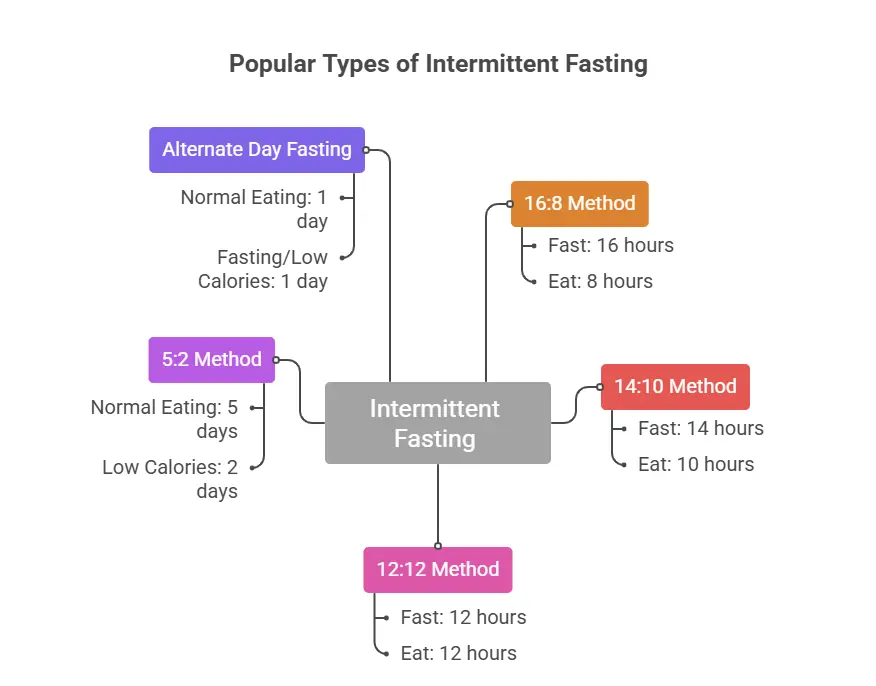
🔶16:8 Method
- You fast for 16 hours
- You eat during an 8-hour window
- Example: You can eat from 10 AM to 6 PM.
- This is the most common and easy method
🔶14:10 Method
- You fast for 14 hours
- You eat during 10 hours
- Example: You can eat from 9 AM to 7 PM
- This is good for beginners
🔶12:12 Method
- You fast for 12 hours
- You eat during 12 hours
- Example: You can eat from 8 AM to 8 PM
- This is the simplest form for new users
🔶5:2 Method
- You eat normally for 5 days in a week
- You eat very less food for 2 days
- These 2 days are not full fasting but very low calories
🔶Alternate Day Fasting
- You eat one day normally
- You fast or eat very little the next day
- This pattern repeats every other day
Why different types exist:
- To match different lifestyles
- To help beginners and advanced users
- To make fasting easier to follow
Each type works in its own way. You can choose the one that feels simple and comfortable for your body.
Turn Your Passion for Fitness into a Profession
Learn practical skills, get certified, and step into the growing fitness industry with confidence.
Join the CourseBenefits of Intermittent Fasting
Intermittent fasting has many simple health benefits.
1. Helps in weight loss
- You eat fewer meals in a day
- This can reduce extra calorie intake
- Body may start using stored fat for energy
2. Improves digestion
- The stomach gets enough rest time
- Food is digested more easily
- Helps reduce bloating in some people
3. Increases energy levels
- Many people feel light and active
- No heavy feeling from constant eating
- Body uses energy more efficiently
4. Supports better focus
- Some people feel more clear and focused
- Less food intake can reduce tiredness
- Helps in better concentration
5. May improve eating habits
- You avoid unnecessary snacking
- Helps you eat at fixed times
- Encourages more mindful eating
6. Helps control sugar levels (in some cases)
- May support better blood sugar balance
- Helps reduce frequent eating of sweets
- Can support metabolic health
Risks and Side Effects
🟠Hunger and food cravings
- You may feel very hungry during fasting hours
- Craving for snacks or sweets can increase
- This can make fasting difficult at first
🟠Low energy and tiredness
- Some people feel weak or low in energy
- You may feel less active during the day
- It can affect daily work in the beginning
🟠Headache or dizziness
- Not eating for long hours may cause headache
- Some people may feel light-headed
- This usually happens in the starting days
🟠Mood changes
- You may feel irritated or less patient
- Hunger can affect your mood
- Concentration may reduce for some people
🟠Overeating during eating time
- Some people eat too much after fasting
- This can reduce the benefits of fasting
- It may also cause stomach discomfort
🟠Not suitable for everyone
- Not recommended for children
- Not ideal for pregnant or breastfeeding women
- People with medical conditions should be careful
Who Should Avoid Intermittent Fasting?
🟠Pregnant women
- They need regular food for baby growth
- Long gaps without food can affect health
- So fasting is not safe during pregnancy
🟠Breastfeeding mothers
- They need extra energy and nutrition
- Fasting may reduce energy levels
- It can affect milk supply in some cases
🟠Children and teenagers
- Growing body needs regular food
- Skipping meals can affect growth
- Healthy regular meals are better for them
🟠People with diabetes
- Blood sugar may go too low or too high
- Fasting can be risky without medical advice
- Doctor guidance is very important
🟠People with eating disorders
- Fasting may increase unhealthy eating habits
- It can affect mental and physical health
- Regular balanced meals are safer
🟠People with serious health problems
- Such as liver, kidney, or heart issues
- Fasting may affect body balance
- Medical advice is necessary before trying
🟠People who feel weak or underweight
- Fasting may reduce body strength more
- It can cause tiredness and low energy
- Regular food is better for recovery
Turn Your Passion for Fitness into a Profession
Learn practical skills, get certified, and step into the growing fitness industry with confidence.
Join the CourseTips for Beginners
♦️Start slowly
- Do not start with long fasting hours
- Begin with small fasting time like 12 hours
- Increase slowly when your body adjusts
♦️Choose an easy method
- Try 12:12 or 14:10 method first
- These are simple for beginners
- Later you can try other methods if needed
♦️Drink enough water
- Drink water regularly during fasting time
- It helps reduce hunger feelings
- Keeps the body fresh and active
♦️Eat healthy food
- Choose fruits, vegetables, and simple meals
- Avoid too much junk food
- Healthy food gives better energy
♦️Do not skip nutrients
- Eat balanced meals during eating time
- Include proteins, vitamins, and minerals
- This keeps the body strong
♦️Avoid overeating
- Do not eat too much after fasting
- Eat slowly and in small portions
- This helps digestion and comfort
♦️Listen to your body
- If you feel weak or dizzy, stop and rest
- Do not force fasting every day
- Your comfort is very important
♦️Be consistent but flexible
- Try to follow a routine daily
- But adjust if you feel unwell
- Balance is more important than strict rules
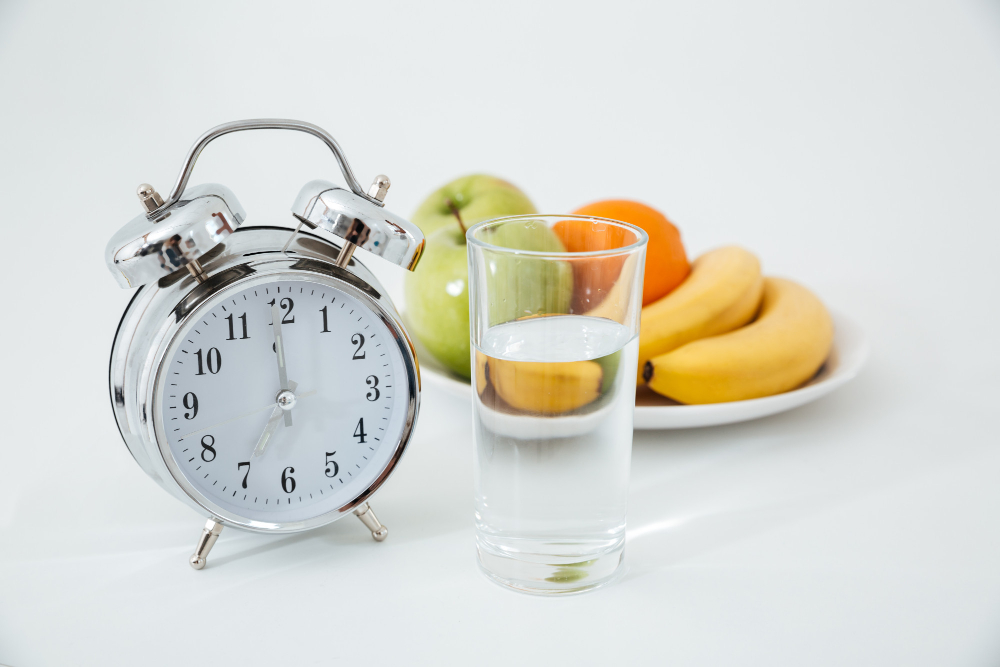
Foods to Eat During Fasting Plans
🟠 Fresh fruits
- Fruits are light and healthy
- They give natural energy
- Like apple, banana, orange, watermelon
- Help improve digestion
🟠 Vegetables
- Vegetables are rich in vitamins and minerals
- They keep the body healthy
- Like carrot, spinach, cucumber, broccoli
- Best when cooked simply or eaten fresh
🟠 Whole grains
- Give long-lasting energy
- Keep you full for longer time
- Like brown rice, oats, whole wheat bread
- Better than refined grains
🟠 Protein-rich foods
- Help build and repair body muscles
- Keep you strong and active
- Like eggs, dal, beans, chicken, fish
- Important for daily energy
🟠 Healthy fats
- Give energy in a healthy way
- Support brain and body functions
- Like nuts, seeds, olive oil, avocado
- Should be eaten in small amounts
🟠 Water and healthy drinks
- Drink plenty of water
- Helps keep the body hydrated
- You can also take coconut water or herbal tea
- Avoid sugary drinks
Become a General Fitness Trainer and turn your passion into a Profession!
Final Thoughts
Turn Your Passion for Fitness into a Profession
Learn practical skills, get certified, and step into the growing fitness industry with confidence.
Join the CourseFrequently Asked Questions
What is intermittent fasting?
Intermittent fasting is a simple eating pattern where you eat during a fixed time and avoid food for the remaining hours. It focuses on when you eat, not what you eat.
What are the main benefits of intermittent fasting?
It may help in weight loss, improve digestion, increase energy levels, and support better eating habits when followed properly.
Is intermittent fasting safe for everyone?
No, it is not safe for everyone. Pregnant women, children, breastfeeding mothers, and people with medical conditions should avoid it or ask a doctor.
What can I drink during fasting time?
You can drink water, plain tea, or black coffee without sugar. Avoid sugary or high-calorie drinks.