Table of Contents
🎯 The Answer
Key Takeaways:
- It focuses on meal timing.
- Fat loss remains its biggest advantage.
- Muscle growth requires proper planning.
- Protein intake stays essential.
- Exercise improves overall results.
- Hydration supports performance.
- Many fasting methods exist.
- Consistency matters not perfection.
- Food quality remains important.
- Not everyone responds similarly.
Become a General Fitness Trainer and turn your passion into a Profession!
📝 Introduction
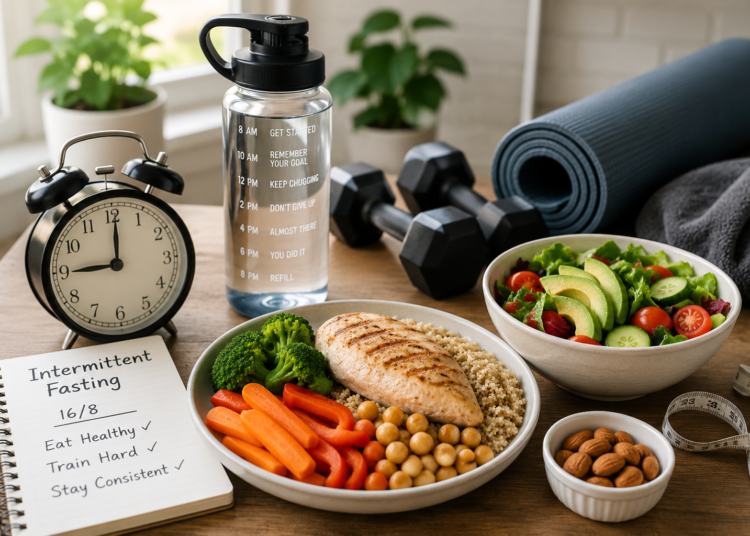
Intermittent fasting has become popular. People use it for weight loss. Others follow it for fitness goals. Some simply prefer structured eating patterns.
Unlike other diets, this fasting focuses on when people eat. It does not strictly control food choices. This flexibility attracts many fitness enthusiasts. However, understanding its effects remains important before starting.
Turn Your Passion for Fitness into a Profession
Learn practical skills, get certified, and step into the growing fitness industry with confidence.
Join the Course⏳ What Is Intermittent Fasting?
It is an eating pattern. It alternates eating and fasting periods. The focus remains on meal timing.
Key Features
- Limits eating to specific hours.
- Creates longer fasting periods.
- Does not ban specific foods.
- Can fit different lifestyles.
- Often simplifies meal planning.
How It Works
- Eating occurs within set windows.
- Fasting occurs between meals.
- Water remains important.
- Calorie-free drinks are often allowed.
- Consistency improves results.
Why People Choose It
- Simpler than many diets.
- Fewer meals require preparation.
- Easier calorie control.
- Flexible scheduling options.
- Supports various fitness goals.
Important Considerations
- Nutrition still matters.
- Protein remains essential.
- Exercise supports results.
- Sleep affects progress.
- Hydration stays important.
🔄 Popular Intermittent Fasting Methods
Several fasting methods exist today. Each method offers different benefits. Personal preference often determines success.
1️⃣ 16:8 Method
This remains the most popular option.
Structure
- Fast for 16 hours.
- Eat within 8 hours.
- Often skip breakfast.
- Lunch becomes first meal.
- Dinner ends eating window.
Benefits
- Easy to follow.
- Flexible scheduling.
- Beginner friendly.
- Supports fat loss.
- Fits busy lifestyles.
2️⃣ 14:10 Method
This method suits beginners.
Structure
- Fast for 14 hours.
- Eat within 10 hours.
- Easier adjustment period.
Benefits
- Less restrictive.
- Sustainable for beginners.
- Easier social flexibility.
3️⃣ 5:2 Method
This method uses weekly planning.
Structure
- Normal eating five days.
- Reduced calories two days.
- Fasting days stay separated.
Benefits
- Flexible weekly schedule.
- No daily fasting requirement.
- Easier for some individuals.
4️⃣ Alternate-Day Fasting
This method alternates eating patterns.
Structure
- Normal eating one day.
- Fasting next day.
- Repeats throughout weeks.
Challenges
- More difficult adherence.
- Increased hunger risk.
- Harder social scheduling.
5️⃣ One Meal A Day
This remains the strictest approach.
Structure
- One daily meal.
- Very long fasting periods.
- Limited eating opportunities.
Challenges
- Difficult for beginners.
- Harder nutrient intake.
- Exercise performance may suffer.
📊 Comparison of Popular Methods
| Method | Difficulty | Beginner Friendly |
|---|---|---|
| 14:10 | Easy | Yes |
| 16:8 | Moderate | Yes |
| 5:2 | Moderate | Yes |
| Alternate-Day | Hard | No |
| One Meal Daily | Very Hard | No |
💡 Pro Tip
Start with easier methods first. Gradual adaptation improves success.
⚙️ How Intermittent Fasting Affects the Body
Fasting creates several body changes. These changes influence energy use, hormones, and metabolism.
Changes in Energy Usage
- Stored energy becomes available.
- Fat stores provide fuel.
- Energy production continues.
- Metabolic flexibility improves.
- Fuel sources shift gradually.
Changes in Insulin Levels
- Insulin levels often decrease.
- Fat utilization may improve.
- Blood sugar regulation improves.
- Energy access becomes easier.
Hormonal Changes
- Growth hormone may increase.
- Muscle preservation improves.
- Recovery processes receive support.
- Metabolism remains active.
Appetite Changes
Many people notice hunger changes. Appetite often becomes easier to manage. Structured eating improves awareness.
Common Effects
- Reduced cravings.
- Better meal control.
- Less mindless snacking.
- Improved eating habits.
Cellular Changes
Research shows several cellular benefits.
Possible Benefits
- Increased cellular repair.
- Removal of damaged cells.
- Improved metabolic efficiency.
- Better overall health support.
Factors Affecting Results
Not everyone experiences identical outcomes.
Important Factors
- Sleep quality.
- Stress levels.
- Food choices.
- Protein intake.
- Hydration habits.
- Exercise frequency.
⚠️ Common Misconceptions
Many myths surround fasting.
1. Myth: Fasting Guarantees Weight Loss
- Calorie intake still matters.
- Food quality remains important.
2. Myth: Muscle Always Decreases
- Protein supports muscle maintenance.
- Strength training reduces risks.
3. Myth: Fasting Works Instantly
- Results require consistency.
- Progress takes time.
Turn Your Passion for Fitness into a Profession
Learn practical skills, get certified, and step into the growing fitness industry with confidence.
Join the Course🔥 Benefits for Fat Loss
Fat loss remains the biggest reason. People adopt fasting schedules for this purpose.
Why Fat Loss Often Improves
Fasting naturally limits eating.
Key Benefits
- Fewer daily meals.
- Reduced snacking.
- Better calorie control.
- Improved meal structure.
- Greater food awareness.
How Fasting Supports Fat Loss
Several mechanisms contribute.
Metabolic Benefits
- Fat stores provide energy.
- Lower insulin levels.
- Improved energy balance.
- Better appetite regulation.
Behavioral Benefits
- Less emotional eating.
- Fewer late-night snacks.
- Easier portion management.
- More structured habits.
Role of Nutrition
Food quality remains essential.
Best Food Choices
- Lean protein sources.
- Whole grains.
- Fruits.
- Vegetables.
- Healthy fats.
Foods to Limit
- Sugary snacks.
- Processed foods.
- Excessive fried foods.
- High-calorie beverages.
Role of Exercise
Exercise improves fasting outcomes.
Helpful Activities
- Walking.
- Cycling.
- Strength training.
- Moderate cardio.
- Daily movement.
📊 How Fasting Supports Fat Loss
| Factor | Benefit |
|---|---|
| Smaller Eating Window | Better calorie control |
| Reduced Snacking | Lower calorie intake |
| Structured Schedule | Improved consistency |
| Fat Utilization | Better energy usage |
🔍 Quick Fat Loss Checklist
- Follow a consistent schedule.
- Eat enough protein.
- Stay hydrated.
- Exercise regularly.
- Sleep adequately.
- Choose nutritious foods.
- Track progress regularly.
💪 Impact on Muscle Growth
It supports muscle growth. But, muscle gain needs proper planning. Training, nutrition, and recovery are important. Fasting alone can’t build muscle.
People assume fasting causes muscle loss. This is not true. Adequate protein intake preserve muscle mass. Strength training also plays a major role.

Why Muscle Growth Can Still Happen
Several factors support muscle development.
Training Factors
- Strength training provides muscle growth.
- Progressive overload supports improvements.
- Consistent workouts deliver better results.
- Recovery helps muscles adapt.
- Training quality matters greatly.
Nutrition Factors
- Protein provides muscle repair.
- Calories provide workout energy.
- Balanced meals improve recovery.
- Nutrients support muscle function.
- Hydration supports performance.
Recovery Factors
- Sleep supports muscle repair.
- Rest days reduce fatigue.
- Recovery improves strength gains.
- Stress management supports progress.
- Consistency improves results.
Benefits of Fasting for Active Individuals
Some athletes enjoy fasting schedules.
Possible Advantages
- Better eating discipline.
- Reduced unnecessary snacking.
- Improved body composition.
- Structured meal timing.
- Easier calorie tracking.
- Better food awareness.
Challenges for Muscle Gain
Building muscle while fasting may feel challenging.
Common Challenges
- Shorter eating windows.
- Fewer meal opportunities.
- Difficulty consuming enough calories.
- Reduced workout energy.
- Slower recovery when nutrition lacks quality.
Importance of Protein Intake
Protein remains essential during fasting.
Benefits of Protein
- Supports muscle repair.
- Maintains lean mass.
- Promotes recovery.
- Supports strength gains.
- Reduces muscle breakdown.
High-Protein Foods
Animal Sources
- Eggs.
- Chicken breast.
- Fish.
- Turkey.
- Greek yogurt.
- Cottage cheese.
Plant Sources
- Lentils.
- Chickpeas.
- Tofu.
- Soy products.
- Beans.
- Peas.
Signs of Inadequate Nutrition
Poor nutrition affects progress.
Warning Signs
- Persistent fatigue.
- Slow recovery.
- Reduced strength.
- Poor workout performance.
- Increased muscle soreness.
- Low motivation.
Best Practices for Muscle Growth
To support muscle gain:
- Prioritize protein intake.
- Train consistently.
- Eat balanced meals.
- Stay hydrated.
- Sleep adequately.
- Track progress.
- Avoid extreme fasting schedules.
📊 Muscle Growth Support Factors
| Factor | Importance |
|---|---|
| Protein Intake | Very High |
| Strength Training | Very High |
| Recovery | High |
| Sleep | High |
| Meal Timing | Moderate |
💡 Pro Tip
Protein should appear in every meal. Consistent intake supports better recovery.
Become a General Fitness Trainer and turn your passion into a Profession!
👥 Who Can Benefit from Intermittent Fasting?
It suits many people. Results depend on goals and lifestyles.
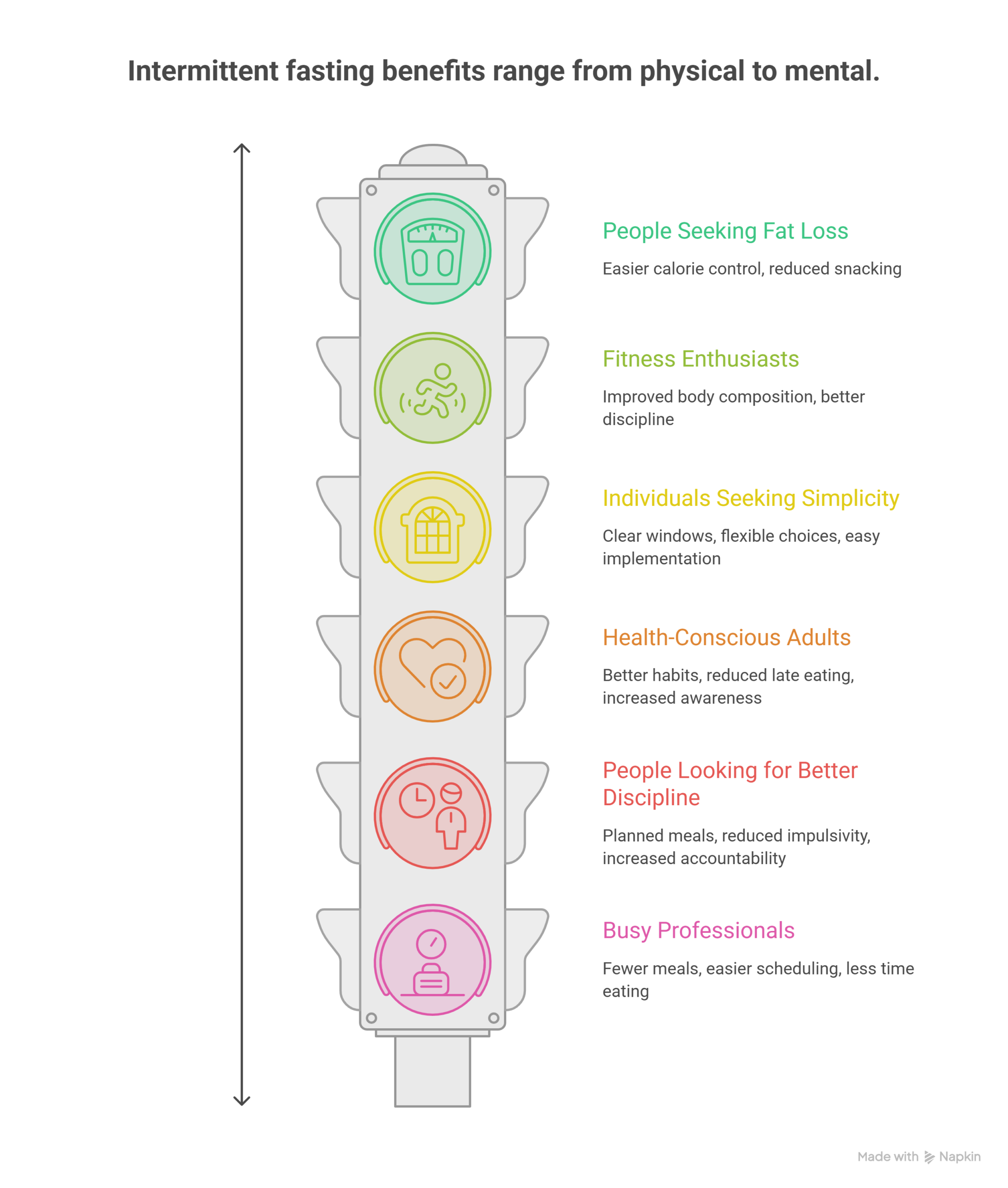
People Seeking Fat Loss
This group often sees benefits.
Reasons
- Easier calorie control.
- Reduced snacking.
- Better meal structure.
- Improved eating awareness.
- Greater consistency.
Busy Professionals
Many professionals prefer simplicity.
Benefits
- Fewer meals to prepare.
- Easier scheduling.
- Less time spent eating.
- Better routine management.
- Reduced decision fatigue.
Fitness Enthusiasts
Many active individuals use fasting.
Potential Benefits
- Improved body composition.
- Better eating discipline.
- Easier weight management.
- More structured habits.
- Better nutrition awareness.
Individuals Seeking Simplicity
Some diets feel complicated.
Why Fasting Appeals
- Clear eating windows.
- Flexible food choices.
- Simple guidelines.
- Easy implementation.
- Sustainable routines.
Health-Conscious Adults
Many adults use fasting strategically.
Common Goals
- Better eating habits.
- Reduced late-night eating.
- Improved routine consistency.
- Increased dietary awareness.
- Better lifestyle management.
People Looking for Better Discipline
Fasting encourages structure.
Benefits
- Planned meal times.
- Reduced impulsive eating.
- Better food choices.
- Increased accountability.
- Improved routine adherence.
Who Should Be Careful?
Certain groups require extra caution.
Examples Include
- Pregnant women.
- Breastfeeding mothers.
- Growing teenagers.
- Individuals with eating disorders.
- People with medical conditions.
Medical advice remains important.
⚠️ Potential Risks and Drawbacks
It offers many benefits. However, challenges also exist.
Hunger During Adaptation
Most beginners experience hunger.
Common Symptoms
- Increased appetite.
- Food cravings.
- Irritability.
- Reduced concentration.
- Mild discomfort.
These symptoms often improve gradually.
Reduced Workout Performance
Some individuals notice performance changes.
Possible Effects
- Lower energy levels.
- Reduced endurance.
- Faster fatigue.
- Lower workout intensity.
- Reduced motivation.
Proper meal timing helps.
Difficulty Meeting Nutrition Goals
Shorter eating windows create challenges.
Potential Problems
- Low protein intake.
- Inadequate calories.
- Poor nutrient balance.
- Insufficient meal variety.
- Reduced recovery support.
Social Challenges
Eating schedules may feel restrictive.
Common Situations
- Family gatherings.
- Restaurant visits.
- Holiday celebrations.
- Workplace events.
- Travel schedules.
Flexibility helps manage situations.
Risk of Overeating
Some people overeat later.
Common Reasons
- Excessive hunger.
- Poor planning.
- Restrictive fasting methods.
- Emotional eating.
- Large meal portions.
Balanced eating reduces risks.
Recovery Challenges
Poor recovery affects fitness progress.
Warning Signs
- Persistent soreness.
- Low energy.
- Reduced strength.
- Poor sleep quality.
- Slower progress.
Mental Challenges
Adjustment periods vary.
Possible Issues
- Frustration.
- Reduced patience.
- Cravings.
- Routine disruptions.
- Motivation fluctuations.
⚠️ Common Mistakes to Avoid
Avoid these common errors.
Nutrition Mistakes
- Skipping protein-rich foods.
- Eating too few calories.
- Choosing processed foods.
- Ignoring vegetables.
- Neglecting hydration.
Training Mistakes
- Exercising excessively.
- Ignoring recovery.
- Training without fuel.
- Skipping rest days.
- Increasing intensity too quickly.
Lifestyle Mistakes
- Poor sleep habits.
- Inconsistent schedules.
- Unrealistic expectations.
- Following extreme plans.
- Comparing results with others.
🏃 Tips for Combining Fasting with Exercise
People successfully combine both approaches. Proper planning helps.
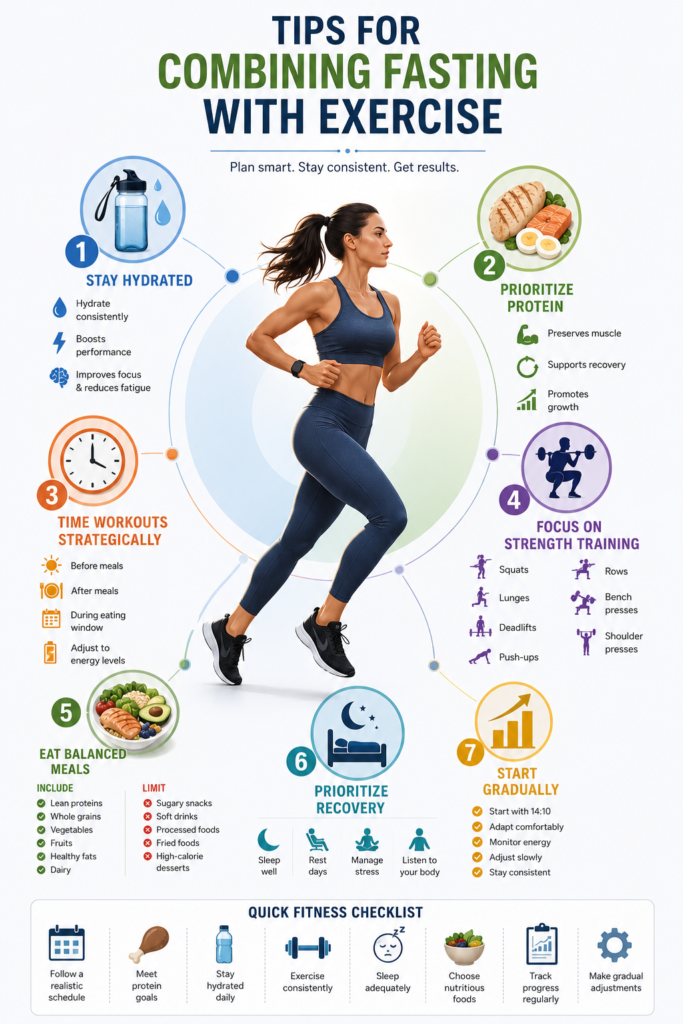
💧 Stay Hydrated
Hydration remains essential.
Benefits
- Supports performance.
- Improves recovery.
- Maintains energy.
- Supports concentration.
- Reduces fatigue.
Hydration Tips
- Drink water regularly.
- Carry a water bottle.
- Increase fluids during workouts.
- Monitor thirst levels.
- Replace lost fluids.
🍗 Prioritize Protein Intake
Protein supports fitness goals.
Benefits
- Preserves muscle mass.
- Supports recovery.
- Promotes muscle growth.
- Reduces muscle breakdown.
- Supports strength gains.
⏰ Time Workouts Strategically
Workout timing affects results.
Popular Approaches
- Exercise before meals.
- Exercise after meals.
- Train during eating windows.
- Adjust based on energy.
🏋️ Focus on Strength Training
Strength training supports body composition.
Effective Exercises
- Squats.
- Lunges.
- Deadlifts.
- Push-ups.
- Rows.
- Bench presses.
- Shoulder presses.
🥗 Eat Balanced Meals
Food quality remains important.
Include These Foods
- Lean proteins.
- Whole grains.
- Vegetables.
- Fruits.
- Healthy fats.
- Dairy products.
Limit These Foods
- Sugary snacks.
- Soft drinks.
- Processed foods.
- Excess fried foods.
- High-calorie desserts.
😴 Prioritize Recovery
Recovery drives progress.
Recovery Habits
- Sleep seven to nine hours.
- Schedule rest days.
- Manage stress levels.
- Follow consistent routines.
- Listen to your body.
📈 Start Gradually
Beginners should avoid extremes.
Gradual Approach
- Start with 14:10 fasting.
- Adapt comfortably.
- Monitor energy levels.
- Adjust slowly.
- Focus on consistency.
🔍 Quick Fitness Checklist
Before starting:
- Follow a realistic schedule.
- Meet protein goals.
- Stay hydrated daily.
- Exercise consistently.
- Sleep adequately.
- Choose nutritious foods.
- Track progress regularly.
- Make gradual adjustments.
🏆 Conclusion
Intermittent fasting can support fitness goals. It is especially helpful for fat loss. Many people like its simplicity. It creates a structured eating routine. This can improve consistency. It can also increase food awareness. Better eating habits often follow.
Muscle maintenance is still possible. Muscle growth is also possible. However, good nutrition is essential. Protein supports muscle recovery. Strength training supports muscle growth. Hydration supports performance. Sleep supports recovery. Healthy habits bring better results. Long-term consistency matters most. Intermittent fasting works best with balanced meals. Regular exercise is also important. Realistic goals support lasting progress.
Turn Your Passion for Fitness into a Profession
Learn practical skills, get certified, and step into the growing fitness industry with confidence.
Join the CourseFrequently Asked Questions
Is intermittent fasting good for weight loss?
Yes, intermittent fasting can be effective for weight loss when followed consistently. It helps reduce eating opportunities throughout the day, which may lead to lower calorie intake and improved control over snacking habits. Combined with healthy food choices and regular exercise, it can support long-term fat loss.
Can intermittent fasting help build muscle?
Yes, muscle growth is possible while following intermittent fasting. Building muscle depends on consuming enough protein, meeting calorie needs, following a strength-training program, and allowing adequate recovery. Fasting alone does not prevent muscle growth when these factors are managed properly.
Which intermittent fasting method is best for beginners?
The 14:10 method is often recommended for beginners because it is easier to follow and requires a shorter fasting period. Once comfortable, many people transition to the 16:8 method, which remains one of the most popular and sustainable fasting approaches.
Can I exercise while fasting?
Yes, many people successfully exercise while fasting and continue to achieve their fitness goals. The best workout timing varies between individuals, and factors such as hydration, nutrition, and exercise intensity can affect performance. Experimenting with different schedules can help identify what works best.
Does intermittent fasting slow down metabolism?
Intermittent fasting does not usually slow metabolism when practiced in a balanced way. Maintaining sufficient calorie intake, consuming enough protein, and staying physically active can help support normal metabolic function. Extremely restrictive eating patterns, however, may negatively affect energy levels and performance.
What foods should I eat during intermittent fasting?
A balanced diet remains important while following intermittent fasting. Meals should include lean proteins, whole grains, fruits, vegetables, healthy fats, and other nutrient-dense foods. Choosing nutritious foods helps support energy levels, muscle recovery, and overall health throughout the fasting routine.
Can intermittent fasting reduce belly fat?
Intermittent fasting may help reduce overall body fat, including fat stored around the abdominal area. However, spot reduction is not possible, and fat loss occurs throughout the body. Consistent fasting, healthy eating habits, and regular exercise can improve body composition over time.
Are there any side effects of intermittent fasting?
Some individuals experience temporary side effects when starting intermittent fasting. Common symptoms include hunger, headaches, fatigue, irritability, and difficulty concentrating. These effects often decrease as the body adjusts to the new eating schedule and develops a consistent routine.
Who should avoid intermittent fasting?
Intermittent fasting may not be suitable for everyone. Pregnant women, breastfeeding mothers, individuals with eating disorders, and people with certain medical conditions should consult a healthcare professional before starting. Professional guidance helps ensure safety and appropriate nutritional intake.
How long does it take to see results from intermittent fasting?
The timeline for results varies from person to person. Some individuals notice changes in energy levels, eating habits, or body weight within a few weeks, while others may take longer. Factors such as diet quality, activity levels, sleep habits, and consistency all influence the speed of progress.