
Table of Contents
The Montessori Mystery Bag activity helps children identify hidden objects through touch. It develops sensory awareness, concentration, vocabulary, memory, and critical thinking skills through hands-on learning.
Key Takeaways
- Strengthens tactile discrimination skills.
- Improves sensory awareness.
- Supports language development.
- Builds concentration levels.
- Encourages independent thinking.
- Improves memory retention.
- Develops observation skills.
- Requires simple materials.
- Works at home and school.
- Makes learning enjoyable.
Unlock your passion for education and shape young minds as a Montessori teacher!
Introduction
The Montessori Mystery Bag activity develops sensory learning skills. Children learn through touch and exploration. They identify objects without looking. This creates meaningful learning experiences. The activity feels like a fun game. It also supports early childhood development.
Many Montessori classrooms use this activity regularly. Teachers appreciate its simple setup. Parents can conduct it easily. The activity requires few materials. Learning happens through direct experiences. Children stay engaged throughout sessions.
🎒 What is the Montessori Mystery Bag?
1: What is the primary focus of the first plane of development in the Montessori method?
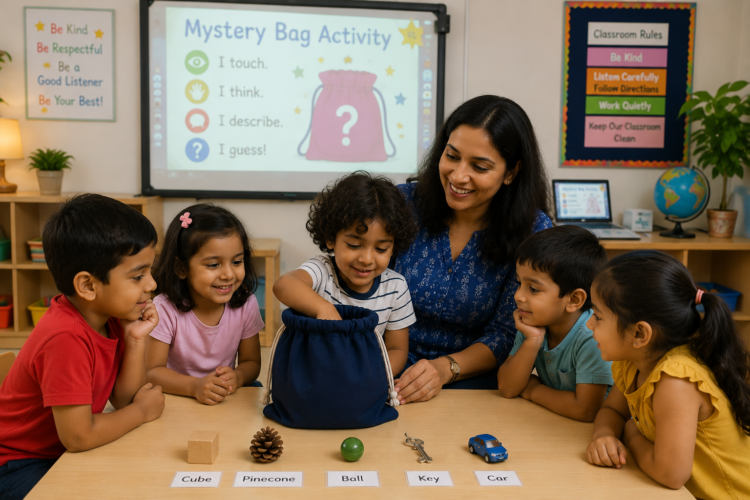
The Montessori Mystery Bag is a sensory activity. Children place hands inside a bag. They cannot see the contents. Kids explore objects through touch. They notice shapes and textures. They then identify the object.
This activity follows Montessori learning principles. Children learn through direct experiences. Exploration happens independently. Learning feels natural and enjoyable. Curiosity drives the activity forward. Discovery becomes part of learning.
The mystery bag usually contains familiar objects. Children recognize items through touch. They compare objects mentally. Children also remember previous experiences. They use reasoning skills often. This strengthens cognitive development.
Unlike visual activities, touch becomes important. Children focus on sensory details. They notice small differences. They compare object features carefully. This improves tactile discrimination. Sensory awareness grows steadily.
🎯 Key Features of the Activity
- Uses touch-based learning.
- Encourages active exploration.
- Supports independent learning.
- Improves observation skills.
- Strengthens memory development.
- Builds problem-solving abilities.
📚 Why is it Important?
Many children depend on sight. This activity develops another sense. Touch becomes the primary tool. Children explore objects carefully. They focus on details more. Learning becomes multi-sensory and meaningful.
The activity also develops patience. Children slow down naturally. They think before answering. They analyze object features carefully. This improves attention skills. Focus becomes stronger over time.
📊 Montessori Mystery Bag Overview
| Feature | Learning Outcome |
|---|---|
| Hidden Objects | Sensory exploration |
| Touch-Based Learning | Tactile development |
| Object Identification | Critical thinking |
| Descriptive Discussion | Language growth |
| Independent Exploration | Confidence building |
Get Certified & Start Your Montessori Career
Montessori Teacher Training Course by Entri App: Gain expert skills, earn certification, and kickstart your teaching career.
Join Now!🌟 Benefits of the Activity
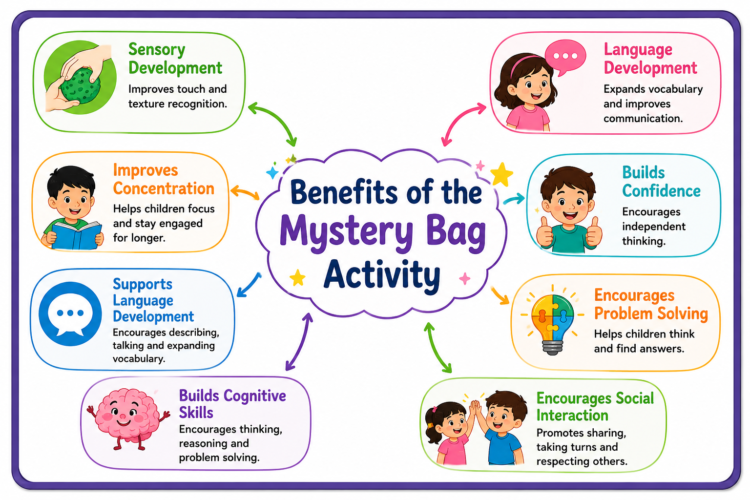
The Montessori Mystery Bag offers many benefits. Several skills develop together. Children learn while having fun. The activity remains highly engaging. It supports different learning styles. Development happens naturally through play.
🖐️ How does it Improve Sensory Development?
Sensory development remains very important. Children learn through their senses. Touch provides valuable information. The mystery bag strengthens this process. Children explore textures carefully. They notice differences more easily.
Children may feel smooth objects. They may feel rough surfaces. Some objects feel soft. Others feel hard or heavy. These comparisons improve sensory awareness. Tactile discrimination becomes more refined.
Repeated practice strengthens sensory processing. Children identify objects faster. They recognize textures confidently. Their observations become more accurate. Sensory learning improves gradually. Confidence grows with experience.
Sensory Benefits
- Improves tactile awareness.
- Strengthens sensory processing.
- Encourages careful exploration.
- Develops texture recognition.
- Improves object identification.
- Builds sensory confidence.
🧠 How does it Support Cognitive Development?
The activity strengthens thinking skills. Children analyze object features carefully. They compare previous experiences. kids use memory frequently. They make logical guesses. This supports cognitive growth.
Children often ask questions mentally. They think about shapes. They think about textures. Children compare object sizes. They consider object functions. This encourages deeper thinking.
Problem-solving develops naturally. Children collect sensory clues. They evaluate information carefully. Kids eliminate unlikely answers. They choose logical conclusions. Reasoning skills improve steadily.
Memory development also improves. Children remember familiar objects. They recall previous experiences. They connect observations quickly. These connections strengthen learning. Memory becomes more reliable.
Cognitive Benefits
- Improves logical thinking.
- Strengthens memory skills.
- Supports problem-solving.
- Encourages critical thinking.
- Develops reasoning abilities.
- Builds attention to detail.
🗣️ How does it Improve Language Development?
Language development occurs naturally here. Children describe objects verbally. They use descriptive vocabulary often. They explain observations carefully. This strengthens communication skills. Vocabulary expands through discussion.
Teachers often ask questions. Children respond with descriptions. They discuss shapes frequently. Kids describe textures carefully. They compare object sizes. These conversations support language growth.
Children learn many new words. They learn texture words. They learn shape words. Children learn comparison words. This strengthens expressive language. Communication becomes more detailed.
Listening skills also improve. Children hear others’ descriptions. They compare different observations. They learn from discussions. Group activities encourage participation. Communication skills develop naturally.
Language Benefits
- Expands vocabulary knowledge.
- Improves speaking confidence.
- Encourages descriptive language.
- Strengthens listening abilities.
- Supports communication skills.
- Improves verbal expression.
🎯 How does it Improve Concentration?
Concentration develops through focused exploration. Children must pay attention. They cannot rely on sight. Touch becomes very important. This requires careful observation. Focus improves naturally.
The activity encourages patience. Children explore slowly. They think before answering. They consider several possibilities. This process strengthens attention. Concentration grows with practice.
Modern children face distractions often. The mystery bag reduces distractions. Children focus on one task. They stay engaged longer. This supports classroom readiness. Focus becomes easier over time.
Strong concentration benefits future learning. Reading requires concentration. Writing requires concentration. Problem-solving requires concentration. The mystery bag supports these skills. Learning becomes more effective.
Concentration Benefits
- Improves attention span.
- Encourages patience.
- Develops persistence.
- Reduces distractions.
- Supports focused thinking.
- Strengthens self-control.
👀 How does it Improve Observation Skills?
Observation skills develop continuously. Children notice small details. They compare object features. Kids recognize differences quickly. They identify similarities too. This strengthens visual thinking.
Children learn to observe carefully. They notice object shapes. Children notice object sizes. They notice object textures. Small details become important. Observation becomes more accurate.
Strong observation skills support learning. Science requires observation. Mathematics requires observation. Reading also requires observation. Early practice creates advantages. Future learning becomes easier.
Observation skills also improve confidence. Children trust their findings. They make thoughtful decisions. They analyze information carefully. Confidence grows steadily. Independent learning becomes easier.
Observation Benefits
- Improves detail awareness.
- Strengthens comparison skills.
- Encourages careful thinking.
- Supports academic readiness.
- Improves analytical abilities.
- Builds confidence.
🤝 How does it Support Social Development?
The activity works well in groups. Children take turns fairly. They listen respectfully. They share ideas openly. Group learning becomes meaningful. Social skills improve naturally.
Children discuss observations together. They compare different answers. They learn from classmates. Kids practice active listening. Communication becomes more effective. Cooperation develops gradually.
Group participation builds confidence. Children feel included. They share successes openly. They encourage classmates often. Positive interactions increase. Classroom relationships become stronger.
Social development remains important. Children need communication skills. They need teamwork skills. They need listening skills. The mystery bag supports these goals. Learning becomes collaborative and enjoyable.
Social Benefits
- Encourages teamwork.
- Improves communication.
- Develops listening skills.
- Promotes cooperation.
- Builds confidence.
- Supports positive interactions.
🧺 Materials Required
The Montessori Mystery Bag needs simple materials. Most items are already available. Preparation takes very little time. Expensive resources are unnecessary. Simple objects work very well. Variety improves learning experiences.
🎒 What Type of Bag Works Best?
Choose a bag that hides objects completely. Children should not see inside. The bag should feel comfortable. It should allow easy exploration. Fabric bags work especially well. Soft materials feel more inviting.
Suitable Bag Options
- Cloth bag
- Drawstring bag
- Fabric pouch
- Opaque tote bag
- Small canvas bag
- Cotton storage bag
Avoid transparent bags completely.
🧸 Which Objects Should Be Included?
Choose familiar objects first. Familiar items build confidence. Children identify them more easily. Success encourages participation. Variety remains very important. Different objects create richer experiences.
Everyday Household Objects
- Spoon
- Key
- Pencil
- Eraser
- Button
- Coin
- Toy car
- Small ball
Nature Objects
- Pinecone
- Leaf
- Pebble
- Shell
- Flower
- Twig
Classroom Objects
- Block
- Crayon
- Marker cap
- Glue stick
- Puzzle piece
- Counting cube
⚠️ Safety Guidelines
Safety always comes first. Every object needs inspection. Sharp edges create risks. Fragile materials may break. Small items require supervision. Safe choices improve experiences.
Avoid these Items
- Sharp objects
- Glass materials
- Toxic items
- Broken toys
- Very small objects
- Heavy objects
📊 Materials Checklist
| Item | Purpose |
|---|---|
| Mystery Bag | Hide objects |
| Household Objects | Exploration |
| Nature Items | Texture learning |
| Classroom Materials | Recognition practice |
| Safe Storage Box | Organization |
🎯 How to Conduct the Activity
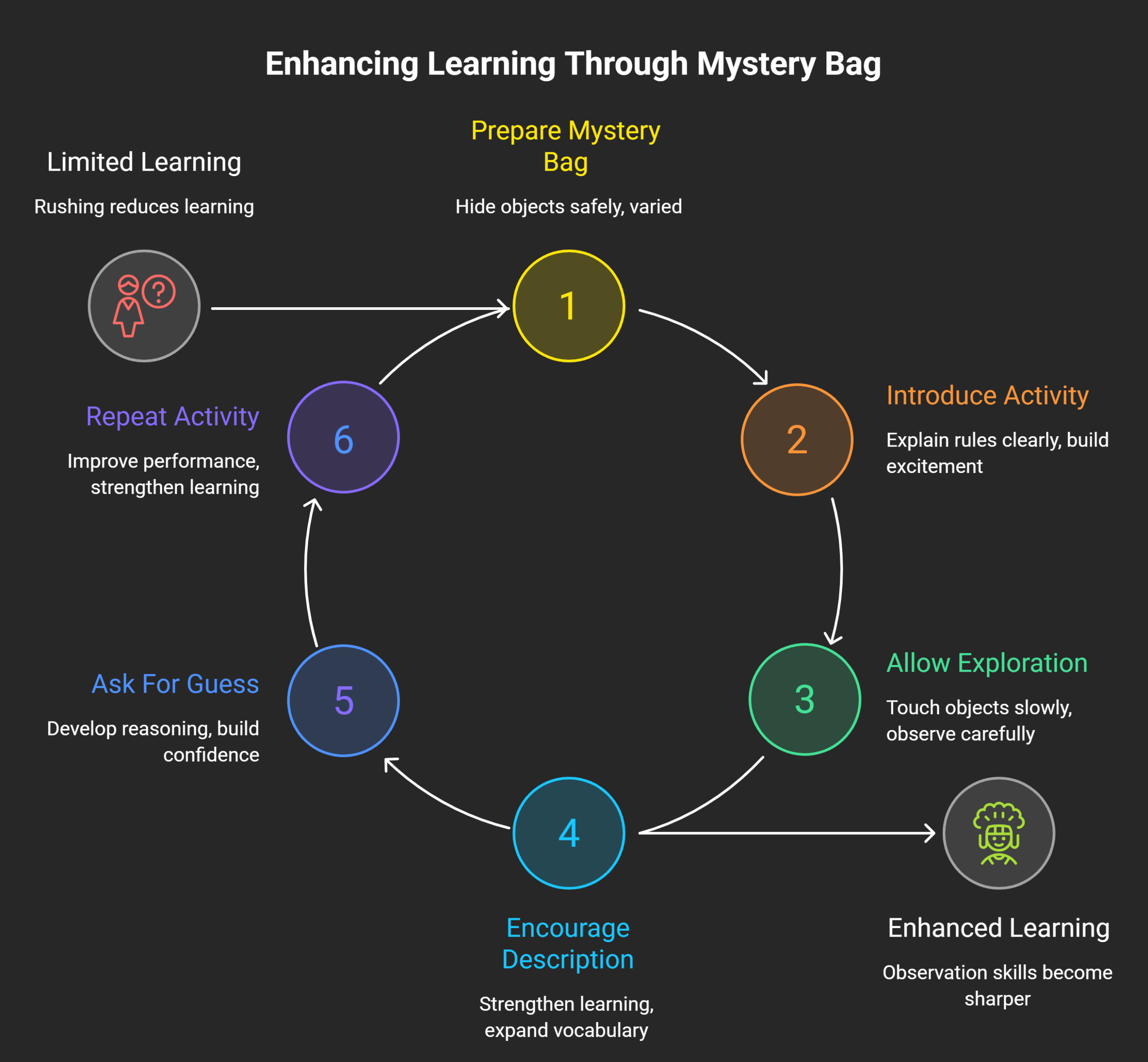
The activity follows simple steps. Good preparation improves results. Clear instructions help children. Consistency builds confidence. Patience remains important throughout. Learning should feel enjoyable.
1️⃣ Prepare the Mystery Bag
Place objects inside the bag. Hide them completely. Check object safety carefully. Ensure variety remains balanced. Include different textures. Include different shapes.
Preparation Tips
- Use five objects initially.
- Increase objects gradually.
- Mix familiar items.
- Include varied textures.
- Organize materials beforehand.
2️⃣ Introduce the Activity
Explain the activity simply. Keep instructions very clear. Children should understand expectations. Demonstrate if necessary. Encourage curiosity immediately. Build excitement before beginning.
Explain these Rules
- Use touch only.
- Avoid peeking inside.
- Explore carefully.
- Think before guessing.
- Describe observations clearly.
3️⃣ Allow Object Exploration
Children place hands inside. They touch one object. Exploration should happen slowly. Encourage careful observation. Rushing reduces learning. Patience improves accuracy.
Ask children to notice:
- Shape
- Texture
- Weight
- Size
- Temperature
- Hardness
Observation develops naturally.
4️⃣ Encourage Description
Descriptions strengthen learning. Language develops through discussion. Vocabulary expands naturally. Communication improves steadily. Questions guide observations. Thinking becomes deeper.
Helpful Questions
- Is it smooth?
- Is it rough?
- Is it round?
- Is it soft?
- Is it heavy?
- Is it small?
These questions improve engagement.
5️⃣ Ask Children to Guess
Children make predictions. Guessing develops reasoning skills. Confidence grows through participation. Wrong answers remain acceptable. Learning matters most. Exploration remains the goal.
After guessing:
- Remove the object.
- Reveal the answer.
- Discuss observations.
- Compare descriptions.
- Celebrate effort.
6️⃣ Repeat with other Objects
Practice improves performance. Repetition strengthens learning. Confidence increases gradually. Children recognize objects faster. Observation skills become sharper. Engagement remains high.
Get Certified & Start Your Montessori Career
Montessori Teacher Training Course by Entri App: Gain expert skills, earn certification, and kickstart your teaching career.
Join Now!🎨 Activity Variations
Activity variations prevent boredom. New challenges maintain interest. Different versions target skills. Variety improves engagement. Children enjoy fresh experiences. Learning remains exciting.
🌈 Colour Mystery Bag
This version teaches colours. Use colourful objects only. Children identify objects first. Colours come afterward. Learning happens naturally. Colour vocabulary improves.
Colour Object Ideas
- Red block
- Blue ball
- Yellow cup
- Green toy
- Purple crayon
- Orange cube
Benefits
- Improves colour recognition.
- Builds vocabulary.
- Strengthens observation.
🔤 Alphabet Mystery Bag
This variation supports literacy. Objects represent letter sounds. Children identify objects first. They then identify letters. Phonics practice becomes enjoyable. Learning feels playful.
Example Objects
- Apple
- Ball
- Cup
- Doll
- Fish
- Kite
Benefits
- Supports phonics learning.
- Builds vocabulary.
- Improves letter recognition.
🔺 Shape Mystery Bag
Shapes become the focus. Children identify geometric forms. Touch strengthens understanding. Shape recognition improves quickly. Mathematics foundations develop naturally. Learning remains engaging.
Shape Ideas
- Circle
- Square
- Triangle
- Rectangle
- Oval
- Star
Benefits
- Improves shape recognition.
- Supports early mathematics.
- Develops spatial awareness.
🌿 Nature Mystery Bag
Nature objects create excitement. Children explore natural textures. Sensory learning becomes richer. Curiosity increases naturally. Outdoor learning feels meaningful. Observation skills improve.
Nature Items
- Leaf
- Pinecone
- Pebble
- Flower
- Shell
- Twig
Benefits
- Connects children with nature.
- Improves sensory awareness.
- Encourages exploration.
👥 Partner Mystery Bag
Children work together. One child describes. Another child guesses. Communication becomes important. Teamwork develops naturally. Listening skills improve.
Benefits
- Encourages cooperation.
- Improves communication.
- Supports teamwork.
Unlock your passion for education and shape young minds as a Montessori teacher!
💡 Tips for Teachers and Parents
Small adjustments improve outcomes. Guidance remains important. Positive experiences encourage participation. Children learn differently. Flexibility improves results. Patience supports growth.

🎯 Start With Familiar Objects
Familiar objects reduce frustration. Children feel more confident. Success increases motivation. Learning becomes enjoyable. Confidence supports participation. Gradual challenges work best.
Good Starter Objects
- Spoon
- Ball
- Block
- Pencil
- Key
- Eraser
🗣️ Encourage Rich Descriptions
Descriptive language strengthens communication. Open questions improve thinking. Children explain observations better. Vocabulary expands naturally. Discussion supports learning. Conversations increase engagement.
Useful Prompts
- Describe the texture.
- Describe the shape.
- Compare object sizes.
- Explain your guess.
🎨 Change Objects Regularly
New objects maintain interest. Variety prevents boredom. Different textures improve learning. Fresh challenges encourage exploration. Curiosity remains high. Engagement lasts longer.
👏 Praise Effort Frequently
Positive feedback builds confidence. Every attempt deserves recognition. Learning requires encouragement. Success comes gradually. Children feel motivated. Participation increases naturally.
Encouraging Phrases
- Great observation.
- Excellent thinking.
- Nice description.
- Wonderful effort.
- Good guess.
- Fantastic focus.
📅 Practice Consistently
Regular practice improves outcomes. Short sessions work best. Consistency strengthens skills. Learning becomes automatic. Confidence develops steadily. Progress becomes visible.
🎯 Conclusion
The Montessori Mystery Bag activity offers valuable learning opportunities. Children explore objects through touch. Sensory awareness develops naturally. Language skills improve steadily. Concentration becomes stronger. Learning feels enjoyable throughout.
The activity requires simple materials. Preparation remains quick and easy. Teachers can use it often. Parents can try it easily. Consistent practice brings lasting benefits. Fun experiences create meaningful learning.
Get Certified & Start Your Montessori Career
Montessori Teacher Training Course by Entri App: Gain expert skills, earn certification, and kickstart your teaching career.
Join Now!Frequently Asked Questions
What is the Montessori Mystery Bag activity?
The Montessori Mystery Bag activity is a sensory learning exercise. Children identify hidden objects using touch instead of sight.
What age is suitable for the Mystery Bag activity?
The activity is ideal for children aged three years and above. The difficulty level can be adjusted based on age and ability.
What skills does the Mystery Bag activity develop?
The activity develops sensory awareness, concentration, and observation skills. It also supports language development, memory, and critical thinking.
Can the Montessori Mystery Bag be used at home?
Yes, parents can easily conduct this activity at home. Most materials needed are already available in households.
How many objects should be placed inside the bag?
Beginners can start with five simple objects. More objects can be added gradually as confidence improves.
What types of objects work best for this activity?
Objects with different textures, shapes, and sizes work best. Variety helps children compare features and improve sensory discrimination.
How long should a Mystery Bag session last?
A session can last between ten and fifteen minutes. Short sessions help maintain focus and engagement.
Can the activity support language development?
Yes, children use descriptive words during object exploration. This helps expand vocabulary and improve communication skills.
Is the Montessori Mystery Bag suitable for group activities?
Yes, the activity works well in classrooms and small groups. Children can take turns, share observations, and learn together.
Why is touch-based learning important for children?
Touch-based learning strengthens sensory processing and observation skills. It also helps children explore and understand their environment more effectively.