Table of Contents
Key Takeaways
Introduction
Muscle anatomy is the study of body muscles. It helps fitness trainers know how the body moves during exercise.
Learning muscle anatomy helps trainers:
- Choosing the right exercises
- Teach correct exercise form
- Improve workout plans
- Help prevent injuries
- Support better fitness results
A good understanding of muscles helps trainers guide clients safely and effectively toward their fitness goals.
Become a General Fitness Trainer and turn your passion into a Profession!
What is Muscle Anatomy?
Muscle anatomy is learning about the muscles in our body.
It helps us understand:
- Where muscles are in the body
- How muscles work
- How muscles help us move
- Which muscles are used during exercise
Muscles are found throughout the body. They work together to help us:
- Walk
- Run
- Jump
- Lift things
- Exercise
Types of Muscles in the Human Body
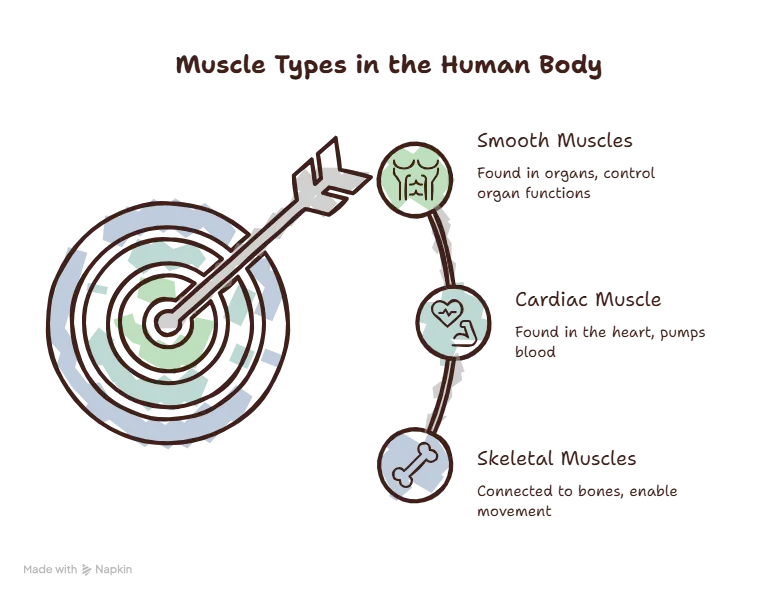
The body has three main muscle types. Each one does a different job.
🟠 Skeletal Muscles
Skeletal muscles are connected to bones. They help the body move.
🔶Main Functions
- Help the body move
- Support posture
- Help with daily activities
- Assist during exercise
🔶Examples
- Biceps
- Triceps
- Quadriceps
- Hamstrings
- Chest muscles
🔶Common Activities
- Walking
- Running
- Jumping
- Weight lifting
🔶Benefits include:
- Better strength
- Improved movement
- Better balance
- Stronger body
- Better fitness performance
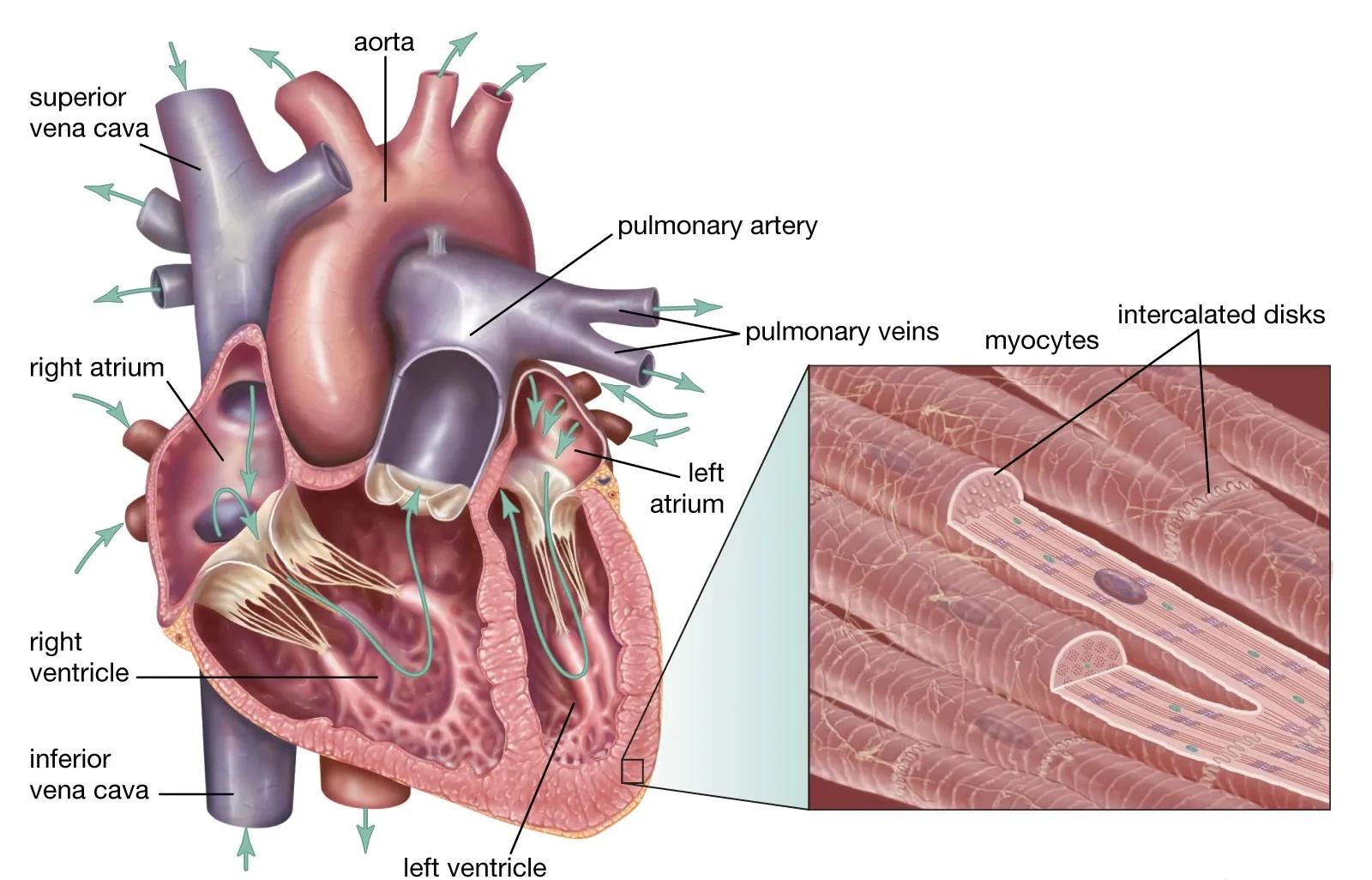
🟠 Cardiac Muscle
This muscle is found only in the human heart.
🔶Main Functions
- Pumps blood around the body
- Keeps the heart beating
- Supplies oxygen to the body
🔶Benefits include:
- Healthy heart function
- improves blood circulation
- Better overall health
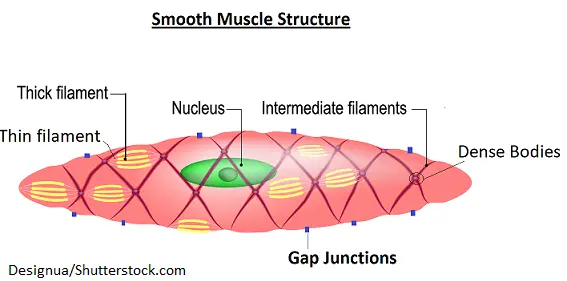
🟠 Smooth Muscles
Smooth muscles are found inside organs.
🔶Locations
- Stomach
- Intestines
- Blood vessels
- Bladder
🔶Main Functions
- Help digest food
- Move food through the body
- Control blood flow
- Support organ functions
🔶Benefits include:
- Better digestion
- Healthy organs
- Proper body functions
- Better overall health
Structure of Skeletal Muscles
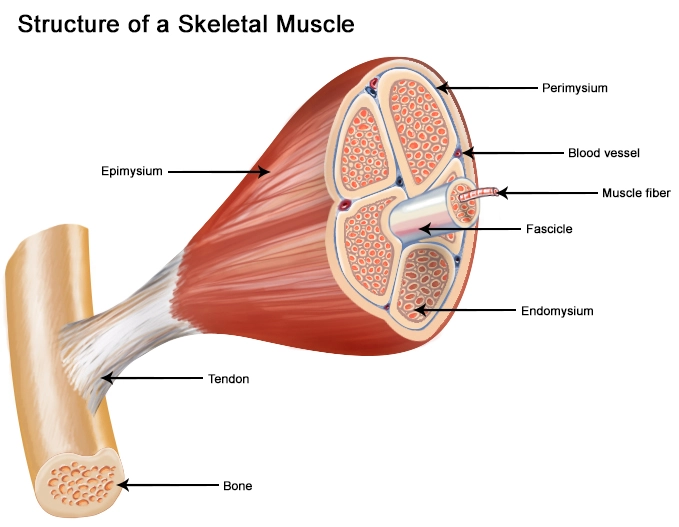
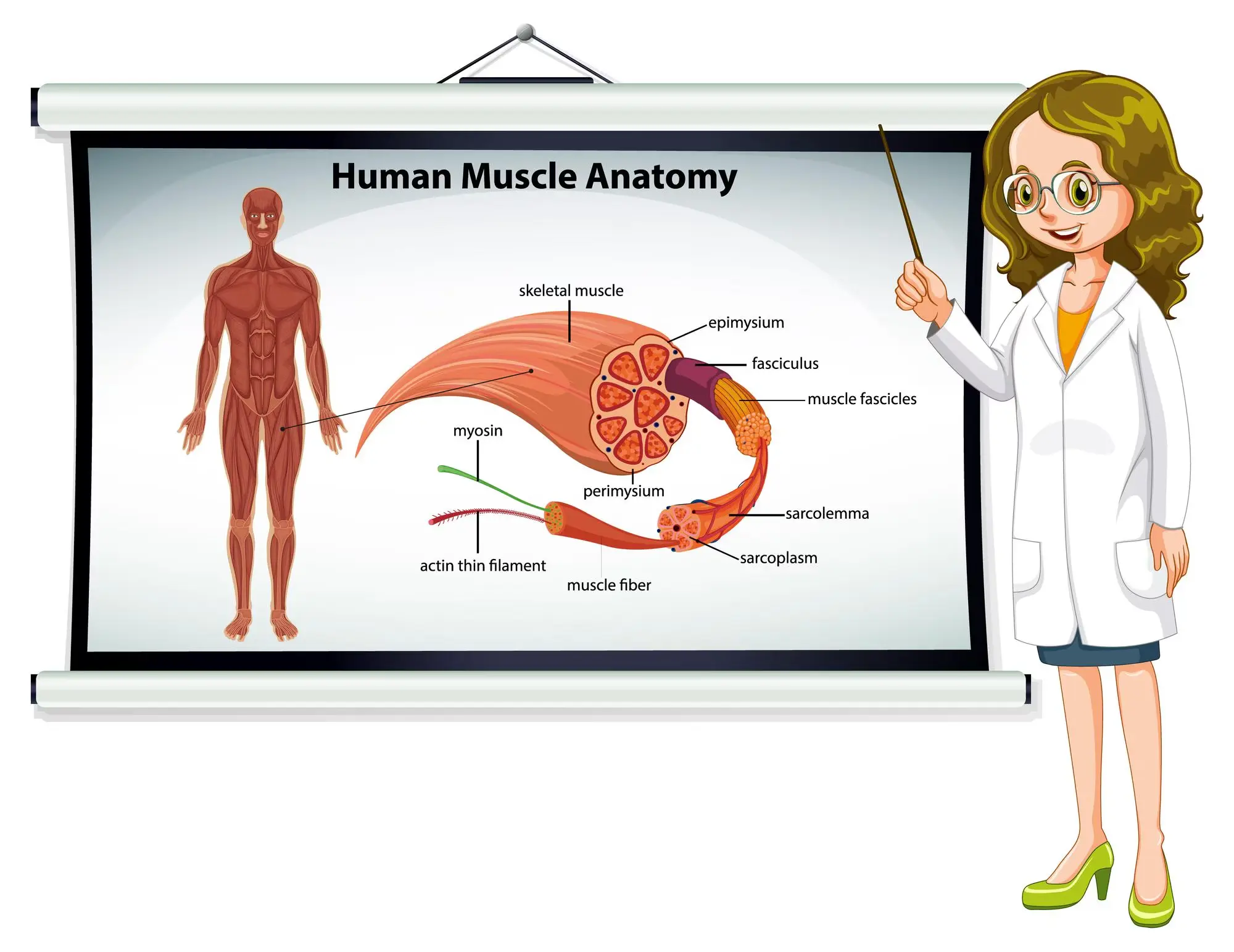
Skeletal muscles are connected to bones. They help the body move during daily work and exercise.
Muscle Fibers
Muscles are made up of many small muscle fibers.
Main Functions
- Create movement
- Produce force
- Help muscles contract
- Support body actions
Tendons
Tendons connect muscles to bones.
Main Functions
- Attach muscles to bones
- Help move joints
- Transfer muscle force
- Support movement
Muscle Bundles
Many muscle fibers join together to form muscle bundles.
Main Functions
- Make muscles stronger
- Help muscles work together
- Support body movement
- Improve muscle power
How Skeletal Muscles Work
When a muscle contracts, it becomes shorter. This pulls the bone and creates movement.
Examples
- Bending the arm
- Walking
- Running
- Jumping
- Lifting weights
Muscle Origins and Insertions
Muscles connect to bones at two places. These two places are called origin and insertion.
🔶Muscle Origin
The origin is one end of a muscle. It usually stays still during movement.
Main Points
- Fixed part of the muscle
- Attached to a bone
- Moves very little
- Provides support during movement
🔶Muscle Insertion
Insertion is the end of a muscle that shifts position when the body moves.
Main Points
- Moving part of the muscle
- Attached to a bone
- Moves during exercise
- Helps create movement
🔶How Origins and Insertions Work
When a muscle tightens, the insertion moves closer to the origin.
Examples
- Bending the arm
- Lifting an object
- Pulling a weight
- Performing a bicep curl
🔶Why Trainers Should Know This
Understanding origins and insertions helps trainers:
- Understand muscle movements
- Choose better exercises
- Teach exercises correctly
- Improve workout plans
- Help prevent injuries
Example: Biceps Muscle
The biceps are located on the front of the upper arm.
Main Functions
- Bend the elbow
- Lift the forearm
- Help pulling movements
Common Exercises
- Bicep curls
- Chin-ups
- Hammer curls
Benefits of Strong Biceps
- Better arm strength
- Improved lifting ability
- Better exercise performance
Muscle Contractions Explained
Muscle contraction happens when a muscle works to move the body. Muscles tighten and relax all day.
🔵Muscle Contraction
Main Functions
- Create movement
- Move bones
- Support exercise
- Help daily activities
🔵Concentric Contraction
The muscle becomes shorter while working.
Examples
- Lifting a dumbbell
- Standing up from a squat
- Pulling during a bicep curl
Benefits
- Builds strength
- Improves muscle power
- Supports movement
🔵Eccentric Contraction
The muscle becomes longer while working.
Examples
- Lowering a dumbbell
- Going down in a squat
- Lowering during a push-up
Benefits
- Improves muscle control
- Builds strength
- Helps prevent injuries
🔵Isometric Contraction
The muscle works without moving.
Examples
- Holding a plank
- Wall sit
- Holding a weight still
Benefits
- Improves stability
- Increases endurance
- Strengthens muscles
🔵Common Exercises
- Squats
- Lunges
- Push-ups
- Planks
- Bicep curls
Prime Movers, Synergists, and Stabilizers
Muscle contractions happen when muscles help the body move. They tighten and loosen during movement.
🟠Concentric Contraction
In this contraction, the muscle becomes shorter while working.
Main Functions
- Lift the body
- Move a weight upward
- Create movement
- Build strength
Common Exercises
- Bicep curls
- Squats (standing up)
- Push-ups (pushing up)
- Pull-ups
Benefits
- Improves strength
- Increases muscle power
- Supports daily movements
- Improves exercise performance
🟠Eccentric Contraction
When a muscle tightens, the insertion moves closer to the origin.
Main Functions
- Control movement
- Slow down movement
- Support balance
- Protecting the muscles
Common Exercises
- Lowering a dumbbell
- Lowering during a push-up
- Lowering from a pull-up
Benefits
- Improves muscle control
- Builds strength
- Reduces injury risk
- Improves stability
🟠Isometric Contraction
In this contraction, the muscle works without moving.
Main Functions
- Hold a position
- Improve stability
- Support balance
Common Exercises
- Plank
- Wall sit
- Holding a weight
- Glute bridge hold
Benefits
- Strengthens muscles
- Improves balance
- Increases stability
🟠Why Muscle Contractions Matter
Muscle contractions help:
- Build strength
- Improve movement
- Support exercise
- Increase muscle control
- Help daily activities
Importance of Anatomy in Exercise Programming
Exercise programming means creating workout plans. Anatomy helps trainers choose the right exercises for each muscle group.
🔵Better Exercise Selection
Anatomy helps trainers understand which muscles are used in each exercise.
Benefits
- Choose the right exercises
- Target the correct muscles
- Improve workout results
- Avoid unnecessary exercises
Examples
- Squats for legs
- Push-ups for chest
- Pull-ups for back
- Planks for core
🔵Better Workout Planning
Good anatomy knowledge helps create balanced workout programs.
Benefits
- Train all muscle groups
- Improve body balance
- Avoid muscle weaknesses
- Support fitness goals
Examples
- Upper body workouts
- Lower body workouts
- Core workouts
- Full-body workouts
🔵Better Exercise Technique
Anatomy helps trainers teach exercises correctly.
Benefits
- Improve movement quality
- Correct mistakes quickly
- Improve exercise safety
- Build confidence
Examples
- Proper squat form
- Correct push-up position
- Safe lifting technique
- Good posture during exercise
🔵Injury Prevention
Understanding muscles and joints helps reduce injuries.
Benefits
- Protect muscles
- Protect joints
- Reduce strain
- Improve movement safety
Common Problems Prevented
- Muscle strains
- Joint pain
- Poor posture
- Overuse injuries
🔵Better Client Results
Good exercise programs help clients reach goals faster.
Benefits
- Improved strength
- Better endurance
- Better flexibility
- Better fitness performance
- Increased confidence
🔵Muscle Balance
All muscles should be trained properly.
Benefits
- Better posture
- Improved stability
- Better movement
- Reduced injury risk
Example
Train both:
- Chest and back
- Quadriceps and hamstrings
- Biceps and triceps
Common Anatomical Terms Every Trainer Should Know
Fitness trainers often use simple anatomy terms to describe body positions and movements. Understanding these terms helps trainers teach exercises correctly.
🔷Anterior
Anterior means the front of the body.
Examples
- Chest
- Abs
- Quadriceps
Why this Matters
- Helps identify front muscles
- Improves exercise instruction
- Makes communication easier
🔷Posterior
Posterior means the back of the body.
Examples
- Back muscles
- Glutes
- Hamstrings
Why this Matters
- Helps identify back muscles
- Improves posture training
- Supports exercise planning
🔷Superior
Superior means above another body part.
Examples
- The head is above the chest
- The shoulders are above the hips
Why this Matters
- Helps describe body positions
- Improves anatomy understanding
🔷Inferior
Inferior means below another body part.
Examples
- The knees are below the hips
- The ankles are below the knees
Why this Matters
- Helps explain body locations
- Improves movement instruction
🔷Medial
Medial means closer to the center of the body.
Examples
- The nose is near the center
- The inner thigh is medial
Why this Matters
- Helps describe muscle locations
- Improves exercise coaching
🔷Lateral
Lateral means farther from the center of the body.
Examples
- The arms are on the sides
- The outer thigh is lateral
🔷Flexion
Flexion means bending a joint.
Examples
- Bending your elbow
- Bending your knee
- Doing a bicep curl
Common Exercises
- Bicep curls
- Leg curls (hamstring curls)
- Crunches
🔷Extension
Extension means straightening a joint.
Examples
- Straightening the arm
- Straightening the knee
- Standing up from a squat
Common Exercises
- Squats
- Leg extensions
- Tricep exercises
🔷Abduction
Abduction means moving a body part away from the body.
Examples
- Raising the arm sideways
- Moving the leg outward
Common Exercises
- Lateral raises
- Side leg raises
- Hip abductions
🔷Adduction
Adduction means moving a body part toward the body.
Examples
- Bringing the arm back down
- Bringing the legs together
Common Exercises
- Adductor machine
- Cable adduction exercises
Applying Muscle Anatomy to Client Training
Fitness trainers use muscle anatomy to create safe and effective workout plans. Understanding muscles helps trainers choose the right exercises for each client.
1. Choosing the Right Exercises
Benefits
- Better workout plans
- Better muscle development
- Improved fitness results
- Safer training
Examples
- Squats for legs
- Push-ups for chest
- Pull-ups for back
- Planks for core
2. Training the Correct Muscle Groups
Major Muscle Groups
- Chest
- Back
- Shoulders
- Arms
- Core
- Legs
Benefits
- Balanced muscle growth
- Better body strength
- Improved posture
- Reduced weaknesses
3. Improving Exercise Technique
Benefits
- Better movement quality
- Safer workouts
- Better results
- Fewer mistakes
Examples
- Correct squat position
- Correct way to do push-ups
- Safe way to lift weights
- Right body position during exercise
4. Preventing Injuries
Benefits
- Reduced injury risk
- Better joint protection
- Safer movement
- Better recovery
Common Problems Prevented
- Muscle strains
- Joint pain
- Poor posturea
- Overtraining
5. Building Strength
Different muscles need different exercises.
Common Strength Exercises
- Squats
- Deadlifts
- Lunges
- Push-ups
- Pull-ups
Benefits
- Increased strength
- Better endurance
- Improved performance
- Stronger muscles
6. Improving Client Goals
Every client has different fitness goals.
Common Goals
- Weight loss
- Muscle gain
- Strength building
- Better fitness
- Improved flexibility
Benefits
- Faster progress
- Better results
- More confidence
- Greater motivation
7. Creating Balanced Workouts
All major muscle groups should be trained.
Important Muscle Groups
- Chest
- Back
- Shoulders
- Arms
- Core
- Legs
Benefits
- Better posture
- Improved balance
- Better movement
- Reduced injury risk
8. Tracking Client Progress
Anatomy knowledge helps trainers check muscle development.
Signs of Progress
- Increased strength
- Better movement
- Improved posture
- Better endurance
- More confidence
9. Common Training Mistakes
Avoid these mistakes.
Training Errors
- Training only one muscle group
- Poor exercise form
- Skipping warm-ups
- Ignoring recovery
- Using wrong exercises
Become a General Fitness Trainer and turn your passion into a Profession!
Conclusion
- Muscle anatomy helps trainers understand the body better.
- It helps them choose good exercises and teach them correctly.
- It also helps prevent injuries and improve workouts.
- The better trainers understand muscles, the better they can help their clients.
| Related Links | |
| Importance of Hydration in Fitness | Keto vs Balanced Diet: Which Is Better? |
Turn Your Passion for Fitness into a Profession
Learn practical skills, get certified, and step into the growing fitness industry with confidence.
Join the CourseFrequently Asked Questions
What is muscle anatomy?
Muscle anatomy is the study of muscles in the human body. It explains how muscles are built and how they help the body move. Trainers use this knowledge to design better workouts.
Why should fitness trainers learn muscle anatomy?
Fitness trainers should learn muscle anatomy because it helps them understand body movement. It also helps in creating safe and effective exercise plans for clients.
How many types of muscles are there in the body?
There are three main types of muscles:
- Skeletal muscles (help in body movement)
- Smooth muscles (work inside organs)
- Cardiac muscles (control the heart)
What are skeletal muscles?
Skeletal muscles are the muscles we can see and control. They help us walk, run, lift, and perform exercises. These muscles are most important in fitness training.
What is the role of muscle origins and insertions?
Muscle origin is the starting point of a muscle. Insertion is where the muscle ends. Knowing this helps trainers understand how exercises move the body.
What is a muscle contraction?
A muscle contraction is when a muscle becomes tight and short. This helps the body to move, lift weights, or perform any physical activity.
What are prime movers, synergists, and stabilizers?
- Prime movers: main muscles that do the work
- Synergists: help the main muscles
- Stabilizers: keep the body steady during movement
How does muscle anatomy help in workout planning?
Muscle anatomy helps trainers choose the right exercises for each muscle. It also helps prevent injuries and improves workout results for clients.