Table of Contents
Introduction
An important role is played by teachers in student learning. Children are observed closely by teachers every day. Because of this, learning difficulties are often noticed early.
Reading, writing, speaking, and lesson understanding may be affected by learning disabilities. Early support is considered very important for children. If warning signs are noticed early by teachers. Kids can get better guidance and support.
Key Takeaways
- Learning difficulties are often noticed early by teachers.
- Confidence and learning are improved through early support.
- Children are affected differently by learning disabilities.
- Warning signs are identified through classroom observation.
- Parent and teacher teamwork is considered very important.
- Student development is improved through supportive teaching.
Unlock your passion for education and shape young minds as a Montessori teacher!
Silent struggles may be experienced by many children in classrooms. Reading activities may be avoided by some students regularly. Classroom instructions may also be struggled with by many children. Learning and emotional well-being can be improved greatly through early teacher support.
🧠 Understanding Learning Disabilities
1: What is the primary focus of the first plane of development in the Montessori method?
Learning disabilities are conditions that affects learning. It also influence information processing. Difficulties may be experienced in daily activities. Which may include reading, writing, speaking, or understanding lessons. However, intelligence is usually not affected by these conditions.
Different children faced different challenges. Some students may struggle with reading activities. Others may face difficulty with math. Few may find difficulty in writing tasks. Learning disabilities are commonly noticed during school years.
📚 Common Types of Learning Disabilities
Several types of learning disabilities may be experienced by children. Each condition affects learning differently.
Common examples include:
- Dyslexia.
- Dysgraphia.
- Dyscalculia.
- Attention difficulties.
- Language processing disorders.
Reading and writing difficulties are often linked with dyslexia and dysgraphia. Math understanding may be affected through dyscalculia.
👶 How Learning Disabilities Affect Students
Classroom learning may become challenging for many students. Even with effort and practice, difficulties may still continue.
The following struggles may be noticed:
- Slow reading progress.
- Poor handwriting.
- Difficulty spelling words.
- Trouble understanding lessons.
- Problems following instructions.
- Difficulty remembering information.
Academic confidence may also be affected gradually.
🗣️ Communication and Social Challenges
Communication difficulties may also be experienced by some children. Thoughts and ideas may struggle to be expressed clearly.
Students may:
- Avoid classroom participation.
- Feel shy during discussions.
- Struggle answering questions.
- Experience frustration often.
Social confidence may sometimes decrease because of these challenges.
😟 Emotional Effects of Learning Disabilities
Strong emotional effects may be experienced by many children. Frustration and embarrassment may develop when classroom tasks feel difficult.
The following emotional signs may appear:
- Low confidence.
- Anxiety during lessons.
- Fear of making mistakes.
- Avoiding school activities.
Supportive learning environments are therefore considered very important.
📖 Learning Disabilities are Not Caused by Laziness
Learning disabilities should not be misunderstood. It is not laziness or poor behavior. Kids usually try hard despite academic struggles.
Difficulties are caused by differences in learning and information processing. Proper guidance and support are therefore needed regularly.
❤️ Importance of Early Identification
Early identification is very important. Especially for children with disabilities. If warning signs are identified earlier one can get better support.
Early support may help:
- Improve academic skills.
- Build confidence.
- Reduce frustration.
- Encourage classroom participation.
Learning experiences are often improved through timely intervention.
👨🏫 Why Teacher Awareness Matters
Learning difficulties are often noticed first in classrooms by teachers. Daily observation helps warning signs become visible earlier.
Better educational support may be provided through:
- Classroom observation.
- Emotional encouragement.
- Parent communication.
- Supportive teaching methods.
Healthier learning experiences are usually created through understanding and support.
Get Certified & Start Your Montessori Career
Montessori Teacher Training Course by Entri App: Gain expert skills, earn certification, and kickstart your teaching career.
Join Now!👀 Early Signs Teachers Should Notice
Early warning signs are often noticed in classrooms first. Daily observation helps learning difficulties become more visible over time. Different signs may be shown by different students. Some difficulties may appear academically, while others may appear emotionally or socially.
Careful classroom observation is considered very important. Early support can usually be provided when warning signs are identified quickly.
📖 Reading Difficulties
Reading challenges are commonly noticed during early school years. Difficulties with letters, sounds, and word recognition may be experienced by some students.
The following signs may be noticed:
- Slow reading speed.
- Frequent reading mistakes.
- Difficulty recognizing words.
- Trouble understanding passages.
- Avoiding reading activities.
Frustration during reading lessons may also be observed regularly.
✍️ Writing Difficulties
Writing problems may become visible during classroom assignments. Difficulties may be experienced with handwriting, spelling, or sentence organization.
Common writing signs include:
- Poor handwriting.
- Frequent spelling mistakes.
- Slow writing speed.
- Difficulty organizing ideas.
- Incomplete written tasks.
Written assignments may sometimes be avoided because of frustration.
🔢 Math Challenges
Math understanding may also be affected in some students. Basic calculations and number concepts may feel confusing despite repeated practice.
The following difficulties may be noticed:
- Trouble counting correctly.
- Difficulty understanding patterns.
- Problems solving simple calculations.
- Confusion with number sequences.
Fear or anxiety during math activities may also be observed.
🗣️ Communication and Attention Problems
Communication and concentration difficulties may appear during classroom activities. Instructions may struggle to be understood or remembered properly.
Possible warning signs include:
- Difficulty following instructions.
- Poor listening skills.
- Short attention spans.
- Trouble expressing ideas clearly.
- Frequent distraction during lessons.
Classroom participation may gradually decrease because of these difficulties.
😟 Emotional and Behavioral Changes
Emotional struggles may also become visible in classrooms. Low confidence and frustration are commonly experienced by students facing learning difficulties.
The following signs may be observed:
- Avoiding classroom activities.
- Fear of making mistakes.
- Anxiety during lessons.
- Sudden behavior changes.
- Withdrawal from classmates.
Supportive classroom environments are therefore considered very important.
📅 Consistent Patterns Should Be Observed
Occasional mistakes are considered normal during childhood learning. However, repeated difficulties over time may indicate learning challenges.
Teachers should carefully observe:
- Academic performance patterns.
- Classroom behavior changes.
- Participation levels.
-
Learning
progress over time.
Consistent observations help warning signs become easier to identify.
🌟 Important Fact
- Early warning signs are often noticed during classroom activities first.
❤️ Why Early Observation Matters
Early observation helps students receive support more quickly. Academic struggles and emotional stress may also be reduced through timely intervention.
Better learning experiences are usually created through:
- Early support.
- Parent communication.
- Supportive teaching.
- Emotional encouragement.
Over time, confidence and classroom participation may improve greatly.
👩🏫 Role of Teachers in Identification
Teachers play an important role in identifying learning difficulties early. They spend many hours observing students every day. Because of this, small learning challenges often become noticeable in classrooms first.
Daily classroom interaction helps teachers understand student behavior and academic performance better. Early identification usually becomes easier through regular observation and communication.
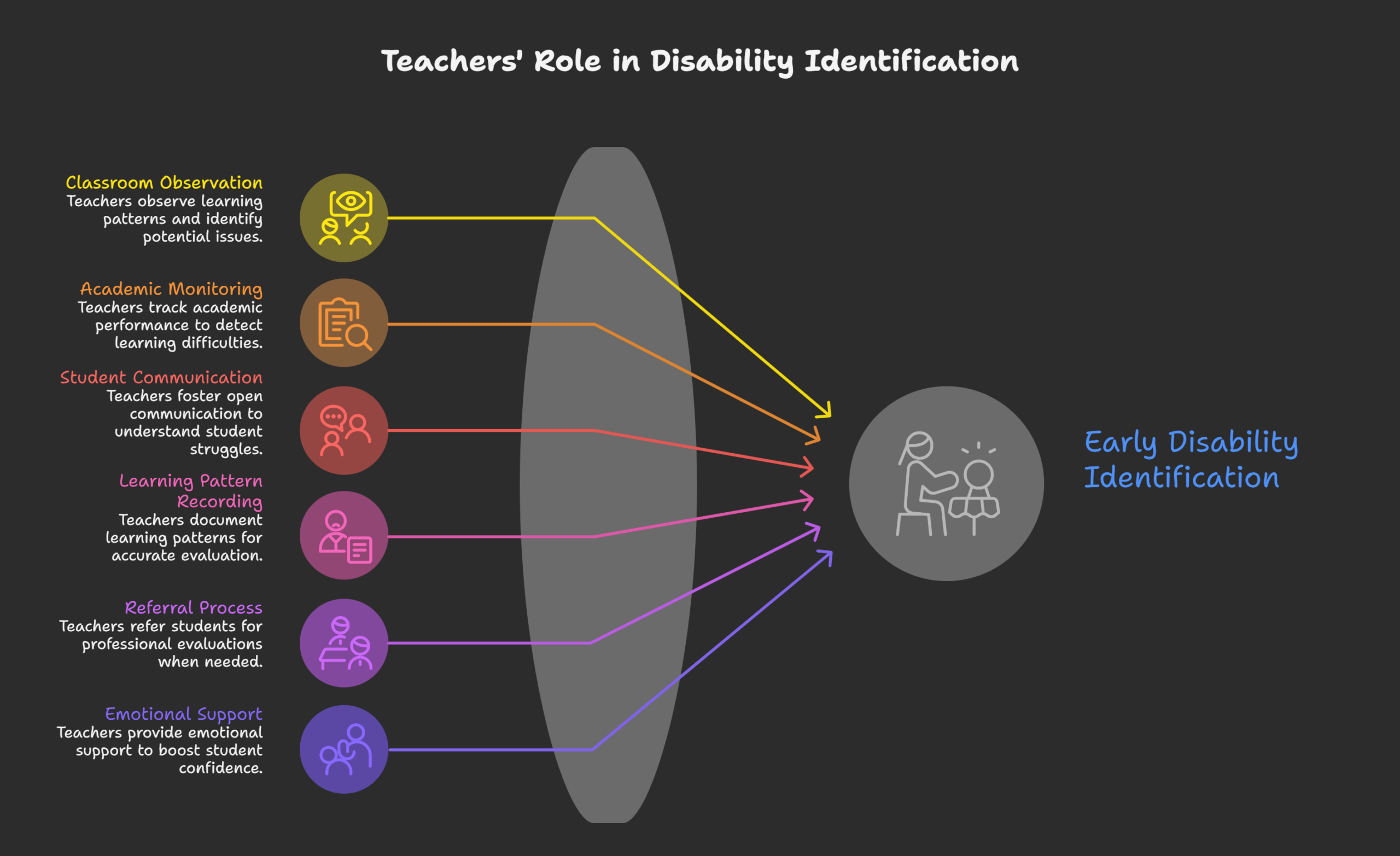
👀 Classroom Observation
Teachers regularly observe how students learn and participate during lessons. Different learning patterns may become visible over time.
Teachers may notice:
- Reading struggles.
- Writing difficulties.
- Attention problems.
- Poor classroom participation.
- Difficulty following instructions.
Consistent observation helps teachers recognize warning signs early.
📚 Monitoring Academic Performance
Teachers closely monitor assignment quality and classroom performance. Repeated academic struggles may indicate possible learning difficulties.
The following areas are often reviewed:
- Reading progress.
- Writing skills.
- Math understanding.
- Homework completion.
- Test performance.
Changes in academic performance may also become noticeable gradually.
🗣️ Communicating With Students
Open communication helps teachers understand student struggles better. Some children may feel embarrassed discussing learning difficulties. Supportive conversations can help students feel safer emotionally.
Teachers may:
- Ask simple questions.
- Encourage classroom participation.
- Listen patiently.
- Offer emotional reassurance.
Positive communication improves student confidence greatly.
📋 Recording Learning Patterns
Teachers often maintain records of student progress and behavior. Accurate observations help identify repeated learning challenges clearly.
Important observations may include:
- Classroom behavior changes.
- Assignment difficulties.
- Reading progress.
- Attention problems.
- Emotional reactions.
These records support future educational evaluations and discussions.
🤝 Referring Students for Further Evaluation
Teachers cannot officially diagnose learning disabilities. However, they can identify warning signs and recommend professional evaluations.
Concerns may be shared with:
- Parents.
- School counselors.
- Special educators.
- Educational psychologists.
Early referrals help students receive support more quickly.
❤️ Providing Emotional Support
Students with learning difficulties often experience frustration and low confidence. Emotional encouragement is very important during this stage.
Teachers can support students by:
- Praising small progress.
- Encouraging participation.
- Creating inclusive classrooms.
- Reducing classroom embarrassment.
Supportive environments improve emotional well-being greatly.
📖 Using Supportive Teaching Methods
Different teaching methods may help students learn more comfortably. Flexible classroom strategies improve understanding and participation.
Helpful methods may include:
- Visual learning tools.
- Step-by-step instructions.
- Interactive activities.
- Extra practice time.
Supportive teaching helps students feel more confident academically.
❤️ Why Teacher Involvement Matters
Early teacher involvement improves learning support greatly. Students usually benefit from timely guidance and emotional encouragement.
Better outcomes are often achieved through:
- Classroom observation.
- Parent communication.
- Early referrals.
- Supportive teaching.
With proper support, students can improve confidence and classroom performance gradually.
✅ Strategies for Support
Supportive teaching methods help students learn more comfortably. Small classroom changes can improve understanding and confidence greatly. Different students may need different learning approaches.
Early support often improves academic and emotional development.
📚 Use Simple Instructions
Simple and clear instructions improve understanding better. Long explanations may confuse some students easily.
Helpful methods include:
- Breaking tasks into smaller steps.
- Repeating important instructions.
- Using simple language.
- Giving visual examples.
Clear guidance reduces classroom confusion greatly.
🎨 Use Visual and Interactive Learning
Many students understand lessons better through visual activities. Interactive learning also improves attention and memory.
Helpful learning tools may include:
- Charts and diagrams.
- Educational videos.
- Flashcards.
- Hands-on activities.
- Learning games.
Visual learning often makes lessons more engaging.
⏳ Allow Extra Time
Some students need more time for reading, writing, or assignments. Flexible learning environments reduce pressure and frustration.
Extra time may help students:
- Complete tasks calmly.
- Improve concentration.
- Build confidence gradually.
Supportive classroom environments improve participation greatly.
❤️ Encourage Positive Reinforcement
Praise and encouragement improve student confidence significantly. Small achievements should always be appreciated.
Positive reinforcement may include:
- Verbal praise.
- Encouraging feedback.
- Reward systems.
- Classroom appreciation.
Encouragement motivates students to participate more actively.
🤝 Create Inclusive Classrooms
Inclusive classrooms help students feel accepted and supported. Emotional safety is very important for children with learning difficulties.
Teachers should encourage:
- Respectful communication.
- Team activities.
- Equal participation.
- Emotional support.
Supportive classrooms improve learning experiences greatly.
👨👩👧 Collaboration with Parents
Parent and teacher collaboration is important. Especially for children with learning difficulties. When parents and teachers work together better support can be provided. Regular communication improves understanding of student.
Children usually benefit from consistent support at school and home.

📞 Share Classroom Observations
Teachers should regularly discuss student progress with parents. Early concerns should be shared clearly and calmly.
Important topics may include:
- Reading difficulties.
- Writing struggles.
- Attention problems.
- Classroom participation.
- Behavioral changes.
Early communication helps parents understand learning challenges better.
🤝 Create Shared Support Plans
Parents and teachers should work together to support children consistently. Shared learning goals improve student progress greatly.
Helpful support methods may include:
- Homework guidance.
- Reading practice.
- Emotional encouragement.
- Consistent routines.
Teamwork creates stronger learning support systems.
❤️ Support Emotional Well-Being
Children with learning difficulties may feel frustrated or discouraged sometimes. Emotional support is very important during this stage.
Parents and teachers should:
- Encourage small progress.
- Praise student efforts.
- Build confidence gradually.
- Reduce classroom pressure.
Positive encouragement improves motivation and participation.
📚 Maintain Regular Communication
Regular communication helps teachers and parents monitor student progress better. Small changes in learning or behavior can be discussed quickly.
Helpful communication methods may include:
- Parent meetings.
- Progress reports.
- Phone discussions.
- School updates.
Strong communication improves student support greatly.
Unlock your passion for education and shape young minds as a Montessori teacher!
❤️ Why Collaboration Matters
Better educational outcomes are often achieved through teamwork. Children usually feel safer and more supported when parents and teachers work together consistently.
Get Certified & Start Your Montessori Career
Montessori Teacher Training Course by Entri App: Gain expert skills, earn certification, and kickstart your teaching career.
Join Now!Conclusion
Teachers play an important role in early identification. Classroom observation helps learning difficulties become noticeable early. Early support improves confidence and academic progress greatly.
Parent and teacher teamwork is also very important. Proper guidance and emotional support help children learn better. Early intervention creates healthier learning experiences for students.
Get Certified & Start Your Montessori Career
Montessori Teacher Training Course by Entri App: Gain expert skills, earn certification, and kickstart your teaching career.
Join Now!Frequently Asked Questions
What are learning disabilities?
Learning disabilities are conditions that affect how children process and understand information. These difficulties may impact reading, writing, math, communication, attention, or problem-solving skills.
Why are teachers important in identifying learning disabilities?
Teachers spend many hours observing students during classroom activities and lessons. Because of this, they often notice early warning signs before others do.
What are common signs of learning disabilities in classrooms?
Common signs include reading struggles, poor handwriting, attention difficulties, slow learning progress, and trouble following instructions. Emotional signs like frustration, anxiety, or avoiding classroom participation may also appear.
Can learning disabilities affect intelligent students?
Yes, learning disabilities do not affect intelligence levels. Many students with learning disabilities are intelligent but process information differently from others.
Why is early identification important for children?
Early identification helps children receive academic and emotional support sooner. Timely intervention often improves confidence, classroom participation, and long-term learning outcomes.
Can teachers officially diagnose learning disabilities?
No, teachers cannot officially diagnose learning disabilities. However, they can observe warning signs and recommend professional evaluations or specialist support.
How can teachers support students with learning difficulties?
Teachers can use visual learning tools, simple instructions, positive reinforcement, and flexible teaching methods. Emotional encouragement and inclusive classroom environments also improve student confidence greatly.
What role do parents play in supporting children with learning disabilities?
Parents provide emotional support, homework guidance, and regular communication with teachers. Strong home and school collaboration usually improves student progress significantly.
What emotional challenges may children with learning disabilities face?
Children may experience frustration, anxiety, embarrassment, or low confidence during classroom activities. Supportive environments and positive encouragement help reduce emotional stress greatly.
Can children with learning disabilities succeed academically?
Yes, many children with learning disabilities perform very well with proper support and guidance. Early intervention, supportive teaching, and emotional encouragement often improve academic success and confidence.