

Table of Contents
Investing in the stock market is often seen by many as a way to grow wealth, but any seasoned investor knows that taxes can quietly eat away those hard-earned profits. In India, whenever you sell a stock or a mutual fund for a profit, the government expects a share in the form of Capital Gains Tax.
But what if you could use your “bad” investments to protect your “good” ones? That is exactly what tax loss harvesting India allows you to do. By strategically selling assets that are currently in the red, you can reduce your overall tax bill and keep more money in your pocket.
In this all-inclusive guide, we have included everything you need to know about tax loss harvesting in the Indian context, right from the basic rules to the step-by-step process of implementation.
Join our Online Course and Learn Stock Marketing the Right Way. Enrol Now!
What Exactly is Tax Loss Harvesting?
Tax loss harvesting is a strategy where you sell stocks or mutual fund units that are currently trading at a price lower than you paid for them. Here the aim is to “realize” or “book” these losses so they can be used to offset the capital gains you have made from other profitable investments.
Think of it as finding a silver lining in a falling market. Even though no person would like to see losses in their portfolio, those losses can become a valuable tool to lower your taxable income.
A Simple Example of Tax Loss Harvesting
Imagine you have two investments in your portfolio:
- Stock A: You sold this for a profit of ₹1,50,000.
- Stock B: You are currently holding this at a “paper loss” of ₹50,000.
If you only sell Stock A, you would normally pay tax on the full ₹1,50,000 profit. However, if you sell Stock B to realize that ₹50,000 loss, your net taxable gain drops to ₹1,00,000 (₹1,50,000 – ₹50,000). By using tax loss harvesting India strategies, you have effectively reduced the amount of profit the government can tax.
Understanding Capital Gains Taxation in India (2026)
1: What is a stock?
To use this strategy effectively, you must first understand how the Indian government taxes your investment profits. For the current fiscal year 2025-2026 and the upcoming fiscal year 2026-2027, equity investments are categorized into two types:
1. Short-Term Capital Gains (STCG)
If you sell your equity shares or equity-oriented mutual funds within 12 months of buying them, the profit is treated as a Short-Term Capital Gain.
- Tax Rate: 20% (plus applicable cess and surcharge).
2. Long-Term Capital Gains (LTCG)
If you hold your equity investments for more than 12 months before selling, the profit is treated as a Long-Term Capital Gain.
- Tax Rate: 12.5% on gains exceeding ₹1.25 lakh in a financial year.
- Exemption: The first ₹1.25 lakh of your total LTCG in a year is tax-free.
The Rules of the Game: Setting Off Losses

The Income Tax Act has specific rules about which losses can offset which gains. You cannot simply mix and match everything. The 3 Golden Rules of tax loss harvesting India are:
Rule 1: Short-Term vs. Long-Term
- Short-Term Capital Losses (STCL): They are very flexible. Here you can use a short-term loss to offset both Short-Term Capital Gains and Long-Term Capital Gains.
- Long-Term Capital Losses (LTCL): They are restrictive. You can only use a long-term loss to offset Long-Term Capital Gains. You cannot use it to reduce your short-term tax liability.
Rule 2: Inter-Head Restrictions
You can only offset capital losses against capital gains. You cannot use a loss from the stock market to reduce the tax you owe on your salary, house property income, or business profits.
Rule 3: Carry Forward Benefits
If your total losses for the year are more than your gains, you don’t lose that benefit. You can carry forward the remaining loss for up to 8 assessment years. This means a loss you make today can help you save tax on a profit you make five years from now!
Important Note: To carry forward these losses, you must file your Income Tax Return (ITR) before the official deadline.
Step-by-Step Procedure For Tax Loss Harvesting
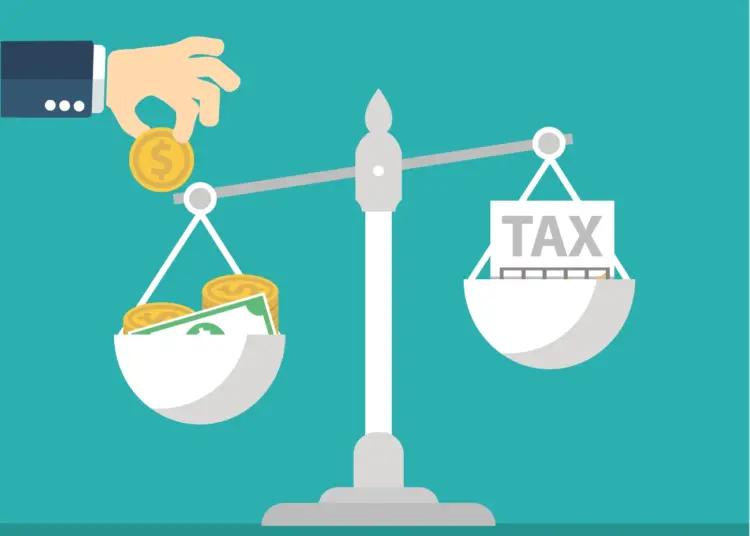
Implementing this strategy requires careful timing and a clear view of your portfolio. Most Indian investors perform this exercise in March, just before the financial year ends.
1: Identify “Paper Losses”
Look through your portfolio for stocks or mutual funds that are currently trading below your purchase price. These are “unrealized” or “paper” losses. They only become “real” for tax purposes once you sell them.
2: Calculate Your Realized Gains
Check how much profit you have already booked during the financial year. If you have sold stocks for a significant profit, you are a prime candidate for tax loss harvesting India.
3: Sell the Underperformers
Sell the loss-making assets to book the loss. This “harvests” the loss and makes it available to offset your gains.
4: Rebalance or Reinvest
Once you have sold the loss-making asset, you have two choices:
- Exit Completely: If the stock was fundamentally weak, simply take the money and invest it in a better opportunity.
- Buy Back (The “Wash Sale” Concept): If you still believe in the long-term potential of the stock, you can buy it back. Unlike the USA, India does not have a strict “Wash Sale Rule” that prevents you from buying back the same stock immediately. However, it is often recommended to wait a day or two to ensure the transactions are seen as distinct.
Benefits of Tax Loss Harvesting
- Direct Tax Savings: The most obvious benefit is the immediate reduction in your tax outgo.
- Portfolio Cleaning: It forces you to look at your underperforming assets and decide whether they still deserve a place in your portfolio.
- Higher Net Returns: By paying less in taxes, your “post-tax” or “tax-adjusted” returns increase, helping you reach your financial goals faster.
- Flexibility: The ability to carry forward losses for 8 years provides a long-term buffer against future tax liabilities.
Stock Market Training Reviewed & Monitored by SEBI Registered RA
Trusted, concepts to help you grow with confidence. Enroll now and learn to start investing the right way.
Know moreCommon Pitfalls to Avoid

While tax loss harvesting India is a powerful tool, it shouldn’t be done blindly. Keep these risks in mind:
- Overlooking Transaction Costs: Each time you sell and buy, you have to pay brokerage fees, Securities Transaction Tax (STT), and other levies. If your tax saving is only ₹500 but your transaction costs are ₹600, applying this strategy will end up in losses.
- Selling Winners for No Reason: Never sell a fundamentally strong, winning stock just to “book profit” so you can use a loss. Only harvest losses to offset gains you needed to take or have already taken.
- Not paying attention to the ₹1.25 Lakh Exemption: Keep in mind that the first ₹1.25 lakh of LTCG is already tax-free. If your total long-term gains are only ₹80,000, there is no need to harvest any long-term losses because you already owe zero tax.
- Exit Timing: Market volatility can be tricky. If you sell a stock to harvest a loss and it jumps 10% the next morning before you can buy it back, you might lose more in growth than you saved in tax.
Important update on debt mutual funds
Please keep the following point in mind if you have purchased debt mutual funds on or after 1st April 2023. According to Section 50AA of the Income Tax Act, 1961, those investments are always treated as short-term capital assets. Irrespective of the holding period, gains or losses from these funds are taxed as short-term capital gains or losses.
Join our Online Course and Learn Stock Marketing the Right Way. Enrol Now!
Key Takeaways
- Tax loss harvesting India involves selling loss-making investments to offset taxable capital gains.
- Short-term losses (held <12 months) can offset both short-term and long-term gains.
- Long-term losses (held >12 months) can only offset long-term gains.
- You can carry forward unadjusted losses for up to 8 years, provided you file your ITR on time.
- Always consider transaction costs and the fundamental quality of the stock before selling.
- The strategy is most effective for investors in high-tax brackets or those with significant realized gains.
Parting Words
Hope you have gained valuable insights on tax loss harvesting post reading this article. If you are quite enthusiastic about stock trading, we have a fabulous idea for you. It’s about a trusted finance training platform offering stock market courses conducted by a team of expert trainers.
Entri Finacademy, since 2022 has grown to be a leading finance education platform. Even if you are a layman with absolutely no knowledge of the stock markets, this is the best place to begin your stock market journey. The expert mentors at Entri will help you learn stock markets right from the very beginning to the advanced levels. Also, if lack of knowledge in English is holding you back from learning stock markets, here’s the good news.
Entri Finacademy offers stock market courses in several regional languages including Tamil and Malayalam. Moreover, features such as exclusive doubt clearance sessions and dedicated trading support makes learning stock trading pretty easy. Apart from stock market courses, Entri Finacademy also offers mutual fund courses and forex trading courses. To know more about Entri’s courses, click here.
Stock Market Training Reviewed & Monitored by SEBI Registered RA
Trusted, concepts to help you grow with confidence. Enroll now and learn to start investing the right way.
Know moreFrequently Asked Questions
Is tax loss harvesting legal in India?
Yes, it is a perfectly legal tax planning strategy permitted under the Income Tax Act, 1961. It involves using legitimate capital losses to offset capital gains.
Can I offset my stock losses against my salary income?
No. Capital losses can only be set off against capital gains. They cannot be used to reduce tax on salary, business income, or other sources.
What is the deadline for tax loss harvesting?
To count for the current financial year, you must sell your loss-making assets on or before the last trading day of March (usually March 31st).
Can I use a long-term loss to offset a short-term gain?
No. Long-term capital losses can only be used to offset long-term capital gains. However, short-term losses can offset both.
How many years can I carry forward my losses?
You can carry forward both short-term and long-term capital losses for 8 consecutive assessment years, provided you file your tax return on time.
Does India have a "Wash Sale Rule"?
Unlike the US, India does not have a formal “Wash Sale Rule.” You can technically buy back the same stock soon after selling it for a loss.
Should I do this every year?
It depends on your portfolio. If you have realized gains and also hold underperforming assets, it is a good practice to review this annually in March.