Table of Contents
The Montessori Three-Period Lesson teaches new concepts through three simple stages. Children first learn names. They then recognize information. Finally, they recall knowledge independently. This method strengthens memory and understanding. Learning becomes active and meaningful. Children gain confidence through repeated success. Concepts become easier to remember. Understanding develops gradually and naturally.
Key Takeaways
- Introduces concepts through three clear stages.
- Strengthens long-term memory skills.
- Supports language development naturally.
- Encourages active child participation.
- Improves concentration and focus.
- Builds confidence through success.
- Promotes independent thinking skills.
- Supports concept mastery gradually.
- Works across many Montessori subjects.
- Makes learning enjoyable and meaningful.
Unlock your passion for education and shape young minds as a Montessori teacher!
🌟 Introduction
🎯 What is the Montessori Three-Period Lesson?
1: What is the primary focus of the first plane of development in the Montessori method?
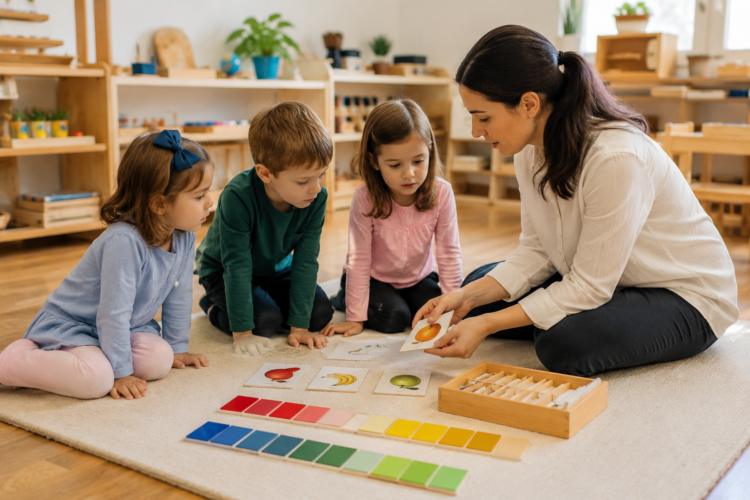
The Montessori Three-Period Lesson is a teaching technique. It introduces new concepts systematically. Children learn information gradually. Each stage builds understanding. Learning follows a clear sequence. Progress feels natural and comfortable.
The lesson contains three distinct periods. Each period serves a purpose. Children move through stages gradually. Understanding develops step by step. Knowledge becomes stronger over time. Learning remains organized and effective.
The method focuses on active learning. Children do more than listen. They participate continuously. They respond to questions. Children make connections independently. Learning becomes memorable and meaningful.
Teachers introduce only a few concepts. This prevents confusion. Children focus more effectively. Understanding improves steadily. Learning remains manageable. Success occurs more frequently.
The lesson also respects development. Children learn at different speeds. Teachers observe carefully. Presentations remain flexible. Individual needs receive attention. Learning becomes personalized.
Montessori educators use concrete materials often. Children interact with objects. Hands-on experiences improve understanding. Learning feels real and meaningful. Concepts become easier to remember. Confidence grows naturally.
The Three-Period Lesson also supports self-correction. Teachers observe responses carefully. Children discover understanding independently. Learning becomes less stressful. Progress feels rewarding. Motivation remains high.
🧠 Why is the Three-Period Lesson Effective?
The lesson works because learning occurs gradually. Children process information step by step. Concepts become easier to understand. Repetition strengthens memory. Participation improves engagement. Learning feels achievable.
Children hear information repeatedly. They also use information actively. This strengthens understanding greatly. Connections become stronger. Memory retention improves naturally. Learning lasts longer.
The lesson also reduces pressure. Children are not tested immediately. They receive opportunities for practice. Confidence develops first. Understanding becomes stronger. Success occurs more frequently.
Key Features
- Three structured learning stages.
- Active child participation.
- Gradual concept introduction.
- Strong memory support.
- Immediate practice opportunities.
- Meaningful learning experiences.
📊 Structure of the Three-Period Lesson
| Period | Child’s Role | Main Goal |
|---|---|---|
| First Period | Listen and observe. | Learn new names. |
| Second Period | Recognize and respond. | Build understanding. |
| Third Period | Recall independently. | Confirm learning. |
🌱 How does the Lesson Support Learning?
The lesson moves from simple tasks. Difficulty increases gradually. Children gain confidence first. Understanding develops naturally. Learning remains comfortable. Progress becomes steady.
Children actively engage throughout lessons. They observe carefully. They listen attentively. Kids answer questions. They interact with materials. Learning becomes more effective.
The lesson also strengthens attention. Children remain focused longer. Participation reduces distractions. Interest remains high. Motivation grows naturally. Learning becomes enjoyable.
Learning Benefits
- Encourages active engagement.
- Improves concept understanding.
- Supports memory retention.
- Builds confidence gradually.
- Promotes independent learning.
- Strengthens concentration skills.
Get Certified & Start Your Montessori Career
Montessori Teacher Training Course by Entri App: Gain expert skills, earn certification, and kickstart your teaching career.
Join Now!🎯 Purpose of the Three-Period Lesson
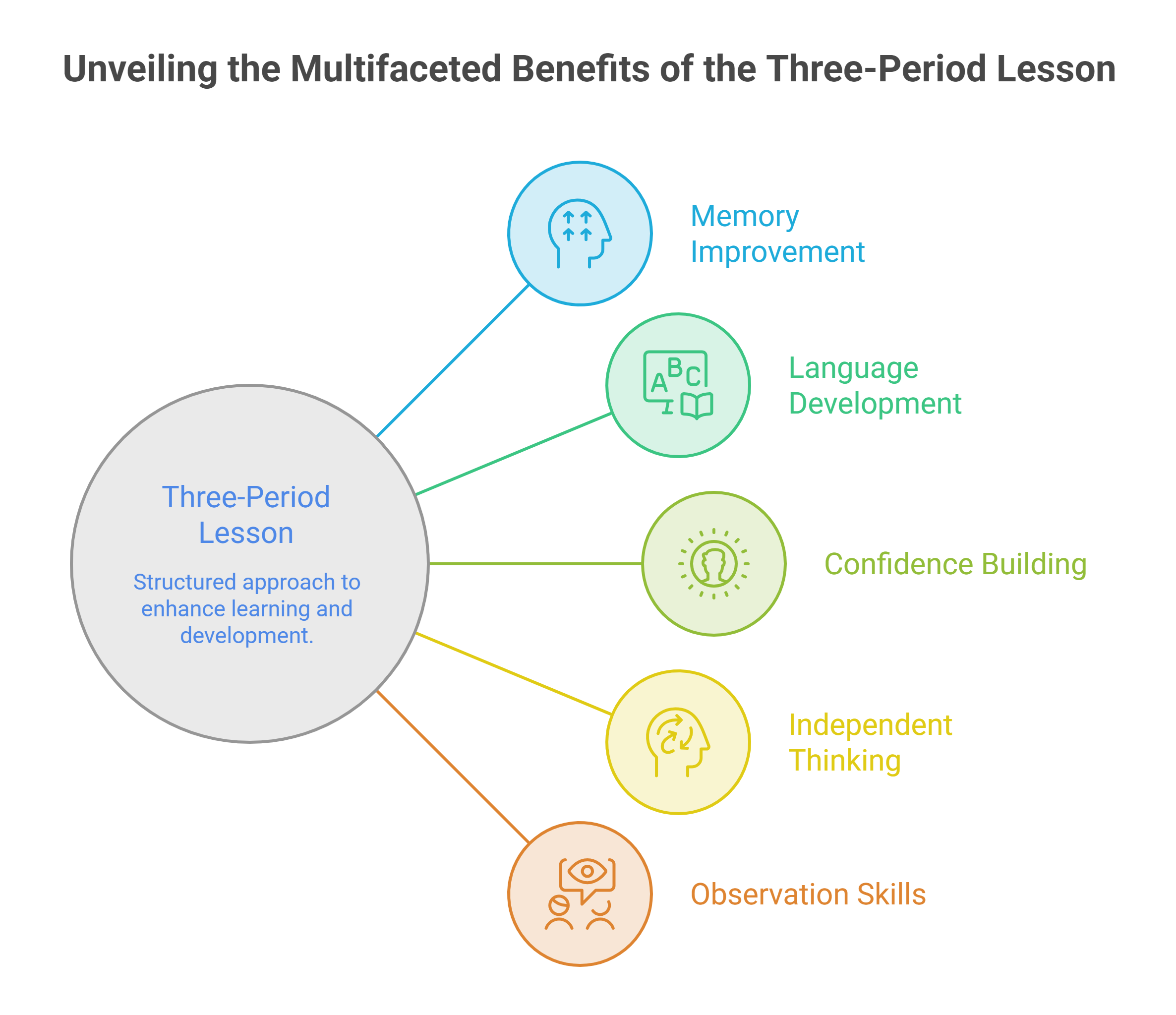
The Three-Period Lesson has several goals. It introduces new concepts clearly. It strengthens memory retention. Three-Period Lesson supports language development. It builds confidence gradually. Learning becomes meaningful and effective.
The lesson does more than teach information. It develops important skills. Children become active learners. They communicate confidently. They think independently. Understanding becomes deeper.
The lesson also supports long-term learning. Knowledge remains meaningful. Concepts stay memorable. Children make stronger connections. Learning becomes more successful. Confidence continues growing.
🧠 How does the Lesson Improve Memory?
Memory plays a major role. Children must remember concepts. Understanding depends on retention. Strong memory supports future learning. Confidence increases naturally. Success becomes easier.
The lesson strengthens memory through repetition. Children hear concepts repeatedly. They interact with information actively. Connections become stronger. Recall improves gradually. Learning lasts longer.
Children also revisit concepts frequently. Practice improves retention. Understanding becomes deeper. Learning remains meaningful. Knowledge becomes permanent. Progress feels rewarding.
Memory Benefits
- Improves retention skills.
- Strengthens recall abilities.
- Supports future learning.
- Encourages repetition.
- Builds confidence.
- Improves understanding.
🗣️ How does the Lesson Support Language Development?
Language development remains important. Children learn many new words. Vocabulary expands gradually. Communication becomes easier. Confidence improves steadily. Expression becomes stronger.
Teachers model correct language. Children hear accurate vocabulary. Pronunciation improves naturally. Understanding becomes clearer. Communication skills strengthen. Learning becomes meaningful.
The lesson also encourages speaking. Children answer questions regularly. Responses build confidence. Communication becomes more natural. Participation increases steadily. Language skills improve significantly.
Language Benefits
- Expands vocabulary.
- Improves pronunciation.
- Strengthens communication.
- Supports listening skills.
- Encourages expression.
- Builds speaking confidence.
🎯 How does the Lesson Build Confidence?
Children experience success often. Tasks remain manageable. Learning feels achievable. Confidence develops naturally. Participation increases steadily. Motivation remains strong.
The lesson avoids unnecessary pressure. Children receive practice opportunities. Understanding develops before recall. Success becomes more likely. Confidence grows steadily. Learning feels positive.
When children answer correctly, pride develops. They trust their abilities. Self-esteem improves gradually. Independence becomes stronger. Participation increases naturally. Learning becomes enjoyable.
Confidence Benefits
- Encourages participation.
- Supports independence.
- Builds self-esteem.
- Improves motivation.
- Reduces learning anxiety.
- Promotes persistence.
🤔 How does the Lesson Encourage Independent Thinking?
Children actively process information. They make connections independently. Learning becomes personal. Understanding develops naturally. Thinking skills improve steadily. Confidence grows through success.
The lesson encourages observation. Children analyze information carefully. They identify relationships. They make decisions independently. Learning becomes meaningful. Understanding becomes stronger.
Independent Thinking Benefits
- Encourages decision-making.
- Supports problem-solving.
- Strengthens reasoning.
- Builds independence.
- Improves observation.
- Promotes confidence.
👀 How does the Lesson Improve Observation Skills?
Observation remains important in Montessori learning. Children notice details carefully. They compare objects. They identify differences. Children recognize similarities. Learning becomes more accurate.
Observation also strengthens concentration. Children focus on information. Attention improves naturally. Learning becomes deeper. Understanding develops steadily. Success increases over time.
Observation Benefits
- Improves attention.
- Strengthens concentration.
- Supports comparison skills.
- Encourages careful thinking.
- Improves accuracy.
- Builds awareness.
🏷️ First Period: Introduction and Naming
The first period introduces new concepts. Children encounter information initially. Teachers present concepts clearly. Learning begins gently. Understanding develops gradually. Confidence starts building immediately.
This stage focuses on naming. Teachers introduce specific words. Children listen carefully. Observation becomes important. Learning remains simple. New information feels manageable.
Teachers usually present few concepts. Too many concepts confuse children. Simplicity improves understanding. Focus remains stronger. Learning becomes effective. Success occurs more frequently.
For example, colors may be introduced. A teacher shows red. He shows blue. He shows yellow. Names are spoken clearly. Children listen attentively.
The goal remains exposure. Children do not memorize immediately. They become familiar first. Repetition supports learning. Understanding develops gradually. Pressure remains minimal.
🎯 What Happens During this Stage?
Children observe carefully. Teachers present materials clearly. New vocabulary appears naturally. Concepts become familiar. Learning remains enjoyable. Curiosity increases steadily.
Teacher Responsibilities
- Present concepts clearly.
- Speak slowly.
- Use correct vocabulary.
- Limit new information.
- Encourage observation.
- Maintain child interest.
Child Responsibilities
- Observe carefully.
- Listen attentively.
- Explore materials.
- Notice differences.
- Participate willingly.
- Build familiarity.
🌈 Example: Teaching Colors
The teacher presents three colors.
- This is red.
- This is blue.
- This is yellow.
Children observe the colors. They hear names repeatedly. Learning remains simple. Understanding begins developing. Confidence remains strong. Curiosity increases naturally.
🔍 Second Period: Recognition and Association
The second period strengthens understanding. Children recognize information presented earlier. Learning becomes more interactive. Participation increases significantly. Understanding grows steadily. Confidence improves naturally.
This stage often lasts longest. Children need practice opportunities. Recognition requires repetition. Concepts become stronger gradually. Learning remains active. Understanding becomes deeper.
Teachers ask children to identify concepts. Children respond physically. Movement increases engagement. Learning feels playful. Participation remains high. Motivation grows naturally.
For example, the teacher may say:
- Show red.
- Touch blue.
- Pick up yellow.
Children demonstrate understanding. Recognition improves gradually. Learning becomes meaningful. Confidence develops steadily. Success encourages participation. Understanding becomes stronger.
🧠 Why is this Stage Important?
Recognition strengthens memory greatly. Children connect words and objects. Understanding becomes more secure. Learning remains active. Concepts become familiar. Retention improves naturally.
Children also receive practice opportunities. Repetition strengthens learning. Mistakes become valuable. Corrections happen gently. Confidence remains protected. Learning stays positive.
Recognition Benefits
- Strengthens understanding.
- Supports memory retention.
- Encourages participation.
- Improves concentration.
- Builds confidence.
- Makes learning active.
🎨 Example: Teaching Shapes
The teacher presents:
- Circle.
- Square.
- Triangle.
Later instructions include:
- Touch the circle.
- Pick the square.
- Hold the triangle.
Children respond actively. Recognition improves steadily. Learning becomes enjoyable. Understanding grows naturally. Confidence increases gradually. Participation remains high.
Get Certified & Start Your Montessori Career
Montessori Teacher Training Course by Entri App: Gain expert skills, earn certification, and kickstart your teaching career.
Join Now!🧠 Third Period: Recall and Identification
The third period confirms learning. Children recall information independently. Understanding becomes visible. Teachers assess progress. Confidence develops naturally. Learning reaches completion.
This stage requires independent responses. Children provide answers themselves. Recall becomes important. Understanding must already exist. Learning remains positive. Pressure stays minimal.
Teachers ask direct questions. Children identify concepts independently. Responses reveal understanding. Progress becomes clear. Success builds confidence. Learning feels rewarding.
For example:
- What color is this?
- What shape is this?
- What number is this?
Children answer independently. Recall strengthens memory. Understanding becomes permanent. Learning becomes meaningful. Confidence increases steadily. Success encourages future learning.
🌱 What if Children Cannot Recall?
Children develop differently. Not every child recalls immediately. Additional practice may help. Teachers return gently. Learning remains flexible. Confidence stays protected.
Montessori education avoids pressure. Children receive needed support. Concepts can be revisited. Understanding develops naturally. Progress occurs gradually. Success eventually follows.
Recall Benefits
- Confirms understanding.
- Strengthens memory.
- Encourages independence.
- Builds confidence.
- Supports assessment.
- Promotes mastery.
🎨 Examples of Three-Period Lesson Activities
The Three-Period Lesson works widely. Many subjects benefit greatly. Activities remain simple. Learning feels engaging. Understanding develops naturally. Confidence increases steadily.
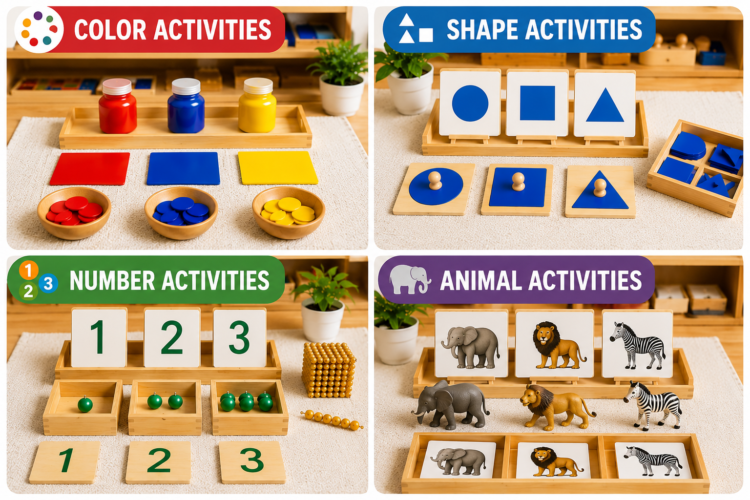
🌈 Color Activities
Colors work very well. Children recognize visual differences. Learning remains engaging. Materials appear attractive. Participation increases naturally. Understanding develops quickly.
Example Activity
- Introduce red, blue, yellow.
- Ask children to identify colors.
- Request independent naming.
Skills Developed
- Color recognition.
- Vocabulary growth.
- Observation skills.
- Memory retention.
🔺 Shape Activities
Shapes appear everywhere. Children recognize them easily. Learning becomes meaningful. Observation improves steadily. Understanding develops naturally. Confidence grows gradually.
Example Activity
- Introduce circle, square, triangle.
- Ask children to identify shapes.
- Encourage independent naming.
Skills Developed
- Shape recognition.
- Visual discrimination.
- Language development.
- Concentration.
🔢 Number Activities
Numbers benefit greatly. Concrete learning improves understanding. Children recognize quantities. Learning feels practical. Confidence develops naturally. Mathematics becomes approachable.
Example Activity
- Introduce numbers one, two, three.
- Ask children to identify numbers.
- Request independent naming.
Skills Developed
- Number recognition.
- Memory skills.
- Mathematical readiness.
- Concentration.
🐘 Animal Activities
Children enjoy animal lessons. Familiar topics increase engagement. Vocabulary expands naturally. Observation improves steadily. Learning feels enjoyable. Participation remains high.
Example Activity
- Introduce elephant, lion, zebra.
- Ask children to identify animals.
- Encourage independent naming.
Skills Developed
- Vocabulary growth.
- Classification skills.
- Observation abilities.
- Memory development.
Unlock your passion for education and shape young minds as a Montessori teacher!
📚 Subjects that Use the Three-Period Lesson
The Three-Period Lesson supports many subjects. Its structure remains flexible. Teachers adapt lessons easily. Learning remains effective. Understanding develops gradually. Confidence grows steadily.
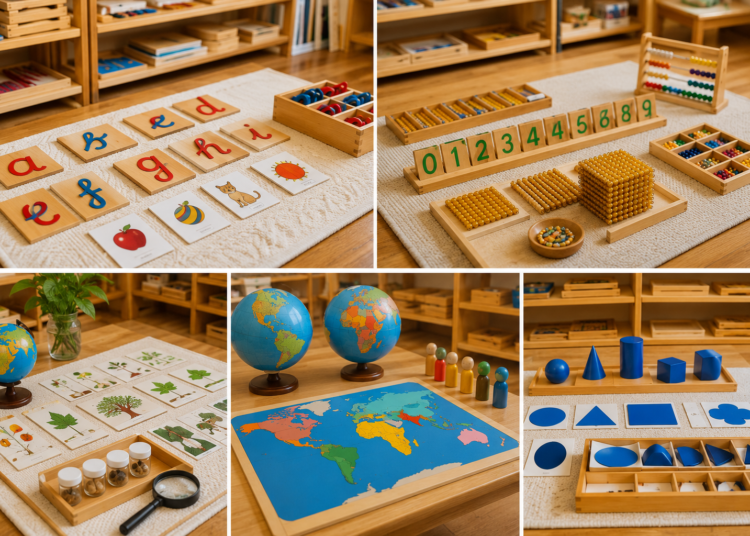
🗣️ Language
Language lessons use this method often. Vocabulary grows naturally. Pronunciation improves steadily. Communication becomes stronger. Learning remains engaging. Confidence develops gradually.
Language Topics
- Colors.
- Shapes.
- Animals.
- Objects.
- Vocabulary words.
🔢 Mathematics
Mathematics concepts require clarity. The lesson provides structure. Learning becomes easier. Understanding develops gradually. Confidence improves steadily. Mathematics feels manageable.
Mathematics Topics
- Numbers.
- Quantities.
- Symbols.
- Counting.
- Basic operations.
🌍 Cultural Studies
Cultural lessons introduce new knowledge. Children explore the world. Curiosity increases naturally. Learning remains meaningful. Understanding develops steadily. Participation stays high.
Cultural Topics
- Continents.
- Countries.
- Landforms.
- Animals.
- Plants.
🔬 Science
Science lessons involve observation. Children explore concepts actively. Learning remains practical. Understanding becomes deeper. Curiosity increases naturally. Confidence grows steadily.
Science Topics
- Living things.
- Weather.
- Seasons.
- Plants.
- Animals.
📊 Subjects Using the Three-Period Lesson
| Subject | Example Concepts |
|---|---|
| Language | Colors, vocabulary. |
| Mathematics | Numbers, symbols. |
| Science | Plants, animals. |
| Cultural Studies | Countries, continents. |
| Geometry | Shapes, forms. |
🎯 Conclusion
The Montessori Three-Period Lesson provides a simple learning structure. Children learn concepts gradually and confidently. Each period serves a unique purpose. Understanding develops through repetition and participation. Memory becomes stronger over time. Learning remains meaningful and enjoyable.
The lesson works across many subjects and age groups. It supports language, mathematics, science, and cultural learning. Children gain confidence through success and practice. Teachers can easily adapt lessons to different concepts. The method encourages active participation and independent thinking. Strong understanding develops through each learning stage.
Get Certified & Start Your Montessori Career
Montessori Teacher Training Course by Entri App: Gain expert skills, earn certification, and kickstart your teaching career.
Join Now!Frequently Asked Questions
What is the Montessori Three-Period Lesson?
The Montessori Three-Period Lesson is a teaching method that introduces new concepts through three stages. Children first learn names, then recognize concepts, and finally recall them independently.
Why is the Three-Period Lesson important?
The lesson helps children learn gradually and confidently. It strengthens memory, understanding, and language development through active participation.
What are the three periods?
The three periods are Introduction and Naming, Recognition and Association, and Recall and Identification. Each stage supports a different level of learning.
At what age can children begin this lesson?
Children can begin using the Three-Period Lesson during preschool years. The activities can be adjusted according to age and developmental needs.
How does the lesson improve memory?
Children hear, practice, and recall information repeatedly. This repetition helps strengthen memory retention and understanding.
Which subjects use the Three-Period Lesson?
The lesson is used in language, mathematics, science, geography, and cultural studies. It can support almost any new concept.
How does the lesson support language development?
Children learn new vocabulary through repetition and interaction. This helps improve communication, pronunciation, and word recognition skills.
What if a child struggles during the third period?
Teachers simply return to earlier stages for more practice. Children learn without pressure and progress at their own pace.
How does the lesson build confidence?
Children experience success through small learning steps. Frequent success encourages participation and strengthens self-confidence.
Can parents use the Three-Period Lesson at home?
Yes, parents can use this method easily at home. Colors, shapes, numbers, and everyday objects work well for practice.