Table of Contents
Robotics is no longer just something you see in labs or sci-fi movies. By the year 2026, it’s a high-growth field that’s really starting to take off in all sorts of industries – manufacturing, healthcare, logistics, agriculture, the auto industry, in schools, and even in your own home.
If you’re a student looking for a career path, or someone who’s already working but wants to switch into something in robotics, then knowing the top careers in robotics is really key. With automation becoming more and more mainstream, knowing how to do things with robots has turned into one of the best investments you can make in your future.
In this article, you’ll learn about the top robotics careers that are out there in 2026, what they entail, and where the demand is. I’ll also give you some tips on how you can get the skills you need to land one of these top jobs – and one of the best ways to do that is by using a structured course like Entri’s Robotics Course to get up to speed.
Why Robotics Careers Are Going to be in High Demand in 2026
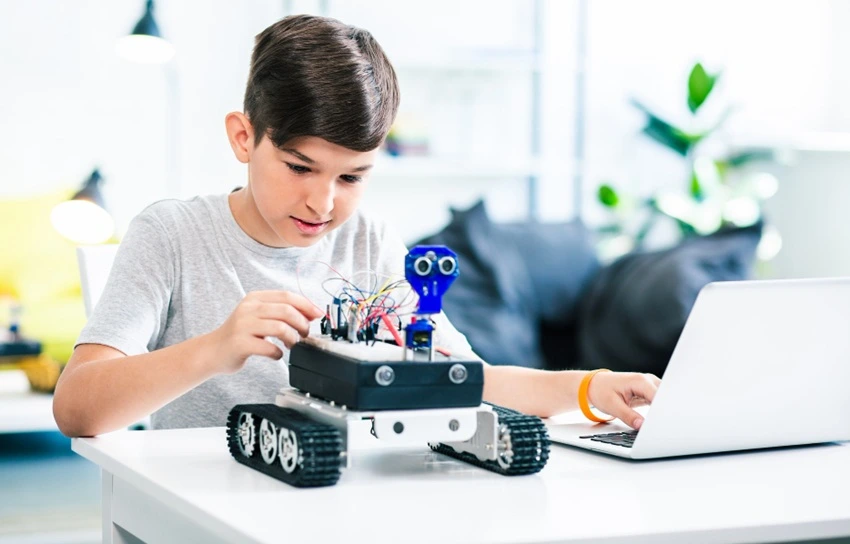
Before we look at all the different jobs that are out there, let’s take a look at why robotics careers are such a great opportunity.
1. Stuff is actually happening now
Robots are now being used in loads of everyday situations – like assembling things in factories, sorting packages in warehouses, helping out in hospitals, farming out in the fields, and even doing housework for us at home.
2. It’s a tech superstar
Today robotics is all about working with other cutting-edge technologies – like artificial intelligence, machine learning, the internet of things, computer vision, automation and data analytics. It’s a really cool field that lets you be at the forefront of all this innovation.
3. Countries are really investing
Countries like India are throwing loads of money at building smart factories and digital infrastructure, which is all going to require loads of expert robotics staff to make it all work.
Master Robotics and AI!
Ready to build the future? Join our comprehensive robotics course to bridge the gap between complex code and physical motion. You’ll gain hands-on experience giving you the technical edge needed to lead in the age of automation.
Know MoreHow to Prepare for a Robotics Career in 2026
So, to make the most of all these opportunities, you’re going to need to build a strong foundation in some key robotics concepts – like the basics of how things work mechanically, electronics and programming. You’ll also need to know a bit about sensors, actuators and control systems, and how to get them all to work together.
A course like Entri’s will get you from the basics through to some really useful real-world robotics skills, with loads of hands on experience and training that matches exactly what employers are looking for right now.
New to robotics? Start from the basics- join today!
Top Robotics Career Opportunities in 2026
Here are some of the highest-growth and most rewarding robotics careers you can pursue in 2026.
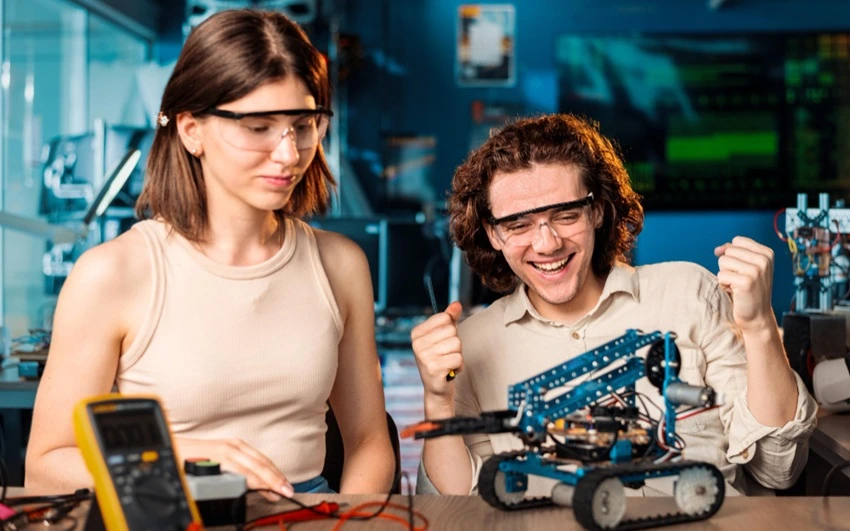
1. Robotics Engineer
Role Overview:
A robotics engineer designs, builds and programs robots or robotic systems that do things on their own, or at least can do things without much human intervention.
Key Responsibilities:
- Making the actual bits and pieces of the robot, and putting them all together
- Getting sensors and motors to work together
- Writing the instructions that control the robot
- Breaking the robot to see what’s going wrong and then fixing it
Why This Role is Important:
Every single industry that uses robots needs people to come up with the ideas and actually make the intelligent machines work. Because they are so in-demand, robotics engineers tend to be well-paid and get good salaries.
2. Robotics Technician
Role Overview:
This one’s focused on keeping existing robots running, day to day. That means installing, maintaining, fixing any problems and getting the machines back up and running in factories and other facilities.
Key Responsibilities:
- Keeping all the moving parts well-maintained and up-to-date
- Figuring out what’s wrong with the robot’s hardware and software
- Assembling all the bits and bobs that make up a robot
- Helping the people who use the robots, and the engineers who build them
What’s Going to Happen in 2026:
As more and more companies start using robots in manufacturing and other areas, there’s going to be a huge demand for people who know what they are doing.
3. Automation Engineer
Role Overview:
Automation engineers specialise in building whole systems that work automatically – and that can include robots, but also goes way beyond that to include making whole production lines and other workflows more efficient.
Key Responsibilities:
- Working out which bits of a process can be automated
- Putting together the controllers that make all the machines work together
- Getting all the different bits of the system to talk to each other using sensors and other tools
- Testing the whole system to see how well it’s doing and where it can be improved
What Drives Demand for This Role:
Companies are looking to make things more efficient, reduce mistakes and save money – which is why they are investing in people who know all about automation.
4. Embedded Systems Engineer
Role Overview:
Embedded systems engineers are the ones who work on the “brain” of the robot – the hardware and software that lets it all work together.
Key Responsibilities:
- Writing code for the tiny computers that control all the robot’s bits and bobs
- Making sure the firmware – the low-level software – is working the way it should
- Getting all the different bits of the system to talk to each other
- Testing how the whole thing works together
Why This is Such a Great Skill to Have:
Embedded systems are basically the heart of any robotic system – so anyone who knows what they are doing is in high demand.
5. AI & Machine Learning Engineer (Robotics Focus)
Role Overview:
AI engineers in robotics are the ones who make the robots “smart” – they develop the systems that let the robot see, learn and make decisions based on what it’s learned.
Key Responsibilities:
- Making the robot see and recognise objects
- Creating the algorithms that let the robot find its way around and move around safely
- Training the robot to interact with the world around it
- Working out how to make all the decisions it needs to make using data
Why AI in Robotics is Such a Big Deal:
Robots that can “think” and adapt to new situations are going to be so much more useful than the ones that can’t – and anyone with AI skills is going to be in high demand.
6. Computer Vision Specialist
Role Overview:
Computer vision specialists help the robots see and interpret the world around them using cameras and sensors.
Key Responsibilities:
- Getting the robot to work out what it’s looking at
- Making 3D vision work for the robot
- Training the robot to do different tasks with its vision system
- Getting the vision processing to work in real-time
Why This Skill is So Important:
From self-driving cars to medical robots – being able to make the robot see and understand the world is a key skill for the future.
7. Robotic Process Automation (RPA) Developer
Role Overview:
RPA developers create software “robots” that automate all the boring routine jobs at the software level.
Key Responsibilities:
- Working out the workflow that the software robot needs to follow
- Writing the scripts that the RPA tools need to make it all work
- Testing and deploying the software robot
- Making sure that the automation is working properly and not getting out of hand
Note:
Although RPA is different from physical robotics, it’s still a key part of the automation world and offers great career opportunities.
8. Maintenance & Support Specialist
Role Overview:
These professionals ensure that deployed robotic systems run smoothly and are fixed quickly when issues occur.
Key Responsibilities:
- Monitoring robot performance
- Performing software and hardware updates
- Conducting preventive maintenance
- Training operators
Why It’s Important:
With more robots in daily operations, maintenance roles become critical to minimise downtime and maximise productivity.
9. Robotics Project Manager
Role Overview:
Project managers coordinate teams working on robotic system implementation, from concept to deployment.
Key Responsibilities:
- Planning project phases
- Managing team collaboration
- Tracking timelines and budgets
- Communicating with stakeholders
Career Advantage:
This role suits professionals who combine technical knowledge with organisational skills.
10. Research and Development Specialist
Role Overview:
R&D specialists push the boundaries of what robots can do, often working with universities, research labs, or innovation centres.
Key Responsibilities:
- Exploring new robotics technologies
- Publishing research papers
- Collaborating on prototypes
- Advancing robotics theory and applications
Future-Forward Role:
Ideal for those passionate about innovation and long-term breakthroughs.
Start learning robotics today! Build strong fundamentals with expert-led training.
How to Choose the Right Robotics Career Path
Choosing the right path depends on:
- your interests (hardware vs software)
- your strengths (analytical vs creative)
- your willingness to learn new skills
- your long-term goals (industry job vs research)
Beginners should start with foundational roles like technician or robotics engineer and gradually specialise once they gain exposure.
Master Robotics and AI!
Ready to build the future? Join our comprehensive robotics course to bridge the gap between complex code and physical motion. You’ll gain hands-on experience giving you the technical edge needed to lead in the age of automation.
Know MoreSkills and Tools Robotics Professionals Must Master
2026 robotics careers require a combination of technical skills.
Core Technical Skills
- C/C++ and Python programming
- Embedded systems development
- Electronics and sensor integration
- Control systems
- Machine learning basics
Tools and Technologies
- Arduino and Raspberry Pi
- ROS (Robot Operating System)
- MATLAB and Simulink
- CAD tools (SolidWorks, Fusion 360)
- Simulation environments
Social and analytical skills like teamwork, critical thinking, and problem-solving also distinguish top performers.
How the Entri Robotics Course Helps You Start Strong
The Entri Robotics Course is designed for beginners and aspiring professionals who want industry-aligned robotics learning.
What You Will Gain
- foundational concepts broken into easy lessons
- hands-on exposure to microcontrollers and embedded systems
- guided projects that build real skills
- clarity on robotics career paths
- confidence to pursue professional opportunities
This course is especially suitable for learners in Kerala and all across India who want a structured roadmap from basics to advanced robotics skills.
Expected Salary Trends in Robotics Careers
Salaries in robotics vary depending on role and experience.
| Career Role | Typical Salary (₹ LPA) |
| Robotics Technician | 3 – 6 LPA |
| Robotics Engineer | 6 – 12 LPA |
| Embedded Systems Engineer | 6 – 15 LPA |
| AI/ML Robotics Specialist | 10 – 25 LPA |
| Computer Vision Specialist | 8 – 20 LPA |
| RPA Developer | 5 – 15 LPA |
| Robotics Project Manager | 12 – 30+ LPA |
| R&D Specialist | 8 – 25 LPA |
Note: Salaries vary by location (metros vs smaller cities), skills, projects handled, and company type. Freelancing and consulting roles may offer higher earnings.
Common Pitfalls to Watch Out For When Building a Robotics Career
1. Rushing Through the Basics
Building a solid foundation in electronics and programming is a non-negotiable for robotics. You can’t skip the fundamentals and still expect to make a go of it.
2. Picking Up Tools Before You Know the Ropes
Let’s face it, tools are always changing. But the concepts that underpin them remain the same. So, make sure you get a handle on the theory before you start playing with the latest gadgets.
3. Failing to Get Your Hands Dirty
Theory’s all well and good, but until you actually start building something – literally getting your hands on a project and working through the problems – it’s not just a concept, it’s just words on a page.
4. Not Keeping Your Skills Fresh
Technology never stands still. And if you don’t keep your learning in line with what’s happening out there in the real world, your skills will rapidly become outdated.
Key Takeaways
- Robotics is an incredibly high-growth field, and 2026 is shaping up to be a particularly exciting time for careers in this space
- Having solid skills in programming, embedded systems and AI are pretty much non-negotiables
- Doing hands-on projects is one of the best ways to build confidence and develop your abilities
- Learning in a structured way will not only get you up to speed faster, but also give you a much stronger foundation to build on
- Robotics professionals are in massive demand across a wide range of industries
- The Entri Robotics Course offers a robust and well-rounded learning foundation
Final Thoughts
The future is going to be built by people who are willing to get in and do the hard work. As automation and intelligent machines start to reshape the way we work, the role that robotics professionals will play in designing, building and managing these systems is going to be absolutely critical.
If you’ve got a passion for tech, enjoy problem-solving and are looking for a career that’s going to be around for the long haul, then robotics could be the perfect fit for you. But it’s not just about throwing yourself into the deep end – or even just following a course or two. To really make the most of it, you need to be committed to learning, applying and growing all the time. And with the right guidance – such as the Entri Robotics Course – you’ll be able to make a real go of it.
Also read: How to Get Started with Robotics: A Step-by-Step Guide
Master Robotics and AI!
Ready to build the future? Join our comprehensive robotics course to bridge the gap between complex code and physical motion. You’ll gain hands-on experience giving you the technical edge needed to lead in the age of automation.
Know MoreFrequently Asked Questions
What are the top robotics career opportunities in 2026?
The top robotics career opportunities in 2026 include robotics engineer, automation engineer, embedded systems engineer, industrial robot programmer, robotics technician, and AI-enabled robotics roles.
Is robotics a good career choice in 2026?
Yes, robotics is a strong career choice in 2026 due to increasing automation, Industry 4.0 adoption, and high demand for skilled robotics professionals across industries.
What qualifications are needed to work in robotics?
Most robotics roles require basic knowledge of electronics, programming, automation, and mechanical systems. Formal engineering degrees help, but practical skills and projects are equally important.
Can non-engineering students build a career in robotics?
Yes, non-engineering students can enter robotics through structured training, hands-on projects, and skill-based learning, especially in technician and application-focused roles.
Which industries offer robotics jobs in 2026?
Industries hiring robotics professionals include manufacturing, automotive, healthcare, logistics, agriculture, defence, warehousing, and education.
What skills are most important for robotics careers?
Key skills include problem-solving, basic programming, electronics, automation concepts, robotics hardware knowledge, and continuous learning ability.
How long does it take to start a career in robotics?
With consistent learning and hands-on practice, beginners can build entry-level robotics skills within 6–12 months, depending on learning pace and goals.
Do robotics courses help in getting jobs?
Yes, structured robotics courses help learners gain practical skills, project experience, and industry-aligned knowledge, improving job readiness and confidence.