Table of Contents
SEO is no longer just about ranking on Google with a few keywords and backlinks. By 2026, SEO has evolved into a multi-dimensional visibility strategy that blends search engines, AI-driven answer platforms, user intent, content quality, and real experience.
For normal readers trying to understand how search works today, and for aspiring digital marketing students and professionals planning their careers, knowing the latest SEO trends in 2026 is essential to stay relevant, employable, and competitive.
This guide explains SEO trends in 2026 in a clear, practical, and real-world manner, without jargon, hype, or shortcuts.
Why SEO Has Changed So Much by 2026
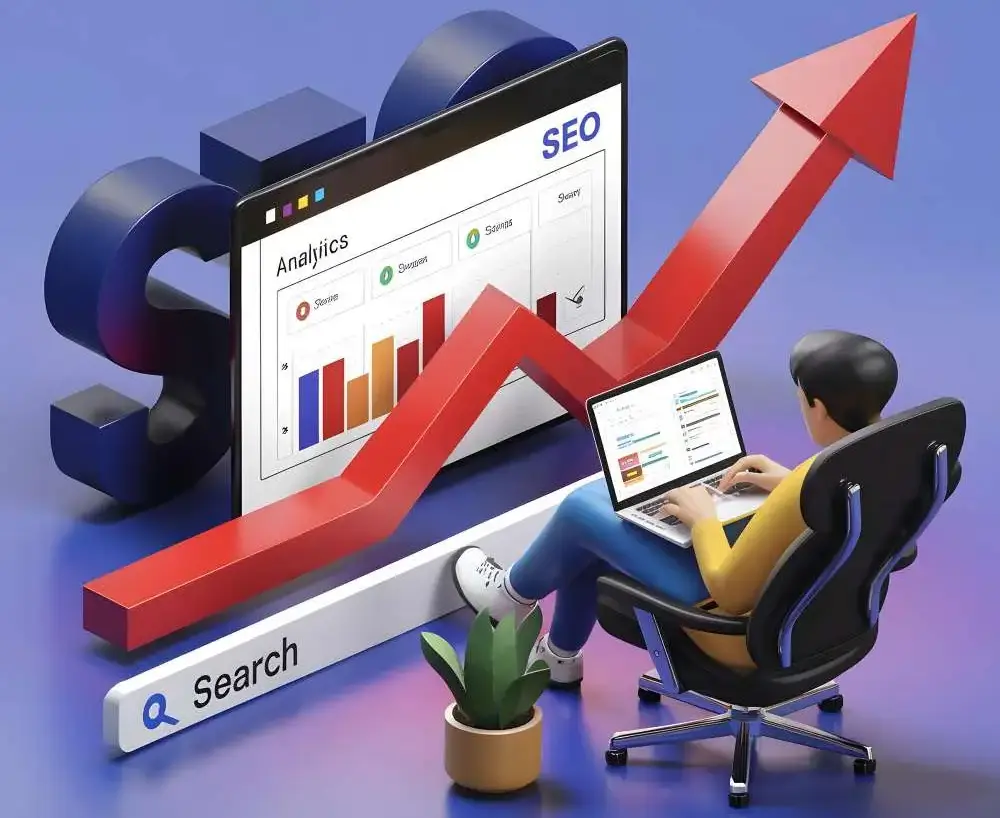
Search behaviour has changed more in the last few years than in the previous decade.
In 2026:
- Users want direct answers, not long explanations
- Search happens across Google, YouTube, voice assistants, and AI tools
- Google prioritises experience, trust, and usefulness
- Low-effort or mass-produced content no longer performs
- SEO is deeply connected with branding and authority
SEO today is not about “gaming the algorithm”. It’s about earning visibility by being genuinely useful.
1. SEO Is Now About Visibility, Not Just Rankings
1: What is the primary goal of SEO (Search Engine Optimization)?
One of the biggest SEO shifts in 2026 is this:
Ranking #1 is no longer the only goal.
Search results now include:
- Featured snippets
- AI-generated answers
- People Also Ask boxes
- Video results
- Local packs
- Knowledge panels
What this means:
SEO success is about being present everywhere your audience searches, not just traditional blue links.
This is where AEO (Answer Engine Optimisation) becomes critical, structuring content so search engines and AI tools can easily extract answers.
Become an AI-powered Digital Marketing Expert
Master AI-Driven Digital Marketing: Learn Core Skills and Tools to Lead the Industry!
Explore Course2. Search Is Expanding Beyond Google (Multi-Platform SEO)
In 2026, users search on:
- Google
- YouTube
- Instagram
- Amazon
- Voice assistants
- AI chat-based tools
YouTube alone has become a powerful search engine for:
- Tutorials
- Reviews
- Learning content
- Product comparisons
SEO in 2026 means:
- Optimising blogs for Google
- Optimising videos for YouTube SEO
- Creating short-form searchable content
- Writing content that AI tools can understand and summarise
SEO is now platform-agnostic.
3. AI Search and Answer Engines Are Reshaping SEO

AI-driven search experiences are changing how content is discovered.
Instead of clicking multiple links, users increasingly:
- Ask questions directly
- Expect summarised answers
- Rely on AI-assisted responses
How this impacts SEO:
- Content must be clear, structured, and factual
- Pages should answer questions directly
- FAQs, headings, and summaries matter more than ever
- Thin or vague content gets ignored
Human-written, experience-backed content performs far better than generic AI-generated text.
Join Our Online Digital Marketing Course & Learn the Fundamentals!
4. EEAT Becomes Non-Negotiable
Google’s EEAT framework,
Experience, Expertise, Authoritativeness, and Trustworthiness are central to SEO in 2026.
What Google looks for:
- Real experience in the topic
- Clear authorship
- Trust signals (about pages, transparency)
- Helpful, original insights
SEO content must show who is speaking and why they are credible.
For students and professionals, this means:
- Learning to write with authority
- Sharing examples and practical insights
- Avoiding copy-paste content
Become an AI-powered Digital Marketing Expert
Master AI-Driven Digital Marketing: Learn Core Skills and Tools to Lead the Industry!
Explore Course5. Content Quality Beats Content Quantity
Earlier, publishing frequently helped rankings. In 2026, this approach backfires.
What no longer works:
- Mass-publishing shallow blogs
- Rewriting existing articles without adding value
- Over-optimising keywords
What works instead:
- In-depth, problem-solving content
- Clear structure and readability
- Real examples and explanations
- User-focused writing
SEO content must feel written for people, not algorithms.
6. Search Intent Matching Is the Core SEO Skill
Keyword research alone is not enough anymore.
In 2026, SEO success depends on understanding search intent, such as:
- Informational (learning something)
- Navigational (finding a site)
- Commercial (comparing options)
- Transactional (ready to act)
Pages that fail to match intent, even if keyword-optimised, don’t rank.
This is why modern SEO requires thinking like the searcher, not just the marketer.
7. Local SEO Gains More Importance
Local searches continue to grow rapidly:
- “near me” queries
- city-based services
- hyper-local recommendations
Key Local SEO trends:
- Optimised Google Business profiles
- Consistent local citations
- Location-specific content
- Reviews and reputation signals
For small businesses and service providers, local SEO often delivers higher ROI than national SEO.
8. User Experience (UX) Is a Ranking Factor, Not a Bonus
In 2026, Google evaluates how users interact with your content.
Important signals include:
- Page loading speed
- Mobile friendliness
- Clear navigation
- Readable formatting
- Time spent on page
If users struggle to consume your content, rankings drop, regardless of keyword usage.
SEO and UX now go hand in hand.
9. Voice Search and Conversational Queries Grow
With the rise of voice assistants and conversational AI:
- Queries are longer
- Language is more natural
- Questions are more specific
SEO implication:
Content must be:
- Conversational
- Easy to understand
- Structured in Q&A format
This is another reason why FAQ sections and simple explanations perform well in 2026.
10. Backlinks Matter, But Authority Matters More
Backlinks are still important, but not all links are equal.
In 2026:
- Relevance matters more than volume
- Authority outweighs quantity
- Natural mentions outperform paid links
Brand reputation, content quality, and real mentions now play a bigger role than aggressive link-building tactics.
SEO Skills That Matter Most in 2026
For students and professionals, these skills define success:
- Search intent analysis
- Content strategy and structuring
- AEO and FAQ optimisation
- Technical SEO basics
- Analytics and performance tracking
- AI-assisted SEO workflows (without over-dependence)
SEO has become a strategic skill, not just a technical one.
How Entri’s Digital Marketing Course Aligns With SEO Trends 2026
Many learners struggle with SEO because they focus only on tools, not fundamentals. A structured programme like the Entri Digital Marketing Course helps learners:
- Understand modern SEO concepts beyond keywords
- Learn intent-based and content-led SEO strategies
- Apply SEO practically with real use cases
- Integrate SEO with content, ads, and analytics
- Prepare for evolving trends like AEO and AI search
For aspiring digital marketers, structured learning helps avoid outdated SEO practices and builds long-term capability.
Common SEO Myths That Don’t Work in 2026
- ❌ “SEO is dead”
- ❌ “AI will replace SEO professionals”
- ❌ “More content always means more traffic”
- ❌ “Backlinks alone guarantee rankings”
The truth:
SEO is evolving, not disappearing.
What SEO Success Looks Like in 2026
Successful SEO today means:
- Your content answers real questions
- Your brand appears across platforms
- Your pages are easy to consume
- Your authority grows over time
- Your traffic is relevant, not random
SEO has shifted from ranking tricks to trust building.
Key Takeaways
- SEO in 2026 is about visibility, trust, and usefulness
- AEO and AI-driven search are reshaping discovery
- Content quality and experience matter more than ever
- Search intent is the foundation of rankings
- SEO and UX are deeply connected
- Continuous learning is essential
- Structured learning like Entri’s Digital Marketing Course helps future-proof SEO skills
Final Thoughts
SEO in 2026 is no longer just a bunch of technical hacks. Its all about putting together a gameplan that incorporates psychology, solid content creation, an understanding of the data, and building trust. People who get this shift right wont just rank higher – they’ll also build careers that really matter.
If you’re serious about getting a grasp on SEO in a way that actually makes sense in today’s search landscape, it’s worth taking the time to learn properly – and a structured course like the Entri Digital Marketing Course can give you that clarity and confidence you need to really stand out from the crowd.
SEO will keep on evolving as time goes on, but this bit never changes: the ones who give people what they’re really looking for will be the ones who come out on top.
Frequently Asked Questions
What are the major SEO trends in 2026?
Major SEO trends in 2026 include AI-driven search, Answer Engine Optimisation (AEO), experience-based content, search intent optimisation, and improved user experience signals.
Is SEO still relevant in 2026?
Yes, SEO is still highly relevant in 2026, but it has evolved beyond keywords to focus on content quality, user intent, trust, and multi-platform visibility.
How is AI affecting SEO in 2026?
AI affects SEO by changing how search engines understand queries, rank content, and generate answers, making structured, clear, and experience-backed content more important.
What is AEO and why is it important in 2026?
AEO (Answer Engine Optimisation) focuses on creating content that directly answers user questions, helping pages appear in featured snippets, voice search, and AI-generated responses.
Does keyword research still matter in SEO 2026?
Yes, keyword research still matters, but it is now combined with search intent analysis and topic relevance rather than focusing on exact keyword matching.
What role does EEAT play in SEO rankings?
EEAT (Experience, Expertise, Authoritativeness, Trustworthiness) helps search engines evaluate content credibility, making it essential for ranking, especially in competitive niches.