Table of Contents
According to analysts at Morgan Stanley, the rapid delivery market will touch $57 billion by 2030. As per the initial projections, the market size was just $42 billion. Believe it or not, the valuation of Zepto, a quick commerce platform started by two college dropouts in 2021 has skyrocketed five times, i.e. from $1.4 billion to $7 billion in just two years.
Join our Online Course and Learn Stock Marketing the Right Way. Enrol Now!
Introduction
In the busy streets of Bengaluru, Mumbai, Delhi, and beyond, a new sound has replaced the morning temple bells or the chirping of birds. It is nothing but the frantic revving of a delivery bike. India has embraced “Quick Commerce” with an intensity seen nowhere else in the world. We are no longer a nation that waits. If we run out of milk, we don’t walk to the corner Kirana store; we tap an icon on our smartphones. If we crave a packet of chips at 11:00 PM, it arrives before we’ve even finished picking a movie to watch.
While this feels like living in the future, your bank account might be stuck in a declining past. This convenience is a product, and like any premium product, it comes with a heavy price tag. Beyond the obvious delivery fee, there is a complex web of psychological triggers and financial leaks that are quietly draining the middle-class savings. To understand how these apps are making you poor, we must look closely at the hidden costs of 5-minute delivery.
1. The Disruption of the Traditional Budgeting System
1: What is a stock?
For generations, the Indian household was built on the foundation of the “Monthly Ration List.” Every month, families would sit down, assess what was used, and buy in bulk. This system was mathematically sound because buying in bulk reduces the unit price of goods.
Quick commerce apps have effectively dismantled this discipline. Instead of a single, well-thought-out purchase, we now engage in “fragmented shopping.” When you buy one litre of oil today, a pack of salt tomorrow, and a bunch of coriander the day after, you lose the ability to track your total consumption. This fragmentation is one of the primary hidden costs of 5-minute delivery. When expenses are broken into small, ₹100 or ₹200 chunks, the brain doesn’t register them as a significant threat to the monthly budget. However, thirty such “small” orders a month can easily cross ₹6,000, often without you realizing where the money went.
2. The Science of the “Add-to-Cart” Temptation
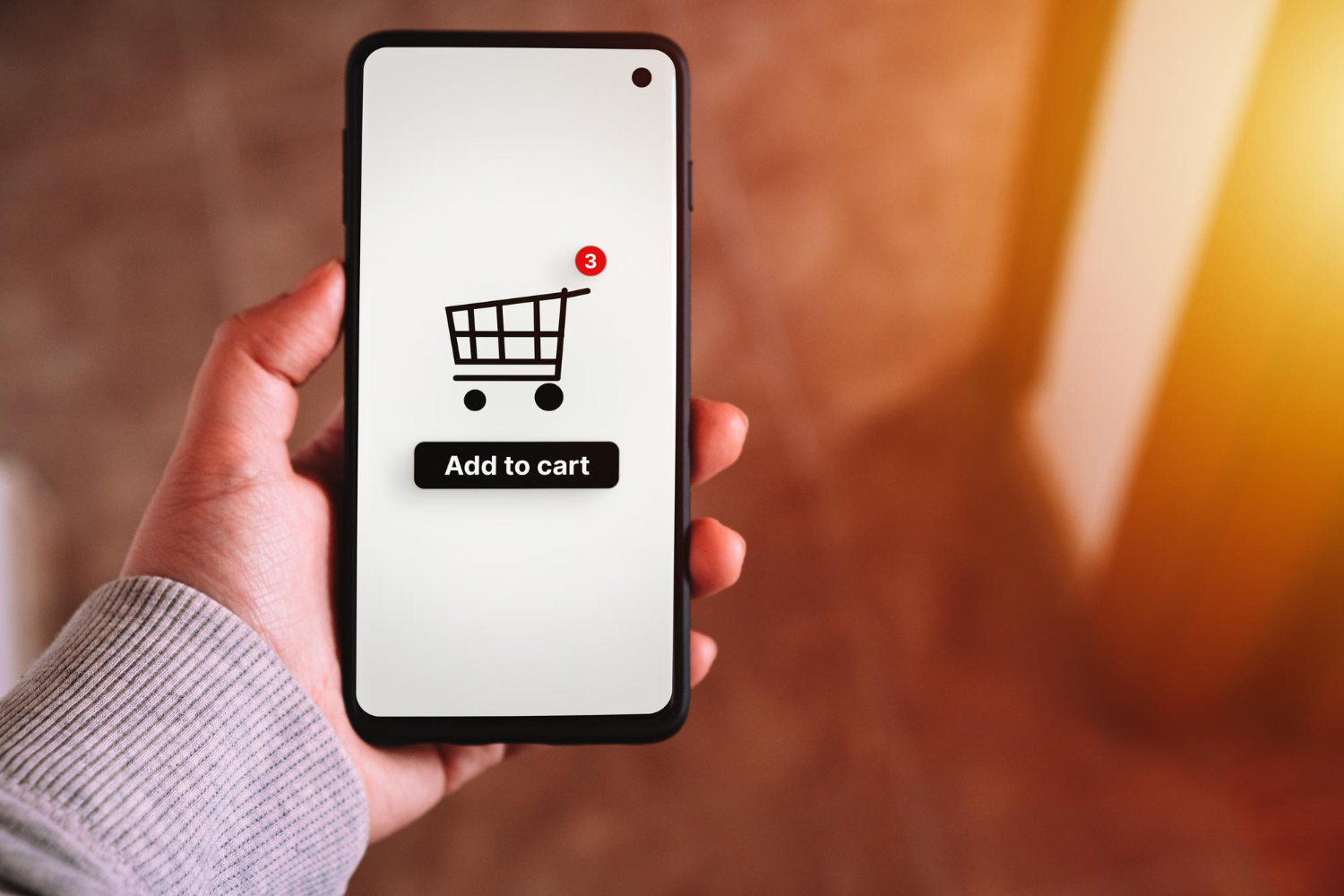
These apps are not just delivery services; they are highly sophisticated software engines designed by data scientists to maximize “Average Order Value” (AOV). Have you ever noticed what happens the moment you add a packet of bread? Within no time the app suggests butter, jam, or eggs.
This is known as “cross-selling,” and in the world of 5-minute delivery, it is hyper-aggressive. Because you want your bread in 5 minutes, your brain is already in a state of “instant gratification.” In this state, your impulse control is weakened. You end up adding a ₹50 soft drink or a ₹80 chocolate bar just because it looked tempting on the checkout screen. Over a year, these “small additions” can cost a household tens of thousands of rupees. This loss of impulse control is a significant factor in the hidden costs of 5-minute delivery.
3. Micro-Transactions: The Death by a Thousand Cuts
If an app asked you to pay ₹500 upfront as a convenience fee every month, you would likely refuse. But if it asks for ₹5 as a “Platform Fee,” ₹15 as a “Delivery Charge,” and ₹2 as a “Rain/Peak Fee,” you would barely react.Let’s check how it works. If an average urban user orders 25 times a month:
- Platform Fee: ₹5 x 25 = ₹125
- Delivery Charge: ₹15 x 25 = ₹375
- Handling/Packing Fee: ₹3 x 25 = ₹75
- Total: ₹575 per month
This ₹575 is being paid purely for the “speed.” It does not include the cost of the actual groceries. In a year, that is nearly ₹7,000—the cost of a decent insurance policy or a small SIP investment—spent simply on the 10-minute wait reduction. These micro-charges are the most literal hidden costs of 5-minute delivery.
4. The Trap of “Free Delivery”
To get rid of the delivery charges mentioned above, most users try to hit the “Free Delivery” threshold, which is usually around ₹199 or ₹499. This is a classic marketing trap.
Assume that a consumer is shopping on Swiggy or Zepto. On both these platforms, he/she can get away with delivery fees if they shop for Rs. 200 or so. However, when it comes to Blinkit, they will have to spend a minimum of Rs.500 for free delivery. Also keep in mind that these charges can be arbitrary at times. For example, on Instamart, the handling charges can come anywhere in the range of Rs.10-15 depending on the order value. In the case of Zepto, it is generally about Rs.21 for large orders and Rs.13 for small orders. The handling charges on Blinkit are usually fixed at Rs.11. To add on, rain and surge fees come to Rs.15 and Rs.30 respectively.
Suppose you only need a bottle of dishwash liquid worth ₹120. To save the cost of paying a ₹25 delivery fee, you search for something else to add to the cart. You end up buying a pack of premium biscuits for ₹80 that you didn’t really want. You “saved” ₹25 on delivery but spent an extra ₹80 on junk food. Multiply this behaviour by several times a month, and you can see why your savings are stagnant. The quest for “free” services often leads to the highest hidden costs of 5-minute delivery.
Stock Market Training Reviewed & Monitored by SEBI Registered RA
Trusted, concepts to help you grow with confidence. Enroll now and learn to start investing the right way.
Know more5. Price Inflation and Lack of Comparison
In a physical market, you have the power of comparison. If the vendor on the left is selling potatoes for ₹30/kg, and the one on the right says ₹40, you move. On a 5-minute delivery app, you are a captive audience.
Research shows that prices on quick commerce platforms are often 5% to 15% higher than local wholesale markets. Furthermore, these apps often stock “premium” or “organic” versions of basic staples. When the regular ₹60 sugar is “out of stock,” you are forced to buy the “sulphur-free, organic” version for ₹120 because you need it now. This subtle upselling ensures that even if you buy the same quantity of goods, you are paying a much higher price for the brand name and the speed.
6. The Environmental and Health “Hidden” Costs
Are you someone who easily falls for discounts? A comparison of market prices reveals that it is the modern trade and e-commerce platforms that offer the highest discount to shoppers consistently. To add on, the discounts offered by these platforms fall somewhere between 13 to 18%. When compared to general trade, price discounting offered by quick commerce chains comes in the range of 6-9%. However, in the case of general trade, the price discount offered is just in the range of 2-5%. While we focus on the wallet, there are indirect costs that eventually hit your finances.
- Health: The main business of quick commerce is ultra-processed snacks. The easier it becomes to get chips and soda, the more you consume them. Rise in consumption of processed food leads to lifestyle diseases, resulting in higher medical bills in the long run.
- Waste: Because you can order anytime, you stop caring about food preservation. Many users report higher rates of vegetables rotting in the fridge because they over-ordered during a “Flash Sale” or added items just to meet a discount criteria.
7. The Erosion of Financial Discipline
Perhaps the most dangerous aspect of these apps is how they change our relationship with money. Indian culture has traditionally valued Sanyam (restraint) and Bachat (saving). Quick commerce promotes the opposite: “I want it, and I want it now.”
This mindset doesn’t stay restricted to groceries. It bleeds into how we buy clothes, gadgets, and luxury items. Once you are used to 5-minute gratification, waiting for anything feels like a chore. This urgency leads to poor financial decisions, such as taking “Buy Now, Pay Later” (BNPL) loans or overusing credit cards. The ultimate hidden costs of 5-minute delivery are the loss of patience and the destruction of a long-term savings mindset.
Join our Online Course and Learn Stock Marketing the Right Way. Enrol Now!
Key Takeaways
- Audit Your Apps: Once a month, export your transaction history and total up every small fee. The number will likely be a wake-up call.
- The 24-Hour Rule: In the case of non-essential items such as snacks, gadgets, non-urgent pantry items, leave them in the cart for 24 hours. If you still want them the next day, buy them.
- Support Local Kiranas: Walking to your local shop not only saves you delivery fees but also provides a bit of exercise and supports the local economy.
- Bulk Buy Staples: Items like flour, rice, oil, and cleaning supplies should never be bought on quick commerce. Buy these in bulk once a month to save significantly.
- Turn Off Notifications: These apps send “hunger cues” via notifications (e.g., “It’s tea time! Want some samosas?”). Turning these notifications off prevents unnecessary spending.
|
RELATED POSTS |
|
Stock Market Training Reviewed & Monitored by SEBI Registered RA
Trusted, concepts to help you grow with confidence. Enroll now and learn to start investing the right way.
Know moreFrequently Asked Questions
Is quick commerce always bad for my budget?
Not if used for genuine emergencies like medicine or a missing ingredient for a meal. It becomes “bad” when it replaces planned grocery shopping.
Why do I feel like I'm spending more on these apps?
Because you are. Between platform fees, higher item prices, and impulse additions to reach “free delivery,” your per-item cost is much higher.
Are the discounts on these apps real?
Often, the “discount” is on an inflated MRP. You might find that the “discounted” price on the app is still higher than the regular price at a local wholesaler.
How can I identify the hidden costs of 5-minute delivery?
Look for platform fees, handling charges, surge pricing, and the cost of “filler items” added to reach a minimum order value.
Do these apps save time?
While the delivery is fast, the time spent browsing and tracking orders adds up. For many, a weekly 30-minute trip to a store is more time-efficient than 15 small orders.
Should I delete these apps?
Not necessarily. They are useful tools. However, you should treat them as a “luxury service” rather than a primary way to buy household essentials.
Does UPI make it easier to overspend?
Yes. The digital nature of UPI removes the “pain of paying” that comes with physical cash, making it easier to hit “Pay” for small, frequent amounts.