Table of Contents
Introduction
Working as a Front Office Executive in a Hospital in Kerala blends professional care, administrative precision, and steady human interaction. This role sits at the intersection of patient experience and hospital operations: front-office staff are often the first and last point of contact for patients and visitors, and their work shapes impressions, smooths workflows, and supports clinical teams. The following expanded account walks through a full day, explains common tasks and challenges, and offers practical tips for anyone considering this career.
Morning: setting up, patient arrivals, and coordination
1: What is the primary role of a hospital administrator?
7:30 – 8:30: Preparations and handover
- Arrive early to receive a handover from the previous shift. Handover notes typically include overnight admissions, pending pre-authorizations, equipment or system issues, and any VIP or emergency cases expected during the day.
- Check that the reception area is clean, well-signed, and stocked with forms, pens, and visitor badges. Cleanliness and order create a calm first impression for anxious patients.
- Boot up the hospital information system (HIS), billing software, printers, and payment terminals. Confirm internet connectivity for any online appointment portals, insurance verification platforms, and SMS/WhatsApp systems used for patient communication.
- Review the day’s appointment roster: number of OPD slots, scheduled procedures, follow-up lists, and expected walk-ins. Note doctors on leave or changed schedules and flag any potential clashes.
- Coordinate with security and housekeeping for smooth patient flow and waiting-area management. If the hospital runs special clinics (cardiology camp, vaccination drive), ensure signage and dedicated counters are arranged.
8:30 – 10:30: Reception and patient registration
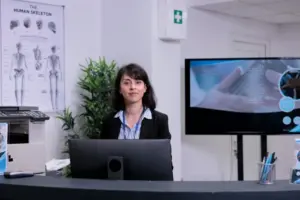
- Greet patients and relatives courteously in Malayalam, English, or Hindi depending on need. A friendly greeting sets the tone and helps calm nervous visitors.
- Register new patients and confirm details for returning patients. Typical information collected: name, age, contact, address, Aadhaar or ID proof, primary physician, and reason for visit. Accurate data entry prevents problems later in care or billing.
- Explain the OPD process: where to wait, approximate consultation time, and where to go for lab tests or imaging. Provide printed slips or SMS directions to reduce confusion in large hospitals.
- Issue tokens or queue numbers during peak hours and manage waiting-area flow. When waiting times are long, proactively inform patients and offer water, seating for elderly patients, or priority tokens where applicable.
- Direct walk-in patients who need emergency attention to triage or the casualty department. Recognizing red flags (severe chest pain, breathing difficulty, altered consciousness) and escalating quickly can be life-saving.
10:30 – 11:00: Coordination with clinical departments
- Communicate patient arrivals to nursing stations and doctors’ assistants so clinicians are prepared, especially for pre-booked cases that need immediate review.
- Confirm sample collection and imaging slots for patients who need tests before seeing the doctor. Quick coordination reduces patient wait times and speeds up consultation flow.
- Flag urgent or delayed cases to the relevant department, such as notifying the lab when a patient arrives with same-day investigation requests or informing the OT scheduling team about an expedited admission.
- Follow up on pending referrals from external clinics; check whether required documents arrived and notify patients of any additional paperwork needed.
Hospital Administration Course with Assured Career Growth
Hospital Administration Course by Entri App: Master essential healthcare management skills, gain certification, and secure top roles in leading hospitals
Join Now!Midday: billing, insurance, and communication management
11:00 – 13:00: Billing assistance and insurance verification
- Assist patients with billing queries for OPD visits, lab tests, and imaging. Clear, transparent explanations about fees reduce disputes and help families plan.
- Verify insurance coverage: check policy validity, patient eligibility, covered procedures, and claim limits. For corporate or government schemes common in Kerala (e.g., Ayushman Bharat-related workflows), ensure correct documentation to avoid rejection.
- Initiate pre-authorization for planned admissions and surgeries when required. Liaise with insurance representatives or TPAs (third-party administrators) to secure approvals, uploading necessary medical notes and estimates promptly.
- Offer and facilitate digital payment options: UPI, card payments, online bank transfers, or hospital-specific wallets. For many elderly patients, staff assist with digital transfers or accept cash as needed, ensuring correct receipts and change.
13:00 – 14:00: Lunch and quick updates
- Lunch breaks are often staggered; front desk coverage must remain consistent. If stepping away, brief the colleague taking over about urgent items and any incoming VIP or emergency cases.
- Use short breaks to review remaining afternoon appointments, reprint any missing documents, and clear backlog emails.
- Share brief updates with clinical staff if any urgent administrative issues arose before the break (e.g., delayed lab reports or a last-minute cancellation by a consultant).
14:00 – 15:00: Phone triage and appointment rescheduling
- Handle incoming calls about test results, appointment availability, billing queries, and teleconsultation links. Clear, calm phone communication helps reassure anxious callers.
- Reschedule or reallocate appointments when doctors are delayed, or when a patient requests a different slot. Maintain a waitlist for same-day cancellations to minimize empty slots.
- For patients traveling from remote areas in Kerala (or nearby Tamil Nadu/Karnataka border regions), provide clear directions, available public transport tips, and local accommodation contacts if necessary.
- Coordinate with the pharmacy for medication availability when a patient calls for an urgent refill or to confirm that prescribed medicines are in stock.
Afternoon: patient support, documentation, and emergency response
15:00 – 17:00: Documentation and post-consultation services
- After consultation, ensure prescriptions, lab requests, and imaging requisitions are correctly printed or sent electronically to the respective departments. Confirm that specimen labels and patient IDs match to avoid mix-ups.
- Prepare discharge paperwork for same-day procedures and short admissions. Make sure the discharge summary, doctor’s advice, and follow-up dates are clearly documented and explained to the patient or attendant.
- Assist with referrals and follow-up scheduling: book the next OPD appointment, provide referral letters to higher centers if needed, and issue any medicolegal documentation when required.
- Maintain accurate and up-to-date patient files in the HIS. For hospitals still using hybrid systems, ensure paper files and electronic records mirror each other.
17:00 – 18:30: Handling difficult situations and end-of-day wrap-up
- Manage billing disputes or complaints calmly. When a family raises concerns about charges or waiting times, listen actively, explain policies, escalate where necessary to patient relations or administration, and document the issue for follow-up.
- Finalize daily reports: total patient count, type of visits (OPD, walk-in, emergency), cancellations, revenue figures, and pending insurance authorizations. These reports help administration with staffing and resource planning.
- Prepare a handover note for the evening shift: list pending admissions, unresolved insurance approvals, any technical issues, and VIP patients. Good handovers prevent mistakes and ensure continuity of care.
- Back up digital data if the hospital policy requires end-of-day backups. Secure physical cash and receipts according to financial control procedures.
|
Related Articles |
|
| How to Become a Hospital Receptionist? | Daily Duties of a Hospital Receptionist |
| Medical Receptionist Salary in Kerala | Hospital Front Office and Billing Executive Salary |
Key skills and qualities that make the day work
- Clear communication and empathy: Speaking Malayalam fluently and using polite, reassuring language helps patients from diverse backgrounds feel understood and respected. Empathy reduces confrontation and builds trust.
- Organizational and multitasking ability: Prioritizing urgent tasks (triage, emergency admissions, insurance authorizations) while keeping routine registrations moving is essential. A systematic checklist reduces missed steps.
- Technical familiarity: Proficiency with HIS, billing software, basic spreadsheets, printer troubleshooting, and POS terminals increases speed and accuracy. Familiarity with SMS/WhatsApp messaging tools is useful for appointment reminders.
- Problem-solving and calm under pressure: Emergencies, sudden doctor unavailability, and angry relatives occur. Following escalation protocols, calling clinical leads, and offering practical interim solutions (water, seating, clear time estimates) helps de-escalate situations.
- Attention to confidentiality: Handling medical records demands strict adherence to privacy norms and hospital policies. Ensure patient data is shared only with authorized staff and is stored securely.
Hospital Administration Course with Assured Career Growth
Hospital Administration Course by Entri App: Master essential healthcare management skills, gain certification, and secure top roles in leading hospitals
Join Now!Typical challenges and how they’re handled
- High patient volumes: Festivals, seasonal outbreaks (dengue, influenza), or vaccination drives can surge footfall. Hospitals use token systems, express counters for routine payments, and mobile queue displays to manage flow.
- Insurance delays and claim rejections: To minimize rejections, verify policy details in advance, collect necessary documents (ID, policy card, pre-existing condition declarations), and keep patients informed if an approval is pending.
- Language and accessibility barriers: Large hospitals may serve non-Malayalam speakers and elderly patients with low literacy. Visual signage, multilingual staff, and patient guides (simple leaflets) improve navigation.
- Technology hiccups: When HIS or payment systems fail, staff revert to manual forms and follow documented SOPs. Regular training on backup procedures reduces the impact.
- Emotional strain and burnout: Continuous exposure to patient grief or high-pressure situations can be emotionally taxing. Hospitals that rotate staff, debrief difficult cases, and provide counseling resources help sustain staff well-being.
Rewards and workplace satisfaction
- Immediate impact on patient experience: A warm greeting, clear instructions, or quick resolution of a billing issue can make a stressful hospital visit more bearable and often earns gratitude from patients and families.
- Variety and human connection: Daily interactions range from routine follow-ups to urgent care situations, offering a mix of predictable tasks and meaningful, sometimes moving, human stories.
- Skill development and career growth: With experience, front-office staff can advance to roles such as patient relations officer, administrative supervisor, or operations manager. Learning hospital administration, medical coding, or customer service certifications strengthens promotion prospects.
- Stable employment with community service ethos: Many professionals value the stability hospitals offer and the sense of contributing to community health, especially in tight-knit Kerala neighborhoods.
A snapshot from Kerala: cultural and operational notes
- Language and courtesy matter: Using Malayalam greetings and culturally respectful phrases, acknowledging elders first, and offering seating or assistance to senior citizens aligns with local norms and improves patient satisfaction.
- Community healthcare ties: Kerala’s strong primary healthcare network means hospitals often receive referrals from local clinics and family doctors. Front-office executives maintain these relationships by ensuring referral documentation is complete and arranging direct communication when necessary.
- Tech adoption and patient expectations: Kerala’s high literacy and smartphone usage have raised expectations for digital convenience. Patients frequently prefer online appointment booking, WhatsApp confirmations, and digital receipts. Being proficient with these tools enhances service quality.
- Local travel and accommodation considerations: Patients from rural districts or neighboring states may need guidance about local transport and affordable stays; hospitals often maintain a list of nearby guest houses and local transport options to assist them.
Practical tips for aspiring front-office executives
- Improve language skills: Speak clear Malayalam and English; basic Hindi helps with interstate visitors. Practice polite, concise phrases for common front-desk interactions.
- Gain technical exposure: Familiarize yourself with popular HIS platforms, billing software, POS terminals, and basic Excel. Short professional certificate courses in hospital administration or medical front-desk operations are valuable.
- Learn medical and insurance basics: Understand common medical terms, test names, and insurance processes relevant to Indian hospitals. This knowledge helps answer patient queries accurately.
- Build soft skills: Practice empathy, active listening, and conflict-resolution techniques. Role-play scenarios such as handling an angry relative or explaining an insurance rejection to build confidence.
- Stay organized and proactive: Use checklists, keep frequently used forms handy, and maintain a small troubleshooting kit (spare pens, stapler, printed emergency numbers) to handle everyday hiccups.
Closing thought
A Front Office Executive in a Kerala hospital plays a quiet but pivotal role: organizing logistics, guiding patients, and connecting clinical care with administrative systems. The job demands patience, precision, and people skills, and for many professionals, it becomes a deeply satisfying way to serve the community while building a stable career in healthcare administration. With Kerala’s high public health awareness and growing digital adoption, front-office roles are evolving into more tech-enabled, patient-centered positions—making them both challenging and rewarding career choices.
Hospital Administration Course with Assured Career Growth
Hospital Administration Course by Entri App: Master essential healthcare management skills, gain certification, and secure top roles in leading hospitals
Join Now!Frequently Asked Questions
What does a Front Office Executive in a hospital do?
A Front Office Executive greets patients and visitors, registers new and returning patients, manages appointment scheduling, assists with billing and insurance verification, coordinates with clinical departments, and handles basic patient enquiries and documentation.
What are typical working hours for this role?
Hours vary by hospital; many front-office executives work in shifts covering morning to evening OPD hours, with some rotating into evening or night shifts for hospitals that provide 24/7 services.
What qualifications are required to become a Front Office Executive?
Common requirements include a high school or diploma qualification; many employers prefer a certificate or diploma in hospital administration, medical office management, or customer service. Proficiency in computers and basic English is often required.
Which languages should a Front Office Executive in Kerala know?
Malayalam and English are essential. Basic Hindi is helpful for interstate patients. Knowledge of local dialects or simple phrases in Tamil can be useful in border districts.
What technical skills are important?
Familiarity with Hospital Information Systems (HIS), billing software, point-of-sale (POS) terminals, basic MS Excel, and common communication tools (SMS, WhatsApp) are important. Printer and basic troubleshooting skills are also useful.
How does the front office handle insurance and pre-authorizations?
Executives verify policy details, check patient eligibility, collect required documents, initiate pre-authorizations with the insurer or TPA, and follow up until approval. They also explain co-payments and exclusions to patients.
How do Front Office Executives manage peak-hour crowds and long queues?
Hospitals use token systems, express counters, appointment reminders, and dedicated counters for repeat visits or billing. Front-office staff triage urgent cases and provide waiting-time updates to reduce frustration.
How is patient confidentiality maintained at the front desk?
Staff follow hospital privacy policies: share information only with authorized personnel, secure electronic records with passwords, avoid loud conversations about patient details in public areas, and store physical files safely.
What are common challenges in this role?
High patient volumes, insurance delays, technology outages, emotionally charged visitors, and long hours can be challenging. Good training, clear SOPs, and strong support from administration help manage these issues.
What are career advancement opportunities?
With experience, executives can move to patient relations officer, administrative supervisor, front-office manager, or operations roles. Additional qualifications in hospital administration, medical coding, or customer service improve promotion prospects.