Table of Contents
Key Takeaways:
- AI helps hospitals work faster and easier
- AI is used for records, billing, and appointments
- AI improves patient care and reduces waiting time
- AI has problems like cost and data safety
- Doctors and staff are still very important in hospitals
Introduction
AI is becoming important in hospital administration today. Hospitals use AI to improve patient care, manage records, save time, and reduce work pressure. AI helps hospitals work faster and more efficiently.
Many hospitals now use AI for appointments, billing, patient records, and hospital management. However, AI also brings some challenges like data privacy, costs, and training needs. Understanding the opportunities and challenges of AI helps students and healthcare professionals learn how technology is changing hospital administration.
Explore Your Future in Hospital Administration! Enroll now
What is AI in Healthcare?
AI in healthcare means using smart computer technology to help hospitals and healthcare workers do tasks more easily and quickly.
AI can help hospitals:
- Store patient records
- Manage appointments
- Support doctors
- Reduce paperwork
- Improve hospital management
👉 AI helps hospitals save time and improve work.
🔸 How AI Is Used in Healthcare
Hospitals use AI for many daily tasks such as:
- Patient registration
- Appointment booking
- Billing work
- Medical record management
- Patient monitoring
👉 AI helps hospitals work faster and better.
🔸 Simple Examples of AI in Hospitals
Some common examples are:
- Online appointment systems
- Chatbots for patient support
- Automatic billing systems
- Digital medical records
- Health monitoring systems
👉 Many hospitals already use AI technology today.
Role of AI in Hospital Administration
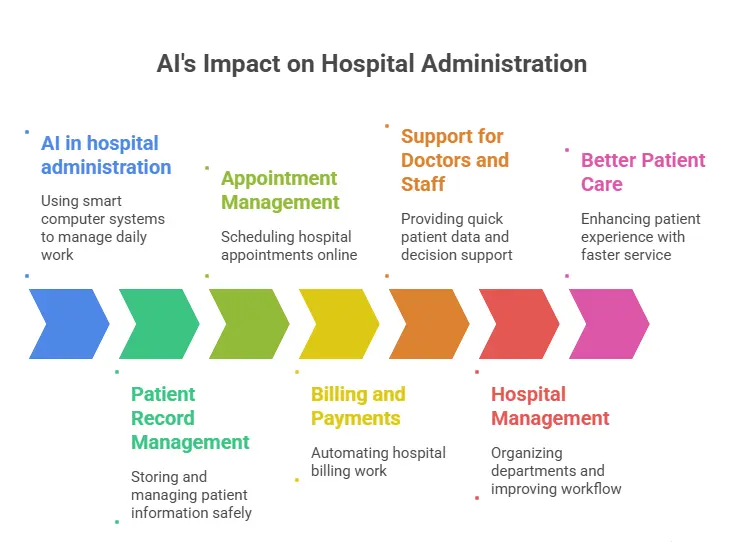
AI in hospital administration means using smart computer systems to help hospitals manage daily work in an easy and fast way. It reduces manual work and improves hospital services.
AI helps hospitals:
- Manage patient records
- Handle appointments
- Support billing work
- Reduce paperwork
- Improve hospital efficiency
👉 AI makes hospital work faster and easier.
Patient Record Management
AI helps store and manage patient information safely.
- Keeps digital patient records
- Finds records quickly
- Reduces paper files
- Improves accuracy
👉 Patient data becomes easy to manage.
Appointment Management
AI helps in scheduling hospital appointments.
- Online booking systems
- Avoids long waiting time
- Sends reminders to patients
- Reduces crowding
👉 Appointments become smooth and fast.
Billing and Payments
AI helps in hospital billing work.
- Automatic billing system
- Fast payment processing
- Fewer billing mistakes
- Easy insurance support
👉 Billing becomes simple and quick.
Support for Doctors and Staff
AI helps doctors and hospital staff in daily work.
- Gives patient data quickly
- Helps in decision making
- Reduces workload
- Saves time
👉 Staff can focus more on patient care.
Hospital Management
AI helps manage hospital operations.
- Organizes departments
- Tracks hospital activities
- Improves workflow
- Reduces delays
👉 Hospital runs in a better way.
Better Patient Care
AI improves overall patient experience.
- Faster service
- Less waiting time
- Better support
- Quick information access
👉 Patients get better care easily.
Benefits of AI in Hospital Management
AI in hospital management helps hospitals work faster, easier, and more smoothly. It reduces human effort and improves patient care.
AI helps hospitals:
- Save time
- Reduce errors
- Improve patient care
- Manage work easily
- Support staff
👉 AI makes hospital work better and faster.
Saves Time
AI helps complete hospital work quickly.
- Fast data entry
- Quick patient registration
- Faster reports
- Easy record search
👉 Hospitals save a lot of time.
Reduces Mistakes
AI helps reduce human errors.
- Correct data entry
- Accurate reports
- Fewer billing mistakes
- Better record keeping
👉 Work becomes more accurate.
Improves Patient Care
AI helps patients get better service.
- Faster treatment process
- Less waiting time
- Better hospital support
- Easy communication
👉 Patients feel more satisfied.
Easy Hospital Management
AI helps manage hospital work easily.
- Organizes departments
- Tracks daily work
- Manages appointments
- Controls workflow
👉 Hospital runs smoothly.
Supports Hospital Staff
AI helps doctors and staff in daily work.
- Reduces workload
- Gives quick information
- Helps decision making
- Saves effort
👉 Staff can work better and faster.
Better Use of Resources
AI helps hospitals use resources properly.
- Less paper usage
- Better time use
- Efficient staff use
- Reduced waste
👉 Hospital resources are used wisely.
AI Applications in Hospitals
AI is used in hospitals to make work easier, faster, and more organized. It helps hospital staff, doctors, and patients in many daily tasks.
AI is used in:
- Patient registration
- Appointment booking
- Billing work
- Medical records
- Patient care
- Hospital management
👉 AI helps hospitals save time and reduce workload.
Patient Registration
AI helps in quick patient entry.
- Patients can register online or at hospital
- Digital forms reduce paper work
- Faster check-in process
- Less waiting time at reception
👉 Registration becomes fast and simple.
Appointment Booking
AI helps manage hospital appointments.
- Online booking systems
- Automatic time scheduling
- Reminder messages to patients
- Reduces long queues
👉 Patients get appointments easily.
Billing and Payments
AI helps in hospital billing work.
- Automatic bill generation
- Faster payment process
- Reduces billing mistakes
- Helps with insurance claims
👉 Billing becomes quick and correct.
Medical Records Management
AI helps store and manage patient records.
- Digital patient files
- Easy to search records
- Safe storage of data
- Reduces paper files
👉 Records are easy to access anytime.
Patient Care Support
AI helps improve patient care.
- Tracks patient health data
- Sends alerts to doctors
- Helps in early diagnosis
- Supports treatment decisions
👉 Patients get better and faster care.
Hospital Management
AI helps manage hospital work.
- Organizes departments
- Tracks daily activities
- Improves workflow
- Reduces delays
👉 Hospital work becomes smooth.
Support for Doctors and Staff
AI helps hospital staff in daily work.
- Gives quick patient information
- Helps in reports and analysis
- Reduces workload
- Saves time
👉 Staff can focus more on patients.
Chatbots and Virtual Help
AI chatbots help patients online.
- Answers basic questions
- Helps with booking appointments
- Gives hospital information
- Available 24/7
👉 Patients get quick support anytime.
Health Monitoring Systems
AI helps monitor patient health.
- Tracks heart rate and reports
- Sends alerts in emergencies
- Used in ICUs and wards
- Helps doctors monitor patients
👉 Health is monitored in real time.
Challenges of Implementing AI in Healthcare
AI is useful in hospitals, but it also has some problems. Hospitals face challenges while using AI systems.
AI challenges include:
- High cost
- Data safety issues
- Lack of training
- Technical problems
- Job concerns
👉 AI is helpful, but not easy to use everywhere.
High Cost
AI systems are expensive.
- Needs costly machines
- Software is expensive
- Hospital setup costs increase
- Small hospitals may not afford it
👉 Cost is a big challenge.
Data Privacy Issues
Patient data must be safe.
- Risk of data hacking
- Privacy concerns
- Sensitive health information
- Need strong security systems
👉 Data protection is very important.
Lack of Training
Hospital staff need training to use AI.
- Many workers are not trained
- Difficult to learn new systems
- Time needed for training
- Mistakes can happen without knowledge
👉 Proper training is required.
Technical Problems
AI systems can have issues.
- Software errors
- System crashes
- Internet problems
- Maintenance needed
👉 Technical support is always needed.
Job Concerns
Some people worry about jobs.
- Fear of job loss
- Machines doing human work
- Staff stress and confusion
- Need balance between AI and humans
👉 Humans are still very important.
Dependence on Technology
Hospitals may depend too much on AI.
- System failure can affect work
- Less manual practice
- Over-reliance on machines
- Need backup systems
👉 Human support is still needed.
Ethical Issues
AI decisions must be fair.
- Risk of wrong suggestions
- Bias in data
- Responsibility questions
- Need proper rules
👉 Ethics is very important in healthcare.
Ethical Concerns and Data Privacy
Future of AI in Hospital Administration
AI will become more important in hospital administration in the future. It will help hospitals work faster, smarter, and more easily.
AI may help hospitals:
- Improve patient care
- Reduce waiting time
- Automate daily work
- Improve accuracy
- Support doctors and staff
👉 Future hospitals will use more AI systems.
Faster Hospital Services
In the future, hospitals will work very fast with AI.
- Quick patient registration
- Fast appointment booking
- Instant reports
- Less waiting time
👉 Patients will get faster service.
Better Patient Care
AI will help improve treatment quality.
- Early disease detection
- Better health tracking
- Smart treatment support
- Emergency alerts
👉 Patients will get better care.
Smart Hospital Management
Hospitals will become more organized.
- Automatic scheduling
- Easy record management
- Better department control
- Smooth hospital workflow
👉 Hospital work will be well managed.
Less Paper Work
AI will reduce manual work.
- Digital records
- Online forms
- Automatic billing
- Less paperwork
👉 Hospitals will become more digital.
Support for Doctors
AI will help doctors in daily work.
- Quick patient data
- Treatment suggestions
- Medical reports analysis
- Decision support
👉 Doctors can work more easily.
Use of Robots and Automation
Some hospital tasks may be done by machines.
- Delivery of medicines
- Cleaning support
- Lab work assistance
- Patient monitoring systems
👉 Machines will help hospital staff.
Remote Healthcare (Telemedicine)
Patients may get treatment from home.
- Online doctor consultation
- Video check-ups
- Remote monitoring
- Digital prescriptions
👉 Healthcare will become more accessible.
Better Data Analysis
AI will study health data quickly.
- Find disease patterns
- Predict health risks
- Improve treatment plans
- Support research
👉 Better decisions will be made.
Challenges Will Still Exist
Even in the future, some problems may remain.
- High cost
- Data safety issues
- Need for training
- Technical problems
👉 Human support will still be needed.
Skills Healthcare Professionals Need in the AI Era
In the AI era, hospitals are using more smart technology. Healthcare workers must learn new skills to work with AI systems. These skills help them do their job better and faster.
Healthcare professionals need:
- Basic computer skills
- Communication skills
- Technical understanding
- Problem-solving skills
- Teamwork skills
👉 AI supports workers, so skills are still very important.
Basic Computer Skills
Healthcare workers must know simple computer use.
- Using hospital software
- Typing patient details
- Email and digital records
- Using online systems
👉 Computers are used in every hospital.
Communication Skills
Good communication is very important in hospitals.
- Talking with patients politely
- Understanding patient needs
- Speaking with doctors and nurses
- Clear and simple explanation
👉 Good communication improves patient care.
Understanding AI Tools
Workers should understand basic AI systems.
- Appointment systems
- Digital records
- Chatbots and apps
- Health monitoring tools
👉 Simple knowledge of AI is helpful.
Problem-Solving Skills
Hospitals face daily challenges.
- Handling emergencies
- Solving patient issues
- Managing work pressure
- Finding quick solutions
👉 Quick thinking is very important.
Teamwork Skills
Hospitals always work as a team.
- Working with doctors and nurses
- Supporting other departments
- Sharing responsibilities
- Helping each other
👉 Teamwork improves hospital work.
Adaptability
Workers must adjust to new technology.
- Learning new systems
- Accepting changes
- Using updated tools
- Continuous learning
👉 Change is part of modern hospitals.
Data Handling Skills
Hospitals use a lot of data.
- Patient records management
- Understanding reports
- Using digital files
- Keeping data safe
👉 Data skills are very useful.
Attention to Detail
Small mistakes can be serious in healthcare.
- Correct patient information
- Careful record entry
- Checking reports properly
- Avoiding errors
👉 Accuracy is very important.
Time Management
Hospital work must be done on time.
- Following schedules
- Completing tasks quickly
- Managing patient flow
- Prioritizing work
👉 Time management improves efficiency.
Explore Your Future in Hospital Administration! Enroll now
Conclusion
Hospital Administration Course with Assured Career Growth
Hospital Administration Course by Entri App: Master essential healthcare management skills, gain certification, and secure top roles in leading hospitals
Join Now!Frequently Asked Questions
What is AI in hospital administration?
AI means using smart computer systems in hospitals.
It helps with tasks like:
- Patient records
- Appointments
- Billing
- Reports
👉 AI makes hospital work faster and easier.
Why is AI used in hospitals?
AI is used to save time and reduce work pressure.
It helps in:
- Faster services
- Less paperwork
- Better patient care
- Fewer mistakes
👉 AI improves hospital efficiency.
How does AI help patients?
AI helps patients in many simple ways:
- Quick appointment booking
- Less waiting time
- Fast reports
- Better support through chatbots
👉 Patients get faster and smoother service.
What are examples of AI in hospitals?
Some common AI tools are:
- Online appointment systems
- Chatbots for help
- Digital medical records
- Automatic billing systems
- Health monitoring devices
👉 Many hospitals already use these systems.
What are the benefits of AI in healthcare?
AI gives many benefits:
- Saves time
- Reduces errors
- Improves patient care
- Helps doctors and staff
- Makes hospital work easy
👉 AI improves overall hospital performance.
What are the challenges of AI in hospitals?
AI also has some problems:
- High cost
- Data privacy issues
- Need for training
- Technical problems
- Job concerns
👉 Hospitals must manage these challenges carefully.