Table of Contents
Why AI is Important in Software Testing
1: What is software testing?
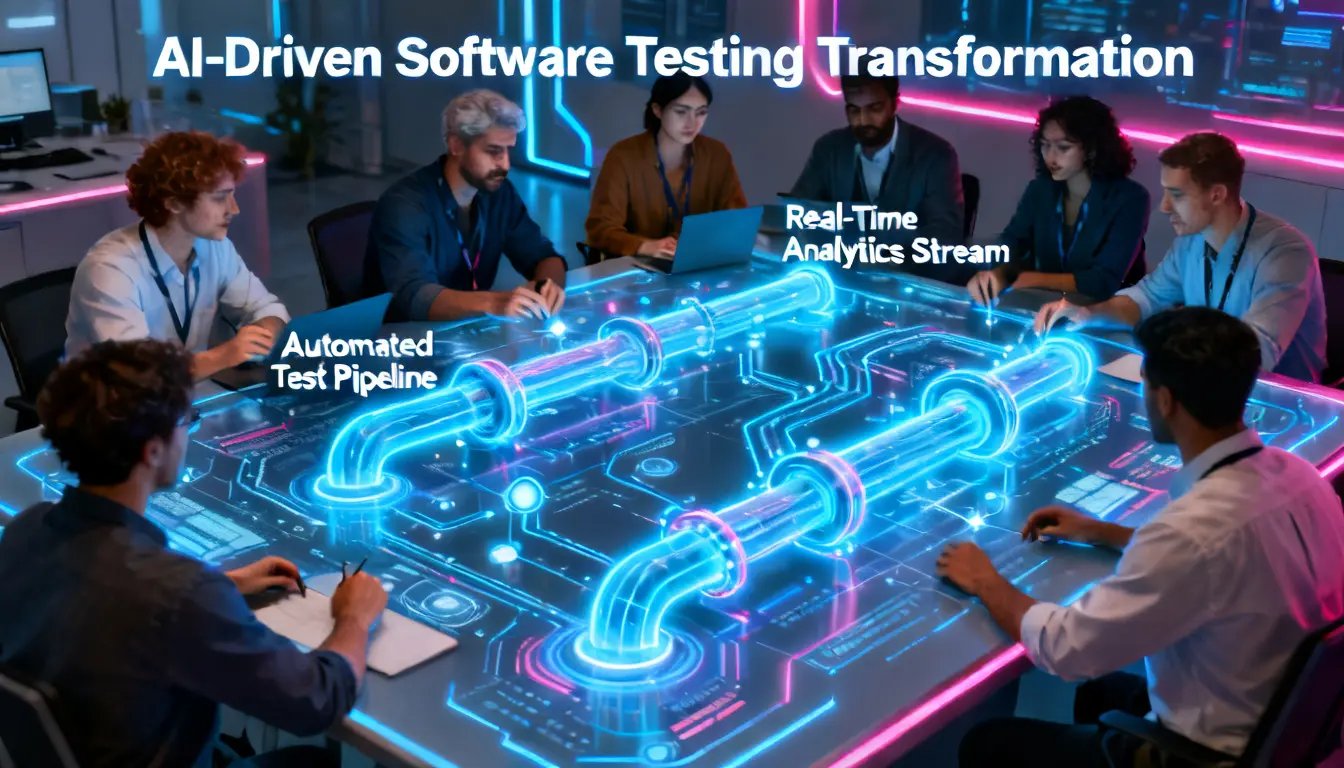
AI is playing a crucial role in modern software testing by making the process faster, smarter, and more reliable. Here’s why it matters:
Speed and Efficiency
Modern software testing relies on AI for speed, intelligence, and reliability. Why it matters:
Quick and Effective
AI can run thousands of test cases faster than manual testing. This automates tedious processes so teams can focus on more important and creative work.
Better Test Coverage
AI finds testing gaps by analyzing big data. It creates new test scenarios to cover extra features, edge cases, and user behaviors.
Reduced Human Error
Manual testing requires repetitive operations that can lead to errors. AI eliminates errors by running tests reliably and accurately.
Predictive Analytics
AI predicts application flaws and high-risk locations using past data and patterns. This helps teams resolve difficulties early, saving time and money.
Master Testing Skills with Industry Experts
Become a Test Engineer: Learn Core Skills from Industry-Leading Mentors and Land High-Paying Testing Jobs!
Explore ProgramKey Use Cases of AI in Testing
Automating complex operations and improving accuracy using AI is changing software testing. The most important real-world use cases are provided below.
Test Case Generation
AI may develop test cases from application behavior, user flows, and historical data. Manual work is reduced, and test coverage is increased.
Visual Testing
AI finds visual faults in UI elements, layouts, and designs that humans miss. It detects device-specific fonts, colours, spacing, and responsiveness
Self-Healing Scripts
AI’s capacity to automatically fix test scripts is a major benefit. When UI elements like IDs or layouts change, AI changes scripts automatically.
Bug Prediction
AI forecasts bug locations based on prior defect data and patterns. This lets testers target high-risk regions and find errors faster.
Test Optimization
AI identifies the most significant test cases based on risk, impact, and past performance. This speeds up testing, especially in continuous integration setups.
Top AI Testing Tools (2026)
The following is a list of some of the most popular testing tools that are powered by artificial intelligence, along with a brief description of each tool
Katalon Studio
An all-in-one testing platform that supports desktop, mobile, software application, and web testing in a single environment. This platform is powered by artificial intelligence and covers all of these testing channels.
Testim
A test automation tool that is not just rapid but also dependable, one that takes use of machine learning to improve the reliability of tests and reduce the amount of maintenance that is required.
Functionize
A testing platform for artificial intelligence that is hosted in the cloud and makes use of cutting-edge technologies to simplify the process of developing and conducting tests.
Applitools
An industry-leading visual assessment platform that makes use of artificial intelligence to detect and eliminate design and user interface faults across all browsers and devices.
Mabl
An artificial intelligence testing platform that is built for continuous testing in Agile and DevOps environments, and that is native to the cloud and employs low-code.
Benefits of AI in Software Testing
AI helps modern software testing teams produce high-quality products faster without sacrificing productivity.
Faster Releases
Artificial intelligence automates arduous, repetitive testing methods for fast, continuous testing. It speeds software distribution and development.
Cost-effectiveness
Artificial intelligence systems are expensive upfront, but they save money by decreasing human interaction, maintenance, and error correction time.
Better Precision
Artificial intelligence improves testing accuracy by running test cases and analyzing large datasets. Manual testing finds even the slightest defects, making software more reliable.
Constant Testing Support
AI integration with Agile and DevOps pipelines enables continuous testing. This ensures real-time issue identification and resolution.
Master Testing Skills with Industry Experts
Become a Test Engineer: Learn Core Skills from Industry-Leading Mentors and Land High-Paying Testing Jobs!
Explore ProgramChallenges & Limitations
AI presents organizations with a number of issues that they must take into consideration, despite the fact that it has a number of tremendous advantages.
Exorbitant initial setup expenses
Initial costs associated with the implementation of AI testing tools can be rather high. There may be costs associated with the licensing of tools, infrastructure, and the training of teams to make efficient use of new technology.
The curve of learning
New skills are required for testing that is driven by artificial intelligence, such as an understanding of data models, automation frameworks, and AI ideas. There is a possibility that testers will require a period of time and subsequent training in order to adjust to these modern technologies.
Reliance on High-Quality Data
To learn and make judgments, artificial intelligence systems rely largely on data. In the event that the data is wrong, out of date, or incomplete, the results may not be dependable, which will ultimately result in bad testing outcomes.
Join Entri’s Software Testing Course Today!!
Future of AI in Software Testing
The introduction of AI has revolutionized software testing, opening the door to smarter, faster, and completely autonomous systems. Key trends are given below:
Hyperautomation
Hyperautomation refers to the practice of completely automating the testing process with the use of automation tools, machine learning (ML), and artificial intelligence (AI). The use of little human intervention significantly improves the efficiency and speed of test preparation, execution, and reporting.
Autonomous Testing
The use of self-deciding testing systems is on the rise in the field of artificial intelligence. Thanks to modern computers, automated script creation, execution, identification, and repair are all within reach.
Integration of DevOps, CI, and CD
Integral to DevOps and CI/CD procedures are testing tools driven by AI. It is possible to implement continuous testing at every stage of development, which results in better products, quicker releases, and more frequent feedback.
Conclusion
Artificial intelligence has made software testing more efficient, quicker, and smarter. AI’s automated test case generation, self-healing scripts, predictive analytics, and continuous testing greatly assist teams in building high-quality software more quickly and with more precision. While there will be benefits in the long run, the upfront costs of setting up and learning are high.
AI-powered testing solutions will be essential for competitiveness in 2026 and beyond as software complexity keeps growing. Testers with knowledge of AI can handle the challenges of modern development and deliver dependable answers.
Learn about artificial intelligence (AI) now for software testing. Consider enrolling in AI testing courses and acquiring knowledge of Katalon, Testim, and Applitools to elevate your QA career.
Frequently Asked Questions
How is AI different from traditional test automation?
Traditional automation follows fixed scripts, while AI-based testing can learn from data, adapt to changes, and even self-heal broken test cases automatically.
Is AI testing suitable for beginners?
Yes, many AI testing tools are user-friendly and offer low-code or no-code options, making them suitable even for beginners in QA.
What skills are needed for AI-based software testing?
Basic knowledge of software testing, automation tools, SQL, and understanding of AI concepts like Machine Learning and data analysis are helpful.
Can AI create test cases automatically?
Yes, AI can generate test cases by analyzing user behavior, application data, and previous test results to improve coverage and efficiency.
What industries benefit most from AI testing?
Industries like IT, banking, healthcare, e-commerce, and telecom benefit greatly due to large-scale and complex software systems.
Does AI improve bug detection?
Yes, AI can detect hidden patterns and predict high-risk areas, helping teams identify bugs earlier in the development cycle.
Do AI testing tools require coding knowledge?
Not always. Many modern tools offer low-code or no-code interfaces, making them easier for non-programmers to use.
How does AI support continuous testing?
AI integrates with CI/CD pipelines to automatically run tests during every build, ensuring continuous feedback and faster delivery.