Table of Contents
Introduction
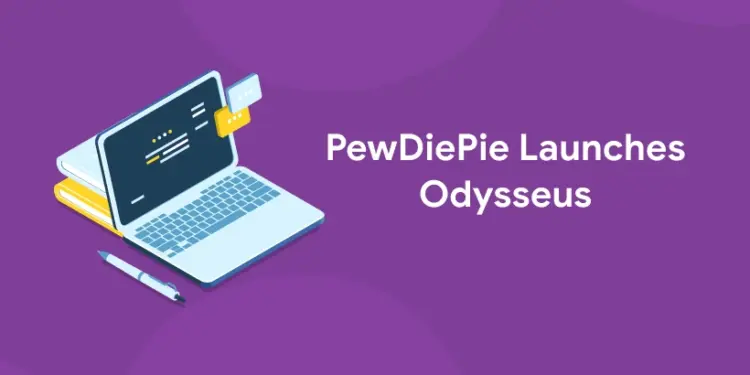
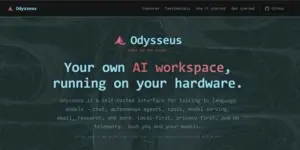
Generative AI is reshaping creative workflows, but rising privacy concerns and subscription costs have creators searching for alternatives. Odysseus, a free open‑source AI workspace released by YouTuber PewDiePie (Felix Kjellberg), promises a privacy‑friendly, customizable way to run ChatGPT‑style assistants on your own device or server.
What a self‑/device‑hosted AI workspace feels like today
- Privacy-first control: Prompts, logs, and models reside on hardware you control rather than third‑party servers.
- Lower ongoing costs: No mandatory subscription fees; costs depend on hardware or optional cloud hosting.
- Customization and portability: Swap models, tweak prompts, and integrate tools specific to your workflow.
- Offline or limited connectivity use: Smaller local models can operate without continuous internet access.
- Responsibility trade-off: You gain control and privacy but take on security, maintenance, and compute management.
Explore Entri’s free AI tools courses now!
Why that matters now
- Centralized AI endpoints can collect and log user data, which raises concerns about leaks and reuse of creative material.
- Self-hosting reduces exposure to third‑party breaches and gives creators direct control over how their data is stored and used.
- For content creators, a local AI workspace can speed ideation and drafting without risking unpublished concepts reaching external datasets.
How PewDiePie built Odysseus — and made it public
- Open-source release: Felix Kjellberg published Odysseus as an open‑source project to give creators a direct, no‑cost way to run AI tools locally.
- Accessibility focus: The project includes a browser-based web UI and documentation designed to make deployment easier for non‑experts.
- Free and community-oriented: Odysseus is available at no cost and invites community contributions to extend features and improve security.
- Democratizing AI tools: By releasing a self‑hostable workspace, PewDiePie aims to make AI more accessible and privacy-respecting for his large creator audience.
About PewDiePie
Felix Kjellberg — known online as PewDiePie — is a long‑time YouTuber who built a massive following through gaming, commentary, and personality-driven content. His move into developer-style creator tools like Odysseus reflects growing interest among creators to shape their own workflow tools and protect their content.

Odysseus AI — features and capabilities
- Self‑/device‑hosted deployment: Run Odysseus on personal computers, home servers, or inexpensive cloud VMs for full data control.
- Web-based workspace: Use a simple browser UI for chat interactions, prompt history, and project organization.
- Model flexibility: Support for local and remote models lets users balance quality and resource needs.
- Customization and extensibility: Add custom prompts, plugins, and integrations to tailor the workspace to writing, coding, or research.
- Open-source transparency: Inspect, modify, and contribute to the codebase for increased trust versus closed systems.
- Cost transparency: No subscription lock‑in; main costs are compute resources and optional hosting.
- Privacy-conscious defaults: Local hosting means logs and data remain under the user’s control; telemetry can be disabled.
- Documentation and onboarding: Guides and examples help non-technical users get started.
Explore Entri’s free coding courses now!
Who should try Odysseus?
- Independent creators who want a private assistant for scripting, ideation, and editing.
- Developers and hobbyists experimenting with self-hosted models and custom prompts.
- Small teams seeking an affordable on-premise AI workspace.
- Privacy-conscious users preferring local data control over subscription services.
How to use Odysseus?
- Visit the project page: Open Odysseus to read the project overview, features, and links to the repository and documentation.
- Check requirements: Review hardware and software prerequisites in the docs (Docker, recommended model sizes, and optional GPU support).
- Clone or download: Follow the link to the GitHub repository from the project page and clone the repo or download the release ZIP to your machine or server.
- Follow installation steps: Use the provided setup guide — typically running with Docker-compose or a single‑command installer — to launch the web UI.
- Choose a model: Select a compatible local model (for offline work) or configure remote model access if you prefer larger cloud models.
- Configure privacy and storage: Adjust settings to control prompt history, telemetry, and data retention so they align with your privacy needs.
- Explore the workspace: Open the browser UI, start chat sessions, create projects, and save prompt templates or notes for repeatable workflows.
- Extend and customize: Add plugins, custom prompts, or integrations (APIs, knowledge bases) as needed; contribute improvements back to the project if you wish.
- Maintain and secure: Regularly update the codebase, apply security patches, and monitor access controls to keep your instance safe.
- Join the community: Look for forums, GitHub issues, or Discord channels linked from the project page to get help, suggest features, and share templates.
How does PewDiePie Challenge Big AI Agents with Odysseus?
- Offers an alternative model: Odysseus presents a different route to AI access — a free, self‑hosted workspace rather than a subscription service — which expands choices for users and creators.
- Shifts the value proposition: Instead of selling convenience and centralized maintenance, Odysseus emphasizes privacy, user control, and community-driven improvements as core benefits.
- Lowers entry barriers for experimentation: By packaging a web UI, documentation, and model flexibility, Odysseus makes hands-on testing and customization easier for individuals and small teams who might otherwise be locked into big‑vendor ecosystems.
- Encourages transparency and inspection: Open-source code lets users audit how the system works, reducing black‑box concerns and promoting trust through visibility.
- Stimulates competition and innovation: A visible, creator-led project with a large audience can nudge larger vendors to improve privacy features, pricing, and user empowerment — a constructive market pressure rather than adversarial confrontation.
AI Workflows Moving Toward Ownership and Customization
- Personal data ownership: Creators increasingly prefer setups where prompts, archives, and derivative content remain under their control, reducing reliance on centralized logging and retention policies.
- Modular workflows: Tools like Odysseus make it easier to swap models, add plug-ins, or integrate domain-specific resources (knowledge bases, private corpora), allowing workflows to evolve with needs.
- Template and prompt ecosystems: Custom prompt templates and shared workflows let teams standardize results while preserving individuality — enabling reproducible outputs and faster collaboration.
- On-premise and hybrid models: Teams can mix local models for sensitive work and cloud models for heavy lifting, balancing cost, performance, and privacy.
- Ownership incentives for creators: When creators control tooling, they can better monetize, license, or archive their work without third‑party constraints; this promotes sustainable creative ecosystems.
Conclusion
Odysseus offers a practical alternative to centralized AI platforms by combining privacy, customization, and zero‑cost access. While self‑hosting requires technical responsibility and mindful hardware planning, Odysseus’s web UI and open‑source approach make it an attractive option for creators and tech‑savvy users who want control over their AI tools and data.
|
Join Big Tech companies with Entri’s Courses Now! |
|||||
|---|---|---|---|---|---|
| Full-Stack Web Developer | Data Science | Python Programming | |||
| Software Testing | AWS Solution Architect Associate | Data Analytics | |||
| Cyber Security | UI/UX Design | ||||
| SAP FICO Course | AI-Powered Practical Accounting Course | ||||