Table of Contents
🎯 The Answer
A calorie deficit happens when one reduces calorie intake. The body still needs energy every day. It needs energy to move and function. It also needs energy for basic activities. When food does not provide enough energy, the body finds another source. It starts using stored energy. Body fat is one of those energy sources. This process can lead to weight loss over time.
A calorie deficit is needed for weight loss. However, it should not be too large. Eating too little can feel difficult. It can make weight loss harder. A small or moderate deficit works better. It is easier to follow. It supports steady progress. Moderate deficit also helps with long-term success.
Key Takeaways:
- Calorie deficit supports weight loss.
- The body uses stored energy.
- Fat loss requires consistency.
- Food choices remain important.
- Exercise supports calorie expenditure.
- Protein helps preserve muscle mass.
- Large deficits may create problems.
- Progress takes time.
- Sustainable habits matter most.
- Safe deficits support long-term success.
Become a General Fitness Trainer and turn your passion into a Profession!
📝 Introduction
Many people want to lose weight. They often look for the best diet. Some try different workout plans. Others follow popular fitness trends. This can make weight loss confusing. However, one principle remains important. That principle is a calorie deficit.
Understanding a calorie deficit makes weight loss easier to understand. It explains how one’s body loses weight. It also explains why some plans succeed. Learning this concept helps set realistic goals. It also helps build better habits. Simple and sustainable habits often give the best results.

Turn Your Passion for Fitness into a Profession
Learn practical skills, get certified, and step into the growing fitness industry with confidence.
Join the Course🔥 What Is a Calorie Deficit?
A calorie deficit happens when one burn more calories than you eat. One’s body still needs energy every day. When food does not provide enough energy, the body uses stored energy instead. This stored energy often comes from body fat.
Understanding Calories
Calories provide energy for the body.
The body uses calories for:
- Breathing.
- Digestion.
- Walking.
- Exercise.
- Body temperature regulation.
- Organ function.
Simple Calorie Deficit Example
Consider this example:
- Calories consumed: 2,000.
- Calories burned: 2,300.
- Daily deficit: 300 calories.
The body must find extra energy. Stored fat often provides this energy.
Why a Deficit Matters
Weight loss does not occur randomly. Energy balance influences body weight.
When calories match needs:
- Weight remains stable.
When calories exceed needs:
- Weight often increases.
When calories stay below needs:
- Weight often decreases.
Sources of Calorie Expenditure
The body burns calories throughout the day.
Basal Metabolic Rate (BMR)
BMR supports essential functions.
Examples include:
- Breathing.
- Circulation.
- Organ activity.
- Cell maintenance.
BMR uses most daily calories.
Physical Activity
Movement increases calorie expenditure.
Examples include:
- Walking.
- Running.
- Cycling.
- Sports.
- Strength training.
Daily Activities
Small movements also matter.
Examples include:
- Cleaning.
- Shopping.
- Gardening.
- Climbing stairs.
- Household chores.
Common Misconceptions
Many myths exist about calorie deficits.
Myth 1
“Certain foods burn fat automatically.”
Reality:
- Energy balance remains important.
Myth 2
“Skipping meals guarantees fat loss.”
Reality:
- Overall calorie intake matters more.
Myth 3
“Exercise alone causes weight loss.”
Reality:
- Nutrition plays a major role.
💡 Pro Tip
A calorie deficit creates weight loss. Food quality still matters.
⚖️ How Weight Loss Works
Weight loss occurs through energy imbalance. The body adapts to changing energy availability.
The Body Needs Energy
It requires energy constantly.
Energy supports:
- Movement.
- Recovery.
- Growth.
- Daily activities.
- Brain function.
What Happens During a Deficit?
When calories decrease:
- Stored energy becomes useful.
- Fat stores provide fuel.
- Weight gradually decreases.
This process takes time.
Fat Loss vs Weight Loss
These terms are often confused.
Weight Loss
Weight loss may include:
- Fat.
- Water.
- Muscle.
- Glycogen stores.
Fat Loss
Fat loss specifically targets body fat.
Many people prefer fat loss.
Why Weight Fluctuates
Daily changes are normal.
Factors include:
- Water intake.
- Sodium intake.
- Meal timing.
- Hormonal changes.
- Glycogen levels.
Small fluctuations are expected.
Role of Consistency
Consistency drives results.
Helpful habits include:
- Tracking intake.
- Staying active.
- Following routines.
- Monitoring progress.
Factors Affecting Weight Loss
Results vary among individuals.
Important factors include:
- Age.
- Activity levels.
- Genetics.
- Sleep quality.
- Stress levels.
Signs of Progress
Progress involves more than scale weight.
Useful indicators include:
- Waist measurements.
- Clothing fit.
- Progress photos.
- Energy levels.
- Exercise performance.
⚠️ Patience Is Important
Weight loss rarely happens overnight.
Slow progress often proves sustainable.
🧮 Calculating Your Calorie Deficit
A calorie deficit should be personalized. Individual needs differ significantly.
Step 1: Estimate Maintenance Calories
Maintenance calories support current weight.
Several factors influence maintenance needs.
These include:
- Age.
- Height.
- Weight.
- Activity level.
- Muscle mass.
Step 2: Choose a Deficit Size
The deficit should remain realistic.
Common approaches include:
- Small deficit.
- Moderate deficit.
- Larger deficit.
Small Deficit
Characteristics:
- Easier adherence.
- Slower progress.
- Better sustainability.
Moderate Deficit
Characteristics:
- Balanced approach.
- Manageable hunger.
- Steady progress.
Large Deficit
Characteristics:
- Faster results.
- Greater hunger.
- Higher difficulty.
Example Calculation
Example Maintenance calories:
- 2,500 calories.
Example deficit:
- 500 calories.
Target intake:
- 2,000 calories.
This creates a daily energy gap.
Why Individualization Matters
No universal number exists.
Different people require different plans.
Factors include:
- Goals.
- Lifestyle.
- Exercise frequency.
- Recovery needs.
Useful Tracking Methods
Tracking improves awareness.
Popular methods include:
- Food journals.
- Nutrition apps.
- Meal planning.
- Portion monitoring.
Common Tracking Errors
Many people underestimate intake.
Common mistakes include:
- Ignoring snacks.
- Forgetting beverages.
- Guessing portions.
- Inconsistent tracking.
💡 Pro Tip
Tracking builds awareness. Awareness improves decision-making.
Turn Your Passion for Fitness into a Profession
Learn practical skills, get certified, and step into the growing fitness industry with confidence.
Join the Course🌟 Benefits of a Healthy Calorie Deficit
A moderate calorie deficit provides several advantages.
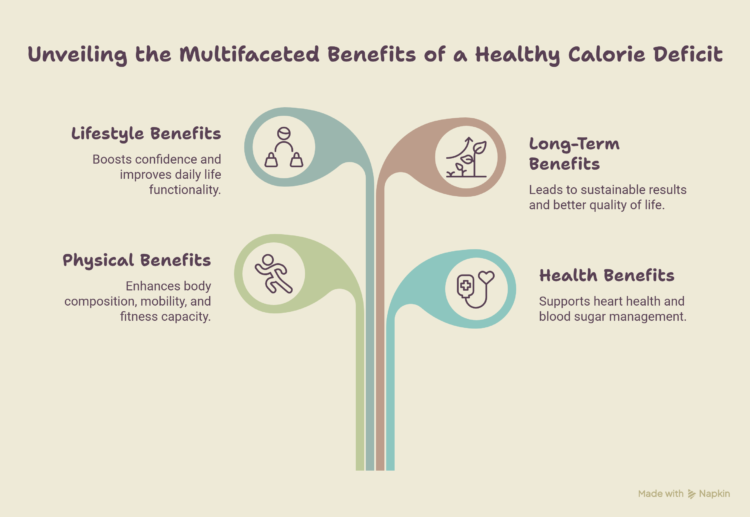
Physical Benefits
Improved Body Composition
Benefits include:
- Reduced body fat.
- Better definition.
- Improved proportions.
Better Mobility
Weight reduction may improve movement.
Benefits include:
- Easier walking.
- Better balance.
- Improved comfort.
Increased Fitness Capacity
Many people experience:
- Better endurance.
- Improved exercise performance.
- Greater activity levels.
Health Benefits
Heart Health Support
Weight management may support:
- Blood pressure control.
- Cardiovascular function.
Blood Sugar Management
Healthy habits may improve:
- Glucose control.
- Metabolic function.
Lifestyle Benefits
Improved Confidence
Many people notice:
- Better self-image.
- Greater motivation.
- Increased confidence.
Better Daily Function
Simple activities may feel easier.
Examples include:
- Climbing stairs.
- Carrying groceries.
- Recreational activities.
Long-Term Benefits
Healthy habits often produce:
- Sustainable results.
- Better health outcomes.
- Improved quality of life.
📊 Benefits of a Healthy Calorie Deficit
| Benefit Area | Examples |
|---|---|
| Physical | Fat loss, mobility |
| Fitness | Better endurance, activity |
| Health | Heart health support |
| Lifestyle | Confidence, daily function |
Become a General Fitness Trainer and turn your passion into a Profession!
⚠️ Common Calorie Deficit Mistakes
Many people understand calorie deficits. However, execution often becomes difficult. Small mistakes can affect progress. Understanding these mistakes improves long-term success.
Focusing Only on Calories
Calories matter greatly. However, food quality matters too.
Problems may include:
- Poor nutrition.
- Frequent hunger.
- Low energy levels.
- Reduced meal satisfaction.
Avoiding Entire Food Groups
Some diets remove many foods.
Examples include:
- Carbohydrates.
- Fats.
- Dairy products.
This approach may create:
- Nutrient gaps.
- Poor adherence.
- Increased cravings.
Following Social Media Trends
Many trends promise rapid results.
Examples include:
- Detox diets.
- Extreme fasting.
- One-food diets.
These approaches rarely support sustainability.
Eating Differently on Weekends
Consistency matters throughout the week.
Common issues include:
- Frequent restaurant meals.
- Large cheat meals.
- Unplanned snacking.
- Increased portion sizes.
Ignoring Portion Awareness
Healthy foods contain calories too.
Examples include:
- Nuts.
- Peanut butter.
- Granola.
- Dried fruits.
Portion awareness remains important.
Making Too Many Changes
Some people change everything immediately.
Examples include:
- New diet plans.
- New workouts.
- Strict restrictions.
This often feels overwhelming.
Using Food as a Reward
Food should not become compensation.
Examples include:
- Celebrating workouts with treats.
- Frequent reward meals.
- Emotional eating patterns.
Comparing Results With Others
Every person responds differently.
Differences include:
- Genetics.
- Lifestyle.
- Activity levels.
- Training experience.
🚫 Mistakes to Avoid
Avoid these habits:
- Skipping hydration.
- Ignoring recovery.
- Chasing quick results.
- Constantly changing plans.
- Following unrealistic expectations.
🥗 Diet and Exercise Tips
A calorie deficit works best with healthy habits. Smart food choices improve satisfaction. Proper exercise supports overall fitness.

Prioritize Food Volume
Some foods provide more volume.
Examples include:
- Leafy vegetables.
- Cucumbers.
- Tomatoes.
- Watermelon.
- Broccoli.
These foods support fullness.
Create Consistent Eating Patterns
Regular meal patterns help many people.
Benefits include:
- Better routine.
- Easier planning.
- Reduced mindless eating.
- Improved consistency.
Learn Hunger Signals
Not all hunger feels identical.
True hunger often develops gradually.
Common signs include:
- Stomach emptiness.
- Reduced energy.
- Increased focus on food.
Manage Eating Environments
The environment influences choices.
Helpful strategies include:
- Keeping healthy foods visible.
- Limiting distractions.
- Eating slowly.
- Using smaller plates.
Improve Meal Satisfaction
Satisfying meals improve adherence.
Helpful additions include:
- Lean proteins.
- Fiber-rich foods.
- Colorful vegetables.
- Healthy fats.
Increase Daily Movement
Movement extends beyond workouts.
Simple examples include:
- Walking during calls.
- Parking farther away.
- Taking activity breaks.
- Walking after meals.
Choose Enjoyable Exercise
Enjoyment supports consistency.
Popular options include:
- Dancing.
- Swimming.
- Cycling.
- Hiking.
- Team sports.
Develop Active Habits
Activity can become routine.
Examples include:
- Morning walks.
- Evening stretches.
- Weekend recreation.
- Active transportation.
Use Progressive Exercise Goals
Small improvements build momentum.
Examples include:
- More daily steps.
- Longer walks.
- Additional repetitions.
- Improved exercise technique.
Monitor Non-Scale Victories
Success involves more than weight.
Examples include:
- Better sleep.
- Improved stamina.
- Greater confidence.
- Increased strength.
- Better mobility.
💡 Pro Tip
Build habits gradually. Consistency becomes easier.
📉 How Much Deficit Is Safe?
The safest deficit varies. Individual circumstances matter. The goal remains sustainable progress.
Why Safety Matters
A deficit should support health.
It should not cause:
- Extreme hunger.
- Constant fatigue.
- Reduced daily function.
- Poor exercise performance.
Understanding Energy Availability
The body needs fuel daily.
Energy supports:
- Brain function.
- Recovery.
- Hormone production.
- Physical activity.
Adequate nutrition remains important.
Characteristics of a Sustainable Deficit
A sustainable deficit often allows:
- Normal daily activities.
- Consistent workouts.
- Good recovery.
- Manageable hunger.
Warning Signs to Monitor
The body often provides feedback.
Potential warning signs include:
- Mood changes.
- Irritability.
- Poor concentration.
- Frequent exhaustion.
- Persistent soreness.
Importance of Recovery
Recovery supports healthy progress.
Important recovery habits include:
- Quality sleep.
- Stress management.
- Rest days.
- Hydration.
Weight Loss Is Not Linear
Progress rarely follows a straight line.
Temporary plateaus are common.
Reasons include:
- Water retention.
- Hormonal fluctuations.
- Activity changes.
- Routine changes.
What to Do During Plateaus
Plateaus require patience.
Helpful actions include:
- Reviewing habits.
- Maintaining consistency.
- Tracking progress.
- Avoiding drastic changes.
Sustainable Weight Loss Characteristics
Healthy progress often includes:
- Gradual changes.
- Consistent habits.
- Balanced nutrition.
- Realistic expectations.
Long-Term Thinking Matters
Many people focus only on speed.
Long-term success requires:
- Patience.
- Adaptability.
- Consistency.
- Sustainable routines.
📊 Sustainable vs Extreme Approaches
| Sustainable Approach | Extreme Approach |
|---|---|
| Balanced meals | Severe restriction |
| Consistent habits | Short-term fixes |
| Gradual progress | Rapid changes |
| Better adherence | Difficult adherence |
| Long-term success | Higher relapse risk |
🧠 Building a Sustainable Weight Loss Mindset
Mindset influences success. Habits become easier with the right perspective.

Focus on Behaviors
Behaviors remain controllable.
Examples include:
- Food choices.
- Activity levels.
- Sleep habits.
- Meal planning.
Set Process Goals
Process goals encourage consistency.
Examples include:
- Daily walks.
- Meal preparation.
- Drinking enough water.
- Regular workouts.
Expect Imperfection
No plan remains perfect.
Occasional setbacks happen.
Examples include:
- Holidays.
- Travel.
- Busy schedules.
- Social events.
Learn From Setbacks
Mistakes provide information.
Questions to consider:
- What caused difficulty?
- What can improve?
- What remains realistic?
Celebrate Small Wins
Small achievements build motivation.
Examples include:
- Better habits.
- Improved energy.
- Increased activity.
- Consistent tracking.
Think Beyond Weight Loss
Healthy habits provide additional benefits.
Examples include:
- Better health.
- Improved fitness.
- Increased confidence.
- Greater quality of life.
🏆 Conclusion
A calorie deficit remains the foundation of weight loss. However, successful weight loss involves more than eating less. Food quality, daily habits, activity levels, and recovery all contribute to progress.
The most effective calorie deficit feels sustainable. It supports normal life, regular exercise, and long-term consistency. Extreme approaches may produce short-term changes. However, balanced habits often create lasting results.
Weight loss should be viewed as a gradual process. Patience remains important. Small improvements accumulate over time. Consistent actions often produce the greatest success. When healthy habits become routine, maintaining results becomes much easier.
Turn Your Passion for Fitness into a Profession
Learn practical skills, get certified, and step into the growing fitness industry with confidence.
Join the CourseFrequently Asked Questions
What is a calorie deficit?
A calorie deficit happens when the body uses more calories than it gets from food and drinks. When this happens, the body starts using stored energy, including body fat, which can lead to weight loss over time.
Why is a calorie deficit important for weight loss?
A calorie deficit is the foundation of weight loss because the body needs extra energy when food intake is lower. To meet its energy needs, the body uses stored energy sources, which may help reduce body fat levels.
How can I create a calorie deficit safely?
A calorie deficit can be created by eating slightly fewer calories, increasing physical activity, or combining both approaches. Small and steady changes are usually easier to maintain and often support better long-term results.
Can I lose weight without exercising if I am in a calorie deficit?
Yes, weight loss can occur through a calorie deficit even without exercise. However, regular physical activity provides additional health benefits and may help preserve muscle mass during the weight loss process.
Does a larger calorie deficit lead to faster weight loss?
A larger deficit may lead to quicker weight loss initially. However, very large deficits can increase hunger, reduce energy levels, and make the plan harder to follow. Moderate deficits are often more sustainable.
What foods should I eat during a calorie deficit?
A calorie deficit works best with nutritious foods that support fullness and energy levels. Lean proteins, vegetables, fruits, whole grains, and healthy fats can help create balanced meals and support overall health.
Why am I not losing weight despite being in a calorie deficit?
Several factors may affect progress, including inaccurate calorie tracking, water retention, stress, sleep quality, and activity levels. Weight loss may also slow temporarily due to natural fluctuations and plateaus.
Can a calorie deficit cause muscle loss?
Muscle loss can occur if calorie intake becomes too low or if protein intake and strength training are neglected. Including enough protein and resistance training can help preserve muscle while losing weight.
How long should I stay in a calorie deficit?
The duration depends on individual goals, starting weight, and overall health. Many people follow a calorie deficit until they reach their target weight, while monitoring progress and making adjustments when necessary.
What are the signs of an unhealthy calorie deficit?
Signs may include constant fatigue, excessive hunger, poor workout performance, dizziness, irritability, and difficulty concentrating. These signs may indicate that calorie intake is too low and adjustments may be needed.