Table of Contents
Coloring Techniques in Fashion Illustration shape modern creative expression. This blog explains essential coloring methods for designers. It covers tools, techniques, and practical improvement tips. Proper coloring improves garment clarity and visual appeal. Every shade communicates emotion, mood, and fabric texture. Strong coloring skills enhance professional fashion presentation. Beginners benefit greatly from structured coloring practice.
Fashion illustration depends on accurate color application and shading. This guide explores popular coloring mediums and best practices. Balanced colors improve design realism and visual harmony. Smart blending techniques create smooth fabric transitions. Consistent practice builds strong artistic confidence and control. Clear color selection supports effective design communication. Good coloring enhances illustration quality and visual impact.
Learn Advanced Designing & Boutique Skills with Experts. Join Now!
Introduction
Fashion illustration transforms creative ideas into visible design concepts. It allows designers to present clothing styles visually. Sketches communicate structure, fit, and design direction clearly. However, sketches alone cannot express full design beauty. Color brings energy, emotion, and clarity to fashion drawings. It adds depth, life, and character to every illustration.
Color helps viewers understand fabric movement and texture. It shows how garments flow, fold, and fit. Soft shading adds realism to clothing sketches. Strong highlights create visual contrast and appeal. Every color choice influences the design mood. Warm shades suggest comfort and vibrance. Cool shades reflect calmness and elegance.
Coloring also improves storytelling in fashion illustration. Designers express themes, inspiration, and cultural elements through color. Seasonal collections rely heavily on thoughtful color selection. Trend forecasting depends on understanding emerging color palettes. Proper coloring helps designers align sketches with fashion trends.
Learning coloring techniques improves technical and creative abilities. It strengthens hand control and visual coordination. Regular practice builds confidence and consistency. Understanding color blending improves fabric representation accuracy. Mastering shading enhances depth and realistic appearance.
Fashion students benefit greatly from structured coloring practice. Professionals rely on strong coloring skills for presentations. Effective coloring enhances portfolio quality and professional impression. Well-colored sketches communicate ideas faster and clearer. They help designers connect better with clients and teams.
With proper techniques, anyone can improve coloring skills. Simple methods allow steady progress and improvement. Clear guidance supports better artistic development. This blog explores essential coloring principles in detail. It explains techniques, tools, and improvement strategies clearly. Each section focuses on building strong illustration foundations.
Key Benefits of Learning Coloring Techniques
-
Enhances sketch realism and visual depth.
-
Improves fabric texture and material representation.
-
Builds stronger artistic confidence and precision.
-
Supports effective design communication and storytelling.
-
Helps create professional-quality fashion illustrations.
-
Encourages creativity and personal artistic expression.
-
Improves portfolio strength and visual presentation.
What This Blog Will Help You Learn
-
Fundamental coloring methods for fashion illustration.
-
Effective shading and blending techniques.
-
Popular coloring tools and materials used.
-
Practical tips for skill improvement.
-
Professional approaches to fashion illustration coloring.
Importance of Coloring in Fashion Illustration
Coloring plays a vital role in fashion illustration. It adds life to simple line drawings. Without color, sketches appear plain and incomplete. Color gives designs clarity, beauty, and meaning. It helps viewers understand garment shape and style. Good coloring improves sketch quality and overall presentation.
Color also supports emotional expression in design. Every color conveys a specific mood and feeling. Bright shades suggest joy, energy, and excitement. Soft shades express calmness and elegance. Dark shades create drama and bold impact. Designers use colors to express artistic intention clearly.
Coloring also improves design understanding and communication. It helps explain ideas to clients and teams. Colored sketches reduce confusion and design errors. Clear color usage improves project accuracy and confidence.
Enhances Visual Appeal and Design Beauty
Color makes illustrations attractive and engaging. It increases interest and emotional connection. Beautiful color combinations capture viewer attention quickly. Balanced shades improve sketch harmony and structure. Neat coloring reflects professionalism and care.
Well-colored sketches appear clean and organized. They create positive impressions on viewers. Attractive illustrations increase interest in the design.
Visual Improvement Benefits:
-
Improves sketch brightness and clarity.
-
Enhances beauty and artistic charm.
-
Creates polished and refined appearance.
-
Builds positive emotional connection.
Improves Fabric Representation and Material Clarity
Color helps represent fabric type and texture. Soft colors show light and flowing fabrics. Deep shades suggest heavy and thick materials. Smooth shading reflects silk and satin textures. Rough strokes represent wool and denim fabrics.
Color highlights fabric folds and drapes. It shows garment movement and natural flow. Proper shading improves fabric realism and structure.
Fabric Representation Benefits:
-
Improves material identification accuracy.
-
Shows fabric movement and folds.
-
Enhances texture and surface clarity.
-
Builds realistic garment appearance.
Supports Clear Design Communication
Color improves idea explanation and design clarity. Clients understand concepts better through color. Teams communicate faster using colored visuals. Color reduces confusion and design misunderstandings.
Clear coloring simplifies decision-making processes. Designers explain patterns and shapes easily. Production teams understand garment construction better.
Communication Benefits:
-
Improves idea clarity and understanding.
-
Enhances team collaboration.
-
Reduces interpretation errors.
-
Speeds up approval processes.
Builds Strong Professional Presentation
Coloring enhances sketch presentation and portfolio strength. Well-colored illustrations appear professional and refined. Recruiters prefer visually appealing design portfolios. Strong colors demonstrate skill, effort, and creativity.
Colored designs create positive professional impressions. They show attention to detail and discipline. Strong presentation increases design credibility and career opportunities.
Professional Benefits:
-
Improves portfolio visual quality.
-
Enhances professional credibility.
-
Strengthens interview presentation.
-
Increases career growth potential.
Encourages Creative Expression and Artistic Growth
Color allows designers to express creativity freely. It supports artistic exploration and innovation. Designers experiment with shades and combinations. Creative coloring builds personal artistic identity.
Color experimentation improves confidence and originality. Unique palettes create distinctive design styles. Creative growth improves long-term artistic development.
Creative Benefits:
-
Encourages originality and innovation.
-
Supports artistic exploration.
-
Builds individual design identity.
-
Enhances emotional expression.
Improves Balance, Proportion, and Composition
Color helps balance visual composition. It guides viewer focus and direction. Strategic color placement improves layout structure. Balanced colors prevent clutter and confusion.
Good color distribution improves visual harmony. It strengthens sketch organization and design flow. Balanced composition improves overall presentation quality.
Composition Benefits:
-
Improves visual harmony and balance.
-
Guides viewer attention effectively.
-
Enhances sketch organization.
-
Supports clear design layout.
Increases Realism and Depth
Color adds dimension and depth to sketches. Shading creates three-dimensional garment effects. Highlights create light reflection and surface realism. Shadows enhance folds and garment structure.
Depth improves visual impact and natural appearance. Realistic sketches look more professional and convincing.
Realism Benefits:
-
Enhances three-dimensional appearance.
-
Improves garment depth perception.
-
Adds realistic lighting effects.
-
Strengthens sketch authenticity.
Improves Learning and Skill Development
Coloring strengthens hand control and coordination. Regular practice improves precision and consistency. Learning color theory enhances artistic knowledge.
Skill improvement increases creative confidence. Strong skills lead to better design quality.
Learning Benefits:
-
Builds better hand control.
-
Improves artistic accuracy.
-
Enhances technical skill development.
-
Strengthens creative confidence.
Role of Coloring in Fashion Illustration
| Design Aspect | Purpose of Coloring | Result |
|---|---|---|
| Visual Appeal | Enhances beauty and clarity | Attractive designs |
| Fabric Texture | Represents material features | Realistic garments |
| Communication | Explains design ideas | Clear understanding |
| Presentation | Improves professional quality | Strong impression |
| Creativity | Encourages expression | Unique designs |
| Composition | Maintains balance | Harmonious layouts |
| Realism | Adds depth and dimension | Lifelike sketches |
Key Reasons Coloring Is Essential
-
Enhances visual appeal and clarity.
-
Improves fabric representation accuracy.
-
Strengthens design communication.
-
Builds professional portfolio quality.
-
Encourages creativity and expression.
-
Improves balance and composition.
-
Adds depth and realism.
-
Supports artistic skill development.
Master Fashion Designing and Create Your Signature Style
Unlock your creative potential with our expert-led Fashion Designing course. Build in-demand skills and step confidently into the world of fashion!
Begin Your Fashion Career Today!Basic Coloring Techniques for Fashion Illustrations
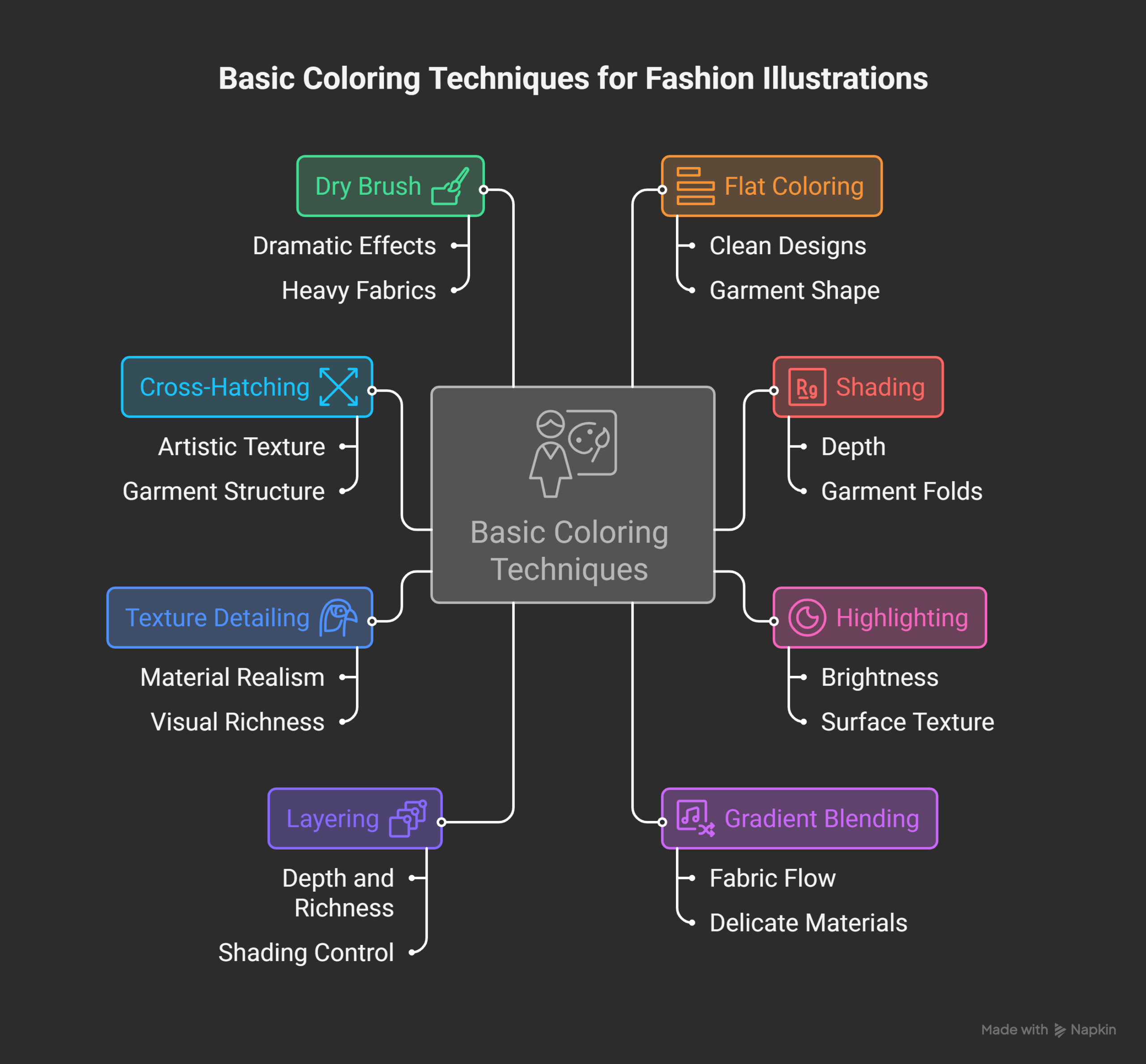
Coloring techniques help transform simple sketches into expressive visuals. They improve design clarity and creative presentation. Each technique offers unique artistic possibilities. Proper methods improve realism, balance, and professional appearance. Learning basic techniques builds strong illustration foundations.
Different techniques suit different fabric types and design styles. Some techniques create soft effects. Others produce bold and sharp finishes. Designers combine methods for richer visual results. Understanding these techniques improves creative confidence and artistic control.
Flat Coloring Technique
Flat coloring uses one solid color without shading. It creates clean and simple fashion sketches. This technique suits beginners and technical illustrations. Flat coloring emphasizes garment shape and silhouette.
This technique ensures neat and controlled application. It avoids complexity and excessive detail. Flat coloring supports clean presentation and clarity.
Key Features:
-
Uses single uniform color.
-
Creates simple and clean designs.
-
Highlights garment outline clearly.
-
Supports quick sketch completion.
Best Used For:
-
Fashion flats and technical drawings.
-
Early design development stages.
-
Pattern design representation.
-
Concept visualization sketches.
Shading Technique
Shading adds darker tones to selected areas. It creates depth and three-dimensional effects. Shading highlights garment folds and curves. It improves fabric realism and texture appearance.
Light shading creates softness and flow. Dark shading creates strong visual contrast. Proper shading improves garment structure clarity.
Key Features:
-
Adds depth and dimension.
-
Enhances garment realism.
-
Improves fabric flow visualization.
-
Builds three-dimensional appearance.
Shading Types:
-
Soft shading for light fabrics.
-
Hard shading for thick materials.
-
Directional shading for garment folds.
-
Layered shading for deeper contrast.
Highlighting Technique
Highlighting uses lighter shades for brightness. It shows light reflection on garments. Highlights enhance fabric shine and surface detail.
This technique improves garment realism and polish. Highlights create smooth texture transitions. They increase visual impact and appeal.
Key Features:
-
Creates brightness and shine.
-
Enhances surface texture clarity.
-
Improves garment dimension.
-
Adds realistic lighting effects.
Gradient Blending Technique
Gradient blending uses smooth color transitions. It creates gradual light to dark effects. This technique enhances softness and realism.
Blending improves garment flow and movement. It suits flowing and delicate fabrics. Smooth blending prevents harsh color lines.
Key Features:
-
Creates smooth color transitions.
-
Enhances softness and fluidity.
-
Improves fabric realism.
-
Reduces harsh edges.
Best Used For:
-
Silk, chiffon, and satin fabrics.
-
Soft garment textures.
-
Natural lighting effects.
-
Elegant fashion illustrations.
Layering Technique
Layering involves applying multiple thin color layers. Each layer builds tone, depth, and richness. This method prevents uneven color patches.
Layering improves shading control and blending smoothness. It allows better intensity management. Designers refine details through gradual layering.
Key Features:
-
Builds color depth gradually.
-
Improves shading control.
-
Enhances texture accuracy.
-
Supports smooth color blending.
Layering Benefits:
-
Prevents harsh color strokes.
-
Improves tonal accuracy.
-
Enhances professional finish.
-
Allows easy correction.
Texture Detailing Technique
Texture detailing creates fabric surface appearance. It uses lines, dots, strokes, and patterns. This technique enhances fabric realism.
Texture details help represent material characteristics. They show fabric thickness and surface feel. Proper detailing adds visual richness and depth.
Key Features:
-
Represents fabric texture clearly.
-
Enhances surface detail.
-
Improves garment realism.
-
Adds artistic depth.
Common Texture Effects:
-
Denim with rough strokes.
-
Wool using soft dot patterns.
-
Leather with smooth shine highlights.
-
Lace using fine delicate lines.
Cross-Hatching Technique
Cross-hatching uses intersecting lines for shading. It creates depth and shadow effects. This method enhances garment structure and folds.
Cross-hatching adds artistic texture and visual interest. It suits detailed and expressive fashion sketches.
Key Features:
-
Uses crossing lines for shading.
-
Creates rich texture effects.
-
Improves depth perception.
-
Enhances sketch expressiveness.
Dry Brush Technique
Dry brush uses minimal color on brush tips. It creates rough texture effects. This method adds artistic drama and surface variation.
Dry brush suits heavy and textured fabrics. It produces expressive and bold visual finishes.
Key Features:
-
Creates rough texture appearance.
-
Adds artistic effect.
-
Enhances fabric character.
-
Supports expressive design styles.
Wet-on-Wet Technique
Wet-on-wet applies color onto damp surfaces. Colors spread softly and blend naturally. This technique creates soft and dreamy effects.
It suits flowing fabrics and light textures. It produces natural color gradients.
Key Features:
-
Creates soft blended effects.
-
Enhances natural transitions.
-
Improves fluid fabric realism.
-
Adds artistic softness.
Color Blocking Technique
Color blocking uses bold contrasting color sections. It creates striking and modern visual impact. This technique enhances fashion-forward presentation.
Color blocking improves bold design communication. It attracts attention and highlights garment structure.
Key Features:
-
Uses contrasting color sections.
-
Creates bold visual statements.
-
Enhances modern fashion appeal.
-
Improves garment visibility.
Comparison of Basic Coloring Techniques
| Technique | Purpose | Visual Result |
|---|---|---|
| Flat Coloring | Clean base application | Simple clean look |
| Shading | Adds depth | Three-dimensional effect |
| Highlighting | Shows brightness | Realistic lighting |
| Gradient Blending | Smooth transitions | Soft realistic finish |
| Layering | Builds tone | Rich color depth |
| Texture Detailing | Shows material | Fabric realism |
| Cross-Hatching | Creates shadows | Artistic texture |
| Dry Brush | Adds roughness | Dramatic surface effect |
| Wet-on-Wet | Soft blending | Dreamy visual flow |
| Color Blocking | Bold contrast | Modern striking design |
Key Advantages of Learning These Techniques
-
Improves sketch realism and depth.
-
Enhances fabric texture representation.
-
Builds creative confidence and control.
-
Strengthens professional illustration presentation.
-
Encourages artistic experimentation and exploration.
-
Supports accurate design communication.
-
Improves overall visual composition.
Learn Advanced Designing & Boutique Skills with Experts. Join Now!
Popular Coloring Mediums Used by Fashion Designers
Coloring mediums play a crucial role in fashion illustration. They determine texture, finish, and overall visual quality. Each medium offers unique artistic possibilities. Designers select mediums based on style, comfort, and project needs. Understanding different mediums improves creative flexibility and confidence.
Different mediums create different visual effects. Some offer smooth blending. Others provide bold and sharp finishes. Many designers combine multiple mediums for richer results. Learning these tools strengthens artistic control and presentation quality.
Colored Pencils
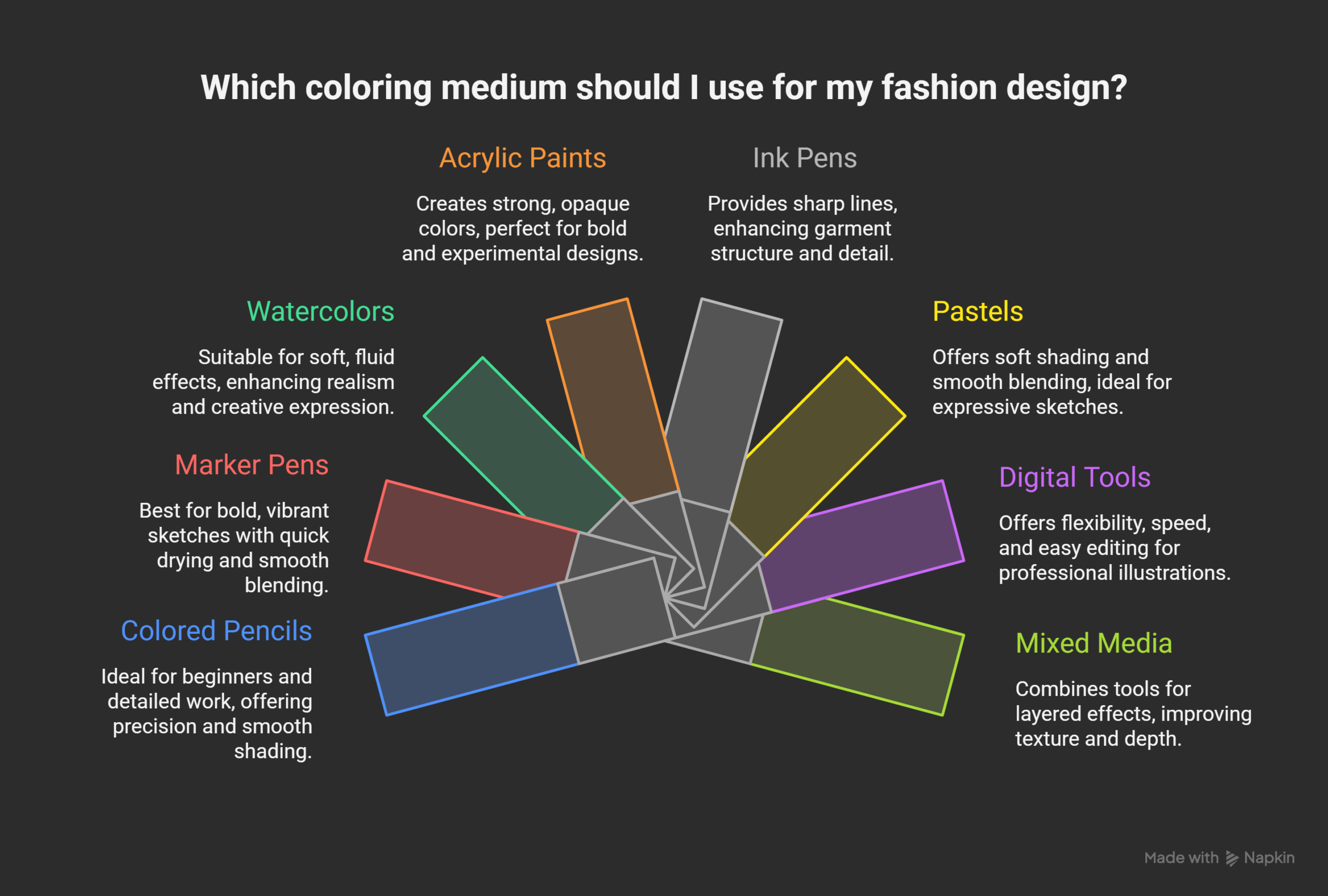
Colored pencils remain highly popular among fashion designers. They offer excellent control and precision. Pencils allow soft shading and smooth blending. They support gradual color layering and tone development.
Colored pencils suit beginners and experienced designers equally. They help develop hand control and color understanding. Their light strokes prevent heavy color application.
Key Features:
-
Provides high precision and control.
-
Allows smooth shading and blending.
-
Supports layered color application.
-
Prevents harsh color marks.
Best Used For:
-
Detailed fashion sketches.
-
Soft shading and highlights.
-
Texture and fabric detailing.
-
Controlled color transitions.
Advantages:
-
Easy handling and comfort.
-
Affordable and widely available.
-
Suitable for long working sessions.
-
Ideal for practice and refinement.
Marker Pens
Markers deliver bold, vibrant, and clean colors. They create smooth and uniform color application. Alcohol-based markers support seamless blending. They dry quickly and reduce smudging.
Markers produce professional-quality fashion illustrations. They enhance sharpness and color richness. Designers often use markers for quick design visualization.
Key Features:
-
Produces vibrant and bold colors.
-
Offers smooth blending capability.
-
Ensures fast drying.
-
Delivers clean and polished finish.
Best Used For:
-
Professional fashion sketches.
-
Quick design visualization.
-
Bold garment presentations.
-
Modern fashion illustration styles.
Advantages:
-
Saves time during coloring.
-
Creates consistent color results.
-
Enhances sketch clarity.
-
Improves professional appearance.
Watercolors
Watercolors create soft, fluid, and artistic effects. They allow smooth gradient transitions. They produce natural and expressive visuals.
Watercolors suit flowing garments and delicate fabrics. They create light and airy color textures. This medium requires patience and practice.
Key Features:
-
Produces soft and natural blending.
-
Creates fluid and artistic finishes.
-
Enhances expressive design effects.
-
Supports gentle color layering.
Best Used For:
-
Soft garment textures.
-
Flowing fabric illustrations.
-
Artistic fashion concepts.
-
Expressive design sketches.
Advantages:
-
Enhances natural color transitions.
-
Builds artistic charm.
-
Supports creative exploration.
-
Improves emotional design expression.
Acrylic Paints
Acrylic paints offer vibrant and opaque color effects. They dry quickly and provide strong coverage. Acrylics create bold and striking visuals.
They suit experimental and artistic fashion illustrations. Acrylics allow texture exploration and surface detailing.
Key Features:
-
Provides bold and opaque colors.
-
Delivers strong visual impact.
-
Supports thick and textured strokes.
-
Ensures long-lasting color durability.
Best Used For:
-
Experimental fashion artwork.
-
Bold garment concepts.
-
Artistic portfolio designs.
-
Surface texture exploration.
Advantages:
-
Produces strong color intensity.
-
Enhances visual drama.
-
Allows texture creativity.
-
Supports artistic experimentation.
Ink Pens
Ink pens create sharp and defined color marks. They offer precise line control and detailing. Inks produce strong contrast and clarity.
They suit technical sketches and detailed garment outlines. Ink adds bold character and artistic structure.
Key Features:
-
Produces sharp and clear lines.
-
Enhances contrast and detail.
-
Improves structural clarity.
-
Supports expressive sketching.
Best Used For:
-
Technical fashion drawings.
-
Line detailing and outlines.
-
Graphic design effects.
-
Pattern illustration work.
Advantages:
-
Improves design accuracy.
-
Enhances visual sharpness.
-
Supports detailed artwork.
-
Adds artistic boldness.
Pastels
Pastels offer soft and smooth color application. They create delicate shading and gentle transitions. Pastels suit artistic and expressive illustrations.
They produce velvety textures and soft finishes. Pastels require careful handling and blending.
Key Features:
-
Produces soft and smooth shading.
-
Enhances gentle color transitions.
-
Creates velvety surface texture.
-
Supports artistic expression.
Best Used For:
-
Soft garment textures.
-
Expressive fashion artworks.
-
Creative design presentations.
-
Mood-based illustrations.
Advantages:
-
Creates rich soft effects.
-
Enhances artistic depth.
-
Supports emotional expression.
-
Improves design subtlety.
Digital Coloring Tools
Digital tools transform modern fashion illustration practices. Software offers endless color combinations and effects. Designers experiment freely with digital platforms.
Digital coloring ensures precision, speed, and flexibility. It allows easy corrections and design modifications.
Popular Digital Tools:
-
Adobe Photoshop
-
Adobe Illustrator
-
Procreate
-
Corel Painter
Key Features:
-
Offers unlimited color options.
-
Supports layering and blending.
-
Allows quick editing.
-
Enhances design efficiency.
Advantages:
-
Saves time and effort.
-
Improves professional presentation.
-
Enables easy corrections.
-
Supports modern design workflows.
Mixed Media Approach
Mixed media combines multiple coloring tools. Designers use pencils, markers, and digital tools together. This approach enhances creative flexibility and depth.
Mixed media improves texture variety and visual richness. It supports unique artistic experimentation.
Key Features:
-
Combines multiple mediums.
-
Enhances texture diversity.
-
Supports creative freedom.
-
Builds layered artistic effects.
Advantages:
-
Improves visual complexity.
-
Enhances creative versatility.
-
Encourages artistic exploration.
-
Strengthens illustration depth.
Comparison of Popular Coloring Mediums
| Medium | Purpose | Visual Result |
|---|---|---|
| Colored Pencils | Precision and blending | Soft controlled finish |
| Markers | Bold color application | Clean vibrant look |
| Watercolors | Fluid artistic effects | Soft natural flow |
| Acrylic Paints | Strong coverage | Bold dramatic visuals |
| Ink Pens | Line clarity | Sharp defined structure |
| Pastels | Soft shading | Gentle smooth texture |
| Digital Tools | Flexible editing | Professional polished output |
| Mixed Media | Creative layering | Rich artistic depth |
Key Advantages of Using Multiple Mediums
-
Improves creative flexibility and expression.
-
Enhances texture and shading variety.
-
Builds professional illustration presentation.
-
Supports experimental artistic development.
-
Encourages unique design exploration.
-
Strengthens visual storytelling quality.
-
Improves overall sketch impact.
Learn Advanced Designing & Boutique Skills with Experts. Join Now!
Conclusion
Coloring strengthens fashion illustration clarity and creative expression. It transforms sketches into engaging visual design stories. Proper techniques improve depth, texture, and realistic appearance. Each method adds unique artistic value and impact. Regular practice builds confidence and professional skill. Creative exploration enhances personal illustration style. Consistent effort leads to visible artistic growth.
Understanding tools improves coloring control and visual precision. Medium selection shapes final illustration quality and presentation. Balanced colors improve design harmony and emotional connection. Strong coloring skills support effective design communication. Creative confidence develops through continuous learning and practice. Each improvement builds stronger fashion illustration abilities. Mastery creates impactful and memorable design visuals.
Master Fashion Designing and Create Your Signature Style
Unlock your creative potential with our expert-led Fashion Designing course. Build in-demand skills and step confidently into the world of fashion!
Begin Your Fashion Career Today!Frequently Asked Questions
Why is coloring important in fashion illustration?
Coloring improves sketch clarity and emotional expression. It enhances garment depth and visual realism. Good coloring improves professional presentation quality. It helps communicate design ideas clearly. Strong coloring builds artistic confidence and creative identity.
Which coloring technique suits beginners best?
Flat coloring suits beginners learning color control. It improves neatness and stroke accuracy. Simple shading builds early confidence. Gradual blending improves artistic understanding. Regular practice strengthens foundational illustration skills.
What coloring medium should beginners start with?
Colored pencils offer excellent control and flexibility. They support smooth shading and blending. Pencils prevent harsh color mistakes. Beginners learn tone control easily. Practice improves precision and artistic confidence.
Are digital coloring tools better than traditional methods?
Digital tools offer speed and easy corrections. Traditional tools build strong foundational skills. Both methods offer valuable learning experiences. Combined practice improves creative flexibility. Balanced usage strengthens artistic growth.
How can I improve my shading skills?
Practice gradient blending using light pressure strokes. Observe fabric folds and shadow patterns. Study lighting effects from reference images. Consistent practice improves control and realism. Patience builds shading accuracy and confidence.
What mistakes should beginners avoid while coloring?
Avoid heavy pressure during color application. Avoid skipping blending and shading practice. Avoid poor color palette selection. Avoid uneven color distribution. Controlled practice prevents common beginner mistakes.
How can I choose the right color combinations?
Study color theory and fashion trends. Use color wheels for harmony understanding. Observe real garment color pairings. Practice different palette combinations regularly. Experimentation improves creative confidence.
How long does it take to master fashion illustration coloring?
Skill development depends on regular practice. Visible improvement appears within consistent effort months. Daily exercises strengthen artistic control. Continuous learning enhances creative growth. Patience supports long-term skill mastery.
Which medium creates the most professional results?
Markers and digital tools offer polished finishes. Each medium suits different design styles. Proper technique improves professional presentation quality. Medium selection depends on project requirements. Practice ensures consistent professional outcomes.
Can coloring skills improve fashion design careers?
Strong coloring improves portfolio visual appeal. Good presentation attracts recruiter interest. Clear illustrations improve professional communication. Enhanced creativity supports design confidence. Improved skills strengthen long-term career opportunities.