Table of Contents
Travelling is full of exciting experiences, and learning a few English idioms can make your conversations even more fun and natural. Whether you’re planning a holiday, sharing your travel stories, or talking to fellow travellers, these idioms help you sound more confident and fluent. In this blog, you’ll find easy-to-understand travel idioms along with examples so you can start using them right away. Let’s begin the journey!
Elevate your speaking skills with our Spoken English Course!
Introduction
Travelling opens the door to new places, new people, and new experiences. Whether you are exploring a busy city, relaxing on a sunny beach, or hiking through the mountains, travel gives us stories we love to share. One fun way to describe these experiences is by using English idioms. These expressions make our language richer and help us communicate feelings, emotions, and moments in a more colorful way. In this blog, we will explore popular travel idioms along with simple examples, so you can use them confidently during your next adventure.
Idioms are especially helpful when talking about travel because they add personality and emotion to your stories. Instead of saying a trip was “very easy,” you can say it was “a walk in the park.” Instead of saying someone is excited, you can say they are “over the moon.” These small expressions make conversations more engaging and help listeners connect with your experiences on a deeper level.
Another great benefit of learning travel idioms is that they help you understand native speakers better. When you visit English-speaking countries, you’ll often hear idioms in casual conversations, at airports, in hotels, and even on tours. Knowing these expressions will not only make communication smoother but also make you feel more confident as you explore new destinations.
Understanding Idioms Related to Travel
1: Which of the sentences below is grammatically correct?
Understanding idioms related to travel can make your conversations more natural, expressive, and easy to follow. Travel idioms help you explain moments of excitement, stress, or adventure in a simple but meaningful way. They add personality to your stories and make your communication feel more relatable, especially when talking to native English speakers. Learning these expressions also helps you understand English more clearly when you hear them at airports, hotels, or while sightseeing.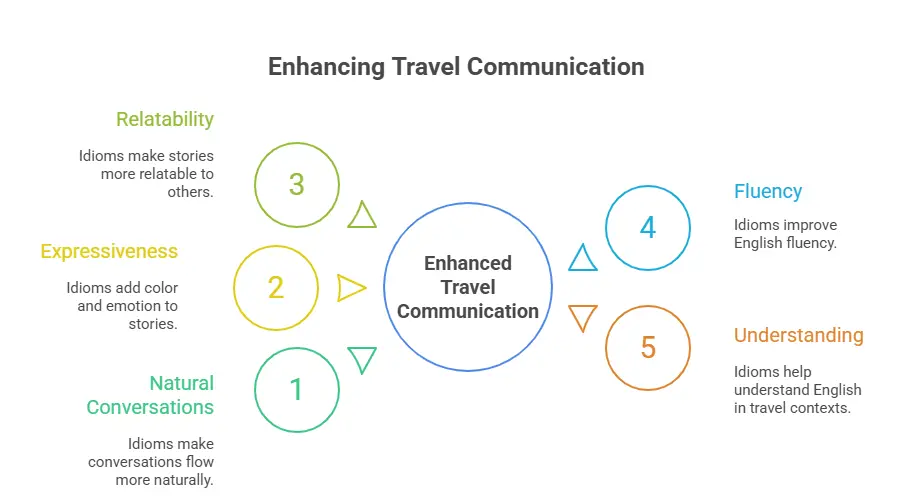
What Are Travel Idioms?
Travel idioms are commonly used expressions that describe situations, feelings, or experiences related to travel and movement. These phrases do not always carry a literal meaning; instead, they create a clear image or emotion that helps people understand a situation quickly. For example, when someone says a trip was “smooth sailing,” it does not involve a boat or water. It simply means that the journey was easy, comfortable, and free from problems. Because idioms use imaginative language, they make conversations more interesting and enjoyable.
Travel idioms are widely used in daily conversations, movies, books, and travel stories. Native speakers often use them without thinking, which is why understanding these expressions is important for English learners. When you learn travel idioms, you start recognizing patterns in how people describe movement, change, progress, and experiences. This helps you follow conversations more easily and respond in a natural way.
Why Travel Idioms Are Useful
Travel idioms are useful because they allow you to express ideas clearly and quickly. Instead of explaining a situation in detail, a single idiom can communicate the full meaning. For instance, when you say someone is “on the road,” people immediately understand that the person is traveling or heading somewhere. This saves time and makes communication smoother.
Using travel idioms also makes your English sound more fluent and natural. Native speakers often rely on idioms to express emotions such as excitement, relief, confusion, or stress. When you use these expressions correctly, you sound more confident and relaxed in conversations. This is especially helpful when sharing travel experiences, giving directions, or talking about plans. Idioms also help you connect better with others, as they add warmth and personality to your speech.
How Idioms Improve Your Travel Experience
Knowing travel idioms can greatly improve your travel experience by helping you understand everyday conversations more easily. While traveling, you may hear these expressions during guided tours, casual chats with locals, or conversations at hotels and airports. Understanding idioms helps you avoid confusion and feel more comfortable in unfamiliar situations.
Using travel idioms yourself can also boost your confidence. When you can describe your journey, challenges, or discoveries using natural expressions, communication becomes easier and more enjoyable. You can share stories more effectively and feel more involved in conversations. Overall, travel idioms help you navigate not just physical journeys, but also social interactions, making your travel experience smoother, richer, and more memorable.
| Free PDFs for download | |
Spoken English Course for Guaranteed Confidence and Career Growth
Spoken English Course by Entri App: Enhance your communication skills, gain certification, and boost your career with confidence.
Join Now!Common Travel Idioms and Their Meanings
Common travel idioms are useful expressions that help you talk about journeys in a more natural, interesting, and fluent way. Instead of using plain or direct sentences, these idioms allow you to describe your travel experiences with more emotion, creativity, and color. They often create a clear picture in the listener’s mind, making your stories easier to understand and more enjoyable to hear. Whether you are sharing a holiday story, planning a trip, or chatting casually, travel idioms make your language sound more natural and native-like.
Learning these idioms is especially helpful for English learners because many native speakers use them in everyday conversations. You will often hear travel idioms in movies, travel blogs, airport conversations, and casual discussions about vacations or work trips. Understanding and using them correctly can improve your confidence, listening skills, and overall communication.
1. “Hit the Road”
The idiom “hit the road” means to start a journey or leave a place. It is commonly used when someone is ready to begin traveling, whether it is a long road trip, a short drive, or even heading to the airport. This expression is informal and often used in friendly conversations.
For example, when someone says, “We should hit the road before traffic gets bad,” it means they want to leave immediately to avoid delays. You might also hear it when ending a visit, such as, “It’s getting late, so I should hit the road.”
2. “Smooth Sailing”
“Smooth sailing” describes a trip or experience that goes easily without any problems, delays, or difficulties. Although the phrase originally comes from sailing, it is now widely used for flights, road trips, and even planning stages of travel.
For instance, “The journey was smooth sailing from start to finish” means everything went well. Travelers often use this idiom to express relief when a trip turns out better than expected.
3. “On the Right Track”
The idiom “on the right track” means that you are going in the correct direction or making good progress. While traveling, it is often used when following directions, maps, schedules, or plans.
For example, after checking a map, you might say, “I think we’re on the right track now.” This idiom can also be used more generally, such as when planning a trip itinerary or booking tickets correctly.
4. “Off the Beaten Path”
“Off the beaten path” refers to places that are not commonly visited by tourists. These destinations are usually quieter, less crowded, and more unique. Travelers who enjoy adventure and local culture often prefer places off the beaten path.
For example, “We stayed in a small village off the beaten path” suggests a peaceful and authentic travel experience. This idiom is commonly used in travel blogs and recommendations.
5. “A Stone’s Throw Away”
The phrase “a stone’s throw away” means that something is very close, usually within walking distance. Travelers often use this idiom when talking about hotels, restaurants, tourist attractions, or transportation.
For instance, “The beach is just a stone’s throw away from our hotel” means it is extremely nearby. It is a helpful idiom when describing convenience while traveling.
6. “Live Out of a Suitcase”
To “live out of a suitcase” means to travel continuously without settling in one place or fully unpacking. This idiom is commonly used by business travelers, frequent flyers, or people on long trips with many destinations.
For example, “I’ve been living out of a suitcase for months because of work travel” shows a lifestyle of constant movement and limited comfort.
Examples of Travel Idioms Used in Sentences
Examples of travel idioms used in sentences play an important role in helping learners understand how these expressions are used naturally in everyday conversations. Idioms often do not mean exactly what the words suggest, so seeing them in real-life contexts makes their meanings much clearer. When you read or hear travel idioms in sentences, you learn how people use them to describe journeys, emotions, plans, and experiences in a simple yet expressive way. These examples also make it easier to remember the idioms and use them confidently during your own travels or casual discussions.
1. “Hit the Road”
The idiom “hit the road” means to begin a journey or leave a place. It is commonly used when someone is ready to start traveling, especially by car, but it can apply to any form of travel. This expression often carries a sense of excitement or urgency.
For example:
“We decided to hit the road early in the morning so we could reach the beach before it got crowded.”
This sentence shows that the travelers wanted to start their journey early to avoid traffic and enjoy the destination peacefully. The idiom helps express action and readiness in a friendly, natural way.
2. “Smooth Sailing”
“Smooth sailing” is used to describe a situation that goes easily without any difficulties or interruptions. In travel contexts, it often refers to trips, journeys, or plans that work out better than expected.
For example:
“Once the rain stopped, the rest of our hike was smooth sailing.” Here, the idiom explains that after the problem ended, everything became easy and enjoyable. It reflects a sense of relief and comfort during the experience.
3. “Off the Beaten Path”
The idiom “off the beaten path” describes places that are not commonly visited by tourists. These destinations are usually quieter and more authentic, often appealing to travelers who enjoy exploring something unique.
Example:
“The little village we visited was off the beaten path, but it turned out to be the most peaceful place on our trip.” This sentence shows that although the location was not popular or well-known, it offered a calm and memorable experience.
4. “A Stone’s Throw Away”
“A stone’s throw away” means that something is very close, usually within walking distance. Travelers often use this idiom to describe the convenience of nearby locations.
For example:
“Our guesthouse is just a stone’s throw away from the bus station, which makes exploring the city very convenient.” This sentence highlights how close the guesthouse is, making travel easier and less stressful.
5. “Live Out of a Suitcase”
To “live out of a suitcase” means to travel constantly without staying in one place long enough to unpack fully. This idiom is often used by people who travel frequently for work or long trips.
Example:
“I’ve been traveling for different events all month, and I’m tired of living out of a suitcase.” This sentence expresses fatigue from constant travel and the lack of comfort that comes with it.
6. “On the Right Track”
The idiom “on the right track” means moving in the correct direction or making good progress. While traveling, it is often used when following directions or confirming plans.
For example:
“The map confirmed we were on the right track, so we felt relieved.” This shows confidence and reassurance that the travelers were going the correct way.
How to Use Travel Idioms in Everyday Conversations
Using travel idioms in everyday conversations can make your speech more lively and natural. These idioms are simple to understand, easy to use, and help you express your thoughts in a friendly way. Even when you are not traveling, these expressions fit well into daily situations. Below are some helpful subheadings and explanations to guide you on how to use travel idioms effectively.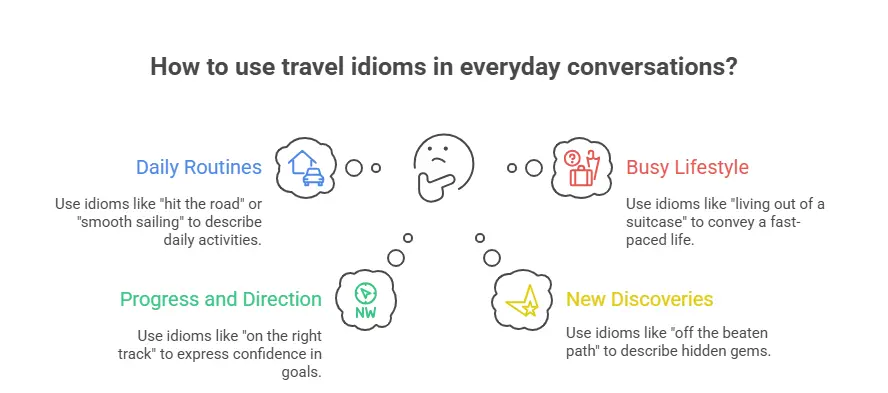
Using Travel Idioms in Daily Routines
Travel idioms are not limited to vacations or long journeys; they can easily be used in everyday routines to make your language sound more natural and relaxed. For example, when you are leaving home for work, school, or even the gym, saying “I’m about to hit the road” sounds more friendly and conversational than simply saying “I’m leaving now.” These expressions add a casual tone and help your speech flow more smoothly.
Similarly, idioms like “smooth sailing” can be used to describe a productive or stress-free day. If everything at work is going well, you might say, “Today has been smooth sailing so far.” Using such phrases helps you express emotions like ease and comfort in a simple yet expressive way. Over time, including these idioms in daily conversations can make your English sound more confident and natural.
Expressing Progress and Direction
Travel idioms are also very useful when talking about personal growth, goals, and progress. When you feel confident about your studies, career, or plans, saying “I’m on the right track” clearly shows that you believe you are moving in the correct direction. This idiom is often used in motivational conversations or when giving reassurance to others.
For example, a student might say, “After improving my study routine, I feel like I’m finally on the right track.” This expression makes your message positive and clear. It also helps listeners understand your mindset without needing a long explanation. Using such idioms can make discussions about progress more encouraging and meaningful.
Describing New Discoveries
Travel idioms are perfect for talking about new or unexpected discoveries in everyday life. When you find a quiet café, a peaceful park, or a small shop that not many people know about, describing it as “off the beaten path” instantly gives others a clear picture. It suggests that the place is special, calm, and different from crowded or popular locations.
For instance, you might say, “I found a bookstore off the beaten path that’s perfect for relaxing.” This idiom helps you express curiosity and appreciation for unique places. It adds personality to your conversation and makes your experiences sound more interesting.
Talking About a Busy Lifestyle
When life feels hectic and you are constantly moving from one task to another, travel idioms can describe that feeling effectively. Saying you are “living out of a suitcase” doesn’t always mean you are traveling—it can also describe a lifestyle filled with constant activity and little rest.
For example, “With work, classes, and events, I feel like I’m living out of a suitcase.” This idiom helps others understand that your routine is fast-paced and tiring. It communicates your situation clearly while adding a touch of expression to your words.
Elevate your speaking skills with our Spoken English Course!
Spoken English Course for Guaranteed Confidence and Career Growth
Spoken English Course by Entri App: Enhance your communication skills, gain certification, and boost your career with confidence.
Join Now!Conclusion
Travel idioms add color, emotion, and personality to the way we talk about our journeys. By learning these expressions, you can share your travel stories more naturally and understand others more easily. They help you describe experiences in a simple and engaging way, whether you are talking about a smooth trip, a hidden place you discovered, or a busy day that feels like you’re always on the move. Using travel idioms makes your conversations richer and helps you connect with people who share the same love for exploring new places. As you continue your travels, try using these idioms in real conversations and enjoy how they make your stories come to life.
| Related Links | |
| The Difference between For and Since | Understanding Clauses and Phrases |
| Rules for Using “Some” vs. “Any” | Future Tenses in English: A Complete Guide |
Spoken English Course for Guaranteed Confidence and Career Growth
Spoken English Course by Entri App: Enhance your communication skills, gain certification, and boost your career with confidence.
Join Now!Frequently Asked Questions
What exactly are travel idioms?
Travel idioms are expressions that use creative or symbolic language to describe travel-related experiences. Instead of saying something directly, idioms help you express your feelings, thoughts, and situations in a more colorful and natural way. They are often used by native speakers in both travel conversations and everyday life.
Why are travel idioms important for English learners?
Travel idioms are important because they help you sound more fluent and confident when speaking English. Many native speakers use these expressions naturally, so learning them makes conversations easier to follow. They also help you express yourself more clearly while sharing your travel stories or experiences.
Can travel idioms be used outside of travel situations?
Yes, many travel idioms are commonly used in everyday situations. For example, “on the right track” can describe progress at work or school, and “smooth sailing” can describe anything that is going well. These idioms go beyond travel and fit naturally into daily conversations.
How can I remember travel idioms more easily?
You can remember travel idioms better by reading them in simple sentences, using them in your own conversations, or practicing them through short stories. Connecting each idiom with a real-life situation also makes it easier to recall and use correctly.
Are travel idioms suitable for beginners?
Yes, most travel idioms are easy to understand and beginner-friendly. Even if you are just starting to learn English, you can use these expressions as long as you know their meanings. They help you expand your vocabulary quickly and naturally.
Where can I hear travel idioms being used?
You can hear travel idioms in movies, travel vlogs, podcasts, and conversations with native speakers. They are also commonly used in airports, hotels, travel guides, and casual discussions about trips or plans.
How can I practice using travel idioms in real life?
Try using one or two idioms each day when talking with friends, writing messages, or describing your plans. You can also practice by creating short travel stories or repeating examples you hear from native speakers. The more you use idioms, the more natural they will feel.
Do all English-speaking countries use the same travel idioms?
Most travel idioms are understood across English-speaking countries, but some may be more common in certain regions. However, the idioms included in this blog are widely recognized and can be used confidently anywhere.