Table of Contents
Fashion design is a career made for you if you can’t get enough of making trendy garments and building a brand that people want to buy into. But if the magic of fabrics, weaves and getting to experiment with all sorts of innovative materials gets you pumped up, then it’s textile design all the way.
Both fields have found a home in India’s thriving fashion and textile industry which is now worth a whopping ₹1.5 lakh crore – and they serve totally different roles in the supply chain.
Key Takeaways
- Fashion designing: Garments, styling, trends. Textile: Fabrics, prints, science.
- Fashion starts at ₹4-6 LPA; textiles ₹3.5 LPA to ₹5.5 LPA – both hit ₹12 LPA to ₹20 LPA+ senior.
- Fashion for creative extroverts; textiles for analytical problem-solvers.
- 30% textile grads pivot to fashion (NIFT data).
- Both future-proof: Fashion retail; textiles exports.
- India: 4.5M fashion jobs; 45M textiles (FICCI 2025).
- 6 to 12 month diplomas give fast-track entry; no degree needed.
Start Your Fashion Journey Today! Learn Advanced Designing & Boutique Skills with Experts!
Quick Career Snapshot: Fashion Designing vs Textile Design
| Aspect | Fashion Designing | Textile Design |
| Core Focus | Garment creation & styling | Fabric patterns & materials |
| Avg. Starting Salary (India) | ₹4 LPA to ₹6 LPA | ₹3.5 LPA to ₹5.5 LPA |
| Job Growth (2026) | 15% (Retail boom) | 12% (Exports) |
| Top Skills | Sketching, Trend forecasting | CAD software, Dyeing techniques |
| Best Suited For | Creative extroverts | Analytical innovators |
Master Fashion Designing and Create Your Signature Style
Unlock your creative potential with our expert-led Fashion Designing course. Build in-demand skills and step confidently into the world of fashion!
Begin Your Fashion Career Today!What is the Core Difference Between Fashion Designing and Textile Design?

Fashion designing is all about face-time with consumers – it comes down to what people wear. The way you look at things can change everything, especially when it comes to the production end of things. One little shift in perspective can turn your whole day – and even your whole career – on its head.
Your daily tasks become a whole new ball game, the place you go to work is different, the tools you use are different, and so where you think your career is headed begins to look a lot different too.
Fashion designers get to spend their days sketching out next season’s collections, mixing with stylists and models, tossing together mood boards that just blow people away and making sure those garments are runway perfect.
Textile designers meanwhile get to spend their time working on fabric motifs, trying out new [weaving techniques making sure that the fabric looks and feels just right, working with chemists to get the perfect dye and getting samples out to factories and manufacturers.
Daily Responsibilities: A Side-by-Side View
| Responsibility | Fashion Designing | Textile Design |
| Design Phase | Create runway or ready-to-wear looks | Develop sustainable fabric motifs |
| Tools Used | Adobe Illustrator, CLO 3D | NedGraphics, AutoCAD Textiles |
| Collaboration | Stylists, photographers, models | Weavers, quality control teams, chemists |
| Work Setting | Design studios, fashion houses | Mills, manufacturing units, R&D labs |
What Skills Do Fashion Designers and Textile Designers Need?
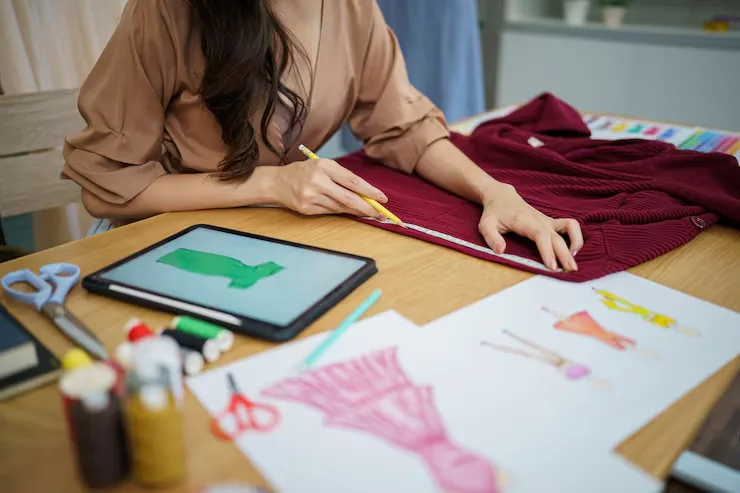
Fashion designing demands artistic flair, trend intelligence, and client-facing communication. Textile design prioritises material science, technical software proficiency, and quality control. Both are creative disciplines – but the expression of that creativity is quite different.
NSDC’s 2025 skills report notes that 70% of fashion design employers prioritise creative portfolios during hiring, while 60% of textile employers specifically require technical certifications in CAD or textile chemistry.
Essential Skills Breakdown
| Skill Category | Fashion Designing (Top 5) | Textile Design (Top 5) |
| Creative | Trend analysis, Garment draping | Pattern making, Colour theory |
| Technical | Sewing, Pattern drafting | Textile chemistry, CAD modelling |
| Soft Skills | Client pitching, Networking | Problem-solving, Quality control |
| Digital | Adobe Illustrator, CLO 3D | NedGraphics, AutoCAD Textiles |
| Specialisation | Styling, Fashion journalism | Sustainable textiles, Weave structures |
Pro Tip: Your Portfolio is a Powerhouse Career Tool
You can’t start a career in fashion design or textile design without a portfolio that’s going to knock the socks off the people you’re trying to impress.
For fashion designers, that means having a portfolio that’s chock full of mood boards, sketches, and styled up lookbooks. For textile designers, you need physical fabric samples, repeat pattern work and a solid set of colour palettes in there somewhere.
Salary and Job Prospects: Fashion Designing vs Textile Design in India (2026)
Fashion designers tend to earn better starting salaries because of all the visibility they get in the retail and brand world. Textile designers, on the other hand, make a killing in the long run – especially if they’re working in places where a lot of textiles get exported and the bonuses they get can add 15% to 20% to their annual pay.
Data and figures in 2026 showed that mid-level fashion pros are earning somewhere between ₹8 LPA to ₹12 LPA, while textile designers at the same level earn ₹7 LPA to ₹10 LPA. Come senior level and both numbers are about the same.
Salary Comparison by Experience Level (India, 2026)
| Experience Level | Fashion Designing Salary | Textile Design Salary | Key Hubs |
| Fresher (0 to 2 yrs) | ₹4 LPA to ₹6 LPA | ₹3.5 LPAto ₹5.5 LPA | Surat, Tirupur |
| Mid-Level (3 to 5 yrs) | ₹8 LPA to ₹12 LPA | ₹7 LPA to ₹10 LPA | Mumbai, Delhi NCR |
| Senior (10+ yrs) | ₹15 LPA to ₹25 LPA+ | ₹12 LPA to ₹20 LPA+ | Bengaluru, Coimbatore |
Master Fashion Designing and Create Your Signature Style
Unlock your creative potential with our expert-led Fashion Designing course. Build in-demand skills and step confidently into the world of fashion!
Begin Your Fashion Career Today!What Courses Can You Take for Fashion Designing or Textile Design?
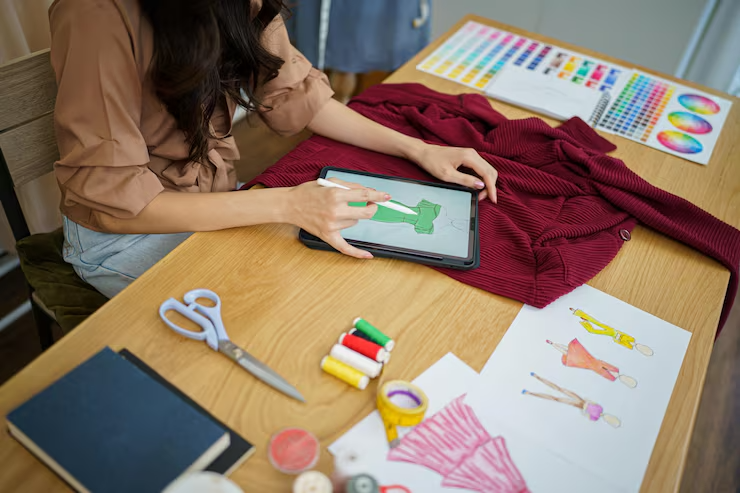
Short diplomas are the fastest entry point for fashion careers. Textile design often requires deeper specialisation – though certifications in CAD-based textile software are now industry-accepted alternatives to full degrees.
AICTE’s 2025 report found that 80% of employers in the fashion and textile sectors prefer candidates with certified, practical training over those with purely academic qualifications.
Top Courses Comparison
| Course Type | Fashion Designing Options | Textile Design Options | Duration & Cost |
| Diploma | Fashion Basics Diploma | Textile CAD Essentials | 6 months, ₹15k–25k |
| Degree | B.Des Fashion (NIFT) | B.Tech Textile (IIT Delhi) | 4 years, ₹2–5L |
| Online Certification | Live Fashion Workshops | Textile Pattern Design | 3 months, ₹5k–10k |
| Specialisation | Sustainable Fashion | Technical Textiles | 6–12 months, varies |
Top Institutions in India:
NIFT (National Institute of Fashion Technology), NID (National Institute of Design), Pearl Academy, IIT Delhi (Textile Engineering), and various state design colleges across Kerala, Tamil Nadu, and Maharashtra.
Which Career Should You Choose? Pros, Cons, and a Quick Quiz
Pros and Cons at a Glance
| Career | Pros | Cons |
| Fashion Designing | High visibility, freelance scope, brand building | Trend pressure, income irregularity early on |
| Textile Design | Stable demand, export market perks, R&D scope | Less glamour, factory-centric environments |
Quick Decision Points
- If you love sketching outfits, following runway trends, and imagining how clothes feel on a person → Fashion Designing is your path.
- If you are more excited by the science of a fabric – how it’s woven, dyed, or structured? → Textile Design is where you belong.
- If you want a client-facing, brand-building career with freelance potential? → Fashion Designing.
- If you prefer technical R&D, sustainable material innovation, and manufacturing-side roles? → Textile Design.
If you answered “both” more than once – you might love Surface Textile Design or Fashion Merchandising, which sit right at the intersection of both fields.
Start Your Fashion Journey Today! Learn Advanced Designing & Boutique Skills with Experts!
Conclusion
Fashion designing and textile design – two distinct but deeply connected creative careers within India’s fast growing and rapidly evolving fashion industry. Fashion designing is all about being the centre of attention: designing collections, creating brands and dressing people to impress. Textile design on the other hand is all about laying the foundation: figuring out the materials that ultimately make fashion happen.
Neither is better than the other. It all depends where your passion is – on the catwalk or in the loom room. Both are pretty lucrative, both have a promising future, and both offer scope for advancement past 2030 and beyond. Take a step back and look at your strengths, do some research, and choose the path that genuinely gets you excited every morning.
Master Fashion Designing and Create Your Signature Style
Unlock your creative potential with our expert-led Fashion Designing course. Build in-demand skills and step confidently into the world of fashion!
Begin Your Fashion Career Today!Frequently Asked Questions
Which pays more - fashion designing or textile design?
Fashion starts off at ₹4-6LPA while textiles kick off at ₹3.5-5.5 LPA – and both can zoom in up to ₹12-25 LPA when you are a senior.
Can I switch over from textile design to fashion design?
Yes, around 25% to 30% of textile graduates do just that, and it’s relatively easy to pick up the necessary skills with some short courses in illustration or draping.
Which one is better for Kerala students - fashion designing or textile design?
Well both can thrive in Kerala’s retail and export scene. A job-focused diploma might be more suitable for someone looking to get a quick entry.
What's the job market forecast for 2026?
Fashion growth is going to be 15% in retail, textiles will grow 12% in exports.
Do I need a 4-year degree to become a fashion designer?
No, you can make do with a 6-12 month diploma. More importantly a good portfolio will get you noticed by employers.
Is fashion designing a stable career in India?
Yes, it is – with 4.5 million jobs and a ₹1.5L Cr market size, retail & direct to consumer sales will only boost stability.
What's the main difference between a fashion designer and a textile designer?
Fashion is all about designing consumer garments and collections. Textiles on the other hand is all about designing production fabrics and prints.
Can you get textile design jobs outside of factories?
Yes – you can find them in R&D, studios, exports, as a board member, even as a freelancer making patterns for global clients.