Highlights & Shadows in Fashion Illustration shape visual storytelling and depth. They help transform simple sketches into expressive fashion designs. These techniques bring life to every garment and pose. They add movement, realism, and artistic clarity. Designers rely on lighting effects for strong presentation. Artists use contrast to guide viewer attention. This approach builds impactful and memorable illustrations.
Understanding light helps improve drawing confidence and control. It allows artists to visualize garment structure clearly. Proper shading enhances fabric flow and fit accuracy. Highlights define curves, folds, and soft edges. Shadows add dimension, balance, and visual harmony. Together, they improve artistic consistency and quality. These skills support creative exploration and technical growth. They help fashion illustrations appear refined and professional.
Fashion illustration communicates ideas beyond simple clothing sketches. It expresses design vision, creativity, and artistic identity. Every line and curve carries purpose and meaning. Proper shading enhances the overall visual communication. Light effects define structure and form clearly. They create a sense of movement and realism. Shading also improves garment presentation and appeal. These elements help designs look complete and professional. They allow viewers to understand garment construction easily. They also help designers explain their creative intent clearly.
Effective shading builds strong visual storytelling. It guides the viewer’s eyes naturally. Shading highlights important design features gently. It supports fabric flow and garment proportions. Shading also helps express fabric texture accurately. Soft materials require gentle tonal transitions. Stiff fabrics need stronger tonal contrasts. This balance improves realism and depth. Good shading also enhances emotional expression. It allows artists to create mood and atmosphere.
Mastering shading techniques requires observation and consistent practice. Artists must study real lighting patterns carefully. They should analyze how light affects surfaces. They must practice layering tones slowly. This process builds control and confidence. It helps create smooth tonal transitions. It also prevents harsh or uneven shading. Over time, artists develop a natural understanding. They learn to visualize light placement instinctively. This improves speed and accuracy. Such skills elevate artistic quality significantly.
Artistic clarity supports professional design communication.
This structured approach helps artists grow steadily. It strengthens both technical and creative skills. It also supports consistent artistic improvement. Through mindful practice, shading becomes intuitive. Over time, illustrations gain depth and refinement. This development leads to stronger fashion visual storytelling.
Why Highlights and Shadows Matter in Fashion Illustration
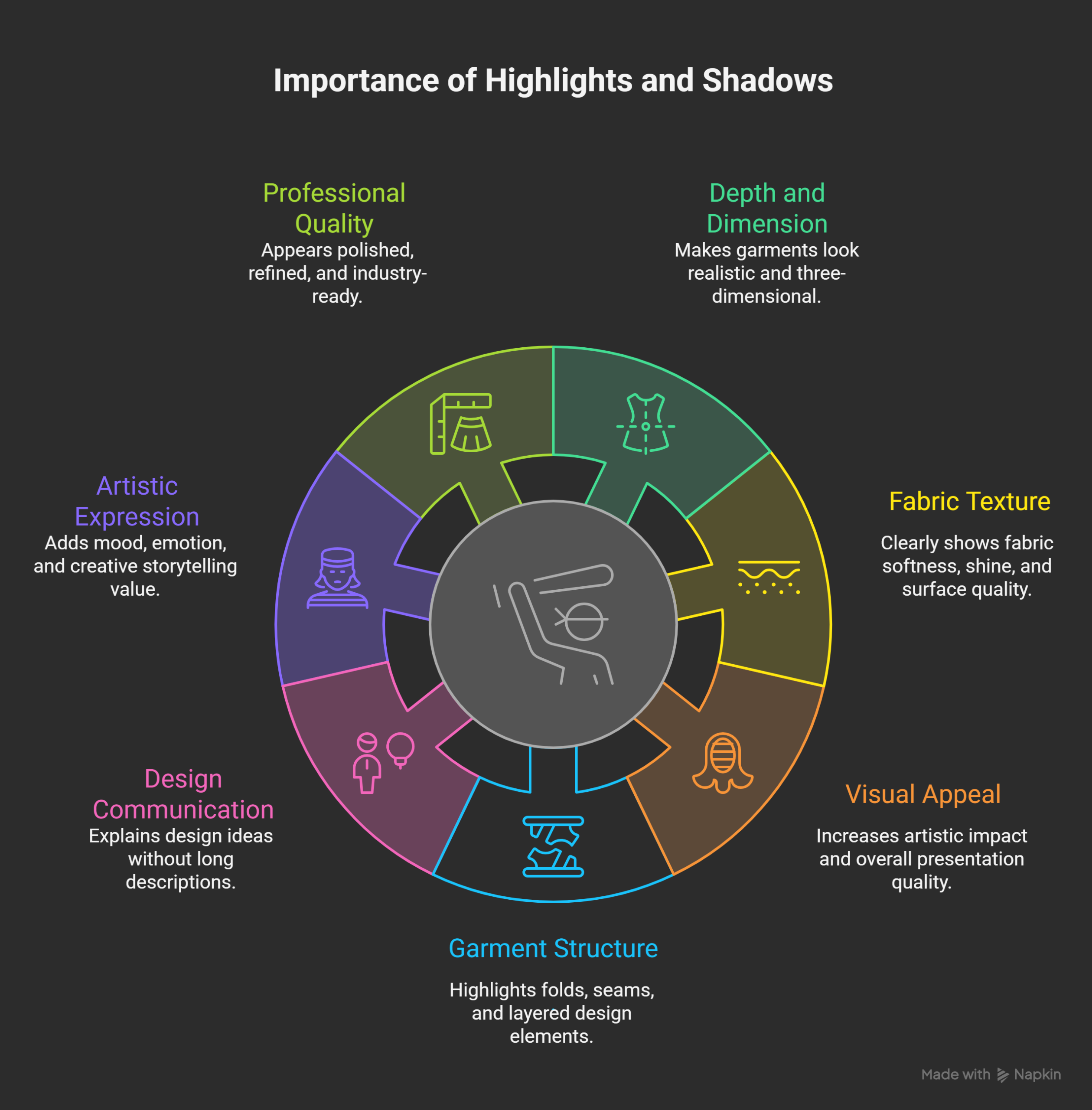
Highlights and shadows play a crucial role in fashion illustration. They bring depth, realism, and clarity to every design. These elements help transform simple sketches into expressive visual compositions. Proper shading enhances garment structure, form, and movement. It supports better communication of creative ideas. Designers rely on shading to express fabric behavior clearly. Balanced lighting effects improve overall illustration quality. Effective use of highlights and shadows strengthens artistic presentation significantly.
Fashion illustrations without shading often appear flat and lifeless. Adding tonal contrast creates dimension and visual interest. Light areas define raised surfaces and contours. Dark areas indicate depth, folds, and recesses. This balance allows garments to appear three-dimensional. Viewers understand shapes and forms more easily. Such clarity helps communicate design intent effectively. Well-shaded drawings look polished and professional.
Creating Depth and Three-Dimensional Form
Depth is essential for realistic fashion illustrations. Highlights and shadows create a natural sense of volume. Proper shading helps define body proportions and garment draping. It shows how fabrics wrap around curves. Shadows emphasize folds, pleats, and layered sections. Highlights enhance raised areas like shoulders and hips. Together, these elements create visual balance and form clarity. This approach makes illustrations appear lively and dynamic.
Depth also improves spatial understanding within the sketch. It separates foreground and background elements effectively. Clear dimension prevents confusion in complex designs. It ensures garments appear wearable and functional. Accurate depth representation helps visualize the final garment appearance. This strengthens communication between designers and viewers.
Key benefits of creating depth:
Improves realism and natural appearance
Enhances garment structure understanding
Supports visual balance and harmony
Adds artistic richness and dimension
Enhancing Fabric Texture and Surface Detail
Different fabrics respond uniquely to light exposure. Highlights and shadows reveal these surface characteristics. Soft fabrics reflect light gently and smoothly. Shiny fabrics reflect light sharply and brightly. Thick materials absorb more light, creating deeper shadows. Proper shading allows viewers to recognize material types easily.
Texture expression improves design accuracy and presentation quality. It helps represent fabric softness, stiffness, or weight visually. Clear texture depiction enhances garment realism. It also supports better material selection understanding. Designers can communicate intended fabric choices clearly.
Common fabric shading characteristics:
Fabric Type
Highlight Style
Shadow Strength
Visual Effect
Silk
Sharp and bright
Light and smooth
Glossy appearance
Cotton
Soft and diffused
Medium intensity
Natural softness
Denim
Subtle and narrow
Deep and strong
Structured weight
Leather
Crisp and narrow
Strong contrast
Firm surface shine
Improving Visual Appeal and Presentation Quality
Good shading increases visual attraction and engagement. Balanced light contrast guides viewer attention naturally. Highlights emphasize focal areas within designs. Shadows provide depth and grounding. This combination creates harmonious compositions.
Well-shaded illustrations appear refined and professional. They reflect artistic control and technical understanding. Strong visual presentation improves portfolio quality significantly. Clear tonal contrast helps designs stand out. Such clarity supports stronger emotional connection. This encourages appreciation and design recognition.
Ways shading enhances visual appeal:
Creates natural focal points
Adds drama and visual interest
Improves composition balance
Enhances design clarity
Supporting Garment Construction and Technical Understanding
Highlights and shadows help explain garment construction visually. Shadows define seams, folds, and overlapping sections. Highlights emphasize surface elevations and edges. This clarity improves understanding of garment structure.
Clear construction representation supports pattern interpretation. It helps production teams visualize assembly accurately. Better clarity reduces design errors and revisions. It also strengthens communication during development stages. This results in efficient design execution.
Construction features improved by shading:
Seam placement
Fabric folds and pleats
Layer transitions
Structural design elements
Strengthening Artistic Expression and Creative Style
Highlights and shadows contribute to artistic individuality. Shading styles help develop unique illustration identities. Soft shading creates calm and elegant moods. Strong contrast produces dramatic visual effects. Balanced tones express harmony and sophistication.
Tonal control allows emotional storytelling. Mood expression enhances visual narrative impact. Designers can communicate atmosphere and theme effectively. This flexibility supports creative exploration. Artistic confidence grows through consistent shading practice.
Shading styles and emotional impact:
Shading Style
Contrast Level
Emotional Effect
Soft shading
Low contrast
Calm and gentle
Balanced shading
Medium contrast
Natural elegance
High contrast
Strong contrast
Dramatic intensity
Enhancing Professional Communication and Design Clarity
Fashion illustrations serve as communication tools. Highlights and shadows improve message clarity. Visual depth explains garment structure more effectively. Clear shading reduces dependency on lengthy descriptions.
Better clarity improves client understanding. It supports quicker feedback and approvals. Strong visual explanation minimizes design misinterpretation. Improved communication strengthens professional collaboration. This results in smoother project workflows.
Communication benefits of shading:
Improves design clarity
Enhances client comprehension
Supports technical accuracy
Reduces design revisions
In Short
Highlights and shadows define fashion illustration quality. They add depth, realism, and expressive strength. Shading enhances fabric texture and garment clarity. Balanced tonal use improves visual presentation. Clear shading strengthens professional communication. Artistic growth depends strongly on tonal understanding. Mastering these elements supports consistent creative improvement.
Understanding light source is essential in fashion illustration. Light direction determines how highlights and shadows appear. Proper light placement creates depth, realism, and visual clarity. It helps define garment structure and body form. Correct lighting improves fabric texture representation. Clear light logic enhances illustration consistency. Balanced lighting supports professional design presentation. Mastering light source understanding strengthens overall artistic control.
Light source refers to the direction from which light reaches the subject. This direction influences brightness and shadow placement. Consistent light direction maintains visual harmony. Random lighting creates confusion and imbalance. Clear light logic improves drawing accuracy. Proper observation supports better lighting interpretation. Careful planning prevents shading errors. This ensures realistic and polished fashion sketches.
Importance of Light Source in Fashion Illustration
Light source controls visual depth and dimension. It defines raised and recessed areas clearly. It shapes garment folds and body curves. Proper lighting improves structural understanding. It also enhances material appearance. Consistent lighting improves artistic professionalism. Balanced illumination increases visual appeal significantly.
Light direction also influences mood and atmosphere. Soft lighting creates calm visual effects. Strong lighting creates dramatic contrast. Balanced lighting expresses elegance and harmony. Artists use lighting to communicate emotions visually. Proper light control strengthens creative storytelling.
Key benefits of understanding light source:
Improves realism and dimensional accuracy
Enhances garment form clarity
Supports fabric texture representation
Strengthens artistic expression
Improves visual balance and harmony
Common Light Source Directions
Light can originate from different directions. Each direction creates unique visual effects. Choosing the correct direction depends on illustration purpose. Consistent application ensures visual coherence.
Front Lighting
Front lighting illuminates the subject directly. It reduces harsh shadows significantly. It creates even brightness across surfaces. This lighting suits clear design presentations. It highlights garment details clearly. It supports balanced compositions.
Advantages of front lighting:
Reduces strong shadow formation
Enhances garment visibility
Supports clean presentation
Side Lighting
Side lighting creates strong contrast and depth. It highlights curves and folds effectively. It produces dramatic visual effects. This lighting adds strong dimensional clarity. It enhances texture and form.
Advantages of side lighting:
Adds dramatic depth
Enhances fabric folds
Creates strong visual contrast
Top Lighting
Top lighting simulates natural sunlight. It highlights upper surfaces prominently. Top lighting creates shadows under folds. It emphasizes garment volume effectively. It supports realistic outdoor lighting effects.
Advantages of top lighting:
Creates natural illumination
Enhances fold depth
Improves volume perception
Back Lighting
Back lighting illuminates the subject from behind. It creates silhouette effects. Back lighting highlights edges and outlines. It adds dramatic visual impact. It enhances design emphasis and style.
Advantages of back lighting:
Creates striking silhouettes
Enhances edge clarity
Adds artistic drama
Comparison of Light Source Directions:
Light Direction
Shadow Strength
Visual Effect
Best Usage
Front lighting
Low
Clear and even
Design clarity
Side lighting
High
Dramatic depth
Artistic emphasis
Top lighting
Medium
Natural realism
Outdoor effects
Back lighting
Strong outlines
Bold silhouettes
Concept designs
Consistency in Light Direction
Maintaining consistent lighting is essential. All highlights must follow one direction. All shadows must fall accordingly. Inconsistent lighting creates visual confusion. Consistent light improves realism significantly. It ensures harmonious shading transitions. It supports professional illustration quality.
Planning light direction before shading prevents errors. Artists should sketch light placement lightly. This approach ensures clarity during coloring. It also prevents unwanted tonal overlaps. Consistency builds visual discipline. This strengthens technical drawing skills.
Ways to maintain lighting consistency:
Decide light direction before coloring
Mark highlight zones lightly
Plan shadow areas clearly
Observe reference images carefully
Understanding Form Shadows and Cast Shadows
Shadows appear in two main forms. Each form serves a different visual purpose. Understanding both improves shading accuracy.
Form Shadows
Form shadows appear on curved surfaces. They show gradual light reduction. They define shape and volume clearly. These shadows enhance three-dimensional realism. They follow body and garment curves naturally.
Characteristics of form shadows:
Soft and gradual
Follow surface curves
Define volume and shape
Cast Shadows
Cast shadows appear when objects block light. They fall onto nearby surfaces. These shadows anchor figures visually. They enhance spatial realism. They create strong depth perception.
Characteristics of cast shadows:
Sharp edges
Strong tonal contrast
Grounding visual effect
Shadow Type Comparison:
Shadow Type
Edge Quality
Purpose
Visual Effect
Form shadow
Soft
Shape definition
Smooth realism
Cast shadow
Sharp
Spatial depth
Grounded appearance
Observing Real-Life Lighting
Observation strengthens lighting understanding. Studying natural light improves shading accuracy. Artists should observe sunlight on clothing. Indoor lighting effects also provide learning opportunities.
Regular observation improves visual memory. It strengthens shading judgment. It enhances artistic confidence. Over time, artists visualize lighting instinctively. This leads to faster and more accurate sketches.
Observation practice methods:
Study clothing under sunlight
Observe indoor lighting patterns
Analyze fashion photography
Practice sketching from references
Role of Light Source in Design Communication
Light source improves design clarity. Proper lighting explains garment structure visually. It reduces reliance on written descriptions. It strengthens communication between designers and viewers.
Clear lighting supports technical interpretation. It helps pattern makers understand garment volume. It improves production visualization. This reduces design misunderstandings. Strong lighting control improves collaboration.
Communication benefits of light understanding:
Enhances design explanation
Improves technical clarity
Supports faster approvals
Reduces revision requirements
Summary
Understanding light source strengthens fashion illustration quality. It enhances realism, clarity, and visual appeal. Proper lighting improves fabric texture representation. Consistent light direction supports professional presentation. Shadow control enhances spatial understanding. Observation strengthens lighting judgment. Mastery of light source builds strong artistic confidence. These skills support continuous creative growth.
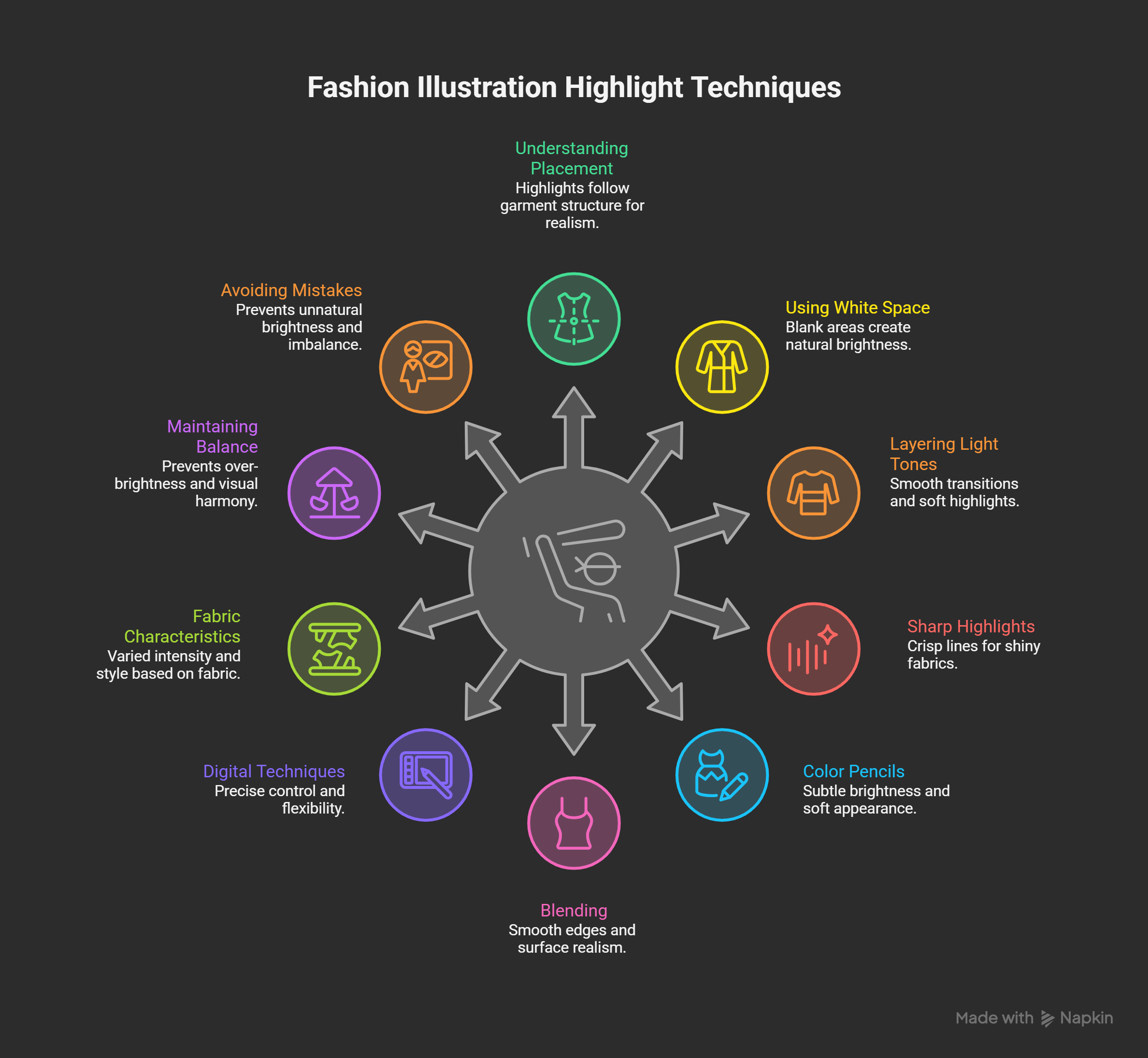
Techniques to Add Highlights in Fashion Illustration
Adding highlights improves the visual quality of fashion illustrations. Highlights represent areas where light touches the surface. They create brightness, dimension, and surface clarity. Proper highlights enhance garment structure and fabric realism. Balanced highlight placement improves artistic accuracy. Clear highlights guide viewer attention naturally. These techniques help designs appear refined and professional. Mastering highlight application strengthens overall illustration quality.
Highlights should appear on raised and exposed areas. These areas receive direct light. Shoulders, sleeves, collars, and folds often catch light. Strategic highlight placement enhances garment shape. Controlled brightness improves surface texture depiction. Subtle highlights create softness and elegance. Sharp highlights create shine and drama. Correct techniques ensure balanced visual presentation.
Understanding Highlight Placement
Proper placement is essential for natural-looking highlights. Highlights should follow garment structure and body contours. Raised surfaces receive more light. Recessed areas remain darker. Consistent placement ensures lighting realism. Random highlights create visual confusion. Careful planning prevents overuse and imbalance.
Highlights also depend on fabric type. Smooth fabrics reflect light evenly. Shiny materials reflect light sharply. Thick fabrics reflect less light. Understanding fabric behavior improves highlight accuracy.
Key areas for highlight placement:
Shoulder lines
Sleeve edges
Collar curves
Bust contours
Hip curves
Fold crests
Pleat edges
Using White Space for Natural Highlights
White space creates natural highlight effects. Leaving blank areas suggests light reflection. This technique works well with watercolors and markers. It preserves brightness and freshness. It prevents over-darkening of illustrations.
Planning blank areas before coloring is essential. Light sketch outlines help define highlight zones. Careful color layering protects these spaces. This method produces clean and luminous results.
Advantages of white space technique:
Preserves brightness
Prevents color muddying
Enhances visual freshness
Improves tonal balance
Layering Light Tones Gradually
Layering creates soft and natural highlights. Light tones form the base layer. Slightly darker tones build depth gradually. This method allows smooth tonal transitions. It prevents harsh edges and blotchy effects.
Layering improves blending control. It ensures balanced color distribution. Gentle strokes maintain surface softness. This technique suits soft fabrics and flowing garments. It also supports subtle fabric movement expression.
Controlled highlight intensity prevents unnatural glare. Precise placement improves material authenticity. Consistent highlight direction maintains visual harmony. This technique enhances luxury fabric depiction.
Fabrics requiring sharp highlights:
Satin
Silk
Leather
Patent materials
Using Color Pencils for Soft Glow Effects
Color pencils allow gentle highlight application. Light pressure creates soft glow effects. White or pale shades enhance brightness. Gradual layering improves tonal harmony. This technique suits cotton, chiffon, and knits.
Over-blending should be avoided. Excess blending removes texture clarity. Balanced blending preserves fabric identity. Controlled blending improves visual flow. This technique enhances overall artistic polish.
Common blending tools:
Blending stumps
Soft tissues
Dry brushes
Cotton swabs
Digital Highlight Techniques
Digital tools offer flexible highlight control. Brushes with low opacity create soft effects. Hard brushes create sharp reflections. Layer adjustments allow brightness corrections. Undo features support experimentation.
Digital blending enhances smoothness. Highlight layers allow non-destructive editing. This method supports professional workflow efficiency. Digital highlights improve consistency and precision.
Advantages of digital highlights:
High control
Easy corrections
Flexible adjustments
Consistent results
Highlighting Based on Fabric Characteristics
Different fabrics require varied highlight treatment. Understanding material behavior improves realism. Proper technique selection ensures accurate texture depiction.
Cool colors create realistic shadow effects. Blues, purples, and greys soften dark areas. Pure black often appears unnatural. Cool shadows blend better with base colors. This approach improves tonal harmony.
Cool tones preserve fabric brightness. They prevent muddy shading. Gentle cool hues enhance surface realism. This method supports professional illustration standards.
Highlights and shadows bring clarity, depth, and realism to fashion illustrations. Proper lighting understanding improves garment structure and visual balance. Controlled shading enhances fabric texture and surface quality. Thoughtful highlight placement adds brightness and dimensional flow. Balanced shadow application strengthens depth and realism. These elements together elevate overall artistic presentation. Consistent practice improves tonal control and lighting accuracy. Mastery of these techniques supports professional illustration standards.
Developing shading skills requires patience, observation, and dedication. Studying real-life lighting improves visual judgment and confidence. Regular practice strengthens blending and tonal layering ability. Careful experimentation enhances creative expression and personal style. Strong shading techniques improve design communication and clarity. Over time, illustrations gain refinement and visual impact. These skills support continuous artistic growth and creative success.
Why are highlights and shadows important in fashion illustration?
Highlights and shadows add depth, realism, and dimension to fashion sketches. They help garments appear three-dimensional and lifelike. These elements define fabric flow, folds, and body curves clearly. They also improve overall visual appeal and design clarity. Proper shading enhances professional presentation quality.
How do highlights improve fabric appearance in illustrations?
Highlights show where light touches the fabric surface. They enhance brightness, shine, and texture clarity. Different fabrics reflect light differently, creating varied visual effects. Proper highlights help identify material types easily. They also improve realism and artistic detail.
Why is understanding light source important in fashion drawings?
Light source determines where highlights and shadows appear. It helps maintain consistent shading direction. Proper light understanding prevents visual confusion. It also enhances depth and dimensional accuracy. Consistent lighting improves overall illustration realism.
What are the best techniques to add highlights in fashion illustration?
Effective techniques include white space usage, tonal layering, sharp highlights for shiny fabrics, and soft blending. Color pencils and digital tools offer controlled highlight application. Proper placement based on garment structure improves realism. Balanced use prevents over-brightness and visual clutter.
How can shadows improve depth and realism in sketches?
Shadows define folds, overlaps, and recessed areas. They add volume and shape clarity. Proper shadow layering creates smooth tonal transitions. Cool-toned shadows improve natural appearance. Balanced shading strengthens garment structure and realism.
What mistakes should beginners avoid while adding highlights and shadows?
Common mistakes include random placement, excessive brightness, harsh edges, and ignoring light direction. Over-blending can remove texture clarity. Excess darkness reduces garment detail visibility. Careful planning and gradual layering prevent these errors.
How does shading improve garment structure understanding?
Shading highlights seams, folds, pleats, and layering clearly. It explains how garments fit and flow. Proper depth helps visualize final garment appearance. This clarity supports better design communication. It also improves production interpretation accuracy.
Can digital tools replace traditional shading methods?
Digital tools offer flexibility, easy corrections, and precision. Traditional methods build strong shading fundamentals. Both approaches complement each other effectively. Combining techniques enhances artistic growth. Each method offers unique creative benefits.
How can beginners practice highlights and shadows effectively?
Beginners should observe real clothing under different lighting. Practicing simple shapes helps understand light behavior. Sketching fabric folds improves shading accuracy. Regular repetition builds confidence and control. Studying professional illustrations enhances learning.
How long does it take to master shading techniques?
Mastery depends on consistent practice and observation. Basic control develops within weeks of regular practice. Advanced shading skills improve over months. Continuous learning refines artistic understanding. Patience and dedication ensure steady improvement.

Famida is an experienced educator with over a decade of teaching experience, specializing in grades 8 to 12, business management (BBM), and electronics engineering. Holding a Master's degree in Electronics and Communication Engineering, she has also trained interns in IoT. For the past four years, Famida has been writing articles for Entri, focusing on exam preparation tips, question papers, and study plans. She also creates practice questions for the Entri app and provides support to users. Additionally, Famida's writing skills extend to parenting and personal blogs, as well as curriculum development.