
Table of Contents
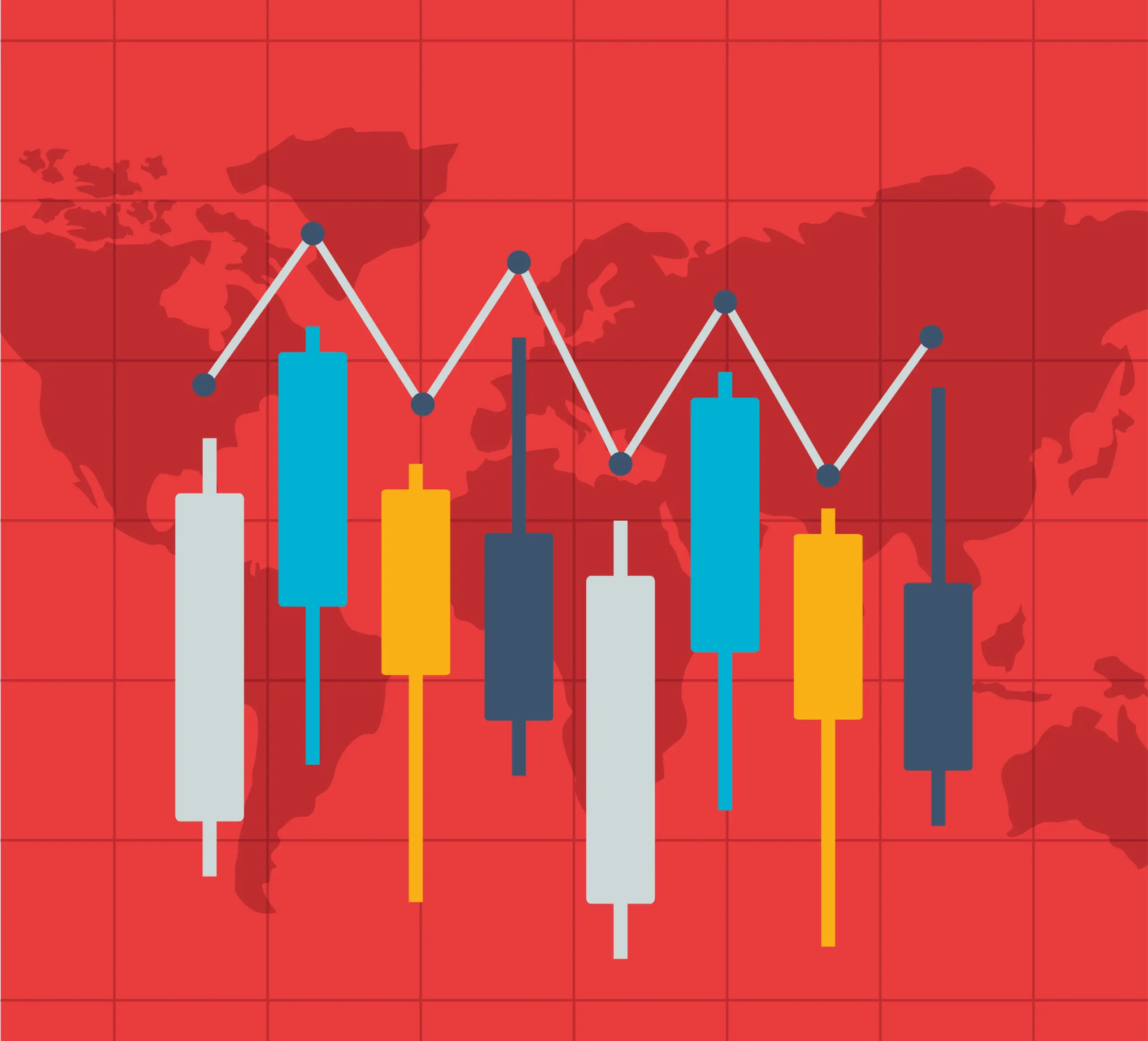
I’ll be honest the first time I opened a candlestick chart, I stared at it for a good ten minutes and understood nothing. Red bars( candles), green bars, little lines sticking out the top and bottom. It looked like a city skyline drawn by someone who’d had too much coffee.
That was years ago. Now I can glance at a chart and within seconds I’m reading the story of who’s in control, where the pressure is, and where the market might be headed next. Candlesticks aren’t complicated once someone actually explains them properly. That’s what this guide is for.
Let’s skip the formal history lesson (yes, they were invented in Japan, yes, it was centuries ago, you can Google it). What matters is why they’ve survived: they work. They compress raw price action into a visual format that, once you learn to read it, tells you more than any indicator ever could.
Join our Online Course and Learn Stock Marketing the Right Way. Enrol Now!
What a Single Candlestick is Actually Telling You

Every candle on a chart covers a time period could be 1 minute, could be 1 week. And inside that candle, four numbers are packed in:
- Open: where price started when the period began
- Close: where it ended when the period was over
- High: the furthest up price managed to reach
- Low: the furthest it fell before recovering (or not)
The fat rectangular part of the candle, the body shows you the distance between open and close. The thin lines poking out above and below are called wicks (or shadows). They show you the high and the low.
Colour is simple: green (or white on older charts) means the price went up during that period and it closed higher than it opened. Red (or black) means the opposite. Sellers won that round.
That’s it. That’s the whole foundation. Everything else is just learning to read these four data points in combination, across multiple candles, in context.
The Body Tells You Who’s Winning
1: What is a stock?
Look at the body first. How big is it?
A thick, long body means one side dominates completely. Big green candle? Buyers were relentless — they pushed the price up and held it there. Big red candle? Sellers took over and didn’t let up. These kinds of candles show up at breakouts, after major news, during panic selloffs. They’re the market shouting.
When the Body is Tiny
A small body means neither side won. The price opened, wobbled around, and basically ended up where it started. This is called a spinning top, and it’s the market shrugging its shoulders. Not necessarily a bad thing to spot — indecision after a strong trend can mean the trend is running out of gas.
The Doji — When Open and Close are the Same
This is a special one. When open and close are virtually identical, the body disappears entirely and you’re left with just wicks — it looks like a cross or a plus sign. That is a doji.
A doji means the bulls and bears had a fight for a long period of time and ended up exactly where they started. Perfect standoff. On its own, it’s interesting. But when a doji shows up after a long trend? That’s when you pay serious attention, because it often signals that the move is exhausting.
Don’t Ignore the Wicks — Most Traders Do
Here’s something I wish someone had told me earlier: the wicks are often more important than the body.
A long upper wick means buyers pushed price way up during that period — but then sellers came in hard and drove it back down before the close. Think about what that means. Someone tried to break higher and got rejected. That tells you there’s selling pressure at those higher prices. It’s not just a line on a chart — it’s evidence of a battle, and the sellers won it.
A long lower wick is the mirror image. Price got hammered down, but then buyers stepped in, absorbed all that selling, and pushed it back up. Bullish rejection. Demand showed up at those lows.
The pin bar takes this to an extreme — tiny body, massive wick. When you see one of those at a key level, that’s a high-conviction signal. The market tested a level, got rejected hard, and bounced. That’s not random noise. That’s price action telling you something.
Patterns: When Candles Start Talking to Each Other
Individual candles are good. But where things really get interesting is when you start reading candles in sequence — because that’s when patterns emerge, and patterns are where the real edge is.
The Hammer (and its Evil Twin, the Hanging Man)
Small body at the top, long wick below. If this shows up at the bottom of a downtrend, it’s called a hammer, and it’s one of the most classic bullish reversal signals there is. The sellers pushed the price way down, buyers stepped in and said ‘nope,’ and drove it back up. Classic.
But here’s the part that trips people up: the exact same candle at the top of an uptrend is called a hanging man, and it’s a bearish warning. Same shape, completely different meaning. Context changes everything.
Engulfing Patterns
Imagine a smallish red candle on day one. Then on day two, a big green candle opens lower but closes higher — so big that its body completely swallows the first candle’s body. That’s a bullish engulfing pattern, and it’s a powerful signal when it happens at lows. It’s saying: yesterday’s sellers just got steamrolled.
The bearish version works at highs — a big red candle swallows a small green one. The bigger the engulfing candle relative to the one it’s eating, the stronger the signal.
Morning Star and Evening Star
Three-candle patterns, and when they show up cleanly, they’re among the most reliable setups in the playbook. The morning star goes like this: big red candle (sellers in control), then a tiny indecision candle that gaps away from the first (the ‘star’), then a big green candle that pushes well into the body of that first red candle. The downtrend is cracking.
Evening star is the same idea in reverse — it shows up at tops and warns that the buyers are running out of steam. Three candles, clear shift in momentum.
Three White Soldiers / Three Black Crows
Three large candles in a row, all the same colour, each one opening inside the previous body and closing near its high (or low). That’s organized, sustained buying or selling — not a one-day spike. These patterns on a daily or weekly chart carry real weight, because they suggest a genuine shift in control, not just a knee-jerk reaction.
The One Rule That Overrides Everything Else

No pattern means anything without context. I can’t stress this enough.
A hammer at the bottom of a six-month downtrend, sitting right on a major support level that’s held three times before, with volume spiking on the candle? That’s a high-probability setup. A hammer in the middle of a choppy sideways market with no clear structure? That’s just noise.
Here’s what to check before you act on any candlestick signal:
- Where is it in the trend? A reversal pattern means nothing if there’s no clear trend to reverse from.
- Is it at a meaningful level? Support, resistance, a round number, a prior high or low — signals at these spots carry far more weight.
- What’s the volume saying? A reversal candle with high volume is confirmation. The same candle on a thin volume? Treat it with suspicion.
- What timeframe are you on? A signal on the weekly chart is worth ten signals in 5-minute. Higher timeframe = more meaningful.
Stock Market Training Reviewed & Monitored by SEBI Registered Investment Advisor
Trusted, concepts to help you grow with confidence. Enroll now and learn to start investing the right way.
Know moreMistakes I’ve Seen (and Made)
Let me save you some pain:
- Jumping in without confirmation. A reversal candle isn’t a signal — the candle after it confirming the move is the signal. Wait.
- Fighting the trend. Even a perfect bullish pattern has low odds in a strong downtrend. The trend is your friend until it isn’t.
- Ignoring what’s happening in the news. A textbook setup can evaporate instantly on an earnings miss or a surprise rate decision. Fundamentals exist.
- Using candlesticks in isolation. They’re a tool, not a system. Layer them with support/resistance, moving averages, volume — then they shine.
How to Actually Get Good at This
Read books, sure. But the fastest way to build real fluency? Go back through historical charts and practice reading them blind.
Pull up a daily chart of anything. Cover the right half. Start reading candle by candle from the left — what’s the pattern saying? What do you expect next? Then uncover a little more and check. Do this for an hour, a few times a week, and within a month you’ll start seeing things most traders completely miss.
Candlestick reading is a skill. It gets better with reps, not with memorizing a list of pattern names.
Join our Online Course and Learn Stock Marketing the Right Way. Enrol Now!
Final Thoughts
One last thing: don’t try to predict. That’s not what this is for. Candlestick analysis shifts the odds in your favour — it tells you when conditions are lining up for a particular outcome. Combined with proper position sizing and stop losses, that edge is enough.
The charts have always been talking. Candlesticks are just how you learn to listen.
|
RELATED POSTS |
|
Stock Market Training Reviewed & Monitored by SEBI Registered Investment Advisor
Trusted, concepts to help you grow with confidence. Enroll now and learn to start investing the right way.
Know moreFrequently Asked Questions
How do you tell if a candlestick is bullish or bearish?
Green (or white) candles are a sign that things are looking up – the close is higher than the open. Red (or black) ones on the other hand, indicate we’ve got a bear on our hands – the close is lower than the open. The size of the body tells you just how strong the winning side was.
What's a doji candlestick and why is it so important?
A doji is when the open and close are almost level with each other – you get this cross-like shape with some pretty long wicks sticking out. It’s a signal of indecision – even more so when it appears after a strong trend, as it’s often a warning sign of a reversal on the cards.
Why do wicks/shadows matter so much in candlestick analysis?
Wicks give away prices that were rejected by the market – a long upper wick means sellers were really trying to push prices up, but couldn’t. A long lower wick means buyers were defending their territory and giving the sellers a hard time. They’re like battle reports between the buyers and sellers.
What's the difference between a morning star and an evening star?
A morning star (bullish reversal): a big red candle, followed by a small gap doji/spinning top, and then a big green one. An evening star (bearish): a big green candle, followed by a small gap doji, and then a big red one. Both mark a shift in momentum.
Can you actually use candlesticks all on their own to make trading decisions?
No way – you always need to take into account other factors like trends, support/resistance levels, volume, and what’s happening on higher timeframes. On their own, these patterns are just noise without any confirmation.
What's the most common mistake people make when it comes to candlesticks?
Acting on a single candle without waiting to see what the next one brings – or ignoring the overall trend and the key levels at play.
How does volume affect the signals you get from candlesticks?
High volume on a reversal pattern is a big deal – it means the buyers or sellers are really piling in. Low volume on the other hand, suggests things are a bit weak – don’t take it too seriously.
Are candlesticks more reliable on certain timeframes?
Yeah, they are – higher timeframes like daily or weekly charts tend to filter out some of the noise and are a lot more reliable than short-term charts like 5-minute ones.
How do you go about getting good at reading candlesticks?
Review some historical charts – take the right-hand side off so you don’t cheat, then have a guess at what might happen next based on the candles. Then uncover the answer and do it all again the next day. Do that daily and you’ll get a much better feel for how patterns work without taking on any real risk.
Do fundamentals get a look-in with candlestick analysis?
Yeah, of course they do – news like big earnings announcements or interest rate changes can totally invalidate a pattern. So, it’s a good idea to combine what you’re seeing with price action with some fundamental analysis to increase your chances of getting it right.