Table of Contents
Instrumentation Engineers manage industrial measurement and control systems. They help industries operate safely and efficiently. Their work supports monitoring, automation, and process control.
Accurate instruments improve productivity and reliability. Many industries depend on these systems daily. This makes Instrumentation Engineering a valuable career choice.
Key Takeaways:
- Instrumentation Supports Industrial Operations:
- Industries rely on accurate process measurements.
- Reliable instruments improve overall performance.
- Measurement and Control Work Together:
- Measurements provide important operational data.
- Control systems use this data effectively.
- Technical Skills Drive Career Growth:
- PLC and SCADA knowledge remain important.
- Strong technical skills improve opportunities.
- Multiple Industries Hire Professionals:
- Many sectors use instrumentation systems.
- Career opportunities remain widely available.
- Safety Remains a Major Priority:
- Accurate instruments improve workplace safety.
- Reliable systems reduce operational risks.
- Automation Increases Demand:
- Automation adoption continues growing globally.
- Skilled professionals remain highly valuable.
- Practical Experience Matters:
- Hands-on training builds technical confidence.
- Real projects improve employability significantly.
- Long-Term Growth Remains Strong:
- Technology continues evolving rapidly.
- Learning opportunities remain widely available.
Get Career oriented MEP training with Expert Mentors! Get Free Demo Here!
Introduction
Modern industries depend on accurate information. Every process requires reliable measurements. Instrumentation systems make this possible.
Automation adoption continues increasing worldwide. Industries seek higher efficiency and reliability. Accurate data supports better decisions.
Instrumentation Engineering plays a critical role. It connects industrial processes with technology. This improves control and performance.
What is Instrumentation Engineering?
Instrumentation Engineering focuses on measurement and control. It helps industries monitor important processes. Accurate information supports reliable operations.
Definition of Instrumentation Engineering
Instrumentation Engineering deals with process measurements. It also focuses on process control. Engineers work with instruments and automation systems.
These systems provide real-time information. Operators use this information effectively. Accurate measurements improve decision-making.
Purpose of Instrumentation Systems
Instrumentation systems collect process information. They help industries monitor operations continuously.
These systems improve productivity and efficiency. They also support safe operations. Reliable data improves overall performance.
Role of Measurement and Control in Industries
Industrial processes depend on accurate measurements. Control systems use this information effectively.
Important functions include:
- Measurement.
- Monitoring.
- Control.
- Automation.
- Safety.
Together, these functions support operations.
Master MEP Design with Industry-Leading Training!
Gain in-depth knowledge of Mechanical, Electrical, and Plumbing (MEP) Design with expert-led courses. Learn HVAC, fire safety, sustainable building strategies, and BIM applications to excel in the construction industry.
Know MoreWho is an Instrumentation Engineer?
Instrumentation Engineers manage measurement systems. They support monitoring and control activities. Their work improves industrial performance.
Overview of the Profession
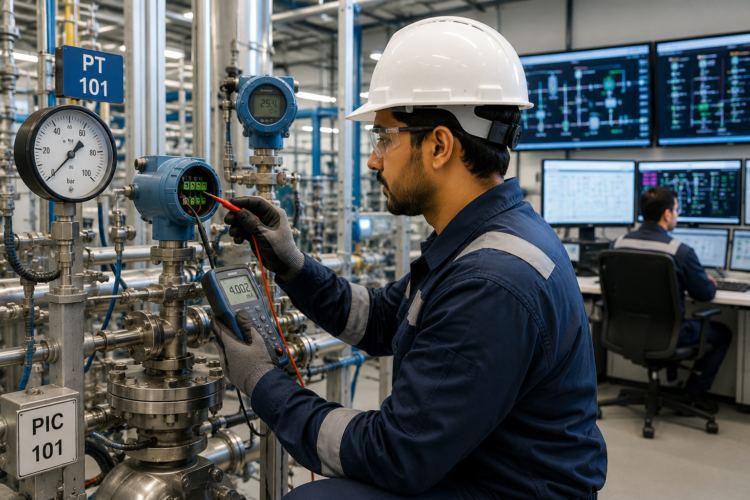
These professionals work with industrial instruments. They install and configure equipment. They also maintain and optimize systems.
Their goal is ensuring accurate measurements. Reliable systems support efficient operations.
Where Instrumentation Engineers Work
Instrumentation Engineers work across industries. Opportunities exist in many environments.
Common workplaces include:
- Industrial plants.
- Manufacturing facilities.
- Power stations.
- Engineering companies.
- Processing industries.
Many roles involve field activities.
Industries that Require Instrumentation Engineers
Many industries depend on instrumentation systems.
Common industries include:
- Oil and Gas.
- Power Plants.
- Manufacturing.
- Pharmaceuticals.
- Chemical Industries.
- Water Treatment Plants.
- Renewable Energy.
These sectors require reliable measurements.
Key Skills Required for an Instrumentation Engineer
Successful engineers need diverse skills. Technical and professional abilities both matter.
Technical Skills
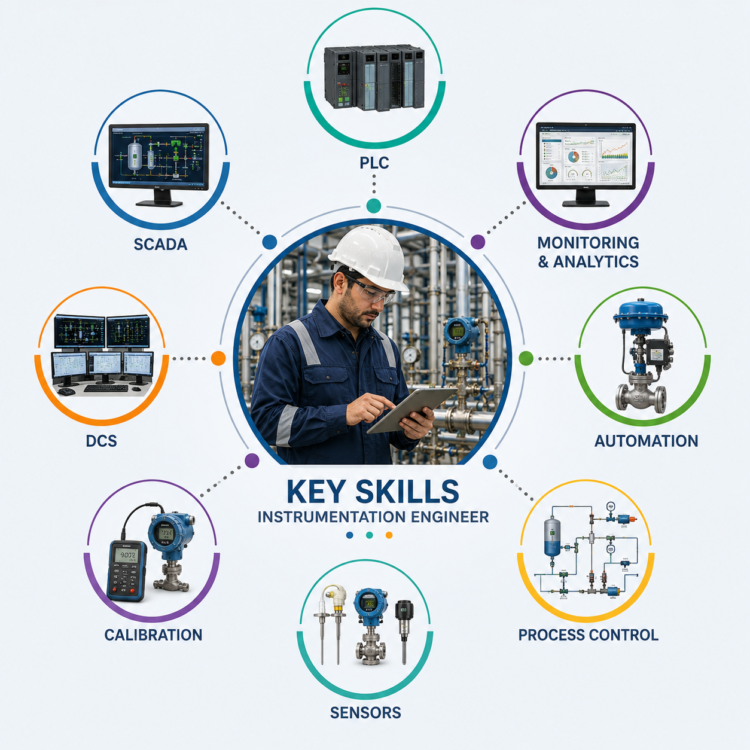
Strong technical knowledge supports success. Several skills remain highly valuable.
Important skills include:
- PLC Programming.
- SCADA Systems.
- DCS Operations.
- Process Control.
- Calibration Techniques.
- Sensor Technologies.
- Industrial Automation.
- Instrument Maintenance.
These skills support daily responsibilities.
Software and Digital Skills
Modern industries use digital tools extensively. Software knowledge improves efficiency significantly.
Useful software skills include:
- AutoCAD.
- EPLAN.
- MATLAB.
- Industrial Communication Protocols.
These tools support engineering activities.
Soft Skills
Technical knowledge alone is insufficient. Professional skills also remain important.
Important soft skills include:
- Problem Solving.
- Analytical Thinking.
- Communication.
- Team Collaboration.
- Time Management.
These abilities improve workplace performance.
Major Responsibilities of an Instrumentation Engineer
Instrumentation Engineers perform many responsibilities. Their work supports reliable operations.
Designing Instrumentation Systems
Every project starts with planning. Proper design improves system reliability.
Responsibilities include:
- Analyzing process requirements.
- Selecting suitable instruments.
- Preparing system layouts.
- Supporting project planning.
Good design improves performance.
Installing and Configuring Instruments
Proper installation ensures accurate operation. Configuration supports reliable measurements.
Responsibilities include:
- Installing sensors.
- Configuring transmitters.
- Connecting instruments.
- Verifying performance.
Accurate setup improves efficiency.
Monitoring Process Performance
Continuous monitoring supports optimization efforts. Engineers review process data regularly.
Responsibilities include:
- Monitoring system performance.
- Reviewing operational trends.
- Identifying abnormalities.
- Supporting improvements.
Monitoring helps prevent issues.
Calibration and Maintenance Activities
Regular maintenance ensures accuracy. Calibration improves measurement reliability.
Responsibilities include:
- Calibrating instruments.
- Performing inspections.
- Replacing faulty components.
- Maintaining records.
Maintenance improves system lifespan.
Troubleshooting Equipment Failures
Technical issues can occur unexpectedly. Quick resolution reduces downtime.
Responsibilities include:
- Diagnosing faults.
- Testing instruments.
- Resolving technical issues.
- Restoring operations.
Strong troubleshooting improves reliability.
Ensuring Safety and Compliance
Safety remains extremely important. Compliance requirements must be followed.
Responsibilities include:
- Following industry standards.
- Supporting audits.
- Maintaining documentation.
- Ensuring compliance.
Safe operations protect facilities.
Supporting Automation Projects
Automation projects often require instrumentation expertise. These systems work closely together.
Responsibilities include:
- Integrating instruments.
- Supporting control systems.
- Assisting automation teams.
- Validating system performance.
Automation improves operational efficiency.
Documentation and Reporting
Documentation supports maintenance activities. Accurate records improve management.
Responsibilities include:
- Preparing technical reports.
- Updating system records.
- Documenting procedures.
- Maintaining engineering drawings.
Proper records support future work.
Master MEP Design with Industry-Leading Training!
Gain in-depth knowledge of Mechanical, Electrical, and Plumbing (MEP) Design with expert-led courses. Learn HVAC, fire safety, sustainable building strategies, and BIM applications to excel in the construction industry.
Know MoreTypes of Instruments Handled by Instrumentation Engineers
Instrumentation Engineers work with many devices. Each instrument serves a specific purpose.
Pressure Instruments
Pressure instruments measure system pressure. They help maintain safe operations.
Temperature Instruments
Temperature devices monitor thermal conditions. Accurate readings support quality control.
Flow Measurement Instruments
Flow instruments measure liquid movement. They also measure gas flow rates.
Level Measurement Instruments
Level instruments monitor tank contents. They prevent overflow and shortages.
Analytical Instruments
Analytical devices measure process composition. They help maintain product quality.
Control Valves and Actuators
Control valves regulate process flow. Actuators support automatic control actions.
| Instrument Type | Purpose | Common Applications |
|---|---|---|
| Pressure Instruments | Measure pressure | Pipelines, Boilers |
| Temperature Instruments | Measure temperature | Furnaces, Reactors |
| Flow Instruments | Measure flow rates | Water, Gas Systems |
| Level Instruments | Measure tank levels | Storage Tanks |
| Analytical Instruments | Analyze composition | Chemical Processes |
| Control Valves | Control process flow | Automation Systems |
Instrumentation Engineer vs Electrical Engineer
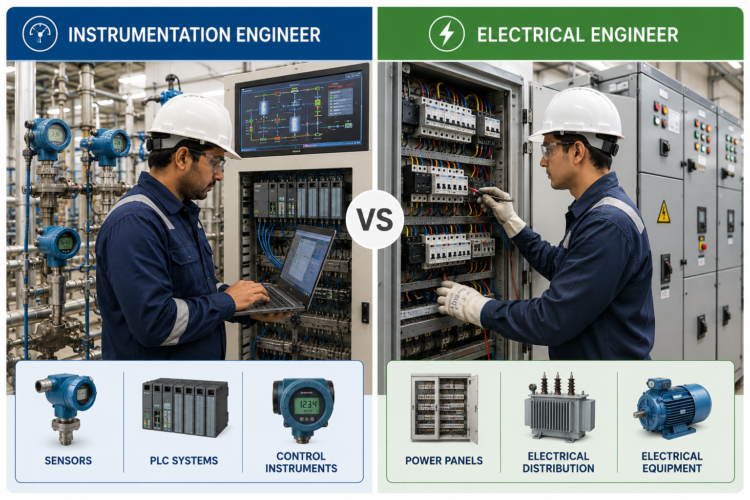
Instrumentation and Electrical Engineering often work together. Both support industrial operations daily. However, their responsibilities remain different.
Instrumentation Engineers focus on measurement and control. They work with sensors and automation systems. Their goal is improving process performance. Accurate measurements support better decisions.
Electrical Engineers focus on electrical systems. They manage power generation and distribution. Their work supports equipment operation. Reliable power keeps systems running.
| Parameter | Instrumentation Engineer | Electrical Engineer |
|---|---|---|
| Primary Focus | Measurement and Control | Electrical Power Systems |
| Systems Handled | Instruments and Automation | Electrical Equipment |
| Key Technologies | PLC, SCADA, DCS | Power Distribution |
| Work Environment | Process Industries | Power and Industrial Sectors |
| Career Opportunities | Automation and Control | Electrical and Energy Systems |
Importance of Instrumentation Engineers in Industrial Operations
Instrumentation Engineers play a vital role. Industries depend on accurate measurements daily. Reliable systems improve operational performance.
Process Efficiency
Efficient operations improve industrial performance. Instrumentation systems provide accurate process data. Engineers use this information regularly.
Benefits include:
- Improved productivity.
- Reduced process variations.
- Better system performance.
- Higher operational efficiency.
Accurate measurements improve process stability. Stable processes reduce unnecessary disruptions. Better control improves production outcomes. Small improvements create major benefits.
Safety Enhancement
Industrial environments involve several risks. Instrumentation systems improve workplace safety. Reliable monitoring supports safer operations.
Benefits include:
- Early fault detection.
- Improved monitoring.
- Better risk management.
- Safer operations.
Safety systems depend on accurate measurements. Reliable instruments detect abnormalities quickly. Early warnings prevent major incidents. Safe operations protect people and equipment.
Quality Control
Product quality remains extremely important. Instrumentation systems support consistent production. Accurate measurements improve product reliability.
Benefits include:
- Better consistency.
- Reduced defects.
- Improved standards.
- Reliable production.
Consistent measurements improve product quality. Better quality improves customer satisfaction. Reliable systems support industry standards.
Cost Reduction
Efficient systems reduce operating costs. Reliable instruments prevent unnecessary losses.
Benefits include:
- Reduced downtime.
- Lower waste.
- Better resource utilization.
- Improved profitability.
Unexpected failures increase expenses. Preventive maintenance reduces these risks. Efficient operations improve business performance. Small savings create significant benefits.
Automation and Digital Transformation
Industries increasingly adopt automation technologies. Instrumentation systems support these initiatives. Modern automation depends on accurate data.
Benefits include:
- Smart monitoring.
- Real-time information.
- Improved decision-making.
- Better operational control.
Digital transformation continues expanding globally. Smart systems require reliable measurements. Instrumentation remains a key foundation.
Career Path and Growth Opportunities
Instrumentation Engineering offers strong career growth. Experience creates new opportunities. Technical expertise supports career progression.
Entry-Level Roles
Most professionals begin with junior positions. These roles build practical experience. Daily exposure improves technical understanding.
Common roles include:
- Instrumentation Engineer Trainee.
- Junior Instrumentation Engineer.
- Instrument Technician.
- Maintenance Engineer.
These positions develop technical confidence. Engineers learn industrial procedures daily. Hands-on experience improves troubleshooting abilities. Practical learning strengthens future growth.
Mid-Level Positions
Experience brings greater responsibilities. Engineers manage larger systems and projects. Technical knowledge becomes increasingly important.
Common positions include:
- Instrumentation Engineer.
- Automation Engineer.
- Control Systems Engineer.
- Project Engineer.
These roles involve system improvements. Engineers often support optimization projects. Leadership responsibilities may gradually increase.
Senior-Level Opportunities
Senior professionals manage complex operations. Strategic responsibilities become more important. Experience plays a major role.
Common positions include:
- Senior Instrumentation Engineer.
- Lead Engineer.
- Engineering Manager.
- Technical Specialist.
These roles require advanced expertise. Teams often depend on senior guidance. Decision-making responsibilities increase significantly.
Specialized Career Tracks
Instrumentation skills support diverse opportunities. Professionals can choose specialized paths.
Common career options include:
- Instrumentation Engineer.
- Automation Engineer.
- Control Systems Engineer.
- Project Engineer.
- Maintenance Manager.
- Instrumentation Consultant.
Specialization improves career flexibility. Advanced expertise increases earning potential. Diverse industries create additional opportunities.
Certifications that can Boost an Instrumentation Engineer’s Career
Certifications improve technical knowledge. They strengthen professional credibility. Employers often value certified professionals.
Automation Certifications
Automation skills remain highly valuable. These certifications improve technical expertise.
Useful certifications include:
- Industrial Automation Certification.
- Process Automation Training.
- Automation Systems Certification.
These programs improve automation knowledge. They also strengthen career opportunities.
PLC and SCADA Certifications
PLC and SCADA skills remain important. Many industries actively seek these abilities.
Popular certifications include:
- Siemens PLC Certification.
- Allen-Bradley PLC Training.
- WinCC SCADA Certification.
- Ignition SCADA Training.
These certifications improve employability significantly. Practical knowledge becomes easier to demonstrate.
Industrial Safety Certifications
Safety remains important across industries. Safety certifications strengthen workplace readiness.
Useful certifications include:
- Industrial Safety Certification.
- Process Safety Training.
- Occupational Safety Programs.
Safety knowledge improves professional value. Many industries prioritize safety expertise.
Industry-Specific Certifications
Specialized industries offer additional programs. These certifications support niche careers.
Examples include:
- Oil and Gas Certifications.
- Pharmaceutical Compliance Programs.
- Power Plant Training Programs.
Specialized knowledge improves career prospects. Industry expertise increases professional demand.
Advantages of Choosing Instrumentation Engineering as a Career
Instrumentation Engineering offers several benefits. Demand continues growing across industries. Career opportunities remain widely available.
Benefits include:
- High industry demand.
- Diverse career opportunities.
- Strong salary potential.
- Global employment prospects.
- Exposure to advanced technologies.
Industries increasingly depend on automation systems. This creates long-term career opportunities. Professionals work with modern technologies. Learning opportunities remain continuous.
Career paths remain highly flexible. Engineers can specialize in many areas. Global opportunities continue expanding. The profession supports long-term growth.
Challenges Faced by Instrumentation Engineers
The profession remains rewarding and challenging. Engineers manage critical industrial systems. Strong technical skills remain essential.
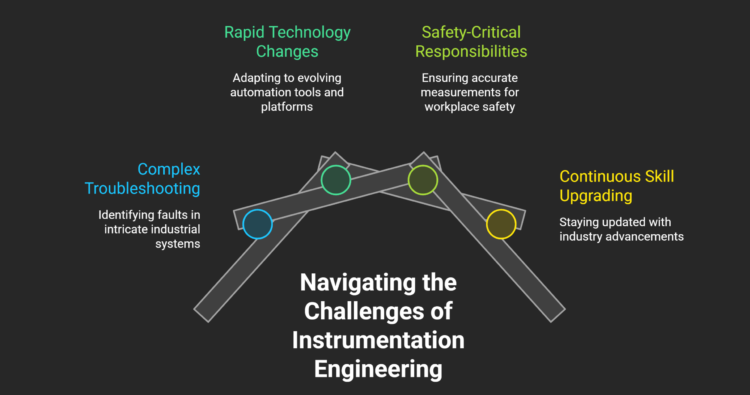
Challenges include:
- Complex troubleshooting.
- Rapid technology changes.
- Safety-critical responsibilities.
- Continuous skill upgrading.
Complex Troubleshooting
Industrial systems contain many components. Fault identification can become difficult. Problems may involve multiple systems. Engineers analyze data carefully. Strong problem-solving remains essential. Experience improves troubleshooting efficiency.
Rapid Technology Changes
Automation technologies evolve continuously. New tools appear regularly. Existing systems also improve frequently. Engineers must keep learning consistently. Updated skills improve career growth. Continuous learning supports long-term success.
Safety-Critical Responsibilities
Many instruments support critical operations. Accurate measurements remain extremely important. Errors can affect industrial performance. Reliable systems improve workplace safety. Engineers must maintain high standards.
Get Career oriented MEP training with Expert Mentors! Get Free Demo Here!
Continuous Skill Upgrading
Technology continues advancing rapidly. New platforms emerge frequently. Industry requirements also change regularly. Engineers must update knowledge consistently. Professional development remains important. Learning supports future opportunities.
Conclusion
Instrumentation Engineering remains essential for modern industries. Accurate measurements support efficient operations. Reliable systems improve safety and productivity.
These professionals help industries monitor processes. They also support control and automation. Their expertise improves operational performance.
As automation adoption continues increasing, demand remains strong. Industries continue investing in advanced technologies. This creates new career opportunities. Instrumentation Engineering offers stability, growth, and continuous learning.
Master MEP Design with Industry-Leading Training!
Gain in-depth knowledge of Mechanical, Electrical, and Plumbing (MEP) Design with expert-led courses. Learn HVAC, fire safety, sustainable building strategies, and BIM applications to excel in the construction industry.
Know MoreFrequently Asked Questions
What qualifications are required to become an Instrumentation Engineer?
Most Instrumentation Engineers hold a degree in Instrumentation Engineering, Electrical Engineering, Electronics Engineering, or a related field. Practical training, internships, and industry certifications can further improve career opportunities and technical skills.
What skills are most important for Instrumentation Engineers?
Strong knowledge of PLCs, SCADA systems, DCS operations, calibration techniques, and process control is highly valuable. Problem-solving, analytical thinking, communication, and teamwork skills are also important for daily responsibilities.
Is Instrumentation Engineering a good career?
Yes, Instrumentation Engineering offers strong career growth and long-term stability. Industries continue investing in automation and process control systems, creating consistent demand for skilled professionals.
What industries hire Instrumentation Engineers?
Instrumentation Engineers work across oil and gas, power generation, manufacturing, pharmaceuticals, chemical processing, water treatment, and renewable energy sectors. Any industry that relies on measurement and control systems can offer career opportunities.
What is the difference between instrumentation and automation?
Instrumentation focuses on measuring and monitoring industrial processes using instruments and sensors. Automation uses this data to control processes automatically through PLCs, SCADA systems, DCS platforms, and other control technologies.
What software tools do Instrumentation Engineers use?
Common tools include AutoCAD, EPLAN, MATLAB, SCADA software, and DCS platforms. Engineers may also work with industrial communication protocols and specialized calibration or configuration software.
What is the average salary of an Instrumentation Engineer?
Freshers typically earn between ₹3 LPA and ₹6 LPA depending on location and skills. Experienced professionals can earn significantly higher salaries, especially in sectors such as oil and gas, power plants, and industrial automation.
Can Instrumentation Engineers work in renewable energy sectors?
Yes, renewable energy industries increasingly require Instrumentation Engineers for monitoring and control systems. Solar plants, wind farms, and energy storage facilities depend on accurate instrumentation for efficient operation.
What instruments do Instrumentation Engineers commonly work with?
They frequently work with pressure transmitters, temperature sensors, flow meters, level instruments, analytical devices, and control valves. These instruments help measure, monitor, and control industrial processes accurately.
Is coding required for Instrumentation Engineering?
Advanced programming is not always required, but basic programming knowledge can be beneficial. Many Instrumentation Engineers work with PLC programming, automation systems, and configuration software during projects and maintenance activities.