Table of Contents
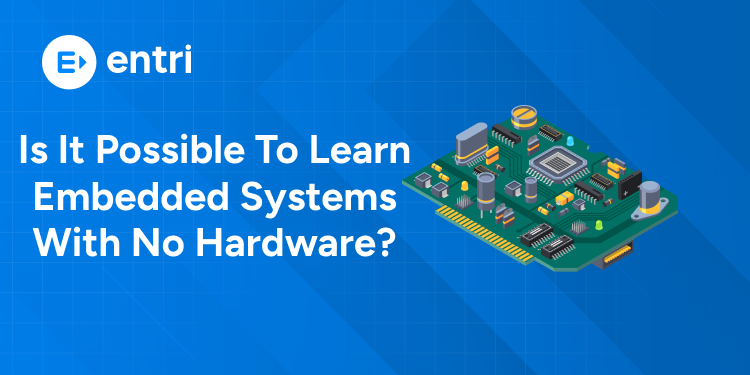
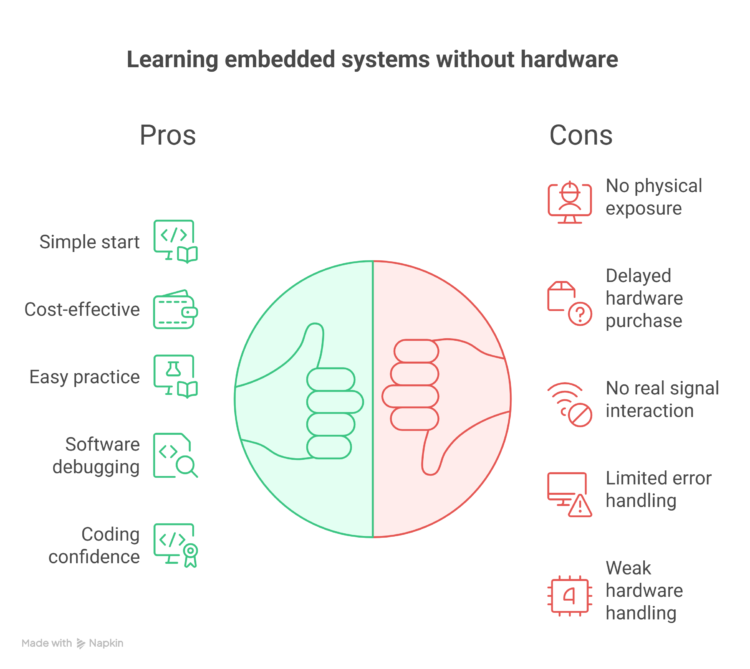
Yes, it is possible to learn embedded systems without hardware. Many core concepts can be learned using software tools and simulators. These include C programming, microcontroller basics, memory handling, and peripheral concepts. RTOS fundamentals can also be understood through virtual environments.
These tools help in building logic and understanding system behavior clearly. They allow practice without needing physical components, making learning easier and more accessible.
However, hardware becomes important at a later stage. Real devices help in understanding actual system behavior and unexpected errors. They are necessary for learning interfacing and debugging skills.
This blog explains what can be learned without hardware and what cannot. It also covers key limitations and when hardware becomes essential for deeper learning.
Kickstart your embedded systems career and turn your tech passion into high-demand skills!
Key Takeaways:
- Embedded basics can be learned fully without hardware.
- Simulators help practice coding and system behavior.
- Real hardware is needed for hands-on debugging and interfacing.
- A hybrid approach gives the best learning outcome.
Introduction


Master Embedded Systems Programming!
Launch your tech career with our Embedded Systems Course, designed for hands-on learning and industry readiness.
Know MoreFrequently Asked Questions
Can embedded systems be learned without hardware?
Yes, many core concepts can be learned using simulators and tools. Programming and system basics can be understood without physical devices.
What should beginners learn first in embedded systems?
Beginners should start with C programming and microcontroller basics. These form the foundation for all embedded system concepts.
Are simulators enough for complete learning?
Simulators are useful for understanding logic and testing code. They cannot fully replace real-world hardware experience.
When should I start using hardware?
Hardware should be used after learning basic concepts clearly. It helps in understanding real system behavior and debugging.
Which tools are best for learning without hardware?
Simulation tools and IDEs are commonly used for this purpose. They allow coding, testing, and debugging in a virtual environment.
Is hardware knowledge necessary for jobs?
Yes, most employers expect some level of hardware experience. Practical projects improve job opportunities significantly.
Can I build projects without hardware?
Basic projects can be created using simulation tools. Real-world projects require physical components for full implementation.
Is embedded systems hard to learn for beginners?
It may seem difficult at first due to technical concepts. With proper tools and guidance, it becomes easier over time.
How long does it take to learn embedded systems basics?
Basic understanding can be achieved in a few months. Regular practice helps in faster learning and improvement.
What is the best way to learn embedded systems?
Start with software-based learning for strong fundamentals. Then move to hardware for practical experience and deeper understanding.