Table of Contents
Came across the term ‘K-shaped economy’ on television, social media or business newspapers? If you have no idea about this concept, then you have reached the right place.
All you have to do is to take a glance at the below 5 points. If you find it worth a read, don’t stop at that point. Continue reading this blog till the end so that you can gain a solid understanding of this concept.
Key Takeaways
- A K-shaped economy refers to a situation where various sections of society recover at different speeds after a crisis.
- Some sectors and income groups grow at a fast pace, while others continue to struggle.
- The gap between the rich and the poor tends to widen during a K-shaped recovery.
- In India, industries like technology and digital services have grown, however small businesses and informal workers have faced challenges.
- By understanding a K-shaped recovery, individuals can make better financial and investment decisions.
Join our Online Course and Learn Stock Marketing the Right Way. Enrol Now!
Introduction
1: What is a stock?
During the time of an economic recovery, it does not always happen at the same pace for everyone. A relatable example is that of a major crisis such as a pandemic or financial slowdown. After such important crises, some people and industries bounce back quickly. However, certain others continue to face difficulties. This uneven recovery is known by the term K-shaped economy.
The term has become quite popular in recent years. It became more relevant after the COVID-19 pandemic, when the world saw huge differences in how various sectors performed. If we take the case of India, the recovery pattern exposed inequalities between urban and rural areas, large corporations and small businesses, and high-income and low-income groups.
In this blog, we will cover everything you want to know about what a K-shaped economy is, how it works, why it happens, and what it means for everyday Indians.
More about K-Shaped Economy
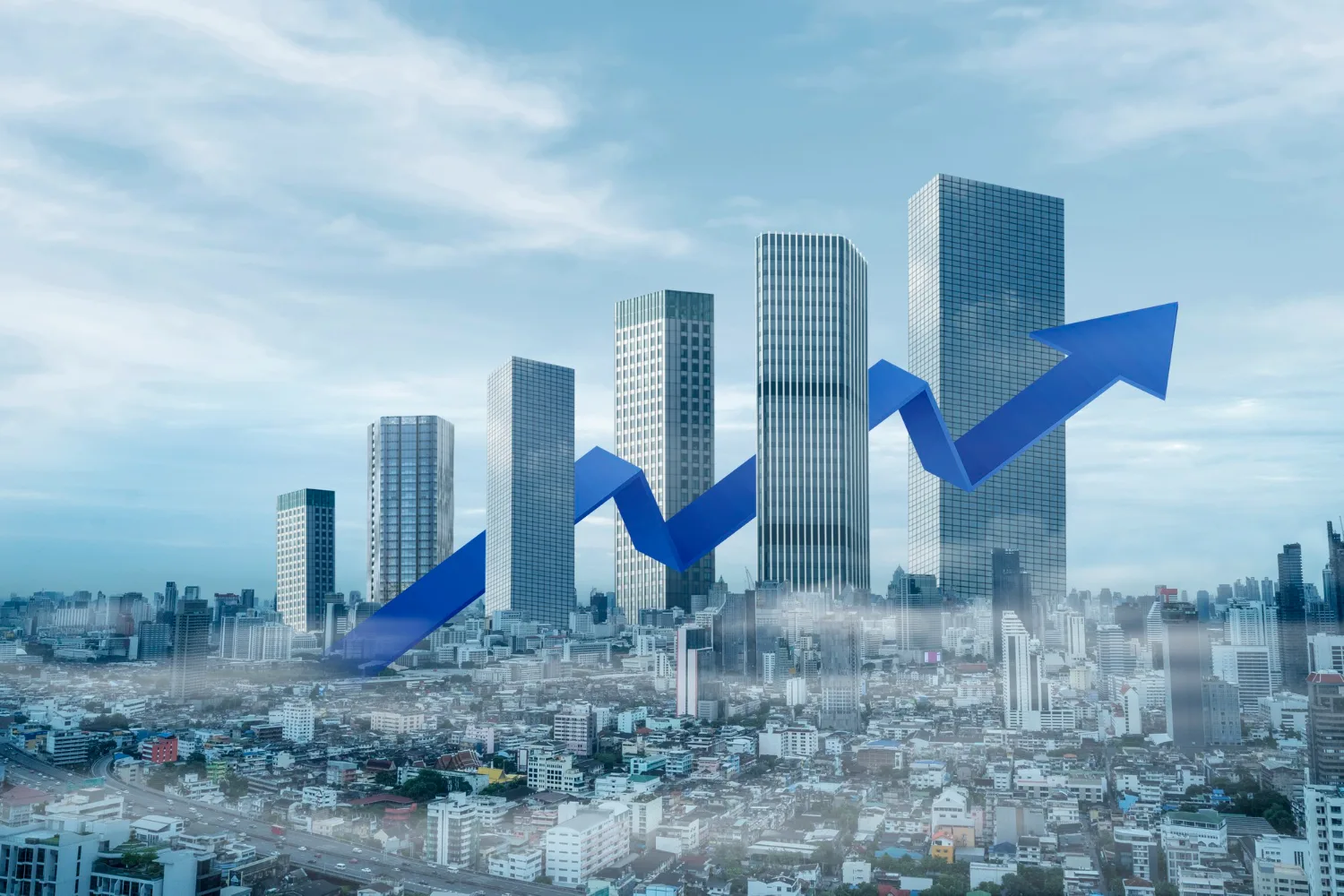
A K-shaped economy refers to a recovery pattern where the economy splits into two paths after a downturn:
- One part of the economy grows upward
- Another part continues to decline or stagnate
When represented graphically, this divergence looks like the letter “K”, hence the name.
The upward sloping line represents sectors or individuals that are doing well. On the other hand, the downward sloping line shows those who are struggling.This pattern is very different from other types of recoveries such as:
- V-shaped recovery: The main features are quick fall and quick rebound
- U-shaped recovery: Characterised by slow recovery after a prolonged downturn
- L-shaped recovery: There will be no major recovery for a long time
A K-shaped recovery exposes inequality within the economy. Due to this reason it is one of the most concerning types of recovery.
Economy’s Response to K-Shaped Recovery
In a K-shaped recovery, though the situation remains the same, different parts of the economy respond in a different manner.
1. The Winners (Upward Arm of K)
These include sectors and individuals who benefit or adapt quickly:
- IT and digital services
- E-commerce companies
- Pharmaceutical and healthcare industries
- Professionals with high income who can work from home
- Stock market investors
These segments often experience an increase in income, job stability, and growth opportunities.
2. The Losers (Downward Arm of K)
These include sectors that go through prolonged challenges:
- Small businesses
- Daily wage workers
- Tourism and hospitality industries
- Informal sector workers
- Low-income households
These groups may come across job losses, reduction of income, and financial instability.
This divergence creates a widening gap between different sections of society. It is to be noted that this is the core feature of a K-shaped recovery.
A Real-Life Example of K-Shaped Recovery From India
There’s a clear, relatable example of K-shaped recovery in India that happened after the COVID-19 pandemic.
Growth in Certain Sectors
- IT companies saw strong demand due to digital transformation
- Online platforms and start-ups had rapid growth
- Stock markets hit new highs
- Large corporations improved profitability
Struggles in Other Areas
- Small and medium enterprises (SMEs) had to shutdown
- Migrant workers had job losses and returned to villages
- Informal sector employment declined
- Rural incomes were under pressure in some regions
This uneven recovery highlighted how economic shocks affect different groups differently.
Stock Market Training Reviewed & Monitored by SEBI Registered Investment Advisor
Trusted, concepts to help you grow with confidence. Enroll now and learn to start investing the right way.
Know more5 Reasons of a K-Shaped Economy
Some of the different factors that contribute to the formation of a K-shaped economy are:
1. Digital Divide
People who have access to technology can continue working and earning. However, others cannot.
2. Nature of Jobs
For white-collar jobs, remote work is allowed whereas blue-collar jobs often demand physical presence.
3. Access to Capital
When compared to small businesses, large companies have better access to loans and funding.
4. Government Policies
There are times when stimulus measures benefit certain sectors more than others.
5. Global Demand
Industries that are export-oriented may recover faster due to global demand. However, domestic sectors lag.
How K-Shaped Recovery Impacts Economy and Society
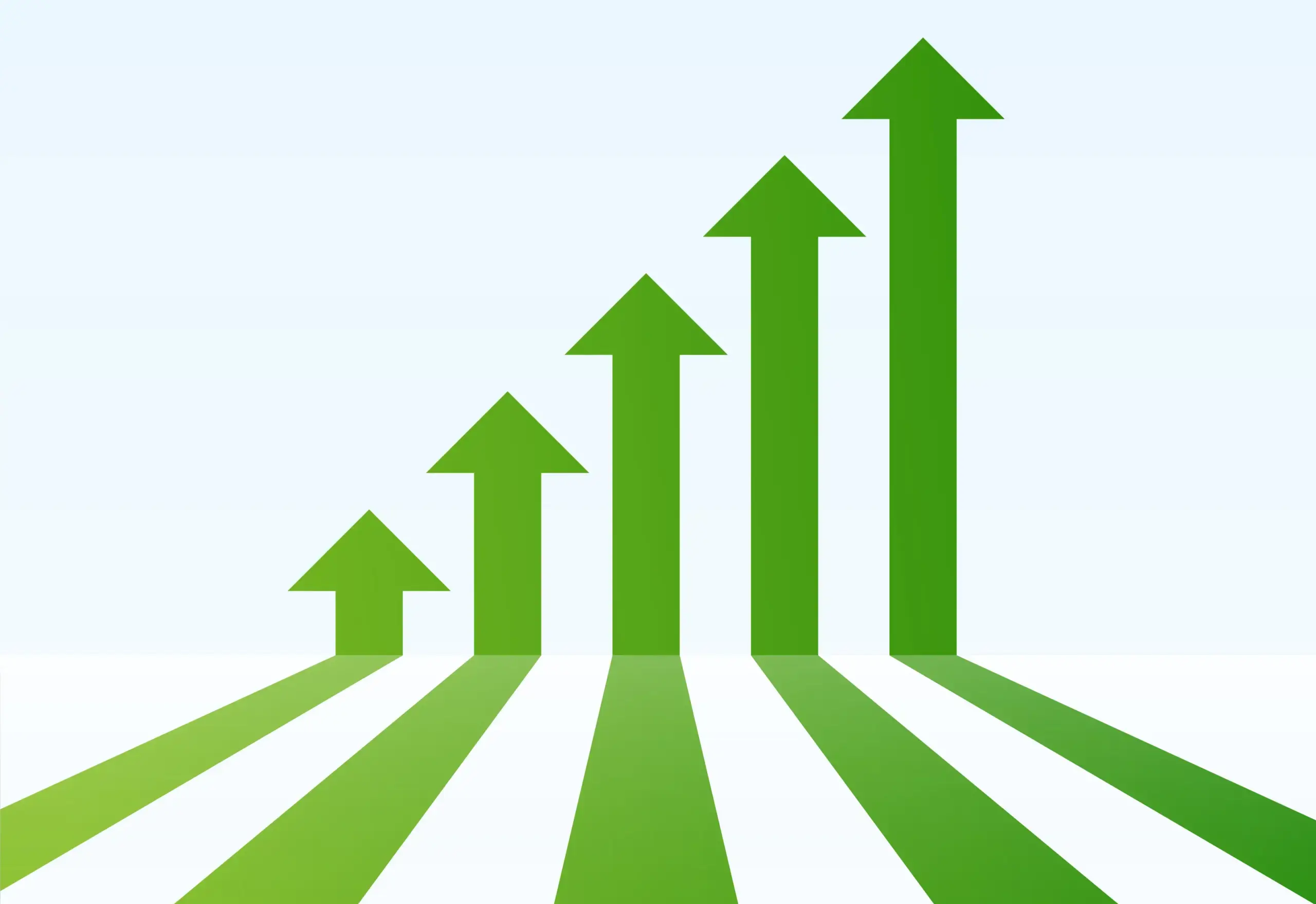
A K-shaped recovery has wide-ranging effects on the economy and society.
1. Income Inequality
The gap between the rich and poor widens significantly. High-income groups accumulate more wealth, while low-income groups struggle.
2. Consumption Patterns
Wealthy individuals spend more on luxury goods, while lower-income groups cut back on essential spending.
3. Employment Issues
Job recovery is uneven as some sectors hire aggressively and others continue layoffs.
4. Social Challenges
Rising inequality can end up in social unrest and dissatisfaction.
5. Economic Imbalance
Long-term growth may be affected if a large section of the population remains financially weak.
How K-Shaped Recovery is Different
It is important to understand how a K-shaped recovery differs from other patterns.
| Recovery Type | Description | Impact |
| V-shaped | Sharp fall and quick recovery | Balanced recovery |
| U-shaped | Slow recovery after stagnation | Moderate impact |
| L-shaped | Long-term stagnation | Severe impact |
| K-shaped recovery | Uneven recovery | High inequality |
Among these, a K-shaped recovery is unique because it highlights inequality rather than just economic growth.
How to Invest In a K-Shaped Economy – 2026
Morgan Stanley’s Global Investment Committee suggests some measures that investors in the U.S. can consider for 2026.
- Remain fully invested and complement it with maximum active management and portfolio diversification.
- One can consider taking profits in volatile, speculative investments in companies that are unprofitable. The same approach can be followed with small and micro-cap stocks and the proceeds can be invested in large-cap quality stocks.
- When it comes to fixed income, investors can consider increasing exposure to 5-to-10-year bonds for interest income.
- Last but not least, international equities and real assets can be considered. This includes gold, real estate, and select private infrastructure.
K-Shaped Economy And Its Importance for Indians
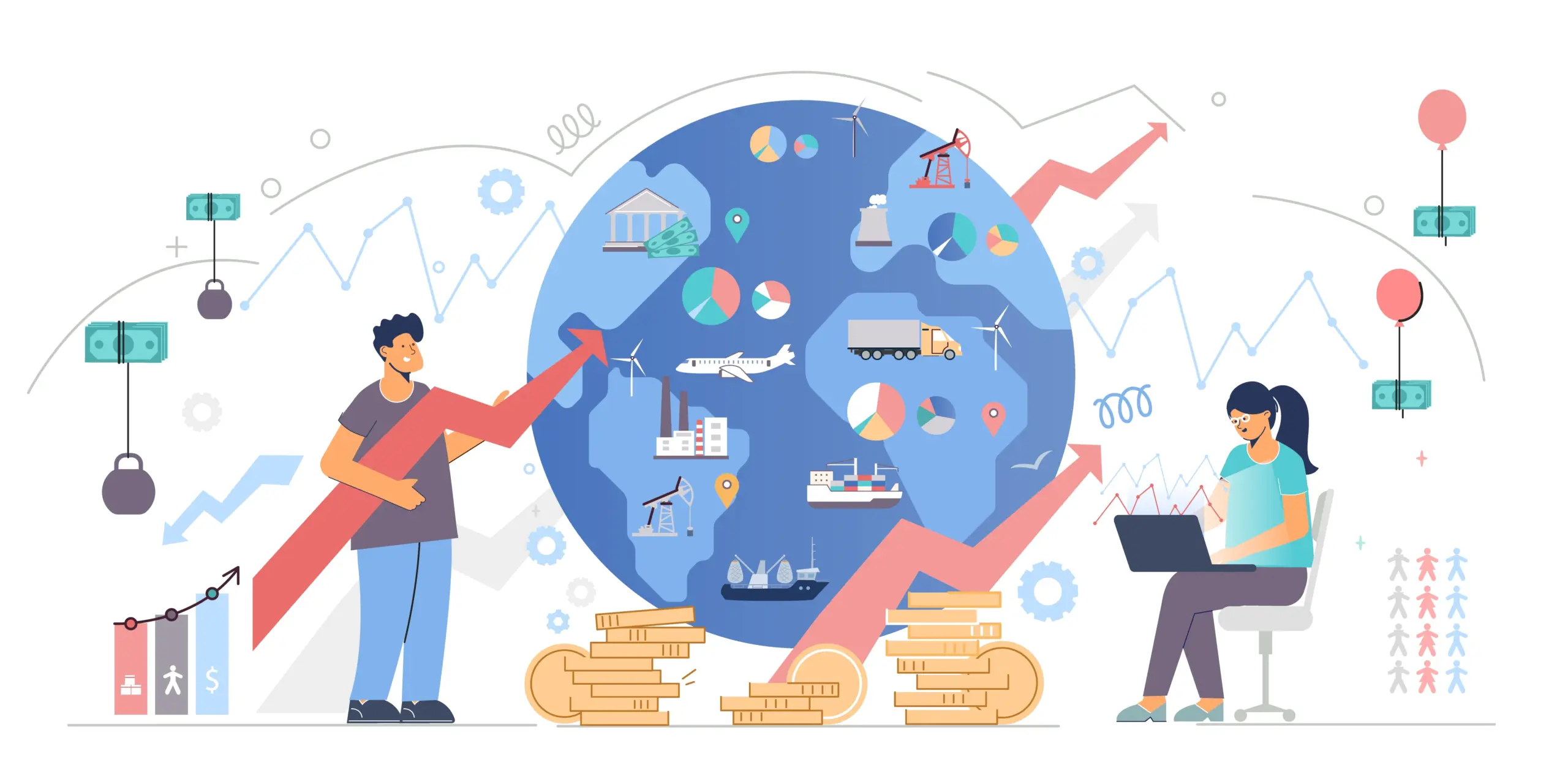
For the average Indian, understanding a K-shaped economy is important for financial planning and career decisions.
1. Job Security
Choosing industries that are growing can provide better stability.
2. Investment Decisions
Investing in sectors that are on the upward path can generate better returns.
3. Skill Development
Learning digital and future-ready skills can help individuals move to the “growing” side of the economy.
4. Financial Planning
Saving and budgeting become more important during uncertain times.
Government’s Role in Addressing a K-Shaped Economy
Governments play a key role in reducing the negative effects of a K-shaped recovery.
1. Supporting Small Businesses
Providing loans, subsidies, and tax relief to MSMEs.
2. Programs For Job Creation
Launching employment schemes to support vulnerable groups.
3. Initiatives For Skill Development
Training workers for new-age industries.
4. Schemes For Social Welfare
Offering direct benefits to low-income households.
5. Infrastructure Development
Boosting sectors that create large-scale employment.
These measures can help balance the two sides of the “K”.
Why is India’s K-shaped Recovery Fading?
For several years, we have seen India’s recovery being that of a tidy “K-shaped” story. It was a scenario where urban consumers were racing ahead while rural India lagged due to inflation and poor incomes. However, it’s an entirely different story today.
The growth is broadening, the gap between rural and urban India is narrowing and in core sectors, rural India is pulling ahead. This is mainly fuelled by GST rate cuts and election-linked warfare spending. In the FMCG sector, this trend is as clear as daylight.
For almost 7 straight quarters till late 2025, rural volumes outperformed that of urban. The growth in cities was just 4%-5% whereas in rural areas, it was 7%-8%. To add on, rural India contributed to more than half of “affordable premium” sales.
Mainly due to saturation and GST adjustments, city consumers have been focusing on big-ticket discretionary spends. On the other hand, mass consumption is anchored in villages. This is clear evidence that the K-shaped trend is fading and if it continues, India’s next growth engine may come from its rural areas and not metros.
5 Steps For Protection From a K-Shaped Recovery
As macroeconomic conditions are beyond individual control, people can take the below 5 steps to protect themselves.
1. Upgrade Your Skills
Focus on digital, financial, and technical skills.
2. Diversify Your Income
Have multiple income sources such as freelancing or side businesses.
3. Invest Prudently
Focus on long-term investments in growing sectors.
4. Build Emergency Funds
Set aside at least 6 months of expenses as savings.
5. Be Informed
Keep yourself updated on economic trends and industry developments.
Is it Temporary or Permanent?
A K-shaped recovery is usually temporary. However, its effects can last long if not addressed properly.
If inequality continues to grow, it can:
- Slow down overall economic growth
- Reduce consumer demand
- Create long-term social and economic issues
However, with proper policies and inclusive growth strategies, economies can move toward a more balanced recovery.
Join our Online Course and Learn Stock Marketing the Right Way. Enrol Now!
Conclusion
A K-shaped economy is a powerful concept and it shows how uneven economic recovery can be. Even though some sectors and individuals thrive, others continue to struggle. This creates a widening gap in income and opportunities.
The K-shaped recovery in India after recent economic disruptions has shown the importance of inclusive growth. It reminds us that economic progress is meaningful only when it benefits all sections of society.
For individuals, understanding this concept is not just about economics, but also about making smarter career, financial, and investment decisions. When it comes to policymakers, it is a reminder to focus on balanced and inclusive development.
A truly strong economy is one where growth is shared, opportunities are equal, and no one is left behind.
|
RELATED POSTS |
|
| How To Invest During Market Uncertainty 2026 | |
|
Big changes in UPI and Card payment from April 1 – Things You Need to Know |
|
| How to Check and Recover Your Unclaimed Money | |
Stock Market Training Reviewed & Monitored by SEBI Registered Investment Advisor
Trusted, concepts to help you grow with confidence. Enroll now and learn to start investing the right way.
Know moreFrequently Asked Questions
What is a K-shaped economy?
It is a recovery where some sectors grow while others decline.
What does K-shaped recovery mean?
It refers to unequal economic recovery across different groups.
Is India going through a K-shaped recovery?
Yes, some sectors have grown while others are still struggling.
Who benefits in a K-shaped recovery?
It is high-income groups and digital sectors that benefit the most.
Who suffers in a K-shaped recovery?
It is the low-income workers and small businesses who are most affected.
Can a K-shaped recovery be fixed?
Yes, with government support and inclusive policies.
Why is K-shaped recovery important?
It highlights inequality and helps in better decision-making.