
Table of Contents
From April 1st onwards, you have to perform an extra step while making a digital payment. Are you confused? Please note that going forward you won’t be able to complete a transaction just by using one-time passwords.
To know all that and more in a glance, just take a look at the RBI’s new digital payment rules summarised in 6 points. If you are curious to understand the new changes in-depth, don’t miss to read this blog till the end.
Key Takeaways
- Mandatory Two-Factor Authentication (2FA): Starting April 1, all digital payments, including UPI and cards, must use at least two factors of authentication.
- Dynamic Security: At least one of the security factors must be “dynamic” (like an OTP or biometric) rather than just a static PIN.
- Risk-Based Checks: Banks will now use “Risk-Based Authentication,” meaning unusual or high-value transactions might require extra verification.
- Enhanced UPI Limits: Specific categories like hospitals, educational institutions, and tax payments now enjoy a higher transaction limit of ₹5 lakh.
- Merchant Fees: While UPI remains free for you, merchants may pay an interchange fee for transactions over ₹2,000 made via wallets (PPIs).
- Increased Liability for Banks: If a transaction happens without following these new security rules, the bank or payment provider will be held liable for the loss.
Ace your personal finance journey with Entri’s Personal Finance Online Course. Join Now!
Introduction
1: What is a stock?
Digital payments have become the heartbeat of the Indian economy. Whether you are buying a cup of tea at a local stall or paying your college fees, UPI and credit cards are likely your go-to tools.
However, with the rise in convenience comes a rise in digital fraud. To tackle this, the Reserve Bank of India (RBI) has introduced a comprehensive set of updates effective from April 1. These RBI Digital Payment Rules April 1 are designed to make your money safer and the systems more robust.
In this blog, we will break down every major change, from how you log in to your app to how much money you can send in a single day.
1. The New Gold Standard: Two-Factor Authentication (2FA)
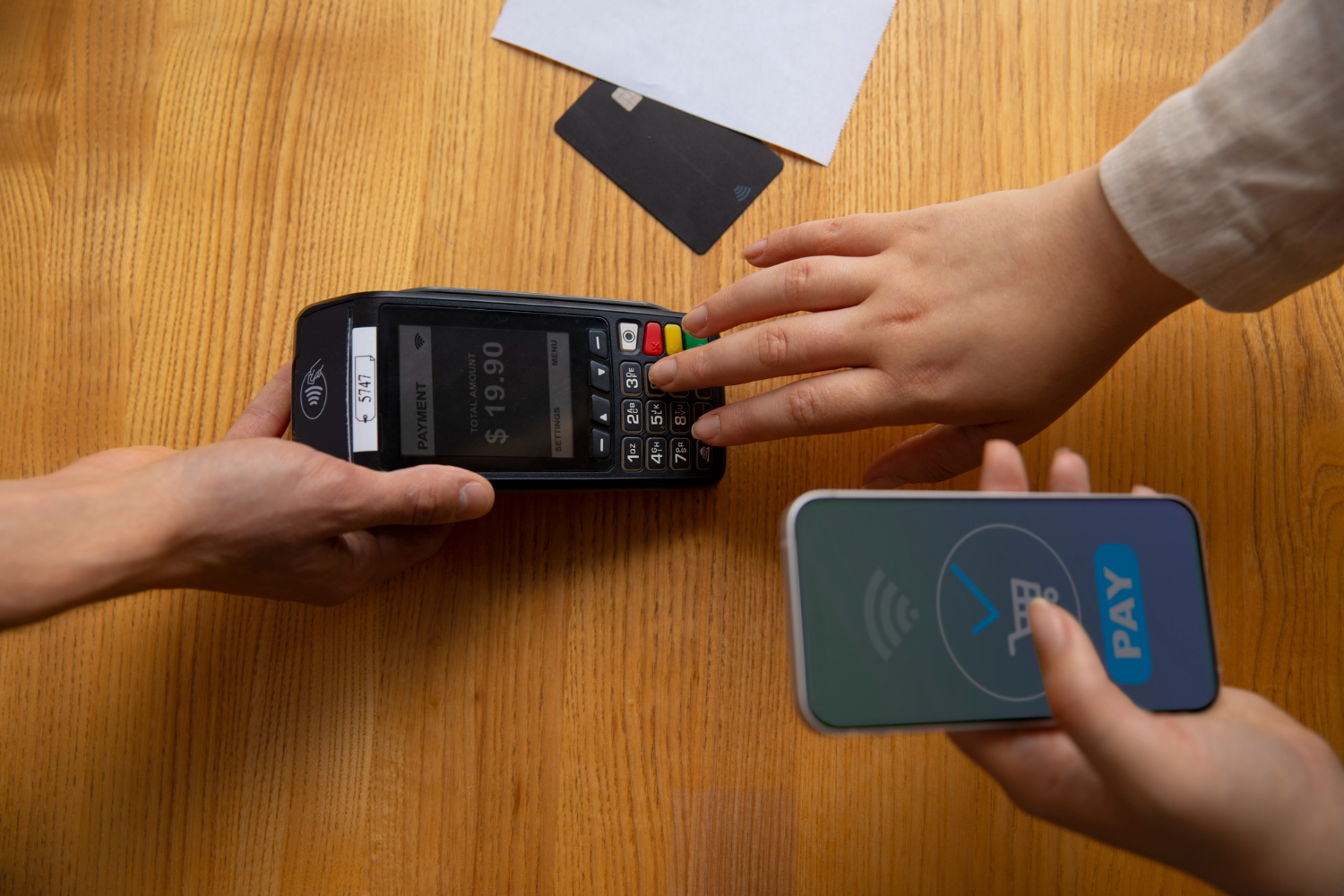
The most significant shift under the RBI Digital Payment Rules April 1 is the formalization of “Two-Factor Authentication” for every single digital transaction. While many apps already use this, the new rules make it a mandatory legal requirement across all platforms—UPI, debit cards, credit cards, and digital wallets.
What are the “Factors”?
To prove it is really you making the payment, the system will look for two out of these three things:
- Something you know: A password, a static PIN, or a passphrase.
- Something you have: Your physical smartphone, a hardware token, or a SIM card (device binding).
- Something you are: Your fingerprint, face ID, or other biometric markers.
The Requirement for “Dynamic” Factors
A major loophole in the past was the use of static credentials. For example, if someone knew your UPI PIN, they could potentially access your money. From April 1, the RBI mandates that at least one factor must be dynamic. This means it must change for every transaction. Examples include an OTP sent to your phone or a biometric scan that cannot be easily replicated.
2. Risk-Based Authentication: Smarter Security
Have you ever wondered why a ₹100 payment goes through instantly while a ₹50,000 payment sometimes feels more “difficult”? That is because of Risk-Based Authentication.
Under the new guidelines, banks and payment providers are encouraged to look at the context of a transaction. If you are sitting in your home city using your usual phone to pay a regular utility bill, the system might let you through with basic 2FA. However, if the system detects:
- A transaction from a new city or country.
- A login from a different device.
- An unusually high payment amount.
- A payment to a “flagged” or suspicious merchant.
In these cases, the bank may ask for an additional layer of security, such as a biometric scan or a secondary approval, even if you have already entered your PIN. This “intelligent” security is a core part of the RBI Digital Payment Rules April 1.
3. Big Boost for UPI Transaction Limits
While security is tightening, the RBI and NPCI are also making UPI more powerful for high-value needs. While the standard daily limit for Peer-to-Peer (P2P) transactions generally remains at ₹1 lakh, certain essential categories have seen a massive jump.
| Category | New Transaction Limit |
| Standard P2P (Friend to Friend) | ₹1 Lakh |
| Hospitals & Healthcare | ₹5 Lakh |
| Educational Institutions (Schools/Colleges) | ₹5 Lakh |
| IPO Subscriptions | ₹5 Lakh |
| RBI Retail Direct (Govt Bonds) | ₹5 Lakh |
| Online Tax Payments | ₹5 Lakh |
This change is a huge relief for families who previously had to rely on NEFT or RTGS (which can be slower) to pay large hospital bills or semester fees.
Trusted, concepts to help you grow with confidence. Enroll now and learn to start investing the right way.
There has been a lot of confusion regarding “UPI Charges.” Let’s clear the air: UPI is still free for the common man. The new rules involve an “Interchange Fee” that applies only to Merchants and only under specific conditions: If you are paying a shopkeeper directly from your bank account via UPI, there is zero charge for you and zero charge for the shopkeeper. The interchange fee (ranging from 0.5% to 1.1%) is paid by the merchant to the wallet provider to cover the costs of the digital infrastructure. The RBI Digital Payment Rules April 1 also bring some much-needed discipline to the credit card industry. Banks can no longer be “lax” with your data or your consent. Explore calculators for SIP, EMI, FD, and more – all in one place Free • Easy • Instant Results One of the most user-friendly aspects of the RBI Digital Payment Rules April 1 is the shift in liability. In the past, if a fraud occurred, the customer often had to struggle to prove it wasn’t their fault. Now, if a bank or a payment app fails to implement the mandatory 2FA or the dynamic security checks required by the RBI, and a fraudulent transaction occurs, the bank is held liable. This puts the burden of security on the institutions that hold your money, ensuring they use the best technology available to protect you. To sum it up, it will become mandatory for banks and payment platforms to follow security rules. In case the fraud occurs because of system failure, banks may have to compensate users. Also note that users may get speedy resolution in such cases. To make the system more stable, the NPCI (National Payments Corporation of India) has also introduced some “under the hood” changes that you might notice in your daily usage: According to the Reserve Bank Of India, similar authentication rules will be extended to cross-border transactions also and this includes international card payments. However, full implementation is expected to take place by October 2026. These changes will ensure the same level of safety for global transactions, in line with domestic security standards. Ace your personal finance journey with Entri’s Personal Finance Online Course. Join Now! The evolution of India’s digital payment landscape is moving toward a “Safety First” approach. The RBI Digital Payment Rules April 1 might feel like they add a few extra steps—like a biometric scan or a clearer confirmation screen—but these are essential shields against the growing threat of cybercrime. By being well-aware of all these changes, you can continue to enjoy the convenience of UPI and cards. Also it ensures peace of mind as your hard-earned money is protected by some of the most advanced regulations in the world. As we move into this new financial year, remember to keep your apps updated and never share your dynamic security factors (like OTPs) with anyone! Trusted, concepts to help you grow with confidence. Enroll now and learn to start investing the right way.
No. UPI transactions from your bank account remain free for all individual users. Charges only apply to merchants for specific wallet-based transactions over ₹2,000. Two-Factor Authentication means using two different “keys” to unlock your payment—like your phone (device) and your PIN, or your PIN and your fingerprint. Yes, OTP remains a valid “dynamic” factor. However, banks may gradually offer biometric options (fingerprint/Face ID) as a faster, more secure alternative. The RBI increased the limit to ₹5 lakh for healthcare and education to help citizens make large, urgent payments easily without needing traditional banking methods. Under the new rules, this is a violation. You can complain to the bank, and if they don’t resolve it, escalate it to the RBI Ombudsman. Yes. For new registrations or device changes, there is a “cooling period” where you can only send a limited amount (usually ₹5,000) to prevent fraud. While domestic rules start April 1, the RBI has set a separate deadline of October 1 for similar high-security standards for international card transactions.Stock Market Training Reviewed & Monitored by SEBI Registered Investment Advisor
4. UPI Interchange Fees: Do You Have to Pay?
5. New Rules for Credit and Debit Cards
Tightening the Reins on Card Issuers:
💰 Financial Tools
6. What Happens if You Face a Fraud?
7. Operational Changes in UPI Apps
International Payments – An Update
Conclusion
Stock Market Training Reviewed & Monitored by SEBI Registered Investment Advisor
Frequently Asked Questions
Is UPI going to be charged from April 1?
What is 2FA in simple terms?
Can I still use OTP for my payments?
Why is my UPI limit higher for hospital bills?
What should I do if my bank increases my credit limit without asking?
Is the 24-hour limit for new users still there?
Are these rules applicable to international transactions?