Table of Contents
🎯 The Answer
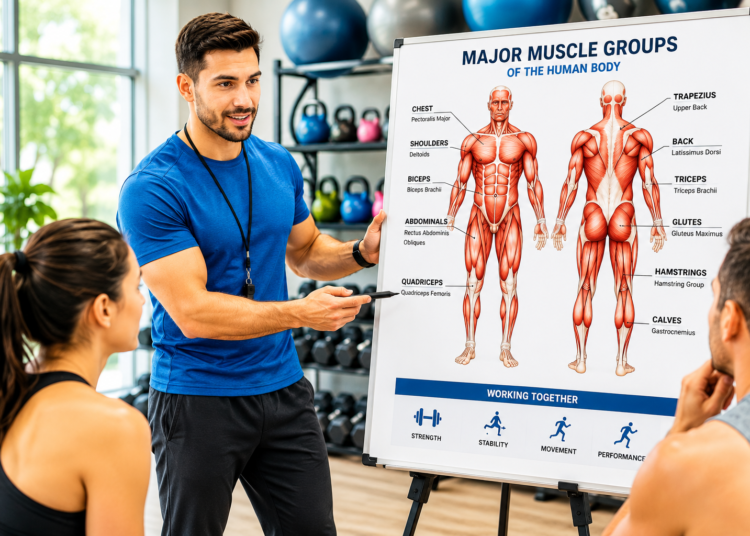
Understanding major muscle groups is important. It helps trainers create better workout plans. It improves exercise choices. Understanding also improves movement quality. Muscle knowledge supports strength and endurance. It also supports mobility. It can help prevent injuries.
Fitness trainers should understand how muscles work. They should know which muscles work together. This knowledge improves client results. It also makes workouts safer. Workouts become more effective. Trainers can guide clients better.
Key Takeaways:
- Muscle groups control movement.
- Trainers need anatomy knowledge.
- Upper body muscles support pushing and pulling.
- Core muscles improve stability.
- Lower body muscles generate power.
- Muscle groups work together constantly.
- Balanced training prevents weaknesses.
- Recovery supports muscle development.
- Proper exercise selection improves results.
- Understanding muscles improves coaching.
Become a General Fitness Trainer and turn your passion into a Profession!
📝 Introduction
The human body contains many muscles. Each muscle performs specific functions. Some muscles create movement. Others provide stability and support. Every daily activity uses muscles.
Fitness trainers should understand muscle groups. This knowledge improves exercise programming. It also helps prevent injuries. Understanding muscle groups creates better training plans. It also helps clients achieve goals safely.
Turn Your Passion for Fitness into a Profession
Learn practical skills, get certified, and step into the growing fitness industry with confidence.
Join the Course🏋️ Why Fitness Trainers Should Understand Muscle Groups
They guide people toward fitness goals. Understanding muscle groups makes it easier. It allows trainers to create effective programs. It also improves exercise instruction.
Why This Knowledge Matters
- Improves workout planning.
- Supports balanced development.
- Prevents muscle imbalances.
- Improves exercise selection.
- Enhances movement quality.
- Reduces injury risks.
- Supports long-term progress.
Benefits for Trainers
Better Program Design
Strong programs require anatomy knowledge.
Benefits include:
- Better exercise choices.
- Improved workout structure.
- Clear progression plans.
- Balanced training schedules.
- More effective results.
Better Client Results
Clients benefit from proper guidance.
Advantages include:
- Improved strength gains.
- Better muscle development.
- Enhanced movement quality.
- Reduced injury risks.
- Greater confidence.
Better Exercise Instruction
Trainers teach movement patterns daily.
Knowledge helps them:
- Explain exercise purpose.
- Demonstrate proper technique.
- Correct mistakes quickly.
- Improve exercise safety.
- Build client trust.
Understanding Movement Patterns
Muscles rarely work alone. Most exercises involve several muscles.
Common movement patterns include:
Pushing Movements
Examples include:
- Push-ups.
- Bench presses.
- Shoulder presses.
Primary muscles involved:
- Chest.
- Shoulders.
- Triceps.
Pulling Movements
Examples include:
- Pull-ups.
- Rows.
- Lat pulldowns.
Primary muscles involved:
- Back.
- Biceps.
- Forearms.
Squatting Movements
Examples include:
- Bodyweight squats.
- Goblet squats.
- Barbell squats.
Primary muscles involved:
- Quadriceps.
- Glutes.
- Hamstrings.
Common Training Mistakes
Poor anatomy knowledge creates problems.
Common mistakes include:
- Overtraining one muscle group.
- Ignoring weak muscles.
- Poor exercise selection.
- Inadequate recovery.
- Unbalanced workouts.
💡 Pro Tip
Learn muscle functions before advanced coaching. Strong foundations improve training quality.
Become a General Fitness Trainer and turn your passion into a Profession!
💪 Upper Body Muscle Groups
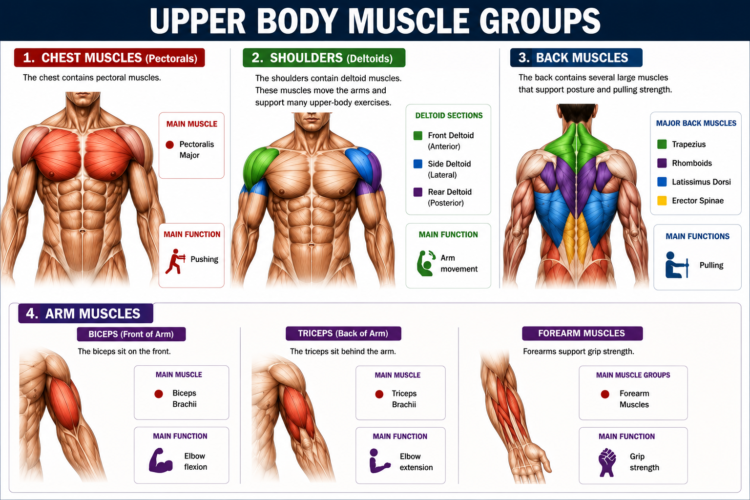
The upper body contains several major muscles. These muscles support lifting, carrying, pushing, and pulling. They also assist daily activities.
Chest Muscles
The chest contains pectoral muscles.
Main Functions
- Pushing movements.
- Arm movement.
- Shoulder support.
- Upper-body strength.
Common Exercises
- Push-ups.
- Bench press.
- Incline press.
- Chest flyes.
- Cable crossovers.
Why Strong Chest Muscles Matter
Benefits include:
- Better pushing strength.
- Improved posture.
- Enhanced athletic performance.
- Greater upper-body stability.
Shoulder Muscles
The shoulders contain deltoid muscles.
These muscles move the arms. They support many upper-body exercises.
Main Functions
- Arm lifting.
- Arm rotation.
- Shoulder stability.
- Movement control.
Deltoid Sections
The deltoid contains:
- Front deltoid.
- Side deltoid.
- Rear deltoid.
Each section performs different functions.
Common Exercises
- Shoulder presses.
- Lateral raises.
- Front raises.
- Reverse flyes.
- Upright rows.
Back Muscles
The back contains several large muscles. These muscles support posture and pulling strength.
Major Back Muscles
- Latissimus dorsi.
- Trapezius.
- Rhomboids.
- Erector spinae.
Functions of Back Muscles
Back muscles help:
- Pull objects.
- Stabilize the spine.
- Improve posture.
- Support shoulder movement.
- Maintain balance.
Common Back Exercises
- Pull-ups.
- Chin-ups.
- Seated rows.
- Bent-over rows.
- Lat pulldowns.
- Deadlifts.
Importance of Back Training
Strong back muscles provide many benefits.
Benefits include:
- Better posture.
- Reduced back discomfort.
- Improved athletic performance.
- Better lifting ability.
- Enhanced stability.
Arm Muscles
Arm muscles assist many movements. They support both pushing and pulling exercises.
Biceps
The biceps sit on the front.
Functions
- Bend the elbow.
- Assist pulling movements.
- Support lifting actions.
Exercises
- Bicep curls.
- Chin-ups.
- Hammer curls.
- Cable curls.
Triceps
The triceps sit behind the arm.
Functions
- Straighten the elbow.
- Support pushing exercises.
- Improve arm strength.
Exercises
- Tricep pushdowns.
- Dips.
- Close-grip bench press.
- Overhead extensions.
Forearm Muscles
Forearms support grip strength.
Functions
- Wrist movement.
- Hand control.
- Grip support.
- Object handling.
Exercises
- Farmer’s carries.
- Wrist curls.
- Dead hangs.
- Reverse curls.
Why Strong Arms Matter
Benefits include:
- Better lifting performance.
- Improved sports performance.
- Stronger grip strength.
- Better daily function.
📊 Major Upper Body Muscle Groups
| Muscle Group | Main Function |
|---|---|
| Chest | Pushing |
| Shoulders | Arm movement |
| Back | Pulling |
| Biceps | Elbow flexion |
| Triceps | Elbow extension |
| Forearms | Grip strength |
🧠 Core Muscle Groups
The core forms the body’s center. These muscles stabilize the spine. They also improve movement efficiency.
Many people think the core means abs. The core actually includes several muscles.
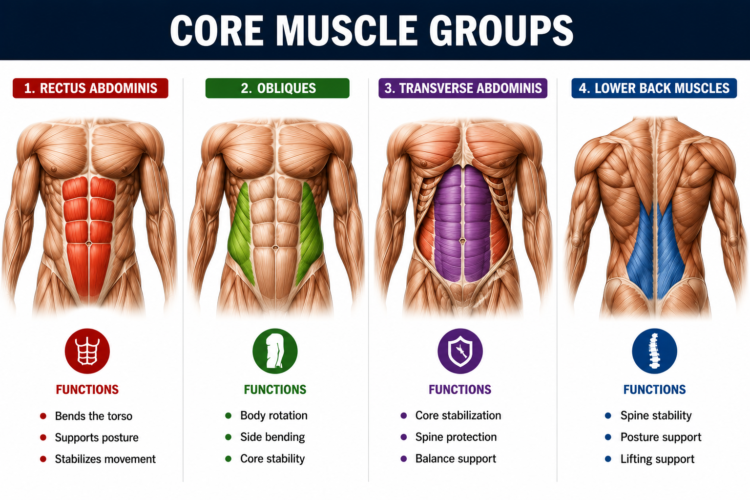
Major Core Muscles
- Rectus abdominis.
- Obliques.
- Transverse abdominis.
- Erector spinae.
Rectus Abdominis
This muscle forms the visible abs.
Functions
- Bends the torso.
- Supports posture.
- Stabilizes movement.
Exercises
- Crunches.
- Sit-ups.
- Leg raises.
- Reverse crunches.
Obliques
Obliques sit along the sides.
Functions
- Body rotation.
- Side bending.
- Core stability.
Exercises
- Russian twists.
- Side planks.
- Wood chops.
- Bicycle crunches.
Transverse Abdominis
This muscle lies deeper.
Functions
- Core stabilization.
- Spine protection.
- Balance support.
Exercises
- Planks.
- Dead bugs.
- Bird dogs.
- Hollow holds.
Lower Back Muscles
These muscles support posture.
Functions
- Spine stability.
- Posture support.
- Lifting support.
Exercises
- Back extensions.
- Supermans.
- Deadlifts.
Benefits of a Strong Core
A strong core provides many benefits.
Physical Benefits
- Better balance.
- Better posture.
- Improved coordination.
- Reduced injury risk.
- Greater stability.
Training Benefits
- Better lifting technique.
- Improved exercise performance.
- Stronger movement patterns.
- Better athletic ability.
⚠️ Common Core Training Mistakes
Avoid these mistakes:
- Training only abs.
- Ignoring lower back muscles.
- Using poor form.
- Rushing repetitions.
- Skipping stability exercises.
📊 Core Muscle Functions
Turn Your Passion for Fitness into a Profession
Learn practical skills, get certified, and step into the growing fitness industry with confidence.
Join the Course🦵 Lower Body Muscle Groups
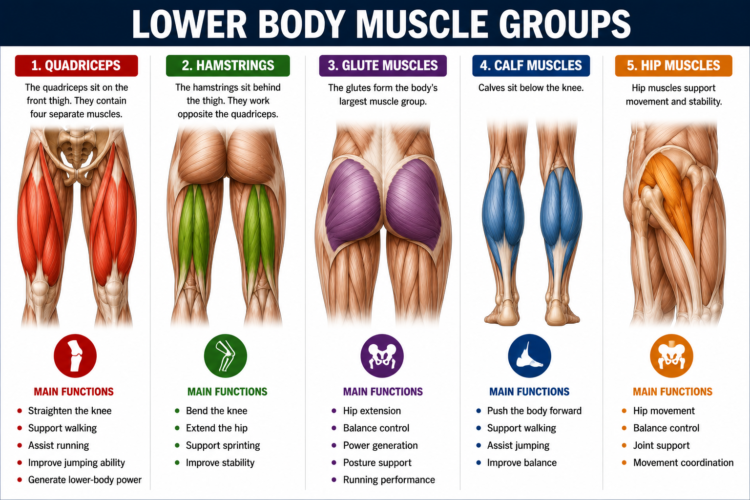
The lower body contain large muscle groups. They support movement and balance. They also help generate power. These muscles helps in walking & running. It supports jumping & lifting. Strong lower-body muscles improve performance. They also make daily activities easier.
Quadriceps
The quadriceps sit on the front thigh. They contain four separate muscles.
Main Functions
- Straighten the knee.
- Support walking.
- Assist running.
- Improve jumping ability.
- Generate lower-body power.
Common Exercises
- Squats.
- Leg presses.
- Lunges.
- Step-ups.
- Leg extensions.
Benefits of Strong Quadriceps
Strong quadriceps provide several benefits.
Advantages
- Better knee support.
- Improved athletic performance.
- Greater lower-body strength.
- Enhanced balance.
- Reduced injury risk.
Hamstrings
The hamstrings sit behind the thigh. They work opposite the quadriceps.
Main Functions
- Bend the knee.
- Extend the hip.
- Support sprinting.
- Improve stability.
Common Exercises
- Romanian deadlifts.
- Hamstring curls.
- Good mornings.
- Glute bridges.
- Deadlifts.
Why Hamstrings Matter
Weak hamstrings can create imbalances.
Benefits of Strong Hamstrings
- Better running speed.
- Improved posture.
- Enhanced knee stability.
- Reduced injury risk.
- Improved lifting performance.
Glute Muscles
The glutes form the body’s largest muscle group.
Major Glute Muscles
- Gluteus maximus.
- Gluteus medius.
- Gluteus minimus.
Functions of Glutes
Glutes support many movements.
Key Functions
- Hip extension.
- Balance control.
- Power generation.
- Posture support.
- Running performance.
Common Exercises
- Squats.
- Hip thrusts.
- Lunges.
- Step-ups.
- Deadlifts.
Importance of Strong Glutes
Benefits include:
- Better athletic performance.
- Improved posture.
- Greater lower-body power.
- Reduced back stress.
- Better movement efficiency.
Calf Muscles
Calves sit below the knee.
Main Functions
- Push the body forward.
- Support walking.
- Assist jumping.
- Improve balance.
Common Exercises
- Calf raises.
- Jump rope.
- Box jumps.
- Sprinting drills.
Benefits of Strong Calves
- Better ankle stability.
- Improved running ability.
- Enhanced balance.
- Greater explosiveness.
Hip Muscles
Hip muscles support movement and stability.
Functions
- Hip movement.
- Balance control.
- Joint support.
- Movement coordination.
Common Exercises
- Side lunges.
- Hip abductions.
- Clamshells.
- Lateral walks.
📊 Major Lower Body Muscle Groups
| Muscle Group | Main Function |
|---|---|
| Quadriceps | Knee extension |
| Hamstrings | Knee flexion |
| Glutes | Hip extension |
| Calves | Ankle movement |
| Hip Muscles | Stability |
🔄 How Muscle Groups Work Together
Muscles rarely work alone. Most movements require multiple muscles. This teamwork improves efficiency and stability.
Why Muscle Coordination Matters
Movement becomes smoother through coordination.
Benefits
- Better performance.
- Reduced injury risk.
- Improved balance.
- Greater strength output.
- Better exercise technique.
Example: Squat Movement
A squat uses many muscles.
Primary Muscles
- Quadriceps.
- Hamstrings.
- Glutes.
Supporting Muscles
- Core muscles.
- Lower back muscles.
- Calves.
Each muscle contributes differently.
Example: Push-Up Movement
Push-ups involve several upper-body muscles.
Primary Muscles
- Chest.
- Triceps.
- Shoulders.
Supporting Muscles
- Core.
- Lower back.
- Forearms.
Example: Pull-Up Movement
Pull-ups require coordinated effort.
Primary Muscles
- Latissimus dorsi.
- Biceps.
- Forearms.
Supporting Muscles
- Core muscles.
- Shoulder stabilizers.
Importance of Stabilizer Muscles
Stabilizers support movement quality.
Functions
- Maintain balance.
- Protect joints.
- Improve posture.
- Support heavier lifts.
Common Muscle Pairings
Certain muscles often work together.
Push Muscles
- Chest.
- Shoulders.
- Triceps.
Pull Muscles
- Back.
- Biceps.
- Forearms.
Lower Body Muscles
- Quadriceps.
- Hamstrings.
- Glutes.
- Calves.
⚠️ Problems Caused by Imbalances
Muscle imbalances create issues.
Common Problems
- Poor posture.
- Joint discomfort.
- Reduced strength.
- Increased injury risk.
- Movement limitations.
Balanced training helps prevent these issues.
🎯 Training Different Muscle Groups Effectively
Effective training requires planning. Each muscle group needs attention. Recovery also remains important.
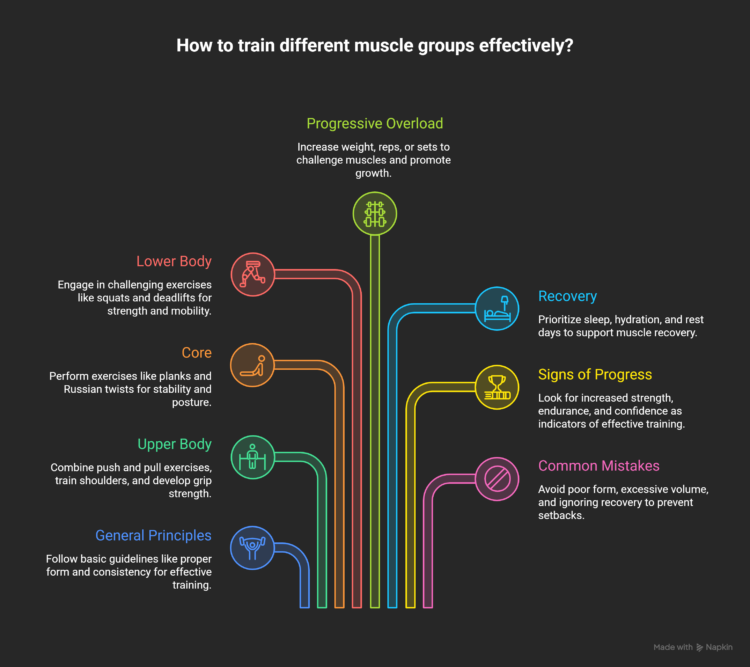
General Training Principles
Follow these basic principles.
Key Guidelines
- Use proper form.
- Train consistently.
- Allow recovery time.
- Increase difficulty gradually.
- Focus on technique.
Training Upper Body Muscles
Upper-body muscles support many activities.
Effective Strategies
- Combine push exercises.
- Include pull exercises.
- Train shoulders regularly.
- Develop grip strength.
- Focus on balanced development.
Sample Exercises
- Bench press.
- Rows.
- Pull-ups.
- Shoulder presses.
- Bicep curls.
Training Core Muscles
Core training improves stability.
Effective Exercises
- Planks.
- Dead bugs.
- Bird dogs.
- Russian twists.
- Side planks.
Benefits
- Better posture.
- Improved balance.
- Greater stability.
- Better lifting performance.
Training Lower Body Muscles
Lower-body muscles require challenging exercises.
Effective Exercises
- Squats.
- Lunges.
- Deadlifts.
- Step-ups.
- Hip thrusts.
Benefits
- Increased strength.
- Better mobility.
- Improved athletic performance.
- Enhanced power generation.
Importance of Progressive Overload
Muscles need new challenges.
Ways to Progress
- Increase weight.
- Increase repetitions.
- Increase sets.
- Improve technique.
- Reduce rest periods.
Importance of Recovery
Recovery supports muscle growth.
Recovery Strategies
- Sleep adequately.
- Stay hydrated.
- Eat balanced meals.
- Schedule rest days.
- Manage stress levels.
Signs of Effective Training
Progress appears gradually.
Positive Signs
- Increased strength.
- Better endurance.
- Improved technique.
- Faster recovery.
- Greater confidence.
⚠️ Common Training Mistakes
Avoid these mistakes.
Training Errors
- Poor exercise form.
- Excessive training volume.
- Ignoring recovery.
- Skipping warm-ups.
- Using improper technique.
Nutrition Errors
- Low protein intake.
- Poor hydration.
- Inadequate calories.
- Excess processed foods.
💡 Pro Tip
Train all major muscle groups. Balanced development improves performance and appearance.
🔍 Quick Muscle Training Checklist
Before every workout:
- Warm up properly.
- Use correct technique.
- Train multiple muscle groups.
- Stay hydrated.
- Focus on quality movements.
- Cool down afterward.
- Track progress regularly.
🏆 Conclusion
Understanding major muscle groups is essential for fitness success. These muscles support movement, strength, balance, and posture. Each muscle group performs unique functions. Together, they help the body move efficiently.
Fitness trainers should understand how muscles work. This knowledge improves exercise selection and program design. It also helps prevent injuries and muscle imbalances. Better understanding leads to better coaching.
Balanced training remains important. Upper-body, core, and lower-body muscles all need attention. Proper exercise, recovery, and nutrition support muscle development. Consistent training produces the best results. Strong muscle knowledge creates stronger fitness outcomes.
Turn Your Passion for Fitness into a Profession
Learn practical skills, get certified, and step into the growing fitness industry with confidence.
Join the CourseFrequently Asked Questions
Why is it important to understand major muscle groups?
Understanding major muscle groups helps create balanced and effective workout programs. It allows fitness trainers and individuals to choose suitable exercises, improve movement quality, and reduce the risk of injuries during training.
What are the major muscle groups of the human body?
The major muscle groups include the chest, shoulders, back, arms, core, quadriceps, hamstrings, glutes, calves, and hip muscles. Each group performs specific functions and contributes to movement, stability, posture, and overall physical performance.
How do upper body muscles help during exercise?
Upper body muscles support pushing, pulling, lifting, carrying, and throwing movements. They play a key role in exercises such as push-ups, pull-ups, rows, bench presses, and shoulder presses, helping improve strength and functional fitness.
Why are core muscles important for overall fitness?
Core muscles help stabilize the spine and maintain proper posture during daily activities and workouts. A strong core improves balance, coordination, exercise performance, and reduces the likelihood of lower back discomfort and injuries.
What are the main functions of lower body muscles?
Lower body muscles generate power and support movement during activities such as walking, running, jumping, climbing, and lifting. They also contribute to balance, mobility, and athletic performance while supporting proper body alignment.
How do different muscle groups work together?
Most movements involve multiple muscle groups working as a team rather than a single muscle acting alone. For example, squats engage the quadriceps, hamstrings, glutes, core, and calves, while push-ups involve the chest, shoulders, triceps, and core muscles.
What happens when some muscle groups are stronger than others?
Muscle imbalances can affect posture, movement patterns, and overall performance. Over time, these imbalances may increase the risk of injuries, limit strength development, and make certain exercises less effective.
How often should major muscle groups be trained?
Training frequency depends on fitness goals, experience level, and recovery ability. Most fitness programs train each major muscle group at least two times per week while allowing adequate recovery between sessions.
What are the best exercises for training multiple muscle groups?
Compound exercises are highly effective because they engage several muscles simultaneously. Examples include squats, deadlifts, lunges, push-ups, pull-ups, bench presses, rows, and overhead presses, which improve strength and coordination efficiently.
How can fitness trainers use muscle group knowledge effectively?
Fitness trainers can use muscle group knowledge to design balanced workout plans, select appropriate exercises, and identify weaknesses in movement patterns. This understanding helps improve client results, supports injury prevention, and creates more personalized training programs.