Table of Contents
Introduction
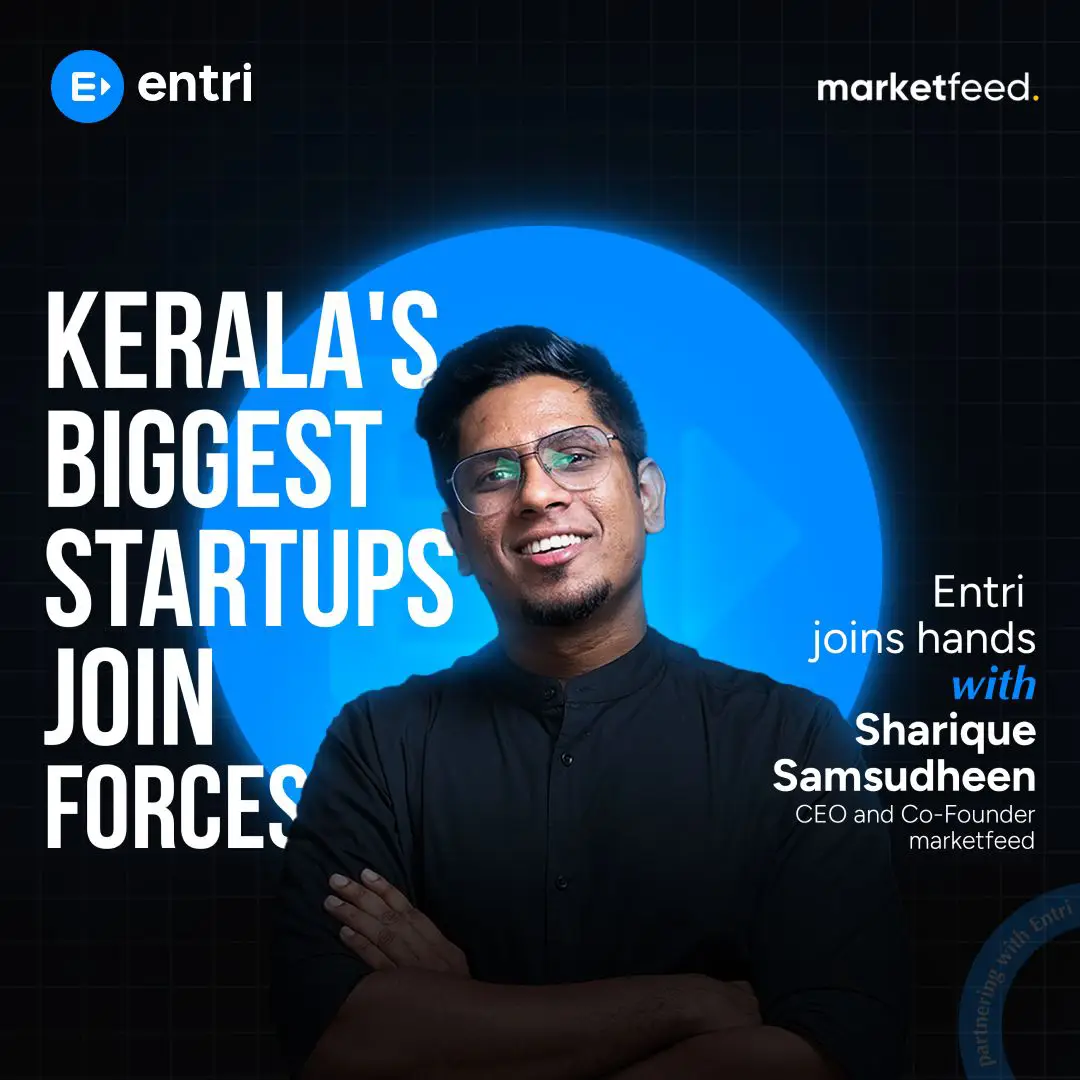
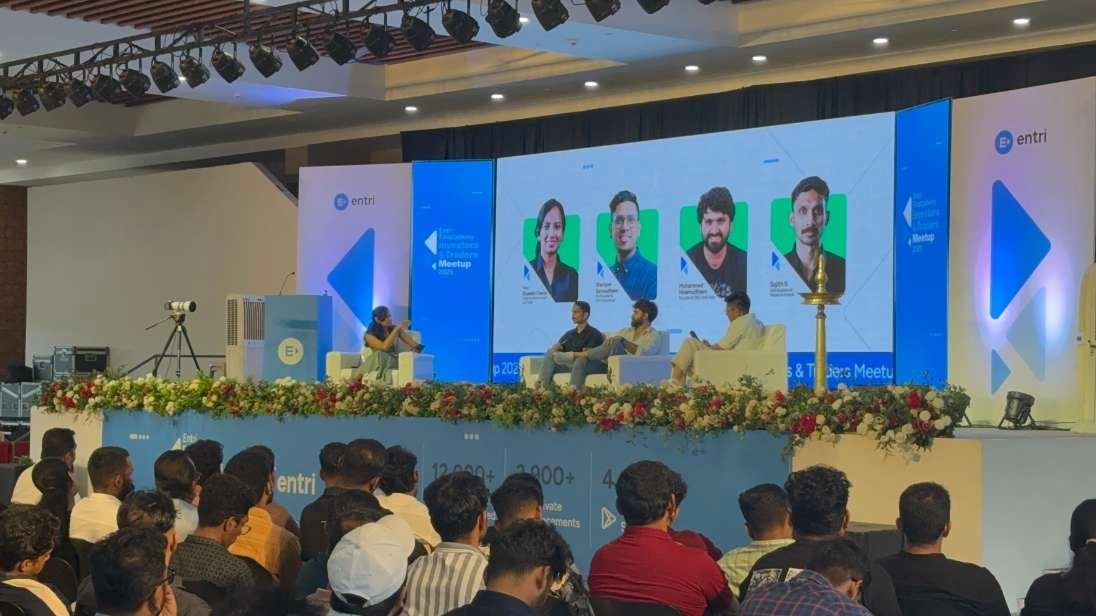
Entri Finacademy, a pioneer and a leading player in the finance education field since 2017, hosted a power-packed panel discussion recently. Titled ‘Money Talks’, the discussion was based on 4 trending topics: Start-ups, Markets, Investment & Health. Our expert panellists, stalwarts in the startup and finance industry set the stage for a thought-provoking, insightful session with some key takeaways for the audience. Before getting into the details, let’s go straight into the names and the profiles of the expert panelists.
The panelists
1: What is a stock?
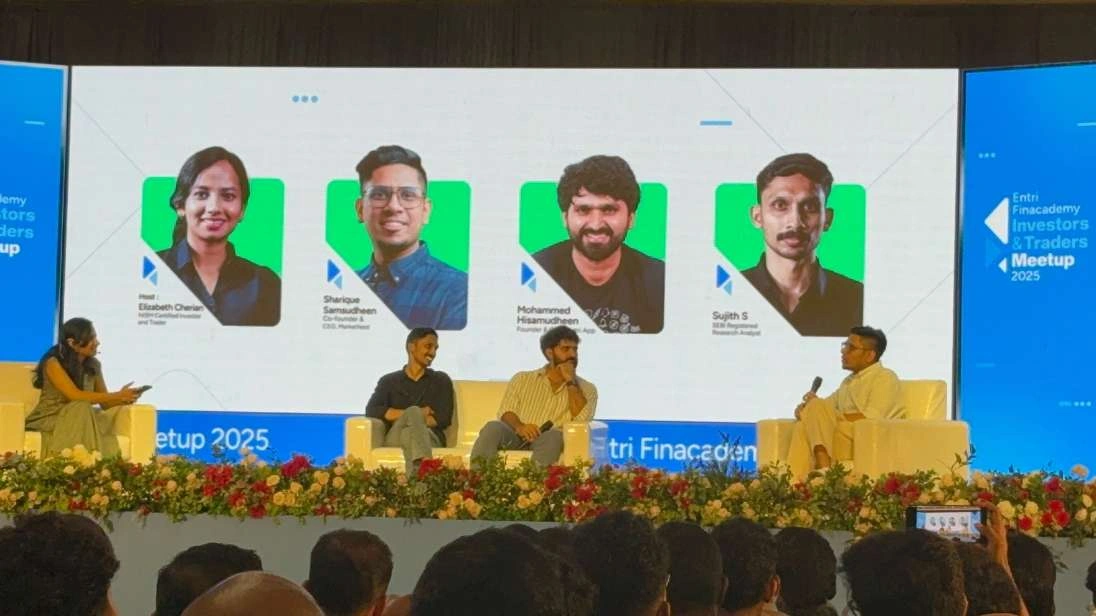
- Sharique Samsudheen – Co-Founder & CEO, Marketfeed
- Mohammed Hisamudheen – Founder & CEO, Entri app
- Sujith S – SEBI Registered Research Analyst & Founder of Insight Research Analytics
The moderator of the session was Elizabeth Cherian, an NISM-certified investor and trader.
Key takeaways
Here you go! The 10 key takeaways from the session:
1. Be passionate about stock trading
Sujith kickstarted the discussion by sharing his personal experience, a least-expected entry into the stock markets. It is quite important to be passionate about stock trading rather than treating it as a money making activity. Learn from your mistakes, follow the major trend and manage the risk-reward accurately, added Sujith.
2. Identify the problem faced by millions, develop a technology solution
An alumnus of LBS Engineering College, Kasargod, Hisam began his startup journey during his college days itself. He, along with three of his friends, founded ‘SMS Gyaan’, a startup that allowed access to Wikipedia articles via SMS. Hisam’s major learning from that startup was that the opportunity lies in figuring out a problem faced by the majority of Indians and coming up with a technology-based solution. It finally led to the birth of Entri, an upskilling platform catering to both government and private job requirements.
3. The purpose of money varies in different life stages
Sharique was of the view that till you make money, money is a matter of survival. But, after a certain point, money becomes freedom and luxury. Hisam shared the same thought, spoke about the eroding value of money and also mentioned that money is the fuel that helps him chase his passion. According to Sujith, money is the factor that drives you towards your desires.
4. Bet on the sectors that are most impacted by AI
The sectors to bet on would be the ones that are most impacted by AI, such as hospitality and services, opined Sharique. According to Hisam, it won’t be surprising if the concept of universal basic income comes into the picture in the next 10-15 years, due to the job disruption caused by AI. As per the concept of universal basic income, the government will be providing money to the public to make a living as all jobs will be taken away by AI.
5. Understand the company management, business model, availability
Before investing in an IPO of a company, it is very important to understand the company’s management, business model and the availability of its products, said Sujith. It is equally important to learn about the debt of that company.
6. Celebrate those Indicons
Rather than comparing the valuation of Indian startups with ‘unicorn’, a US concept, we should start celebrating Indicons, said Sharique. Indicon is a company that achieves Rs. 100 crore revenue and becomes profitable within 10 years of starting, a concept coined by Kunal Bahl, the founder of Snapdeal. Sharique also added that Entri has achieved an amazing feat of becoming an Indicon. Hisam endorsed Sharique’s view and added that in the last 10 years all new ideas have saturated.
Now what is left is only very few niche segments where there are some problems to be solved. He said that AI might help with that. When asked about that one advice he would give to upcoming startup founders, Hisam stated that it is very important to realise that it is not at all easy. However, entrepreneurs never fail i.e. even if you fail, you can go back to a job or start a new company. To sum it up, entrepreneurship is 100% risk free.
7. Nifty might touch 1 lakh, gold allocation should be small
Believing in the strong prospects of the India growth story, Sujith is positive about Nifty touching 1 lakh points by 2050. Sharique is against allocating 100% gold in one’s portfolio as it is a highly risky bet. He went on to add that the reasons for considering gold or silver as part of your portfolio should be:
- As a protection for the rupee depreciation against dollar and
- A hedge against fall in equity markets (it may be 10, 20 or 30% depending on each person’s risk appetite).
8. Fundraising is no more a challenge for startups
According to Hisam, nowadays, fundraising is not a challenge for Kerala startups in the initial days, provided they add value. If it’s somewhere around Rs. 1 -3 crore, startup founders can raise funds from angel investors in Kerala itself compared to 10 years back, when people had to travel to other states like Bangalore in search of funds.
9. Health should be the priority
Sharique stated that health should be given primary importance, though money is also important. It’s better to strike a balance between health and money at an early age itself. Hisam shared the quote “You have 100 problems in your life until you have a health problem. Then you’ll be having only one problem” which made a lot of sense for him. According to him, you should not wait till you face a serious health problem. Fitness should be the priority in your life and it should be made a daily habit, just like brushing your teeth.
10. Marital life and sharing
Since Sharique had started business and share trading before marriage, he had an open discussion with his wife about how life would be going forward and the expectations associated with it. After marriage, he shares even his official matters with his wife on a daily basis. In Hisam’s case, since his wife also works as an employee with Entri from day 1 onwards, things have been easy for him as she knows many official matters. When it comes to Sujith, though his wife is also a partner in his business, she doesn’t know or enquire about the day-to-day matters of the business.
Learn Stock Marketing with a Share Trading Expert! Explore Here!
Questions from the audience
1. You people spoke about some startups in which you have recently invested. What are those ideas and what are the kinds of industries in have you made investments?
Hisam : One of my recent investments is in a startup called ‘Katha Ads’. It’s a network of micro influencers and nano influencers. Even a person with 1000 or 2000 Instagram followers is considered a nano or micro influencer. Katha ads make those influencers available to external businesses. Brands such as Entri, MyG and Manorama are advertising through them. Katha ads is one of the fastest-growing startups in Kerala, and they are doing really well.
My second recent investment is in ‘Appmaker’, a Shopify website builder. It’s a service business and one of their customers is Zudio. ‘Premagic’ is another startup in which I have invested, and Sharique is also an investor in it. It’s an app on which photos taken on our mobile during an event are shared via AI.
These startups focus on solutions faced by people in a niche segment. In the future, it would be better to focus on such niche segments rather than concentrating on mass segments.
Sharique : I have invested in a company called ‘Dubverse’. It is a platform that helps content creators and media companies with dubbing in multiple languages. One of my other investments is in a company called ‘Wint Wealth’ that helps people invest in bonds.
2. How can I build a career in investments or investment banking?
Sujith: Be it any area, first we need to focus on experience, that too different types of experiences. For example, if you want to become a research analyst, there is an exam conducted by NISM. Work in a broking or advisory company for 5 years so that the probability of getting a SEBI license becomes higher.
3. What are the parameters to consider while preparing a watchlist for doing intraday trading?
Sharique: For intraday trading, the first consideration should be stocks that have good movement. Thus, you can decide not to buy large-cap stocks. There are 2 ways to approach: Either you can prepare a watchlist or you can also trade without any watchlist (by using screeners and scanners and defining a universe like Nifty 50 or Nifty 500). The problem with preparing a watchlist is that there will be only 5 or a maximum of 15 stocks in it. It is not humanly possible to check the chart of each and every stock. I first started with a watchlist and later switched to screener-based trading for this reason.
4. Since businesses are using algorithmic trading, what is the relevance of using AI in future trading?
Sharique: For a long time, trading has evolved from human beings manually performing tasks to a technology-driven era. Due to this reason, we started algorithmic trading at my firm, and AI has a lot of scope in it. Be it trading or any other field, you should have the aptitude to learn technology-related things like AI.
Watch the full video here:
Parting Words
Hope you got some valuable insights from Entri’s power-packed panel discussion on Start-ups, Markets, Investment & Health. Are you interested in learning more about stock trading, forex trading and mutual funds? A SEBI-compliant platform with over 9 million students, Entri Finacademy would be the perfect platform to start your investment journey. With a team of highly experienced mentors and features such as live classes and exclusive doubt clearance sessions, Entri clearly stands out from the rest. To know more about Entri’s courses, click here.
Stock Market Training Reviewed & Monitored by SEBI Registered Investment Advisor
Trusted, concepts to help you grow with confidence. Enroll now and learn to start investing the right way.
Know moreFrequently Asked Questions
What was the focus of the Money Talks panel discussion at Entri Finacademy’s Meetup?
The panel explored the intersection of start-ups, financial markets, investment behaviour, and personal health, emphasising how these elements shape modern wealth-building.
Who were the speakers featured in the Money Talks panel?
The panel included Elizabeth Cherian (Host), Sharique Samsudheen (Marketfeed), Mohammed Hisamudheen (Entri App), and Sujith S (SEBI Registered Research Analyst).
What were the key themes discussed in the panel?
Major themes included start-up growth in India, evolving market trends, investor psychology, financial discipline, and the connection between health & wealth.
What did Sharique Samsudheen highlight during the session?
He shared real-life observations on market behaviour, risk management, and how disciplined financial habits can transform long-term returns.
What insights did Mohammed Hisamudheen contribute?
He focused on the importance of financial literacy, practical learning, and why young professionals must understand market fundamentals to make informed decisions.
How did Sujith S add value to the discussion?
As a SEBI-registered analyst, Sujith provided data-driven perspectives on market cycles, investor mistakes, and how to analyse trends wisely.
Did the panel discuss the start-up ecosystem in India?
Yes, the speakers discussed how India’s fast-growing start-up landscape offers both opportunities and risks, and why investors must evaluate fundamentals before investing.