
Table of Contents
Montessori Mystery Bags develop tactile discrimination through touch-based exploration. Children identify hidden objects using touch alone. The activity strengthens sensory awareness. It also improves concentration and memory. Language skills improve naturally. Learning becomes engaging and meaningful.
Key Takeaways
- Develops tactile discrimination skills.
- Strengthens sensory awareness.
- Improves object recognition.
- Supports language development.
- Builds concentration levels.
- Encourages independent learning.
- Strengthens memory retention.
- Improves observation skills.
- Suitable for home use.
- Works well in classrooms.
Unlock your passion for education and shape young minds as a Montessori teacher!
🌟 Introduction
Children learn through their senses. Touch plays a major role. Young children explore objects naturally. They notice shapes and textures. They compare different materials. These experiences support development.
Montessori education values sensory learning. Children learn through direct experiences. Hands-on activities improve understanding. Exploration becomes an important learning tool. Sensory materials support growth. Learning feels natural and enjoyable.
Montessori Mystery Bags support tactile learning. Children explore hidden objects. They rely on touch only. Visual clues remain unavailable. This increases sensory awareness. Observation skills improve steadily.
The activity requires simple materials. Preparation takes little time. Children usually enjoy the challenge. Teachers use it frequently. Parents can use it easily. Learning continues beyond classrooms.
🎒 What are Montessori Mystery Bags?
1: What is the primary focus of the first plane of development in the Montessori method?
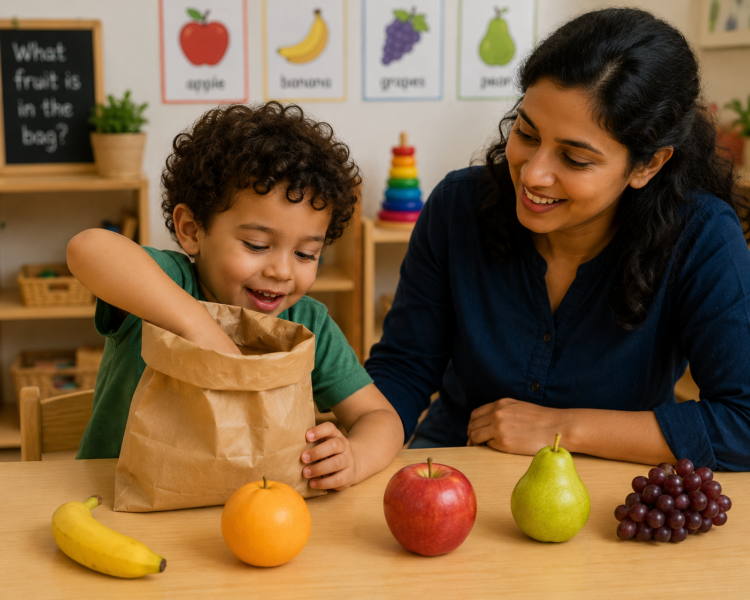
Montessori Mystery Bags are sensory learning tools. Objects remain hidden inside bags. Children cannot see them. They explore objects through touch. They identify objects carefully. Learning happens through discovery.
The activity follows Montessori principles closely. Children learn independently. Exploration happens naturally. Curiosity drives participation. Direct experiences support understanding. Confidence develops gradually.
Mystery Bags usually contain familiar objects. Children recognize items through touch. They compare textures carefully. Kids notice object shapes. They observe sizes and weights. These details support learning.
Children often describe objects verbally. They explain observations carefully. Vocabulary develops naturally. Communication improves through discussion. Thinking becomes more organized. Learning remains enjoyable throughout.
🎯 Main Features of Montessori Mystery Bags
- Uses touch-based learning.
- Encourages sensory exploration.
- Supports independent thinking.
- Develops observation skills.
- Improves concentration levels.
- Builds vocabulary naturally.
📦 Common Objects Inside Mystery Bags
- Wooden blocks.
- Spoon.
- Key.
- Pinecone.
- Leaf.
- Pebble.
- Shell.
- Small ball.
- Crayon.
- Puzzle piece.
🤔 Why are Mystery Bags Effective?
Children often depend on sight. Mystery Bags remove visual clues. Touch becomes the primary sense. Children focus more carefully. They notice important details. Sensory awareness improves significantly.
The activity encourages curiosity. Children enjoy solving challenges. Each object feels different. Every discovery feels rewarding. Learning becomes more engaging. Participation remains high.
Mystery Bags also support independent learning. Children make observations alone. They think before answering. They analyze information carefully. Problem-solving skills improve. Confidence grows steadily.
📊 Montessori Mystery Bag Overview
| Feature | Purpose |
|---|---|
| Hidden Objects | Sensory exploration. |
| Touch-Based Learning | Tactile development. |
| Object Identification | Critical thinking. |
| Verbal Description | Language development. |
| Independent Discovery | Confidence building. |
Get Certified & Start Your Montessori Career
Montessori Teacher Training Course by Entri App: Gain expert skills, earn certification, and kickstart your teaching career.
Join Now!🖐️ Why is Tactile Discrimination Important During Early Childhood?
Tactile discrimination means recognizing differences through touch. Children identify textures easily. Kids compare object surfaces. They notice size differences. They recognize familiar objects. These skills support development.
Young children explore constantly. They touch objects frequently. They learn through experiences. Sensory information guides learning. Touch helps understanding. Development occurs naturally.
Strong tactile discrimination supports daily tasks. Children button clothing independently. They hold pencils correctly. Kids handle classroom materials. They recognize objects quickly. Confidence improves during activities.
Sensory experiences also strengthen brain development. Neural connections become stronger. Information processing improves. Learning becomes more efficient. Future skills develop easier. Early practice offers advantages.
🧠 How does Tactile Discrimination Support Learning?
Touch provides important information. Children gather sensory clues. They compare experiences regularly. Memory stores these observations. Recognition improves over time. Learning becomes deeper.
Children use tactile discrimination during reading. They handle books confidently. Writing requires fine motor control. Mathematics uses manipulatives often. Classroom learning involves touch. Strong sensory skills help greatly.
Tactile discrimination also improves problem-solving. Children analyze object features. They compare similarities carefully. They notice differences quickly. Decisions become more accurate. Thinking skills improve naturally.
📌 Benefits of Strong Tactile Discrimination
- Improves sensory processing.
- Supports fine motor development.
- Strengthens object recognition.
- Improves concentration skills.
- Builds learning confidence.
- Supports school readiness.
🌱 What Happens When Tactile Skills Improve?
Children become more independent. Everyday tasks become easier. They recognize objects faster. They use materials confidently. Learning feels less challenging. Success increases motivation.
Improved tactile skills support exploration. Children investigate new objects. They ask thoughtful questions. They compare different materials. Curiosity continues growing. Learning becomes more meaningful.
Strong sensory skills also support social growth. Children participate confidently. They share observations openly. Communication becomes easier. Group activities feel enjoyable. Classroom engagement improves.
📊 Importance of Tactile Discrimination
| Area | Benefit |
|---|---|
| Sensory Development | Better touch awareness. |
| Fine Motor Skills | Improved control. |
| Learning Readiness | Better classroom performance. |
| Independence | Greater confidence. |
| Communication | Stronger descriptions. |
🌈 Benefits of Mystery Bag Activities
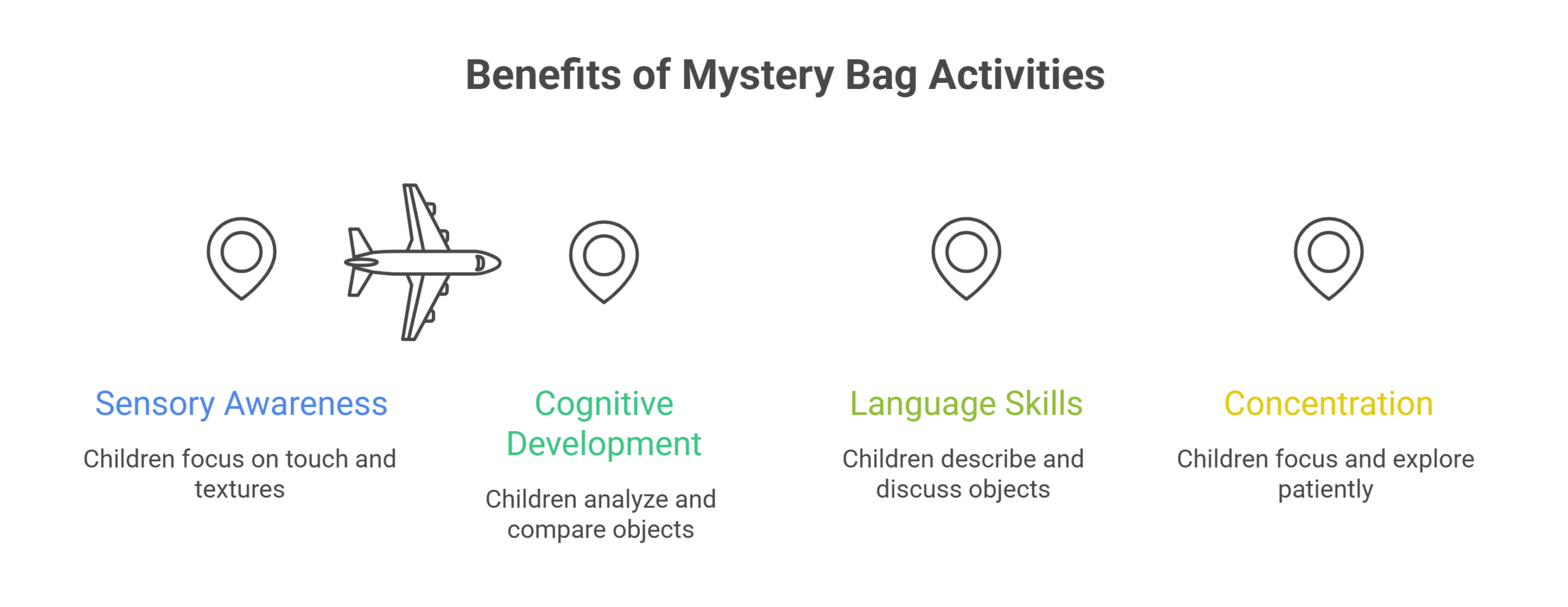
Mystery Bag activities support multiple skills. Learning remains enjoyable. Children stay actively engaged. Development occurs naturally. Several abilities improve together. The activity offers lasting benefits.
🖐️ How do Mystery Bags Improve Sensory Awareness?
Children focus on touch. Visual distractions disappear. Textures become more noticeable. Shapes feel more important. Small differences become clear. Sensory awareness grows steadily.
Children compare many objects. They notice rough textures. They notice smooth surfaces. Children recognize hard materials. They identify soft objects. Observation skills improve naturally.
Sensory Benefits
- Strengthens tactile awareness.
- Improves sensory processing.
- Encourages careful exploration.
- Develops texture recognition.
- Improves object identification.
- Supports sensory confidence.
🧠 How do Mystery Bags Support Cognitive Development?
Children analyze information carefully. They compare object features. They use previous experiences and make thoughtful guesses. Reasoning skills improve steadily. Learning becomes more active.
Memory development also improves. Children remember familiar objects. They recall sensory experiences. Connections strengthen over time. Recognition becomes easier. Learning remains meaningful.
Cognitive Benefits
- Improves logical thinking.
- Supports memory development.
- Encourages problem-solving.
- Strengthens reasoning skills.
- Improves attention to detail.
- Supports critical thinking.
🗣️ How do Mystery Bags Improve Language Skills?
Children describe objects frequently. They explain textures carefully. They discuss shapes openly. Vocabulary expands naturally. Communication becomes stronger. Confidence improves gradually.
Teachers often ask questions. Children respond thoughtfully. Discussions create learning opportunities. New words appear regularly. Descriptive language improves. Speaking skills become stronger.
Language Benefits
- Expands vocabulary.
- Encourages descriptive language.
- Improves communication skills.
- Supports listening abilities.
- Strengthens verbal expression.
- Builds speaking confidence.
🎯 How do Mystery Bags Improve Concentration?
Children focus carefully during exploration. Touch requires attention. Observation becomes important. Distractions decrease naturally. Focus improves steadily. Learning becomes more effective.
Patience also develops. Children explore slowly. They think before answering. They consider different possibilities. Careful thinking improves outcomes. Concentration grows through practice.
Concentration Benefits
- Improves attention span.
- Encourages patience.
- Builds persistence.
- Supports focused thinking.
- Reduces distractions.
- Strengthens self-control.
🧺 Materials Needed
Montessori Mystery Bags require simple materials. Most items are easy to find. Expensive resources are unnecessary. Preparation remains quick and simple. Everyday objects work very well. Variety improves learning experiences.
🎒 What Type of Bag Works Best?
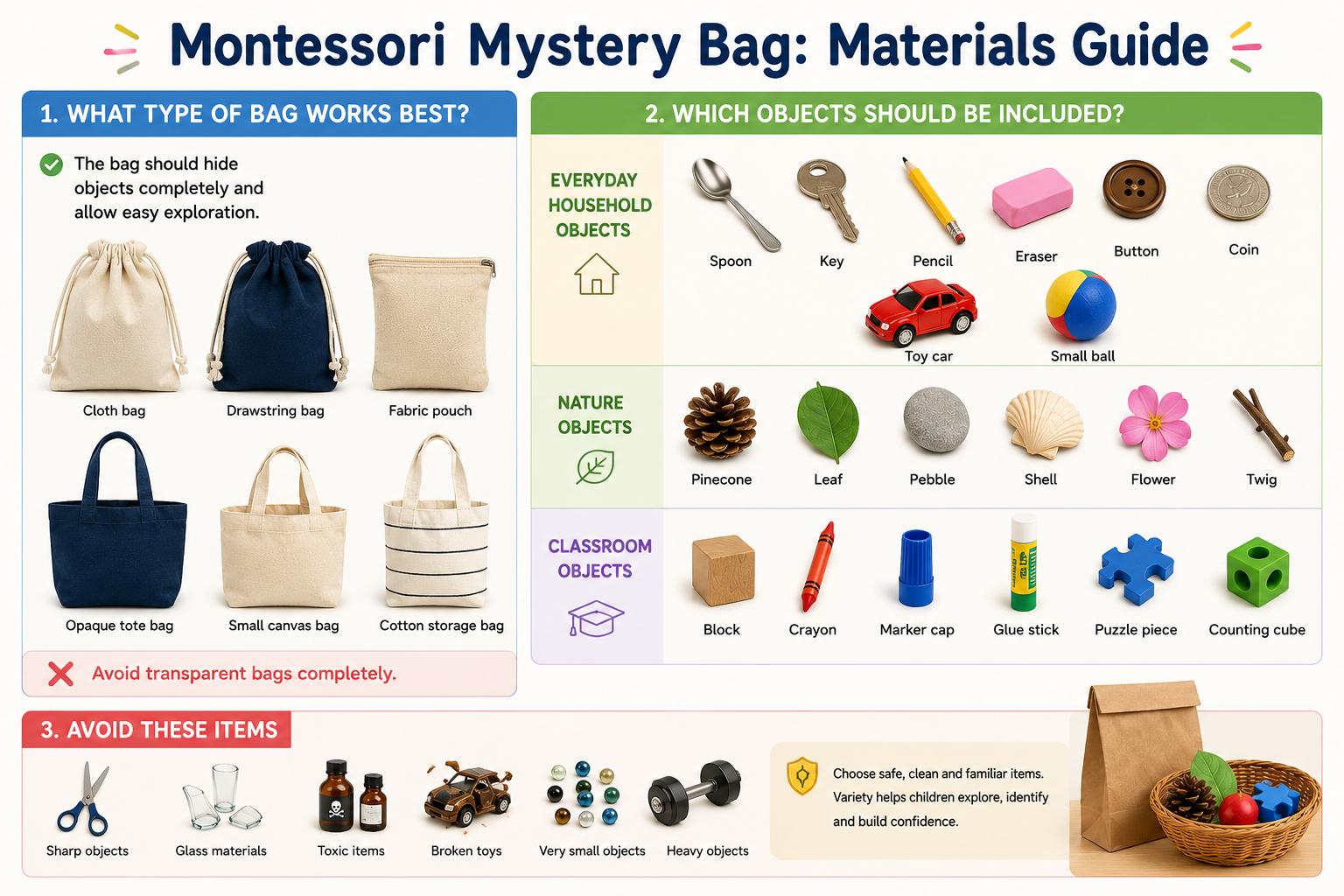
The bag should hide objects completely. Children should not see inside. Soft bags work especially well. Fabric feels comfortable during exploration. The opening should allow access. Children should explore easily.
Suitable Bag Options
- Cloth bag.
- Drawstring bag.
- Fabric pouch.
- Opaque tote bag.
- Small canvas bag.
- Cotton storage bag.
Avoid transparent bags completely.
🧸 Which Objects should be Included?
Choose familiar objects initially. Familiar items build confidence. Children identify them more easily. Success encourages participation. Variety remains very important. Different objects create richer experiences.
Everyday Household Objects
- Spoon.
- Key.
- Pencil.
- Eraser.
- Button.
- Coin.
- Toy car.
- Small ball.
Nature Objects
- Pinecone.
- Leaf.
- Pebble.
- Shell.
- Flower.
- Twig.
Classroom Objects
- Block.
- Crayon.
- Marker cap.
- Glue stick.
- Puzzle piece.
- Counting cube.
⚠️ Safety Guidelines
Safety always comes first. Every object needs inspection. Sharp edges create risks. Fragile materials may break. Small items require supervision. Safe choices improve experiences.
Avoid these Items
- Sharp objects.
- Glass materials.
- Toxic items.
- Broken toys.
- Very small objects.
- Heavy objects.
📊 Materials Checklist
| Item | Purpose |
|---|---|
| Mystery Bag | Hide objects. |
| Household Objects | Exploration. |
| Nature Items | Texture learning. |
| Classroom Materials | Recognition practice. |
| Storage Basket | Organization. |
👋 How to Introduce Mystery Bags to Children
Introducing Mystery Bags requires patience. Children should feel comfortable. Instructions should remain simple. Curiosity should guide participation. Learning should feel enjoyable. Confidence develops through encouragement.
Children often feel excited immediately. Hidden objects create curiosity. Exploration feels like a game. Engagement levels stay high. Participation becomes voluntary. Learning remains stress-free.
🎯 Start with Familiar Objects
Begin with simple objects. Familiar items reduce frustration. Children recognize them easily. Success builds confidence quickly. Positive experiences encourage participation. Learning becomes more enjoyable.
Good Starter Objects
- Spoon.
- Pencil.
- Ball.
- Key.
- Block.
- Eraser.
🗣️ Explain the Activity Clearly
Simple instructions work best. Young children need clarity. Long explanations create confusion. Demonstrations improve understanding. Confidence grows through guidance. Participation becomes easier.
Explain these Rules
- Use touch only.
- Avoid looking inside.
- Explore slowly.
- Think before guessing.
- Describe observations clearly.
✋ Encourage Careful Exploration
Children should explore slowly. Touch provides important information. Rushing reduces accuracy. Observation improves through patience. Details become easier to notice. Learning becomes deeper.
Ask children to notice:
- Shape.
- Texture.
- Weight.
- Size.
- Hardness.
- Temperature.
🎉 Celebrate Every Attempt
Correct answers feel rewarding. Effort deserves recognition too. Children learn through practice. Mistakes support learning. Encouragement builds confidence. Participation increases naturally.
Positive Responses
- Great observation.
- Excellent thinking.
- Nice description.
- Wonderful effort.
- Good guess.
- Fantastic focus.
Get Certified & Start Your Montessori Career
Montessori Teacher Training Course by Entri App: Gain expert skills, earn certification, and kickstart your teaching career.
Join Now!🎨 Variations for Different Age Groups
Different ages need different challenges. Activities should match abilities. Difficulty should increase gradually. New challenges maintain interest. Variety improves engagement. Learning remains exciting.
👶 Mystery Bags for Younger Children
Young children need simple tasks. Familiar objects work best. Large items improve safety. Success builds confidence quickly. Exploration remains the main goal. Learning should feel playful.
Suitable Objects
- Soft ball.
- Wooden block.
- Spoon.
- Toy car.
- Large leaf.
- Crayon.
Learning Focus
- Texture recognition.
- Object identification.
- Vocabulary development.
- Sensory exploration.
🧒 Mystery Bags for Preschoolers
Preschoolers enjoy greater challenges. They observe more details. Vocabulary becomes stronger. Descriptions become longer. Thinking skills improve steadily. Activities can become more complex.
Suitable Activities
- Guessing games.
- Matching objects.
- Shape identification.
- Colour identification.
- Texture comparison.
Learning Focus
- Problem-solving.
- Observation skills.
- Memory development.
- Communication skills.
👦 Mystery Bags for Older Children
Older children enjoy advanced challenges. Critical thinking becomes important. Objects may become unfamiliar. Discussions become deeper. Reasoning skills improve greatly. Learning remains engaging.
Advanced Challenges
- Similar object comparisons.
- Nature collections.
- Shape categories.
- Material classifications.
- Partner guessing games.
Learning Focus
- Logical reasoning.
- Analytical thinking.
- Detailed descriptions.
- Independent learning.
🌈 Themed Mystery Bags
Themes increase excitement. Children enjoy variety. Learning feels fresh. Curiosity remains strong. Participation stays high. Engagement improves naturally.
Nature Theme
- Pinecone.
- Shell.
- Leaf.
- Pebble.
- Flower.
- Twig.
Classroom Theme
- Crayon.
- Block.
- Marker cap.
- Glue stick.
- Puzzle piece.
- Counting cube.
Colour Theme
- Red block.
- Blue ball.
- Yellow cup.
- Green toy.
- Purple cube.
- Orange crayon.
Unlock your passion for education and shape young minds as a Montessori teacher!
🚀 Skills Developed through Mystery Bags
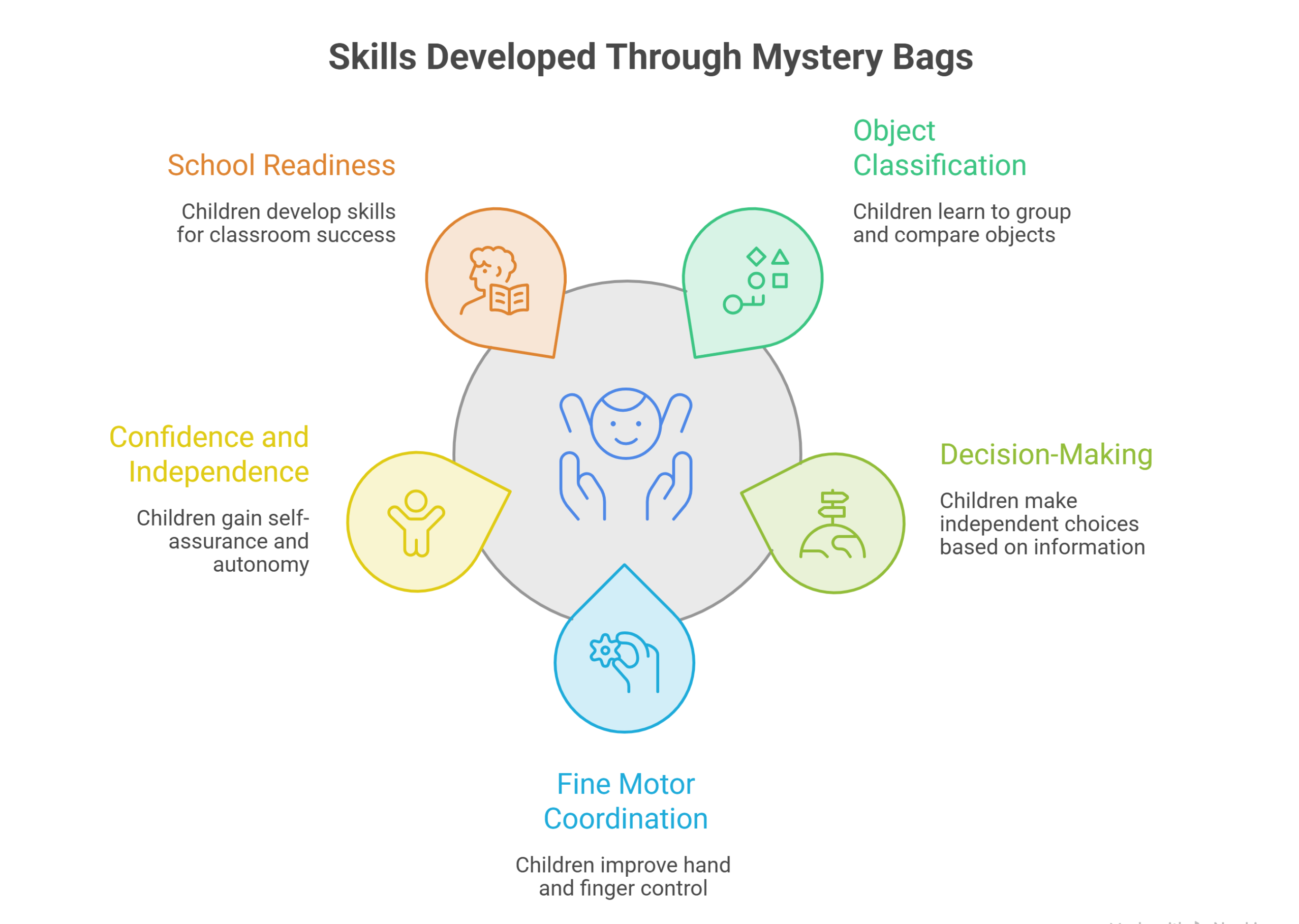
Mystery Bag activities support many everyday skills. Children apply these skills beyond classrooms. Learning becomes practical and meaningful. Confidence grows through repeated practice. Independence develops gradually over time. These skills support future learning.
🎯 Object Classification Skills
Children compare object characteristics carefully. They notice similarities and differences. Sorting becomes easier with practice. Classification supports future academic learning. Early categorization builds strong foundations. Observation becomes more accurate.
Children Learn to:
- Group similar objects.
- Compare object features.
- Identify differences quickly.
- Recognise object categories.
- Sort materials confidently.
🤔 Decision-Making Skills
Children make choices independently. They evaluate sensory information. They consider different possibilities. Each guess requires reasoning. Decision-making improves gradually. Confidence increases through practice.
Children Learn to:
- Make thoughtful choices.
- Evaluate information carefully.
- Consider several possibilities.
- Trust their observations.
- Build independent thinking.
✋ Fine Motor Coordination
Children manipulate objects carefully. Small movements become more controlled. Hand muscles strengthen gradually. Object handling improves over time. Coordination supports many daily tasks. Practical skills become easier.
Children Learn to:
- Grip objects correctly.
- Handle materials carefully.
- Control hand movements.
- Improve finger coordination.
- Strengthen hand muscles.
🌟 Confidence and Independence
Mystery Bags encourage self-discovery. Children solve challenges independently. Success creates positive feelings. Confidence develops naturally. Learning becomes self-directed. Independence grows steadily.
Children Learn to:
- Work independently.
- Trust their abilities.
- Explore confidently.
- Take learning risks.
- Solve simple challenges.
📚 School Readiness Skills
Many classroom activities require similar abilities. Mystery Bags prepare children gradually. Learning foundations become stronger. Children adapt more easily. Confidence supports participation. School readiness improves naturally.
Children Learn to:
- Follow instructions.
- Complete activities independently.
- Participate confidently.
- Engage in discussions.
- Remain focused longer.
📊 Skills Developed through Mystery Bags
| Skill | Real-Life Application |
|---|---|
| Classification | Sorting and organizing. |
| Decision-Making | Problem-solving tasks. |
| Fine Motor Control | Writing and drawing. |
| Independence | Self-directed learning. |
| School Readiness | Classroom participation. |
🎯 Conclusion
Montessori Mystery Bags support sensory learning effectively. Children explore objects through touch. Tactile discrimination improves steadily. Concentration becomes stronger over time. Language skills develop naturally. Learning remains engaging and enjoyable.
The activity requires simple materials. Preparation remains quick and easy. Teachers can use it regularly. Parents can try it at home. Consistent practice produces lasting benefits. Meaningful experiences create stronger learning outcomes.
Get Certified & Start Your Montessori Career
Montessori Teacher Training Course by Entri App: Gain expert skills, earn certification, and kickstart your teaching career.
Join Now!Frequently Asked Questions
What are Montessori Mystery Bags?
Montessori Mystery Bags are sensory learning tools used in Montessori education. Children identify hidden objects through touch, helping them strengthen tactile discrimination and observation skills.
What is tactile discrimination?
Tactile discrimination is the ability to recognize and compare objects through touch. It helps children identify differences in texture, shape, size, and weight without relying on sight.
What age is suitable for Mystery Bag activities?
Mystery Bag activities are suitable for children aged three years and above. The objects and difficulty levels can be adjusted according to a child’s developmental stage.
How do Mystery Bags support sensory development?
Children explore objects using their sense of touch alone. This process strengthens sensory awareness and helps them process tactile information more effectively.
What objects can be placed inside Mystery Bags?
Everyday household items, nature objects, and classroom materials work well. Using objects with different textures and shapes creates richer sensory experiences.
Can Mystery Bags be used at home?
Yes, Mystery Bags are easy to set up at home. Parents can use simple items already available around the house for meaningful learning activities.
How long should a Mystery Bag activity last?
A typical session can last between ten and fifteen minutes. Short sessions help children stay focused and engaged throughout the activity.
How do Mystery Bags improve language skills?
Children describe objects using words related to texture, shape, and size. These discussions help expand vocabulary and improve communication skills naturally.
Why are Mystery Bags important in Montessori education?
Mystery Bags encourage hands-on learning and independent discovery. They support Montessori principles by allowing children to learn through direct sensory experiences.
What skills do children develop through Mystery Bags?
Children develop tactile discrimination, observation, classification, and decision-making skills. The activity also supports fine motor development, confidence, and school readiness.