• Teaching
    • Montessori Teacher Training 🔥
    • Yoga Teacher Training
  • Coding
    • Full Stack Development Course
    • Data Science Course
    • Python Programming Course
    • Software Testing Course
    • Architecting on AWS
  • Commerce
    • ACCA Course
    • SAP Fico Course
    • Practical Accounting Course
    • SAP MM Course
    • HR Management Course in Kerala
    • CMA USA Online Classes
    • Enrolled Agent Course
    • PwC Edge : Strategic Accounting and Finance Programme
  • Technical
    • Structural Design Course
    • Embedded Systems Software Engineering in Kerala
    • MEP Course
    • BIM Training Course
    • Quantity Survey Course
  • Finacademy
    • Stock Market Course
    • Mutual Funds Course
    • Forex Trading Course
  • Digital Marketing
    • Digital Marketing Course
    • Performance Marketing Course
  • Language Learning
    • Spoken English Course
    • German Language Course
    • IELTS Exam Coaching
  • Exam Preparation
    • Kerala PSC Coaching
    • Kerala PSC LGS Coaching
    • KAS Coaching
    • Kerala PSC LDC Coaching
    • Kerala PSC LSGS Coaching
    • KPSC Industries Extension Officer Coaching
    • KPSC Technical Mechanical Coaching
    • KPSC Technical Electrical Coaching
    • Kerala PSC Technical Exam Preparation
    • KPSC Technical Civil Coaching
    • SBI PO Coaching
    • IBPS Clerk Coaching
    • IBPS PO Coaching
    • IBPS SO Coaching
    • Bank Exam Coaching
    • Lecturer in DIET Course
    • Kpsc HSA Coaching
    • KPSC LP UP Assistant Coaching
    • EMRS Coaching
    • KTET Coaching
    • SSC Coaching
    • SSC JE Coaching
    • SSC CGL Coaching
    • SSC CHSL Coaching
    • SSC MTS Coaching
    • UPSC Coaching
  • Health Care
    • Hospital Administration Course
  • Other Exams
    • GATE Coaching
    • CAT Coaching
    • MAT Online Coaching
    • KMAT Online Coaching
Entri Blog
No Result
View All Result
Sunday, February 8, 2026
  • Kerala PSC
    • Kerala PSC General
      • Kerala PSC Exams
      • KAS Exam
      • Kerala PSC VEO Notification
      • Kerala Police SI
      • Kerala PSC LDC Notification
      • Kerala PSC Village Field Assistant Notification
      • Kerala PSC LD Typist Notification
      • Kerala PSC Food Safety Officer
      • Kerala PSC Excise Inspector Notification
      • Kerala PSC BDO Notification
      • Kerala PSC CPO Notification
      • Kerala PSC LGS Notification
      • Fire and Rescue Officer
      • Women Fire and Rescue Officer
    • Kerala PSC Teaching
      • Kerala PSC HSA
      • Kerala PSC HSST
      • KTET
      • LP/UP Assistant
      • KVS
      • Railway Teacher
    • Kerala PSC Technical
      • LSGD AE
      • Draftsman/Overseer
      • IEO
      • ATP
      • Polytechnic Lecturer
      • AE Electronics
      • Assistant Engineer
  • Banking
    • IBPS PO Notification
    • IBPS Clerk Notification
    • SBI PO Notification
    • SBI Clerk Notification
    • SBI SO Notification
    • SBI Apprentice Notification
    • Canara Bank PO Notification
    • Indian Bank PO Notification
    • RBI Assistant Notification
    • RBI Office Attendant Notification
    • IBPS RRB Notification
    • IBPS RRB Office Assistant Notification
  • Skilling
    • Coding
    • Spoken English
    • Stock Market
      • Stock Market Weekly Report
    • Digital Marketing
    • Accounting Course
    • SAP
    • German
    • IELTS
    • Quantity Survey
    • MEP
    • Structural Design
    • Montessori
    • Yoga Teaching
    • HR Management
    • Embedded Systems
  • Courses
    • AI Powered Data Science Course
      • Data Science Malayalam
      • Data Science Course in Tamil
      • Data Science Course in Telugu
      • Data Science Training in Kochi
      • Data Science Training in Trivandrum
      • Data Science Course in Calicut
      • Data Science Training in Thrissur
    • AI Powered Data Analytics Course
      • Data Analytics Course in Malayalam
      • Data Analytics Course in Tamil
      • Data Analytics Course in Telugu
    • BIM Course in Kerala
      • BIM Course in Kochi
      • BIM Course in Trivandrum
      • BIM Course in Calicut
    • Quantity Surveying Course
      • Quantity Surveyor Course in Tamil
      • Quantity Surveying Course in Telugu
      • Quantity Surveyor Course in Hyderabad
      • Quantity Surveying Course in Chennai
      • Quantity Surveying Course in Vijayawada
      • Quantity Surveying Course in Guntur
      • Quantity Surveying Course in Warangal
      • Quantity Surveying Course in Karimnagar
    • Structural Design Course
      • Structural Design Course in Hyderabad
      • Structural Design Course in Chennai
      • Structural Design Course in Kochi
      • Steel Structure Design Course
      • RCC Design Course
    • MEP Course
      • MEP Design Course in Kerala
      • HVAC Course
      • MEP Course in Kochi
    • Robotics and AI Course
    • Embedded System Course
      • Embedded Systems Software Engineering in Calicut
      • Embedded Systems Software Engineering in Kochi
      • Embedded Systems Software Engineering in Trivandrum
    • AI-Enhanced Full Stack Developer Course
      • Full Stack Development Malayalam
      • Full Stack Development Hindi
      • Full Stack Development Tamil
      • Full Stack Development Telugu
      • Full Stack Development Kannada
    • Stock Market Course
      • Stock Market Course in Malayalam
      • Stock Market Course in Tamil
      • Options Trading Course
    • Mutual Funds Course
      • Mutual Funds Course in Kerala
      • Mutual Funds Course in Tamil
    • Forex Trading Course
    • Spoken English Course
      • Spoken English Course in Malayalam
      • Spoken English Course in Hindi
      • Spoken English Course in Telugu
      • Spoken English Course in Tamil
      • Spoken English Course in Kannada
    • AI-Driven Python Programming Course
    • Ui Ux Designer Course
    • AI-Powered Software Testing Course
      • Software Testing Course in Malayalam
      • Software Testing Course in Tamil
      • Software Testing Course in Telugu
    • Ai-Powered Cybersecurity Course
    • AI Tools Mastery
    • AI Powered AWS Solutions Architect Associate Course
    • AI Powered Practical Accounting Course
      • Accounting Course in Malayalam
      • Accounting Course in Tamil
      • GCC VAT Course
      • Taxation Course
      • GST Practitioner Course in Kerala
      • GST Course
      • UAE Accounting
      • Tally Course
      • Zoho Books Training
    • SAP Training Courses
      • SAP FICO Course
      • SAP MM Course
      • SAP SD Training
      • SAP FICO Course in Tamil
      • SAP MM Course in Tamil
    • Enrolled Agent Course in Kerala
      • Enrolled Agent Course in Calicut
      • Enrolled Agent Course in Kochi
      • Enrolled Agent Course in Trivandrum
    • ACCA Training Online
      • ACCA Course in Kerala
      • ACCA Performance Management PM F5 Course
      • ACCA Taxation TX F6 Course
      • ACCA Financial Reporting FR F7 Course
      • ACCA Audit and Assurance AA F8 Course
      • ACCA Financial Management FM F9 Course
    • CMA USA Online Classes
    • HR Management Course
      • HR Management Course in Kochi
      • HR Management Course in Trivandrum
      • HR Management Course in Calicut
    • PwC Edge : Strategic Accounting and Finance Programme
    • Performance Marketing Course
    • Mern Stack Developer Course
      • Full Stack Developer Course in Kochi
      • Full Stack Developer Course in Trivandrum
      • Full Stack Developer Course in Calicut
      • Full Stack Developer Course in Pune
      • Full Stack Developer Course in Bangalore
      • Full Stack Developer Course in Hyderabad
      • Full Stack Developer Course in Chennai
      • Full Stack Developer Course in Indore
      • Full Stack Developer Course in Jaipur
      • Full Stack Developer Course in Coimbatore
    • AI Powered Digital Marketing Training
      • Digital Marketing Course in Kerala
      • Digital Marketing Course in Kochi
      • Digital Marketing Course in Trivandrum
      • Digital Marketing Course in Calicut
      • Digital Marketing Course in Kollam
      • Digital Marketing Course in Thrissur
      • Digital Marketing Course in Kottayam
      • Digital Marketing Course in Kannur
    • Hospital and Healthcare Administration
    • Montessori Teacher Training
      • Montessori Teacher Training in Calicut
      • Montessori Teacher Training in Kochi, Ernakulam
      • Montessori Teacher Training in Trivandrum
      • Montessori Teacher Training in Kollam
      • Montessori Teacher Training in Malayalam
      • Montessori Teacher Training in Kannada
    • Other Courses
      • German Language Course
      • ChatGPT Course
      • Yoga Teacher Training Course
      • Advanced Fashion Designing and Boutique Management
  • Others
    • Railway
      • RRB Technician Notification
      • RRB JE Notification
      • RRB ALP Notification
      • RRB NTPC Notification
      • RRB RPF Notification
      • RRB RPF SI Notification
      • RRB RPF Constable Notification
      • RRB Group D Notification
      • RRB RPSF SI Notification
      • RRB SSE Notification
    • SSC
      • SSC CPO Notification
      • SSC MTS Notification
      • SSC CGL Notification
      • SSC CHSL Notification
      • SSC GD Constable Notification
      • SSC Stenographer Notification
      • SSC JE Notification
      • SSC CAPF Notification
      • SSC JHT Notification
      • Delhi Police Constable Notification
      • Delhi Police SI Notification
    • GATE
    • MAT
    • KMAT
      • KMAT Kerala 2024
    • TET
      • APTET
      • CTET
      • DSSSB
      • Karnataka TET
      • Kerala TET
        • KTET Notification
      • KVS
      • MPTET
      • SUPER TET
      • TNTET
      • TSTET
      • UPTET
    • UPSC
      • UPSC CAPF Notification
      • UPSC CDS Notification
      • UPSC NDA Notification
      • UPSC Civil service Notification
  • Free Learn
    • Free Courses
      • Free Coding Courses
        • C Langauge Courses
        • Free Data Science Courses
        • Free Python Programming Courses
        • Free Full Stack Developer Courses
      • Free Accounting Courses
        • Free Accounting Course in Malayalam
        • Free ZohoBooks Course in Malayalam
        • Free Tally Course for Beginners in Malayalam
        • Free ACCA Foundation Course in Malayalam
        • Free Gulf VAT and Accounting Course in Malayalam
      • Free Digital Marketing Courses
        • Free SEO Courses
        • Web Development for Marketers
      • Engineering Upskilling Courses
        • Free Quantity Surveying Course in Telugu
        • Free Embedded Systems Foundation Course
        • Free AutoCAD Course in Malayalam
        • Free Planswift Course
        • Free MEP Course in Malayalam
        • Free Quantity Surveying Course for Beginners
      • Free Hospital Administration Courses
      • Free Management Courses
      • Free SAP Courses
        • Free SAP FICO Tutorial for Beginners in Malayalam
      • Free German Courses
      • Free IELTS Courses
      • Free Teachers Training Courses
      • Free Trading Courses
        • Introduction To Stock Trading in Tamil
        • EMI Traps Explained by Sharique Samshudheen
        • Free Trading Psychology for Beginners by Nagaraj Sir
        • Free Beginner’s Guide to Investments by Nagaraj Sir
        • Free Stock Market Courses in Malayalam
        • Free Mutual Funds Course by Nagaraj Sir
        • Free Options Trading Course Malayalam
        • Free Forex Trading Courses Malayalam
        • Free Personal Finance Courses Malayalam
        • Free Health Insurance Masterclass by Sharique Samshudheen
    • Question Answer
    • Aptitude Questions
    • Webinars
  • Test Prep
    • Kerala PSC Coaching
      • KPSC Degree Level Exam Preparation
      • Kerala PSC 12th Level Exam Preparation
      • Kerala PSC 10th Level Exam Preparation
      • KAS Coaching
      • Kerala PSC LDC Coaching
      • Kerala PSC LD Typist Coaching
      • Kerala PSC Fireman Coaching
      • KSFE Assistant Exam Preparation
      • Secretariat Office Attendant Coaching
      • Secretariat Assistant Coaching
      • Kerala PSC SI Exam Coaching
      • Khadi Board LDC Exam Preparation
      • Devaswom Board LDC Coaching
      • University LGS Exam Preparation
      • University Assistant Exam Coaching
      • KPSC Scientific Officer Exam Coaching
      • KPSC Probation Officer Grade II
      • KPSC Food Safety Officer Coaching
      • KWA Sanitary Chemist Coaching
      • KPSC Diary Farm Instructor Exam Coaching
      • Kerala PSC KWA Lab Assistant Exam Coaching
      • Kerala PSC ICDS Supervisor Exam Coaching
      • KPSC Finger Print Searcher Coaching
      • Kerala PSC Welfare Officer Gr. II Exam Coaching
      • KPSC Assistant Dental Surgeon Coaching
    • KPSC Teaching Exams
      • HSA Exam Preparation
      • KPSC HSA Social Science Coaching
      • KPSC HSA Physical Science Coaching
      • KPSC HSA English Coaching
      • KPSC Junior Language Teacher Hindi
      • KTET Coaching
      • SET Coaching
      • LP/UP Assistant Exam Coaching
      • HSST Exam Preparation
      • HSST Commerce Exam Coaching
      • Kerala PSC Lecturer in Diet Coaching
      • KVS PGT/TGT Coaching
    • Kerala PSC Technical Exams Coaching
      • Assistant Engineer Electrical Exam Coaching
      • Assistant Engineer Electronics Coaching
      • Assistant Engineer Mechanical Coaching
      • Kerala PSC Industries Extension Officer Coaching
      • KPSC LSGD AE Exam Coaching
      • KPSC Civil Engineering Exam Coaching
      • KPSC Mechanical Engineering Exam Coaching
      • KPSC Electrical Engineering Exam Coaching
      • KPSC Electronics Engineering Exam Coaching
      • KPSC Technical Computer Science Coaching
      • KPSC Tradesman Turning Coaching
      • Kerala PSC Overseer Exam Coaching
      • KPSC Assistant Town Planner Coaching
      • Lecturer in Polytechnic Electronics Coaching
    • Teaching Exams Coaching
      • CSIR NET Exam Coaching
      • EMRS Coaching
      • CTET Exam Online Coaching
    • IELTS Training Online
    • Bank Exam Coaching Online
      • SEBI Grade A Coaching
      • IBPS SO Online Coaching
      • IBPSC PO Online Coaching
      • IBPSC Clerk Online Coaching
      • SBI PO Coaching
      • SBI Clerk Online Coaching
      • SBI Apprentice Class
      • SBI SO Online Coaching
      • RBI Grade B Coaching
      • RBI Assistant Coaching
      • CSEB Exam Coaching
      • IBPS RRB Coaching
      • IBPS RRB PO Coaching
      • Canara Bank Po Exam Coaching
      • Kerala Gramin Bank Coaching
      • Kerala Bank Exam Coaching
        • Kerala Bank Clerk Exam Coaching
        • Kerala Bank Office Attendant Exam Coaching
        • Kerala Bank Assistant Manager Exam Coaching
      • JCI Exam Coaching
      • NABARD Grade A Coaching
      • LIC AAO Coaching Online
    • UPSC Online Coaching
      • UPSC CAPF Online Coaching
    • SSC Online Coaching
      • SSC JE Online Coaching
      • SSC CGL Coaching
      • SSC CGL AAO Coaching
      • SSC CHSL Coaching
      • SSC CGL CBI Inspector Coaching
      • SSC MTS Coaching
      • SSC Stenographer Coaching
      • SSC GD Online Coaching
    • RRB Exams Coaching
      • RRB RPF Exam Coaching
      • RRB NTPC Exam Coaching
      • RRB JE Online Coaching
      • RRB JE Electronics Coaching
      • RRB ALP Exam Coaching
      • RRB Technician Exam Coaching
    • CAT Online Coaching
    • CMAT Online Coaching
    • XAT Exam Coaching
    • GATE Online Coaching
      • GATE CE Online Coaching
      • GATE ME Online Coaching
      • GATE EE Online Coaching
    • NMAT Exam Coaching
      • AAI ATC Jr Executive Coaching
    • Cochin Shipyard Executive Trainee Coaching
    • BEL Probationary Engineer Coaching
    • HPCL Junior Executive Coaching
Free Courses
Entri Blog
  • HTML Tutorial
  • DSA Tutorials
  • Tutorials in Hindi
    • HTML Tutorial for Beginners in Hindi
    • Python Tutorial for Beginners in Hindi
    • GIT and GITHUB Tutorial for Beginners in Hindi
  • Tutorials in Tamil
    • JavaScript Tutorial in Tamil
  • Tutorials in Telugu
    • HTML Tutorial For Beginners in Telugu
    • CSS Tutorial for Beginners in Telugu
    • Bootstrap Tutorial for Beginner in Telugu
  • Tutorials in Kannada
    • HTML Tutorial For Beginners in Kannada
entri exclusive offers entri exclusive offers
Home Articles

Online vs Offline Spoken English Classes – Which Is Better?

by Sravan Prakash
February 8, 2026
in Articles, Spoken English
Online vs Offline Spoken English Classes – Which Is Better
Share on FacebookShare on WhatsAppShare on Telegram

Table of Contents

  • Introduction
  • Conclusion

Introduction

online vs offline spoken english

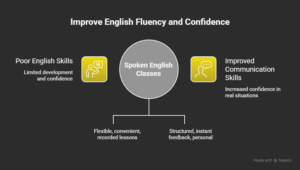
Imagine doing a job interview with clear thoughts in your head but not being able to express them because your English is a dreadful language and you lack confidence. That is the reality for many people. Speaking fluent English can hinder development, social engagement and confidence. The good news is that spoken English classes can improve confidence and fluency over time.

But, one question that most people have prior to starting is: should you take spoken English classes online or offline? Each mode has its merits and can help or hurt you, depending on your situation. This decision is also driven by how you practice, your learning style, your location, your budget and future goals.

Online spoken English classes are flexible and convenient. You can learn from anywhere, save time on the go, and you often have access to a recorded lesson to revise. On the other hand, online classes are face to face, structured learning experiences, and instant feedback, which are helpful for those learners who prefer direct, personal instruction and discipline.

This article details the difference between online versus offline spoken English classes, explaining how each works and who should be taught that method. By the end, you will have a direction and are empowered to make an informed decision that gives you improved communication skills and confidence in real world situations.

Elevate your speaking skills with our Spoken English Course!

What Defines Online Spoken English Classes?

Online spoken English classes take place via video calls or apps. Students live at home on computers or mobile phones. Teachers direct the class in real-time or video. Tools such as chat and screen sharing are also common in these classes. Participants talk with other participants at different times. The configuration also allows for flexible schedules, a plus for busy adults. The internet is also a quick way to access worksheets and videos. The time is sunk, so there is no travel. All courses are taught individually, or individually. They are on popular computers, and are easy to connect. This format has become popular because it is so convenient to apply in everyday life. Students can check on the recordings again for further improvement. In other words, online classes are primarily aimed at practical, virtual speaking skills.

What Defines Offline Spoken English Classes?

Online Speaking English classes take place in physical classrooms at designated times. Students attend face to face with others and sit in person. The teachers lead discussions, role plays and group activities on the spot. Whiteboards, books and printed handouts are on display. It is direct, personal interaction. Generally, classes are nightly or weekend. Localities range from schools to cities coaching centers. It relies on the use of body language and real-time feedback. Students establish networks with neighbors. It requires going to the place, it structure the routine. Online setups allow for an isolated space away from home distractions. The teacher can hear pronunciation and see facial expressions. These classes are also great for those who prefer more traditional methods of learning.

Key Advantages of Online Spoken English Classes

The beauty of online classes is flexibility. You can work or care for your family at any time, without a fixed schedule. This means learning at your own pace and stopping to learn when needed. The availability of internationally oriented teachers adds accents and instruction to your home. Low-rent space typically results in lower prices. Digital means the materials are less paper and cheaper. Apps and other technology aids check on progress with instant quizzes and feedback. Group chats allow you to practice without leaving your chair. For introverts, the screen is a safe space to speak up. Recordings allow for revisiting of difficult issues. This is the format busy professionals enjoy trying to fit into during break times. Parents commute by car, saving hours a week. Free trials are also common on the internet. This is an approach that can respond to unexpected changes in routine. Rural students are just as good. There are more online courses than in a local school.

Drawbacks of Online Spoken English Classes

Online classes are good, but they can be costly. The second problem is technical, such as a slow internet, that can disrupt session time. Not everyone has reliable equipment, which can lead to frustration. During prolonged hours, screen fatigue starts to erupt and decrease focus. Home distractions, such as family noise, distract the eye. Interactions between people via the phone may break down social bonds. Video can’t filter out subtle body language signals for teachers. Self-scholasticity becomes important because no physical presence dictates attendance. The time difference from one time zone to another complicates group classes with the other international peers. Data privacy issues abound on some platforms. Those new to tech may be overwhelmed by setup. Without practical materials, some ideas are abstract. Power outages completely hamper progress. Absent the classroom energy, motivation wanes. These factors can slow down learning in some learners.

Key Advantages of Offline Spoken English Classes

Offline classes excel in personal engagement. Direct interaction with teachers allows immediate corrections on pronunciation. Classmates provide real practice partners, building quick rapport. The structured environment encourages regular attendance and discipline. Hands-on activities like debates spark lively discussions. Physical resources, such as books and props, enhance understanding. Teachers can demonstrate gestures and expressions up close. Networking happens naturally, leading to lasting friendships. The dedicated space minimizes distractions from home life. For visual learners, whiteboards and charts clarify points effectively. Group dynamics create a supportive atmosphere for shy speakers. Offline settings often include cultural events to practice English in fun ways. Progress feels tangible through in-person feedback. This format suits those who thrive in social settings. Children and teens benefit from the routine it instills. Overall, the human element strengthens confidence faster.

Drawbacks of Offline Spoken English Classes

Offline classes come with limitations too. Fixed schedules clash with work or other duties, causing missed sessions. Travel time eats into your day, especially in traffic-heavy areas. Costs run higher due to venue rents and materials. Class sizes might crowd out individual attention. Weather or health issues can prevent attendance. Limited teacher options depend on local availability. No recordings mean relying on notes for reviews. Group pace may not suit everyone, leaving some behind. Commuting adds fatigue before lessons even start. In smaller towns, quality classes might be scarce. Rigid timings ignore personal emergencies. These issues make offline less practical for many modern lifestyles.

Cost Comparison Between Online and Offline Classes

Money plays a big role in choosing classes. Online options often cost less, with monthly fees starting at $20 to $50. No travel expenses save on gas or public transport. Digital materials cut down printing costs. Many platforms offer discounts for bulk sessions. Offline classes charge more, ranging from $50 to $100 per month. Venue fees and physical books add up. Commuting can tack on $10 to $20 weekly. However, some offline centers bundle extras like certificates. Online might include hidden tech costs like better internet plans. Budget-conscious learners lean toward online for value. Yet, offline provides perceived quality worth the price for some. Weigh your finances against the benefits each offers. Savings from online can fund more sessions overall. In the end, affordability tips the scale for many.

Flexibility and Convenience in Learning

Flexibility defines online classes. Schedule sessions around your life, not the other way around. Late-night options suit night owls. Pause and resume as needed without losing place. Offline demands commitment to set times, which builds habit but limits options. No flexibility for sudden shifts in plans. Online lets you learn from anywhere, even while traveling. Offline ties you to one spot. For working parents, online eases the juggle. Students in jobs find online slots during lunch. Offline suits those needing external structure to stay motivated. Convenience favors online in fast lives today. Yet, some value the break from screens that offline provides. Choose based on how your day flows.

Effectiveness for Building Spoken English Skills

Effectiveness depends on the learner. Online classes use tech to simulate real conversations through role plays. Interactive tools like polls engage students actively. Recorded feedback helps refine accents at your pace. Studies show online learners improve fluency with consistent practice. Offline shines in immersive settings, where spontaneous talks build quick thinking. Direct eye contact aids in reading cues. Group exercises mimic real-world chats. Research indicates offline boosts confidence through social bonds. Both methods work if commitment stays high. Online suits self-starters who review often. Offline helps those needing guidance. Track progress with speaking tests in either. Success comes from regular effort, not just the format.

Access to Quality Teachers and Resources

Online opens doors to teachers worldwide. Pick experts with native accents or specialized skills. Platforms vet instructors for quality. Resources include vast libraries of videos and exercises. Offline limits choices to local talent, which varies by area. Top teachers might cluster in big cities. Resources depend on the center’s budget. Online updates materials quickly with new trends. Offline offers tangible aids like flashcards. For rural learners, online levels the field. Urban dwellers might find strong offline options. Quality hinges on reviews and trials. Both can deliver if selected wisely.

Impact on Motivation and Discipline

Motivation varies by format. Online requires self-drive, as no one watches over you. Set goals to stay on track. Reminders from apps help. Offline builds discipline through routine attendance. Peers encourage showing up. The classroom vibe sparks energy. Online might lead to procrastination without structure. Offline combats this with accountability. Track habits in a journal for either. Rewards like treats after sessions boost drive. Discipline grows with practice in both. Choose what aligns with your style.

Social Interaction and Networking Opportunities

Social aspects differ greatly. Online connects you globally, chatting with diverse groups. Forums extend discussions beyond class. Networking happens via linked profiles. Offline fosters local ties, leading to meetups. Face-to-face bonds feel stronger. Group projects build teamwork. Online suits introverts who prefer typed chats first. Offline draws extroverts thriving on energy. Both offer practice in English socially. Expand your circle based on goals. Professional networks grow online easily. Personal friendships bloom offline.

Technology Requirements and Barriers

Tech plays a central role online. Need stable internet and a device with camera. Basic skills suffice, but glitches happen. Offline needs no tech, just showing up. Barriers like poor connectivity hinder online. Offline faces location barriers. Invest in good setup for online success. Offline avoids screen strain. For tech-savvy folks, online flows smooth. Others might prefer offline simplicity. Overcome barriers with preparation.

Suitability for Different Age Groups and Learning Styles

Age influences choice. Kids often need offline’s structure and play. Teens adapt to online’s fun apps. Adults favor online flexibility. Seniors might struggle with tech, preferring offline. Learning styles matter too. Visual types like offline boards. Auditory learners enjoy both talks. Kinesthetic benefit from offline activities. Online quizzes suit interactive styles. Match your traits to the method. Families can mix for best results.

Environmental and Health Considerations

Environment affects learning. Online saves travel, reducing carbon footprint. Stay home during illness. Offline exposes you to crowds, risking sickness. But fresh air from commuting refreshes. Online screen time tires eyes. Offline movement keeps you active. Health protocols in offline centers vary. Online offers comfort in bad weather. Balance eco-friendly choices with personal well-being.

Future Trends in Spoken English Education

Trends shift toward hybrid models blending both. Online grows with better tech like VR for immersion. Offline adapts with smaller groups. Demand for spoken skills rises in global jobs. Online reaches more people affordably. Offline maintains appeal for hands-on fans. Stay updated through reviews. Future favors adaptable learners.

How to Choose the Right Option for You

Assess your needs first. List priorities like cost, time, and style. Try free sessions in both. Read reviews from similar learners. Set clear goals for speaking improvement. Consult friends who took classes. Factor in your location and tech access. Make a pros-cons list. Decide what excites you most. Switch if needed after starting. Your choice should feel right for growth.

Elevate your speaking skills with our Spoken English Course!

Conclusion

1: Which of the sentences below is grammatically correct?

2: What's the difference between "there", "their", and "they're"?

3: Which tense is used for activities that are happening now?

4: What is a synonym for the word ‘happy’?

5: How many vowels are there in the English alphabet?

    Fill out the form to see the results


    Get Your English Proficiency Score

    Online vs Offline Spoken English Classes each bring strengths to the table. Online offers unmatched flexibility and access, ideal for busy or remote learners. Offline provides deep personal interaction, perfect for those seeking structure and social ties. Weigh costs, convenience, and effectiveness against your life. Many find online edges out for modern demands, saving time and money while delivering results. Yet, the best choice depends on you. Start today to unlock better communication. Your spoken English journey awaits—pick the path that leads to confidence and success.


    Spoken English Course for Guaranteed Confidence and Career Growth

    Spoken English Course by Entri App: Enhance your communication skills, gain certification, and boost your career with confidence.

    Join Now!

    Frequently Asked Questions

    Can online spoken English classes truly provide the same quality of pronunciation correction as offline classes?

    This question strikes at the heart of a major concern for language learners: the technical nuance of sound. For decades, the gold standard for pronunciation training was the physical classroom, where a teacher could lean in, demonstrate tongue placement, and offer immediate, nuanced feedback. The transition to digital learning has sparked legitimate debate about its efficacy for this precise skill. The answer is not a simple yes or no, but a nuanced exploration of how technology has evolved to meet—and in some ways, transform—this challenge.

    In a traditional offline setting, the advantages are sensory and immediate. A teacher can physically demonstrate how to form the soft “th” in “this” versus the hard “th” in “thick.” They can use mirrors, feel the vibration of vocal cords, and correct a student’s lip shape in real-time. This kinesthetic and visual feedback loop is powerful, especially for learners who are tactile or struggle with auditory processing. The environment allows for picking up on subtleties like breath control and the physicality of accent reduction. For a beginner utterly unfamiliar with English phonetics, this hands-on guidance can feel indispensable.

    However, to claim online classes lack quality pronunciation tools is to underestimate the sophistication of modern EdTech. High-definition video conferencing allows for clear, close-up views of a teacher’s mouth and jaw. Innovative platforms now integrate specialized tools:

    • Visual Speech Feedback: Some software provides waveform analysis or visual tongue placement charts, giving learners a scientific, objective view of their sound production—something impossible in an offline class.

    • AI-Powered Pronunciation Analysis: Advanced programs can record a student’s speech, compare it to a native model, and provide instant, granular feedback on specific phonemes, intonation patterns, and rhythm. This offers repetitive, patient, and data-driven correction that doesn’t depend on a teacher’s momentary attention in a busy classroom.

    • Recorded Playback and Self-Analysis: This is perhaps the most significant advantage. Students can record themselves during an online role-play, listen back immediately, and self-correct. They can compare their recording to the teacher’s model repeatedly, developing critical self-listening skills. In an offline class, the moment is ephemeral.

    The role of the teacher also shifts online. A skilled online instructor becomes a coach who leverages these tools. They might share their screen to highlight phonetic symbols, use digital whiteboards to map intonation, or send personalized audio clips with corrections after class. The feedback can be more structured and documented.

    The determining factor is often the learner’s profile. For severe articulation issues or learners who are profoundly auditory-kinesthetic, the offline model’s hands-on approach may be initially superior. However, for most learners—especially intermediates aiming for fluency and accent softening—the technological tools available in a well-designed online course offer a powerful, consistent, and recordable method for pronunciation improvement. The quality hinges less on the modality and more on the specific tools the platform or teacher employs and the learner’s discipline in utilizing them. Ultimately, the most effective path may be a hybrid: using online tools for daily practice and self-analysis, supplemented by occasional offline sessions for holistic feedback.

    I'm a shy learner. Will online classes actually help me build confidence to speak in the real world, or will they just let me hide behind a screen?

    This concern is incredibly valid and addresses the core purpose of spoken English classes: transferable confidence. The fear is that the digital barrier, while initially comforting, might become a crutch, creating a competent speaker in the virtual bubble who clams up in a real meeting or conversation. The dynamic between shyness, the online environment, and lasting confidence is complex and deeply personal.

    Let’s first acknowledge why online classes can be a powerful starting point for a shy learner. The psychological safety is real. You are in your own controlled environment. You can often choose to turn your video off initially or use a virtual background. The pressure of dozens of physical eyes on you is reduced to a gallery of small, sometimes distracted, faces on a screen. For someone with social anxiety, this lowered sensory overload can be the very key that unlocks their willingness to attempt speaking at all. The chat function allows them to type a question if their voice fails, ensuring they don’t get left behind. This “lower stakes” practice zone can facilitate the first, crucial step: producing language without paralyzing fear.

    However, the “hiding” risk is real if the learning journey stops there. The critical differentiator is course design and teacher skill. A high-quality online spoken English class for shy learners must be intentionally structured to systematically reduce the “safety net” and simulate real-world pressure in a graduated way.

    1. Structured Progression: It should start with low-pressure activities like repeating after the teacher, speaking in breakout rooms with just one partner, or answering via audio message instead of live. It should then progressively move to small group discussions, moderated Q&As, and finally, full-class presentations.

    2. Focus on Real-World Simulation: The best online classes use scenarios—simulating a job interview, a restaurant order, a phone call—with the video on. This forces the learner to manage eye contact (with the webcam), body language, and the cognitive load of the scenario, bridging the gap to physical interaction.

    3. Teacher-Led Community Building: A skilled online instructor fosters a supportive community. They normalize mistakes, use positive reinforcement, and create pair-share activities that build peer support. Knowing your classmates, even virtually, reduces the fear of judgment.

    Conversely, an offline class throws you into the deep end from day one. For some shy learners, this “sink-or-swim” approach catalyzes rapid adaptation. The unavoidable physical presence of others forces engagement, and the confidence built here is inherently tied to face-to-face interaction. The networking and friendships formed can provide a stronger support system. However, the risk is that a profoundly shy individual might completely withdraw, speak so softly they aren’t heard, or even drop out due to overwhelm.

    Therefore, the online advantage for the shy learner is not permanence, but controlled exposure therapy. It allows for the gradual building of linguistic competence alongside confidence, in manageable increments. The goal of a well-designed program is to make the screen “disappear,” focusing the learner on the task and the conversation. The final test is not performance in class, but whether the learner voluntarily turns their video on, initiates conversation, and eventually feels equipped to handle a real-world interaction. For many, the journey from hiding behind a screen to speaking confidently on a video call for work is a massive, transferable step toward in-person confidence. The screen isn’t a hiding place in a good program; it’s a training ground.

    How do I ensure I'm getting personalized attention in an online spoken English class compared to offline?

    The concern about becoming just another face in a digital crowd is paramount when investing in language learning. Personalization is the engine of rapid progress, as it addresses your specific errors, learning pace, and goals. The myth that offline classes inherently offer more personal attention and online classes are impersonal factories isn’t necessarily true—it’s a matter of structure, teacher ratio, and pedagogical design, not merely modality.

    In a physical classroom, personal attention is geographically bounded but not guaranteed. In a class of 20 students, even the most dedicated teacher has limited minutes per student per session. Attention often goes to the most vocal or struggling students. The “personalization” may consist of a teacher walking by your desk, hearing your group discussion, or calling on you directly. It’s real-time but often brief and sporadic. The advantage is the teacher’s ability to read the room—seeing who’s confused, who’s disengaged—and adjust accordingly using non-verbal cues. For some learners, this ambient supervision feels supportive.

    Online learning redefines the mechanics of personalization, making it more data-driven and asynchronous. Here’s how quality platforms ensure you’re seen and heard:

    1. Technological Enablers of Personalization:

    • Breakout Rooms: These are the online equivalent of small group work but with a crucial difference: the teacher can digitally “hop” between multiple private rooms in seconds, spending focused minutes with each small group or pair, often more efficiently than navigating a noisy physical classroom.

    • Individual Chat & Audio Channels: A student can privately message the teacher a question without disrupting the class or feeling shy. The teacher can respond via text or with a private audio message.

    • Recording Analytics: Some platforms provide teachers with dashboards showing each student’s talk time, participation frequency, and even quiz performance, helping them identify who needs outreach.

    • Digital Submissions and Feedback: You can submit recorded speeches, writing assignments, or pronunciation exercises through the platform. The teacher can then provide timestamped, detailed feedback—annotating your audio file or document—which is often more thorough than verbal comments that vanish into air.

    2. Structural Personalization in Course Design:
    The best online courses build personalization into their DNA:

    • Needs Analysis Onboarding: Starting with a detailed assessment of your goals (business English, IELTS, casual conversation), current level, and specific challenges (pronunciation, fluency, grammar).

    • Custom Learning Paths: Based on that analysis, you might get curated playlists of video lessons, specific practice exercises, or vocabulary sets relevant to your field (e.g., healthcare, IT).

    • One-on-One Sessions: Many online models blend group classes with mandatory or optional private tutoring sessions, guaranteeing direct focus.

    3. The Teacher’s Role as a Digital Coach:
    An expert online teacher leverages these tools strategically. Their personalization happens not just during the live session but around it:

    • Pre-Class: Sending you personalized article or video to review based on last week’s errors.

    • Post-Class: Providing tailored homework, follow-up exercises on a weak point (like past tense usage), or a personalized summary of your performance.

    • Asynchronous Feedback: Commenting on your forum posts or practice journal entries.

    The Verdict: Personal attention offline is often reactive and immediate (correcting you as you speak). Personal attention online, when done well, is proactive, documented, and continuous. It requires more intentional design from the provider and proactive communication from the student. To ensure you get it: choose platforms with small class sizes (max 6-8), look for those offering blended learning (group + private), and actively use the channels (chat, submission tools) available to you. The most personalized experience will ultimately depend on your willingness to engage and the provider’s commitment to leveraging their digital toolkit for individualized learning, not on the physical presence of a teacher.

    Can offline spoken English classes keep up with modern, technology-driven teaching methodologies?

    This question challenges the perception of offline classes as traditionalist holdouts in a digital education revolution. The image of rows of desks, a blackboard, and rote repetition is outdated. Modern, quality offline centers are not technological deserts; they are increasingly technology-integrated physical spaces that aim to harness the best of both worlds. Their ability to “keep up” depends entirely on their investment, teacher training, and pedagogical philosophy.

    The core strength of the offline class—immersive, distraction-free human interaction—is now being augmented, not replaced, by technology. Here’s how progressive offline institutions are evolving:

    1. The Flipped Classroom Model: This is a fundamental shift. Students use technology at home to access the initial input—watching video lessons, reviewing interactive slides, or completing grammar exercises on an app before class. The precious physical class time is then freed entirely for what it does best: speaking practice. The classroom becomes a workshop for application: debates, role-plays, simulations, and collaborative projects. The teacher transitions from lecturer to facilitator and coach, focusing on correcting spontaneous speech and guiding complex conversations.

    2. In-Class Tech as a Support Tool: Modern classrooms are equipped with:

    • Interactive Whiteboards (IWBs): These go far beyond chalk. Teachers can pull up YouTube videos instantly, display interactive quizzes (like Kahoot! or Quizizz) that the class plays together on their smartphones, annotate diagrams, and save the entire board’s content to share digitally after class.

    • Student Response Systems & Apps: Quick polls, word clouds, or collaborative brainstorming using apps like Mentimeter make participation anonymous and engaging, encouraging even shy students to contribute.

    • Audio/Visual Playback: High-quality speakers and screens allow for crisp listening exercises, analysis of movie clips, or recording of student role-plays for immediate playback and group analysis.

    3. Blended Learning Ecosystems: Most reputable offline centers now offer a companion Learning Management System (LMS) or app. This portal is where students access homework, supplementary video resources, vocabulary flashcards (like Anki decks), and digital portfolios of their work. It extends learning beyond the classroom walls and provides teachers with data on student preparation.

    The Limitations and Human Edge: Offline centers will likely never match the pure, global-scale data aggregation of massive online platforms. However, their integration of technology is curated and human-mediated. The teacher chooses the tech tool that best serves a specific pedagogical goal for that specific group of students. The technology is a means to amplify human connection and practice efficiency, not the end in itself.

    Furthermore, some “modern methodologies” are inherently human and thrive offline:

    • Communicative Language Teaching (CLT) & Task-Based Learning: These student-centered approaches, emphasizing real communication to complete tasks, are perfectly suited to the dynamic, spontaneous environment of a physical classroom.

    • Total Physical Response (TPR): Especially for beginners, using physical movement to reinforce language is naturally more effective in person.

    Conclusion: The dichotomy is false. The question isn’t whether offline can keep up with tech-driven methods, but how it integrates technology to enhance its inherent human advantages. A cutting-edge offline class uses tech for preparation, administration, and multimedia enrichment, while reserving physical co-presence for high-value, interactive, and psychologically nuanced communication practice that remains difficult to replicate perfectly online. When choosing an offline center, inquire about their use of technology in and out of class—it’s a key indicator of their modernity and pedagogical effectiveness.

    How significant is the networking aspect, and does online networking provide the same value as offline connections?

    The networking component of language learning is frequently underestimated, yet it can be as valuable as the linguistic skills gained. It transforms learning from a solitary academic exercise into a socially embedded activity, providing practice partners, motivation, and even professional opportunities. The nature and value of networking, however, differ profoundly between online and offline modalities, catering to different needs and yielding different kinds of capital—social and professional.

    Offline Networking: Building “Thick” Social Capital
    In a physical classroom, networking is organic, osmotic, and rich in “thick” social capital—the bonds characterized by strong emotional support, familiarity, and trust.

    • The Process: Connections form over shared commutes, during coffee breaks, in collaborative group work, or through post-class socials. You experience the full human being: their body language, their laughter, their unguarded moments.

    • The Value:

      • Deep Practice Partnerships: It’s easier to find a “study buddy” for practice outside class hours when you’ve built rapport in person.

      • Cultural & Local Integration: For immigrants or newcomers, offline classmates become a gateway to local life, recommendations, and a support system against isolation.

      • High-Trust Relationships: The shared, consistent physical investment fosters accountability and friendship. These bonds often outlast the course, becoming part of one’s social fabric.

      • Nuanced Communication Practice: Networking here involves all the subtleties of real-world socializing—reading cues, making small talk, building camaraderie—which is integral to language fluency.

    The value is deeply human and local, but its scope is geographically limited to your classmates and their immediate circles.

    Online Networking: Building “Broad” & Strategic Capital
    Online networking is intentional, platform-mediated, and excels at building “broad” social capital—a wider network of weaker ties that are highly valuable for information access and professional advancement.

    • The Process: Connections are made through breakout room conversations, course forums, LinkedIn groups attached to the course, or global learner communities on platforms like Discord. Profiles and shared digital workspaces are the first points of reference.

    • The Value:

      • Global Perspective & Practice: Your network can span continents. Practicing with a professional in Berlin, a student in São Paulo, and a retiree in Tokyo exposes you to diverse accents, cultural contexts, and global English usage.

      • Professional & Niche Connections: Online platforms often attract learners with specific professional goals. You can network with other engineers, doctors, or entrepreneurs seeking Business English, creating potential for global professional connections.

      • Asynchronous & Interest-Based: Forums and groups allow for networking on your own time. You can connect with someone based on a comment they made days ago or a shared interest in a niche topic.

      • Lower Social Barrier: For introverts or those with social anxiety, initiating a direct message or forum reply is less daunting than approaching someone physically.

    The value here is breadth, diversity, and professional relevance, but it may lack the spontaneous depth and emotional solidarity of offline bonds.

    Comparative Value & Strategic Choice:

    • For Social Integration & Deep Friendships: Offline networking provides superior, tangible value. The relationships are more likely to become part of your real-world social life.

    • For Professional Advancement & Global Mindset: Online networking can be more valuable. It expands your horizons beyond your city and can directly contribute to career development in a globalized economy.

    • For Language Practice Itself: Both are excellent but different. Offline gives you practice in the nuanced, full-sensory social interactions of daily life. Online gives you practice in the digital communication (video calls, messaging) that dominates modern professional life.

    Ultimately, the “same value” is the wrong metric. They provide different kinds of value. The most strategic learners might even seek both: using an online course for global professional networking while participating in a local conversation club for social integration and immersive practice. Your choice should align with whether your primary goal is to build a local community or a global network.

    For someone with a very busy, unpredictable schedule, is committing to any fixed spoken English class (online or offline) a mistake?

    The challenge of the busy professional or caregiver is real: the fear of wasting money on missed sessions and the guilt of falling behind. However, framing this as a choice between “fixed class” and “no class” is a false dichotomy. The real solution lies in strategically selecting the type of fixed commitment and complementing it with flexible practice tools. A completely unstructured approach (like only using apps) often fails for building speaking fluency due to lack of accountability and real human interaction.

    The Pitfall of “No Commitment”
    While language learning apps (Duolingo, Babbel) and YouTube tutorials offer total flexibility, they primarily teach about the language, not the spontaneous, interactive skill of speaking. Without a fixed point of accountability—a live session with a teacher or peers—practice is often the first item sacrificed when life gets busy. The result is stagnant fluency despite consistent vocabulary dabbling.

    Why a “Fixed” Element is Crucial (Even for the Unpredictable)
    A scheduled class, whether online or offline, creates a non-negotiable appointment in your calendar. It provides:

    • Rhythm and Priority: It forces you to protect that time, treating your language development as a professional commitment.

    • Human Accountability: To a teacher and peers, which is a powerful motivator.

    • Structured Progression: Ensuring you move systematically through competencies rather than random topics.

    Strategies for the Unpredictably Busy Learner:
    The key is to choose the right kind of fixed commitment and build a safety net around it.

    1. Opt for Online with Superior Flexibility Features:

    • Look for “Rolling Admission” or “On-Demand” Group Classes: Some platforms offer the same course module that starts every Monday, allowing you to skip a week and join the next cycle without missing content.

    • Prioritize Platforms with Unlimited Make-Up Classes: The best models for busy people allow you to book into any similar-level class during the week if you miss your regular slot.

    • Choose Small-Group or Private Formats: These are easier to reschedule directly with a teacher than large, institutional classes.

    2. The Hybrid Core Solution: Fixed + Flexible
    This is often the ideal model for unpredictable schedules.

    • The Fixed Core: One guaranteed, scheduled session per week (e.g., a 60-minute private online lesson or a small group class). This is your anchor.

    • The Flexible Perimeter: Surround this core with on-demand practice:

      • Conversation Exchange Apps: (e.g., Tandem, HelloTalk) for 15-minute chats when you have time.

      • AI Conversation Partners: Tools like ChatGPT (with voice features) or dedicated ELSA for impromptu practice.

      • Recorded “Office Hours” or Q&A Sessions: Provided by your course to review missed topics.

    3. Negotiate and Communicate:
    If choosing a more traditional fixed-schedule course (online or offline):

    • Inquire about recorded sessions. Can you access the recording if you miss?

    • Ask about the policy for missed classes. Do they offer credit, a make-up, or access to supplementary materials?

    • Choose a teacher or institute known for flexibility and clear communication.

    Conclusion: Committing to a fixed spoken English class is not a mistake for someone with a busy schedule; it is often the only way to ensure progress. The mistake is choosing the wrong type of fixed structure. The optimal path is to find a program that offers a core of live, interactive accountability (which is irreplaceable for speaking) but wraps it in a ecosystem of flexible, on-demand resources and a compassionate make-up policy. Your goal is not to never miss a class, but to have a system that ensures a miss doesn’t derail your entire learning journey. The discipline of protecting that one core weekly appointment, however challenging, will yield far greater fluency gains than years of unfocused, flexible dabbling.

    How do I vet the quality and credibility of an online spoken English platform versus a local offline institute?

    Investing in spoken English classes is an investment of time, money, and hope. Ensuring you choose a credible provider is critical. The vetting process for online platforms and offline institutes shares common principles but uses different tools and focuses on different red flags and assurances due to their inherent structures.

    Vetting an Online Spoken English Platform: The Digital Due Diligence
    The anonymity and scale of online platforms require a investigative, data-driven approach.

    1. Transparency of Teacher Credentials: Go beyond “our teachers are certified.” Look for:

      • Public Teacher Profiles: Can you see the teacher’s bio, qualifications (CELTA, DELTA, MA in TESOL are gold standards), accent, specialization, and years of experience before you buy?

      • Verification: Do they verify teacher identities and credentials?

      • Sample Videos: Can you watch a short intro or teaching sample from key instructors?

    2. Curriculum and Methodology Scrutiny: Avoid platforms that are just “conversation mills.”

      • Is there a published syllabus or learning path? It should show a logical progression from A1 to C1, integrating grammar, vocabulary, and speaking skills.

      • What methodology do they cite? Look for mentions of Communicative Language Teaching (CLT), Task-Based Learning, or a flipped classroom model.

      • Are materials original and level-appropriate? Request sample lesson materials or watch a demo class.

    3. Technology and User Experience (UX):

      • Take a Platform Tour: Before paying, can you explore the interface? Is it intuitive?

      • Tech Requirements: Are they clearly stated? A good platform will tell you the needed internet speed.

      • Demo or Trial Class: A non-negotiable. This tests video/audio quality, teacher skill, and class dynamics.

    4. Social Proof and Deep-Dive Reviews:

      • Go Beyond Star Ratings: Read detailed reviews on sites like Trustpilot, Reddit (r/languagelearning), or independent review blogs. Look for patterns: “great for beginners but not advanced,” “cancelation issues,” “tech glitches.”

      • Check for External Validation: Has the platform been featured in reputable educational or tech publications (EdSurge, TechCrunch)? Do they have academic partnerships?

    5. Policies – The Fine Print:

      • Cancelation and Refund Policy: Is it clear and fair? A 7-day money-back guarantee is a strong sign of confidence.

      • Data Privacy Policy: Where is your data (recordings, personal info) stored? How is it used?

      • Make-up Class Policy: Crucial for busy learners.

    Vetting a Local Offline Institute: The Physical and Community Audit

    1. The Physical Reconnaissance:

      • Visit the Center Unannounced: Assess the learning environment. Is it clean, well-lit, and conducive to learning? Are classrooms equipped with modern tools (IWBs, good acoustics)?

      • Observe a Class (if permitted): This is the single best vetting tool. Watch student-teacher interaction, the balance of teacher talk vs. student talk, and the overall energy.

    2. Teacher Qualifications and Turnover:

      • Ask to meet potential teachers. Inquire about their qualifications and experience teaching your specific demographic (adults, professionals, exam prep).

      • Ask about staff turnover. High turnover can indicate poor management and inconsistent learning.

    3. Curriculum and Class Structure:

      • Request the coursebook or syllabus. Is it from a reputable publisher (Cambridge, Oxford) or well-designed in-house?

      • Ask about the maximum class size. For spoken English, anything over 12 is likely detrimental.

      • Inquire about how they assess progress and provide feedback.

    4. Local Reputation and Student Body:

      • Ask for contact info of current or former students (with their permission). Speak to them directly.

      • Who attends? Are they students, professionals, immigrants? This indicates the institute’s niche and whether you’ll fit in.

      • Check with local universities or community centers for recommendations.

    5. Administrative Professionalism:

      • Are they clear and transparent about costs, schedules, and what happens if you miss a class?

      • Do they provide a formal enrollment agreement?

    The Universal Vetting Questions for Both:

    • “Can you describe a typical lesson for a student at my level?”

    • “How do you measure and report on my progress?”

    • “What happens if I feel the class level is too easy or too hard for me?”

    • “What is your philosophy on error correction?”

    Final Advice: Trust your gut feeling from the trial class or visit. Did you feel engaged, respected, and challenged? Credibility is not just about certificates on the wall or a slick website; it’s about a coherent, transparent, and learner-centered ethos that is evident in every interaction.

    What are the hidden or indirect costs I should budget for with both online and offline classes?

    The advertised monthly fee is just the tip of the financial iceberg. True budgeting for language learning requires anticipating the ancillary costs that support the core instruction. These hidden costs differ significantly between modalities and can impact the overall value proposition.

    Hidden Costs of Online Spoken English Classes

    1. Technology Infrastructure Investment:

      • Hardware Upgrades: A basic laptop or phone might not suffice. For optimal experience, you may need a quality webcam (for clear teacher view), a good headset with microphone (critical for clear audio input/output, reducing background noise), and perhaps a secondary monitor for viewing materials while on camera. This can be a one-time cost of $100-$300.

      • Software & Subscriptions: While the class platform is provided, you might need a reliable PDF reader, office suite, or specific apps recommended by the teacher. Antivirus and VPN subscriptions for privacy/access could be relevant.

      • Internet Upgrade: Standard browsing bandwidth may choke on HD video calls. You might need to upgrade to a more expensive, higher-speed plan with better reliability, adding $10-$30 to your monthly internet bill.

    2. The “Home Classroom” Setup:

      • Ergonomics & Environment: Learning from a kitchen chair can cause fatigue. Investing in a proper chair, desk, and lighting creates a dedicated learning space. You might need soundproofing solutions (acoustic panels, a simple door sweep) to minimize home distractions, a cost often overlooked.

    3. Supplementary Learning Resources:

      • While platforms provide materials, serious learners often buy additional grammar workbooks, vocabulary builders, or novel subscriptions (like Kindle Unlimited for graded readers). You may also pay for premium features on practice apps (e.g., Elsa Speak, Speechling) for extra practice.

    4. Time and Mental Energy:

      • Not a monetary cost, but a real one. The cognitive load of managing technology, troubleshooting glitches, and the intense focus required for screen-based learning (leading to potential eye strain and mental fatigue) is an indirect cost to your well-being.

    Hidden Costs of Offline Spoken English Classes

    1. The Commuting Ecosystem:

      • Transportation: This is the most significant variable. Costs include fuel, parking fees, tolls, or public transit passes. For a twice-weekly class, this can easily add $20-$80 per month.

      • Time as a Currency: The commute time is a massive hidden cost—time that could be used for earning, studying, or family. Calculate the hourly opportunity cost.

      • Vehicle Wear & Tear: More miles mean more frequent servicing.

    2. Convenience and Ancillary Purchases:

      • Food & Drink: Grabbing a coffee on the way to class or buying lunch if classes span mealtimes becomes a habitual expense.

      • Childcare or Pet Care: If class time conflicts with family responsibilities, you may need to pay for a sitter or dog walker.

      • Appropriate Attire & “Grooming”: Unlike online (where you might wear pajama bottoms), attending in person may require a more presentable wardrobe and associated grooming costs, especially if coming from work.

    3. Course Materials and Extras:

      • Physical Textbooks and Workbooks: Offline courses often require specific, sometimes expensive, published coursebooks ($30-$80 each).

      • Printing and Photocopying: Even if handouts are provided, you might incur costs for printing extra copies or notes.

      • “Mandatory” Extras: Some institutes bundle costs for “registration fees,” “activity fees” for cultural events, or compulsory exam fees.

    4. Geographic and Temporal Rigidity Cost:

      • The “Missed Class” Sunk Cost: If you miss an offline class due to illness or work, you typically lose that session and its fee entirely, with little recourse. Online platforms more commonly offer make-ups or recordings.

      • Location-Locked Pricing: You cannot shop globally for better rates; you’re subject to the local market’s pricing, which in expensive cities can be inflated.

    Budgeting for the True Total Cost of Ownership (TCO):
    To compare fairly, create a 6-month TCO estimate for each option:

    • Online TCO: (Monthly Fee x 6) + (One-time Tech Setup) + (Internet Upgrade x 6) + (Estimated Supplementary Apps/Books).

    • Offline TCO: (Monthly Fee x 6) + ((Transportation + Ancillary) x 6) + (Cost of Materials) + (Potential Sunk Costs of Missed Classes).

    This exercise often reveals that while the online sticker price is lower, the required tech investment is front-loaded. Conversely, the offline sticker price is higher, and the recurring commuting costs are a relentless drain. The “cheaper” option truly depends on your existing setup, location, and lifestyle. By budgeting for these hidden costs, you avoid financial surprise and can make a choice based on a complete understanding of value.

    Can I effectively switch between online and offline modes midway through my learning journey, and what should I consider?

    The question of switching modalities speaks to the evolving nature of a learner’s life circumstances, goals, and self-understanding. Perhaps you began with online classes during a busy work period but now crave in-person interaction, or you started offline for discipline but need the flexibility of online due to a relocation. The good news is that switching is not only possible but can be strategically beneficial if done thoughtfully. However, it’s not a simple plug-and-play transition; it requires careful consideration of continuity, pedagogical alignment, and psychological adjustment to maximize the benefits and minimize disruption.

    The “Why” Behind the Switch: Aligning Modality to Current Need
    First, clarify your primary motivation for considering a switch, as this will guide your choice:

    • Life Circumstance Changes: Relocation, new job hours, family responsibilities. This is a pragmatic switch where the new modality accommodates your new reality.

    • Goal Evolution: Perhaps you began learning for general fluency but now need specific Business English or IELTS preparation that’s better offered in one format.

    • Learning Style Discovery: You may have realized you’re not progressing as hoped. An auditory-social learner might stagnate online and thrive offline, while a self-paced visual learner might feel overwhelmed in a fast-paced physical classroom.

    • Plateau Breaking: Sometimes, a change of environment, teacher, and peer group can provide a fresh perspective and renewed motivation to break through an intermediate plateau.

    Key Considerations for a Smooth Transition:

    1. Assessment and Continuity: This is the most critical step. Before leaving your current course:

      • Get a Formal Assessment: Request a detailed progress report or certificate indicating your exact level (e.g., CEFR B1.2) from your current provider. What specific competencies have you mastered? What are your known gaps?

      • Curriculum Mapping: When researching the new course, don’t just ask about “Intermediate Level.” Provide your assessment and ask: “Where would a student with these skills fit in your curriculum? Will I be repeating a lot of material, or will I be challenged from day one?” Avoid paying for redundant learning.

    2. The Pedagogical Bridge: Online and offline classes can differ significantly in teaching methodology, even at the same level.

      • Online to Offline: Be prepared for a potential shift from a tech-aided, potentially more self-directed model to a faster-paced, socially intensive environment. Your speaking stamina and ability to think on your feet in real-time may need rapid development. You might be stronger in structured tasks but weaker in spontaneous chat.

      • Offline to Online: You may need to adapt to a different rhythm. The class might have more structured turn-taking or use breakout rooms instead of free-flowing group chatter. You’ll need to be more proactive in claiming speaking time and comfortable with the slight delay of digital communication. Your ability to read physical cues will temporarily be less useful.

    3. The Social and Psychological Shift:

      • Building New Relationships: Switching means starting over socially. In an offline class, this means integrating into an established peer group. In an online class, it means building connections through a screen. Mentally prepare for this new social dynamic.

      • Accountability Structures: If moving from offline (high external accountability) to online (higher self-accountability), you must immediately establish strong personal discipline routines to compensate.

    4. Financial and Contractual Logistics:

      • Exit Strategy: Understand the cancellation policy of your current program. Can you pause, or do you need to complete a payment cycle?

      • Entry Strategy: Look for a new program that offers a trial period or a short-term commitment (one-month module) to test the fit before a long-term investment.

    Strategic Advantage of a Hybrid Approach:
    Instead of a full switch, consider a hybrid model as a permanent strategy. You might take a weekly online class for consistent, flexible instruction and supplement it with a bi-weekly in-person conversation café for immersive, social practice. This gives you the benefits of both worlds without a jarring transition.

    Conclusion: Switching modalities is a viable and sometimes excellent strategy for continued growth. The key to success lies in treating it not as a simple transfer but as a managed transition. By securing a clear assessment of your current abilities, carefully mapping them to the new curriculum, and preparing for the pedagogical and social differences, you can turn the switch into a powerful catalyst for accelerated learning rather than a disruptive setback. The most adaptable learners are often the most successful.

    What long-term outcomes and ROI should I realistically expect from investing in spoken English classes, and does the choice of mode affect this?

    Investing in spoken English classes is an investment in human capital, with expected returns that extend far beyond the classroom. However, setting realistic expectations is crucial to avoid frustration and to accurately measure success. The Return on Investment (ROI) should be evaluated in both tangible and intangible currencies, and while the mode of learning influences the journey, the ultimate outcome is predominantly determined by learner commitment, quality of instruction, and consistent practice over time.

    Defining Realistic Long-Term Outcomes:
    Outcomes vary based on starting level, intensity, and goals, but a realistic framework for an adult learner taking 3-5 hours of instruction plus practice per week might look like this:

    • 6-Month Outcome (Short-Term): Increased confidence in structured settings. Ability to handle routine daily conversations (shopping, directions, simple social exchanges) with fewer hesitations. Mastery of several key grammatical tenses in speech. Noticeable improvement in pronunciation of problematic sounds. This is the “foundation-laying” phase where the ROI is primarily in reduced anxiety and functional ability.

    • 12-18 Month Outcome (Medium-Term): Sustained fluency in broader social and professional contexts. Ability to participate in extended discussions on familiar topics, express opinions, and narrate stories. Development of strategic competence (ability to paraphrase when stuck). This is where tangible career ROI often begins—perhaps a promotion to a client-facing role, successful participation in international meetings, or a higher score on a proficiency exam like IELTS.

    • 24+ Month Outcome (Long-Term): Approaching advanced proficiency. Ability to use English persuasively, diplomatically, and creatively. Comfort with nuance, humor, and cultural references. This level of ROI can be transformative: qualifying for overseas postings, leading global teams, accessing top-tier international graduate programs, or fully integrating into a new cultural environment.

    The ROI Calculation: Tangible vs. Intangible Returns

    • Tangible ROI:

      • Career Advancement: Salary increases, promotions, bonuses for language skills, access to higher-paying jobs or markets.

      • Educational Access: Admission to English-medium universities, qualification for scholarships.

      • Exam Success: Scores needed for immigration (IELTS, PTE) or professional certification.

      • Cost: Weighed against the income and opportunities generated.

    • Intangible ROI (Often More Valuable):

      • Cognitive Benefits: Improved memory, multitasking, and problem-solving skills.

      • Social & Cultural Capital: Expanded social networks, deeper cross-cultural understanding, ability to consume global media and literature in the original language.

      • Confidence and Identity: A profound shift in self-perception—from someone hindered by language to someone capable of navigating the world. This confidence permeates all areas of life.

      • Autonomy: Freedom from translators or dependence on others in foreign environments.

    Does the Mode (Online vs. Offline) Affect the Long-Term ROI?
    The mode influences the pathway and efficiency of achieving outcomes, which can indirectly affect the ROI timeline and nature, but not the ultimate potential ceiling of proficiency.

    • Online’s Impact on ROI: The flexibility often leads to better consistency over the long term for busy adults, which is the single greatest predictor of success. The access to global teachers may accelerate cultural and accent comprehension. The comfort factor may lead to more frequent practice. Its efficiency (no commute) can mean the same time investment yields more actual learning minutes. Therefore, for professionals, the time-to-ROI might be shorter due to better adherence and practice integration into daily life.

    • Offline’s Impact on ROI: The strong social bonds and immersive environment may lead to higher motivation and faster development of spontaneous speaking reflexes in the early to mid-stages. The networking ROI is more likely to be local and immediately socially valuable. For learners who need external discipline, the structured routine ensures progress where self-paced online learning might fail, protecting the initial financial investment from being wasted.

    The Critical Overarching Factor: The Learner Variable
    The mode is a vehicle, but the learner is the driver. A highly motivated, self-disciplined learner using quality online resources can achieve a higher ROI than an unmotivated learner in a premium offline institute. Conversely, a social learner who thrives on energy will extract more value from offline interactions. The quality of instruction (engaging methodology, qualified teacher) is a more significant determinant of outcome than the delivery channel.

    Final Realistic Expectation: Do not expect miracles in 3 months. Expect a gradual, sometimes non-linear, accumulation of skill and confidence. The highest ROI—both tangible and intangible—accrues to those who view classes not as a finite course but as the structured core of a lifelong practice. The choice of mode should be the one you can stick with consistently, enjoy enough to persist, and that best aligns with your life context and learning personality. That sustained engagement, more than any other factor, will determine your ultimate return.

    Share61SendShare

    Sravan Prakash

    Related Posts

    Capgemini Accounts Interview Questions and Answers
    Accounting

    Capgemini Accounts Interview Questions and Answers

    February 8, 2026
    Denim Stitching Techniques for Beginners
    Articles

    Denim Stitching Techniques for Beginners

    February 8, 2026
    A Day in the Life of a Performance Marketer Daily Tasks, Tools, Skills & Career Path
    Articles

    A Day in the Life of a Performance Marketer: Daily Tasks, Tools, Skills & Career Path

    February 7, 2026

    More to Explore

    1. Basic Grammar Topics for Spoken English
    2. Basic English Grammar Rules of Preposition
    3. What are Determiners in English Grammar?
    4. What is a Verb? Types of Verbs
    5. Common Errors in English with Explanation
    6. Figures of Speech in English
    7. Tenses in English with Examples
    8. Direct and Indirect Speech in English
    9. Spoken English tricks for Fluency in Speech

    Spoken English Training In Different Cities

    1. Spoken English Classes in Kochi
    2. Spoken English Classes in Trivandrum
    3. Spoken English Classes in Thrissur
    4. Spoken English Classes in Kottayam
    5. Spoken English Classes in Kollam
    6. Spoken English Classes Trichy
    7. Spoken English Classes in Jaipur
    8. Spoken English Classes in Coimbatore
    9. Spoken English Classes in Madurai
    10. Spoken English Classes in Vijayawada
    11. Spoken English Classes in Bhopal
    12. Spoken English Classes in Pune
    13. Spoken English Classes in Bangalore
    14. Spoken English Classes in Ahmedabad
    15. Spoken English Classes in Hyderabad
    16. Spoken English Classes in Chennai
    17. Spoken English Classes in Delhi
    18. Spoken English Classes in Indore

    Select your Spoken English Course

    1. Entri Eva AI Powered Spoken English Course
    2. Spoken English Course for School Going Students
    3. Spoken English Course for Job Seekers
    4. Spoken English Course for College Going Students
    5. Spoken English Course for Working Professionals
    6. Spoken English Course for Housewives
    7. OET Training Classes
    8. Professional English Course in Hindi

    More Courses

    • Career Level-Up Course
    • German language Course
    • Hospital Administration Course
    • Montessori Teacher Training Course
    • Advanced Yoga Instructor Course
    • BIM Course
    • Nursery Teacher Training Course
    • Yoga Instructor Course
    • Advanced Fashion Designing and Boutique Management

    Courses

    • Data Science With GenAI
    • AI Enhanced Full Stack Developer Course
    • AWS Solution Architect Course
    • AI Powered Software Testing Course
    • AI-Powered Cybersecurity Course in Kerala
    • AI Enhanced Python Programming Course
    • AI Powered Data Analytics Course
    • AI-Integrated UI/UX Design Course in Kerala
    • Data Science Course in Kerala
    • Data Analytics Courses in Kerala
    • Full Stack Developer Course in Kerala
    • AI Powered Digital Marketing Course
    • Digital Marketing Course in Kerala
    • Practical Accounting Course
    • Structural Design Course
    • Quantity Surveying Course
    • Robotics and AI Course
    • Embedded Systems Course in Kerala
    • BIM Course
    • MEP Course
    • Stock Market Course
    • Stock Market Course in Malayalam
    • Stock Market Course in Tamil
    • Forex Trading Course
    • Mutual Funds Course
    • Mutual Funds Course in Kerala
    • Mutual Funds Course in Tamil
    • PwC Edge : Strategic Accounting and Finance Programme
    • SAP FICO Training
    • SAP MM Training
    • SAP SD Training
    • ACCA Online Course
    • HR Management Course
    • CMA USA Course
    • Enrolled Agent Course

    Company

    • Become a teacher
    • Login to Entri Web

    Spoken English Courses

    • Spoken English Course
    • Spoken English Course in Malayalam
    • Spoken English Course in Hindi
    • Spoken English Course in Tamil
    • Spoken English Course in Telugu
    • Spoken English Course in Kannada
    • Spoken English Course for Housewives
    • Spoken English Course for Working Professionals
    • Spoken English Course for School Students
    • Spoken English Course for College Students
    • Spoken English Course for Job Seekers
    • AI Powered Spoken English Course

    Quick Links

    • Explore Free Courses
    • Aptitude Questions
    • Articles
    • Videos
    • Entri Daily Quiz Practice
    • Current Affairs & GK
    • News Capsule – eBook
    • Preparation Tips
    • Kerala PSC Gold
    • Entri Skilling
    • Kerala PSC

    Other Courses

    • Montessori Teachers Training
    • Performance Marketing Course
    • German Language Course
    • Yoga Teacher Training Course
    • Options Trading Course
    • German Language A1 Course
    • German Language A2 Course
    • German Language B1 Course
    • German Language B2 Course
    • Hospital Administration Course
    • Advanced Fashion Designing and Boutique Management

    Popular Exam

    • IBPS Exam
    • SBI Exam
    • Railway RRB Exam
    • Kerala PSC
    • Tamil Nadu PSC
    • Telangana PSC
    • Andhra Pradesh PSC
    • MPPSC
    • UPPSC
    • Karnataka PSC
    • Staff Selection Commission Exam
    • GATE

    © 2023 Entri.app - Privacy Policy | Terms of Service

    No Result
    View All Result
    • Kerala PSC
      • Kerala PSC General
        • Kerala PSC Exams
        • KAS Exam
        • Kerala PSC VEO Notification
        • Kerala Police SI
        • Kerala PSC LDC Notification
        • Kerala PSC Village Field Assistant Notification
        • Kerala PSC LD Typist Notification
        • Kerala PSC Food Safety Officer
        • Kerala PSC Excise Inspector Notification
        • Kerala PSC BDO Notification
        • Kerala PSC CPO Notification
        • Kerala PSC LGS Notification
        • Fire and Rescue Officer
        • Women Fire and Rescue Officer
      • Kerala PSC Teaching
        • Kerala PSC HSA
        • Kerala PSC HSST
        • KTET
        • LP/UP Assistant
        • KVS
        • Railway Teacher
      • Kerala PSC Technical
        • LSGD AE
        • Draftsman/Overseer
        • IEO
        • ATP
        • Polytechnic Lecturer
        • AE Electronics
        • Assistant Engineer
    • Banking
      • IBPS PO Notification
      • IBPS Clerk Notification
      • SBI PO Notification
      • SBI Clerk Notification
      • SBI SO Notification
      • SBI Apprentice Notification
      • Canara Bank PO Notification
      • Indian Bank PO Notification
      • RBI Assistant Notification
      • RBI Office Attendant Notification
      • IBPS RRB Notification
      • IBPS RRB Office Assistant Notification
    • Skilling
      • Coding
      • Spoken English
      • Stock Market
        • Stock Market Weekly Report
      • Digital Marketing
      • Accounting Course
      • SAP
      • German
      • IELTS
      • Quantity Survey
      • MEP
      • Structural Design
      • Montessori
      • Yoga Teaching
      • HR Management
      • Embedded Systems
    • Courses
      • AI Powered Data Science Course
        • Data Science Malayalam
        • Data Science Course in Tamil
        • Data Science Course in Telugu
        • Data Science Training in Kochi
        • Data Science Training in Trivandrum
        • Data Science Course in Calicut
        • Data Science Training in Thrissur
      • AI Powered Data Analytics Course
        • Data Analytics Course in Malayalam
        • Data Analytics Course in Tamil
        • Data Analytics Course in Telugu
      • BIM Course in Kerala
        • BIM Course in Kochi
        • BIM Course in Trivandrum
        • BIM Course in Calicut
      • Quantity Surveying Course
        • Quantity Surveyor Course in Tamil
        • Quantity Surveying Course in Telugu
        • Quantity Surveyor Course in Hyderabad
        • Quantity Surveying Course in Chennai
        • Quantity Surveying Course in Vijayawada
        • Quantity Surveying Course in Guntur
        • Quantity Surveying Course in Warangal
        • Quantity Surveying Course in Karimnagar
      • Structural Design Course
        • Structural Design Course in Hyderabad
        • Structural Design Course in Chennai
        • Structural Design Course in Kochi
        • Steel Structure Design Course
        • RCC Design Course
      • MEP Course
        • MEP Design Course in Kerala
        • HVAC Course
        • MEP Course in Kochi
      • Robotics and AI Course
      • Embedded System Course
        • Embedded Systems Software Engineering in Calicut
        • Embedded Systems Software Engineering in Kochi
        • Embedded Systems Software Engineering in Trivandrum
      • AI-Enhanced Full Stack Developer Course
        • Full Stack Development Malayalam
        • Full Stack Development Hindi
        • Full Stack Development Tamil
        • Full Stack Development Telugu
        • Full Stack Development Kannada
      • Stock Market Course
        • Stock Market Course in Malayalam
        • Stock Market Course in Tamil
        • Options Trading Course
      • Mutual Funds Course
        • Mutual Funds Course in Kerala
        • Mutual Funds Course in Tamil
      • Forex Trading Course
      • Spoken English Course
        • Spoken English Course in Malayalam
        • Spoken English Course in Hindi
        • Spoken English Course in Telugu
        • Spoken English Course in Tamil
        • Spoken English Course in Kannada
      • AI-Driven Python Programming Course
      • Ui Ux Designer Course
      • AI-Powered Software Testing Course
        • Software Testing Course in Malayalam
        • Software Testing Course in Tamil
        • Software Testing Course in Telugu
      • Ai-Powered Cybersecurity Course
      • AI Tools Mastery
      • AI Powered AWS Solutions Architect Associate Course
      • AI Powered Practical Accounting Course
        • Accounting Course in Malayalam
        • Accounting Course in Tamil
        • GCC VAT Course
        • Taxation Course
        • GST Practitioner Course in Kerala
        • GST Course
        • UAE Accounting
        • Tally Course
        • Zoho Books Training
      • SAP Training Courses
        • SAP FICO Course
        • SAP MM Course
        • SAP SD Training
        • SAP FICO Course in Tamil
        • SAP MM Course in Tamil
      • Enrolled Agent Course in Kerala
        • Enrolled Agent Course in Calicut
        • Enrolled Agent Course in Kochi
        • Enrolled Agent Course in Trivandrum
      • ACCA Training Online
        • ACCA Course in Kerala
        • ACCA Performance Management PM F5 Course
        • ACCA Taxation TX F6 Course
        • ACCA Financial Reporting FR F7 Course
        • ACCA Audit and Assurance AA F8 Course
        • ACCA Financial Management FM F9 Course
      • CMA USA Online Classes
      • HR Management Course
        • HR Management Course in Kochi
        • HR Management Course in Trivandrum
        • HR Management Course in Calicut
      • PwC Edge : Strategic Accounting and Finance Programme
      • Performance Marketing Course
      • Mern Stack Developer Course
        • Full Stack Developer Course in Kochi
        • Full Stack Developer Course in Trivandrum
        • Full Stack Developer Course in Calicut
        • Full Stack Developer Course in Pune
        • Full Stack Developer Course in Bangalore
        • Full Stack Developer Course in Hyderabad
        • Full Stack Developer Course in Chennai
        • Full Stack Developer Course in Indore
        • Full Stack Developer Course in Jaipur
        • Full Stack Developer Course in Coimbatore
      • AI Powered Digital Marketing Training
        • Digital Marketing Course in Kerala
        • Digital Marketing Course in Kochi
        • Digital Marketing Course in Trivandrum
        • Digital Marketing Course in Calicut
        • Digital Marketing Course in Kollam
        • Digital Marketing Course in Thrissur
        • Digital Marketing Course in Kottayam
        • Digital Marketing Course in Kannur
      • Hospital and Healthcare Administration
      • Montessori Teacher Training
        • Montessori Teacher Training in Calicut
        • Montessori Teacher Training in Kochi, Ernakulam
        • Montessori Teacher Training in Trivandrum
        • Montessori Teacher Training in Kollam
        • Montessori Teacher Training in Malayalam
        • Montessori Teacher Training in Kannada
      • Other Courses
        • German Language Course
        • ChatGPT Course
        • Yoga Teacher Training Course
        • Advanced Fashion Designing and Boutique Management
    • Others
      • Railway
        • RRB Technician Notification
        • RRB JE Notification
        • RRB ALP Notification
        • RRB NTPC Notification
        • RRB RPF Notification
        • RRB RPF SI Notification
        • RRB RPF Constable Notification
        • RRB Group D Notification
        • RRB RPSF SI Notification
        • RRB SSE Notification
      • SSC
        • SSC CPO Notification
        • SSC MTS Notification
        • SSC CGL Notification
        • SSC CHSL Notification
        • SSC GD Constable Notification
        • SSC Stenographer Notification
        • SSC JE Notification
        • SSC CAPF Notification
        • SSC JHT Notification
        • Delhi Police Constable Notification
        • Delhi Police SI Notification
      • GATE
      • MAT
      • KMAT
        • KMAT Kerala 2024
      • TET
        • APTET
        • CTET
        • DSSSB
        • Karnataka TET
        • Kerala TET
        • KVS
        • MPTET
        • SUPER TET
        • TNTET
        • TSTET
        • UPTET
      • UPSC
        • UPSC CAPF Notification
        • UPSC CDS Notification
        • UPSC NDA Notification
        • UPSC Civil service Notification
    • Free Learn
      • Free Courses
        • Free Coding Courses
        • Free Accounting Courses
        • Free Digital Marketing Courses
        • Engineering Upskilling Courses
        • Free Hospital Administration Courses
        • Free Management Courses
        • Free SAP Courses
        • Free German Courses
        • Free IELTS Courses
        • Free Teachers Training Courses
        • Free Trading Courses
      • Question Answer
      • Aptitude Questions
      • Webinars
    • Test Prep
      • Kerala PSC Coaching
        • KPSC Degree Level Exam Preparation
        • Kerala PSC 12th Level Exam Preparation
        • Kerala PSC 10th Level Exam Preparation
        • KAS Coaching
        • Kerala PSC LDC Coaching
        • Kerala PSC LD Typist Coaching
        • Kerala PSC Fireman Coaching
        • KSFE Assistant Exam Preparation
        • Secretariat Office Attendant Coaching
        • Secretariat Assistant Coaching
        • Kerala PSC SI Exam Coaching
        • Khadi Board LDC Exam Preparation
        • Devaswom Board LDC Coaching
        • University LGS Exam Preparation
        • University Assistant Exam Coaching
        • KPSC Scientific Officer Exam Coaching
        • KPSC Probation Officer Grade II
        • KPSC Food Safety Officer Coaching
        • KWA Sanitary Chemist Coaching
        • KPSC Diary Farm Instructor Exam Coaching
        • Kerala PSC KWA Lab Assistant Exam Coaching
        • Kerala PSC ICDS Supervisor Exam Coaching
        • KPSC Finger Print Searcher Coaching
        • Kerala PSC Welfare Officer Gr. II Exam Coaching
        • KPSC Assistant Dental Surgeon Coaching
      • KPSC Teaching Exams
        • HSA Exam Preparation
        • KPSC HSA Social Science Coaching
        • KPSC HSA Physical Science Coaching
        • KPSC HSA English Coaching
        • KPSC Junior Language Teacher Hindi
        • KTET Coaching
        • SET Coaching
        • LP/UP Assistant Exam Coaching
        • HSST Exam Preparation
        • HSST Commerce Exam Coaching
        • Kerala PSC Lecturer in Diet Coaching
        • KVS PGT/TGT Coaching
      • Kerala PSC Technical Exams Coaching
        • Assistant Engineer Electrical Exam Coaching
        • Assistant Engineer Electronics Coaching
        • Assistant Engineer Mechanical Coaching
        • Kerala PSC Industries Extension Officer Coaching
        • KPSC LSGD AE Exam Coaching
        • KPSC Civil Engineering Exam Coaching
        • KPSC Mechanical Engineering Exam Coaching
        • KPSC Electrical Engineering Exam Coaching
        • KPSC Electronics Engineering Exam Coaching
        • KPSC Technical Computer Science Coaching
        • KPSC Tradesman Turning Coaching
        • Kerala PSC Overseer Exam Coaching
        • KPSC Assistant Town Planner Coaching
        • Lecturer in Polytechnic Electronics Coaching
      • Teaching Exams Coaching
        • CSIR NET Exam Coaching
        • EMRS Coaching
        • CTET Exam Online Coaching
      • IELTS Training Online
      • Bank Exam Coaching Online
        • SEBI Grade A Coaching
        • IBPS SO Online Coaching
        • IBPSC PO Online Coaching
        • IBPSC Clerk Online Coaching
        • SBI PO Coaching
        • SBI Clerk Online Coaching
        • SBI Apprentice Class
        • SBI SO Online Coaching
        • RBI Grade B Coaching
        • RBI Assistant Coaching
        • CSEB Exam Coaching
        • IBPS RRB Coaching
        • IBPS RRB PO Coaching
        • Canara Bank Po Exam Coaching
        • Kerala Gramin Bank Coaching
        • Kerala Bank Exam Coaching
        • JCI Exam Coaching
        • NABARD Grade A Coaching
        • LIC AAO Coaching Online
      • UPSC Online Coaching
        • UPSC CAPF Online Coaching
      • SSC Online Coaching
        • SSC JE Online Coaching
        • SSC CGL Coaching
        • SSC CGL AAO Coaching
        • SSC CHSL Coaching
        • SSC CGL CBI Inspector Coaching
        • SSC MTS Coaching
        • SSC Stenographer Coaching
        • SSC GD Online Coaching
      • RRB Exams Coaching
        • RRB RPF Exam Coaching
        • RRB NTPC Exam Coaching
        • RRB JE Online Coaching
        • RRB JE Electronics Coaching
        • RRB ALP Exam Coaching
        • RRB Technician Exam Coaching
      • CAT Online Coaching
      • CMAT Online Coaching
      • XAT Exam Coaching
      • GATE Online Coaching
        • GATE CE Online Coaching
        • GATE ME Online Coaching
        • GATE EE Online Coaching
      • NMAT Exam Coaching
        • AAI ATC Jr Executive Coaching
      • Cochin Shipyard Executive Trainee Coaching
      • BEL Probationary Engineer Coaching
      • HPCL Junior Executive Coaching

    © 2023 Entri.app - Privacy Policy | Terms of Service

    x
    sticky banner sticky banner