
Table of Contents
Stitching and sewing are the staples that support the fashion design industry. Through the use of excellent stitching, any creative concept, regardless of how lovely it may seem on paper, is brought to life. In the world of fashion design, mastering sewing methods is not only a fundamental necessity; rather, it is an art that determines the level of craftsmanship and creativity that an individual has. It is possible for designers to translate their vision into wearable art if they have a working knowledge of stitches, textiles, and equipment.
Start Your Fashion Journey Today! Learn Advanced Designing & Boutique Skills with Experts!
Basic Sewing Skills Every Fashion Designer Must Learn
When it comes to the design of clothing, stitching is the language that is used. Prior to being able to unleash their creative talent on the runway, designers need to have a good understanding of the essential techniques that give clothing their life. At the basis of each designer’s journey are these essential sewing talents, which ensure that their creations are visually beautiful and practically sound.
- The Interaction That Takes Place Between Needles and FabricThe way that different materials feel and react to thread and needles is different from one another. Examining the appropriate combination selection procedures is something that designers should do in order to prevent their designs from puckering or tearing.
- Precise cutting and measuring—Exactness is the most important factor. In order to create clothing that is both well-fitting and retains its form, exact measuring and cutting that follows the grain are essential.
- Construction of Seams—Seams are what hold garments together and are constructed. By being proficient in straight, curved, and French seams, designers have the ability to develop finishes that are both durable and tastefully produced.
- Struggling to Improve Your Stitching Abilities – It is important for designers to have the ability to stitch by hand and by machine, from the most fundamental running stitches to back and hem stitches, so that they may use this expertise for a wide range of garment designs.
- The final touches, which include the installation of zippers, buttons, and hems, need very careful attention to detail in order to be completed successfully. It is possible to take everything to the next level by completing the edge or buttonhole in a nice and tidy manner.
- Having the ability to press and iron clothes is a talent that takes practice. Pressing seams flat and precisely shaping garments are both very important skills. Even something that seems to be little might have a major influence on the way something is presented.
- As a designer, you will be much more productive if you are able to tighten seams, repair loose threads, and adjust fits. Simple fixes and alterations have the potential to make your work more efficient.
Types of Stitches Used in Fashion Designing
It is impossible to make a garment without the use of stitches. Every thread has a distinct purpose; certain stitches are used to offer structure and longevity, while others are created only for cosmetic purposes. When it comes to fashion designers, having the skill to sew with a range of stitches is really necessary if they want their items to endure and turn out the way they want them to. A number of stitches that are often used in the fashion industry include the following:
1. Running stitch
When you need to temporarily tack, gather, or create tiny seams, the running stitch is the most basic and easiest kind of hand stitch to utilize. It is the first stitch that the majority of designers learn.
2. Back Stitch
An excellent choice for long-lasting seams, this stitch is both robust and secure. Because it looks so much like machine stitching, it’s often employed in sewing and mending clothes.
3. Cloudy Stitch
The overcast stitch is great for completing seams without a serger and for preventing raw edges of cloth from fraying.
4. Hem Stitch
Hems of skirts, slacks, and dresses are fastened with this tidy, almost undetectable stitch. In addition to seeming smooth on the outside, it gives a polished finish.
5. Stitching a Blanket
Typically used for ornamental reasons or as an edging for heavier textiles such as wool. The result is an accessory or clothing that looks more tailored and fashionable.
6. Stitching a Chain
Elasticity and flexibility are enhanced by this looping thread. It’s common to see it in ornamental patterns and couture details, and it’s also used often in decoration and embroidery.
7. The Lock Stitch, AKA the Machine Stitch
The standard machine stitch for making clothing. Almost all ready-to-wear garments utilize it to attach fabric parts since it is robust and tidy.
8. The Zigzag Stitch
A multipurpose machine stitch that may be used for both building and finishing purposes. In addition to protecting edges and seams from fraying, it has ornamental uses as well.
9. Basting
Sewing that is lengthy and loose is used to temporarily attach materials before the final sewing. Before permanently sewing, it aids designers in adjusting fits and aligning patterns.
Master Fashion Designing and Create Your Signature Style
Unlock your creative potential with our expert-led Fashion Designing course. Build in-demand skills and step confidently into the world of fashion!
Begin Your Fashion Career Today!Understanding Sewing Machines & Tools
The potential for a fashion designer’s creativity to flourish is facilitated by the appropriate use of sewing machines and other equipment. The ability to operate, maintain, and choose the appropriate equipment is just as important as having mastered design talents. It is necessary for designers to have a solid understanding of sewing machines and equipment in order to work quickly, correctly, and develop garments of a high quality.
Types of Sewing Machines
Fashion designers make use of a wide variety of tools, depending on the requirements of their work:
- Home sewing machines are an excellent choice for beginners and for making fast repairs. In addition to being simple to use, they are perfect for basic stitching.
- Commercial Sewing Equipment: Machines such as these, which are built for speed and durability, are necessary in companies that produce high-quality apparel for professionals.
- Embroidery machines are machines that stitch intricate designs and motifs onto fabric. They are in the category of sewing machines.
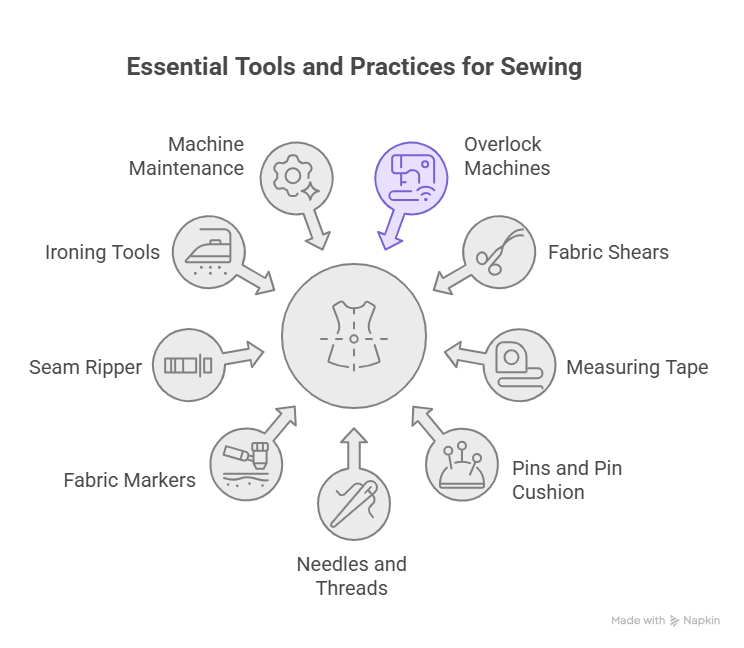
- Overlock Machines that cut the excess fabric while simultaneously overlocking (serging) the edges of garments give them a professional look. This effect is achieved by the machines.
Essential Sewing Tools
Additionally, designers rely on a wide range of hand tools in addition to machines when it comes to tasks such as cutting, measuring, and detailing. A handful of the most important tools are as follows:
- It is recommended to use fabric shears and scissors for cutting cloth in a precise and hygienic manner.
- Make use of a measuring tape in order to get accurate measurements of your body and the textiles you are wearing.
- During the stitching process, it is necessary to make use of pins and a pin cushion in order to keep the cloth pieces in place.
- There is a wide range of sizes and kinds of needles and threads available to accommodate a variety of textiles and sewing applications.
- Patterns, cutting lines, and thread guides may all be drawn using fabric markers or tailor’s chalk.
- When it comes to removing unattractive stitches in a tidy and orderly manner, the seam ripper is a little but fundamental instrument.
- In order to complete garments and smooth out seams, pressing and ironing tools are what you need.
Maintenance and Handling
Routine upkeep on sewing machines is needed to keep them in great shape and make them last longer. It is necessary for creators to
- Always keep your machine clean so that lint and thread don’t build up on it.
- When you oil parts that move, don’t go against the manufacturer’s instructions.
- To be able to sew many different types of fabric, you need to use the right thread and needle.
- To keep people safe, tools should be stored in a safe place.
Hand Stitching vs Machine Stitching
This shows both the technical and creative parts of sewing, as fashion designers utilize a mix of machine and hand stitching to actualize their ideas throughout the design process. There are a variety of strengths, aims, and educational preferences that are unique to each of these systems. By gaining a grasp of the differences between the two, designers are able to choose the technique that is most suitable for each individual garment.
| Aspect | Hand Stitching | Machine Stitching |
|---|---|---|
| Definition | Sewing done manually using a needle and thread. | Sewing done using an electric or mechanical sewing machine. |
| Speed | Slow and time-consuming. | Fast and efficient for large-scale production. |
| Precision | Offers great control over delicate areas and small details. | Provides consistent and uniform stitching across the fabric. |
| Durability | Moderately strong, depends on thread quality and technique. | Highly durable and suitable for heavy fabrics. |
| Aesthetic Value | Gives a handmade, artistic, and unique appearance. | Provides a clean, professional, and polished finish. |
| Best For | Embroidery, hems, fine detailing, and couture garments. | Garment construction, seams, and bulk production. |
| Flexibility | Easy to use on delicate or complex designs. | Limited flexibility in small or curved areas. |
| Tools Required | Needle, thread, thimble, and scissors. | Sewing machine, presser foot, and various machine accessories. |
| Skill Level | Requires patience, precision, and craftsmanship. | Requires technical knowledge and machine handling skills. |
| Usage in Fashion | Used for embellishments, hand embroidery, and finishing touches. | Used for assembling garments and ensuring strong seams. |
Fabric Handling & Stitching Techniques
One of the most essential abilities for every fashion designer is the ability to handle cloth in the appropriate manner. Various textiles exhibit a variety of behaviors, including the ability to stretch readily, the tendency to wrinkle fast, and the tendency to fray at the edges. Stitching techniques and handling procedures that are appropriate guarantee that clothing have a nice appearance, fit well, and endure for a longer period of time.
Understanding Fabric Behavior
Every fabric—cotton, silk, denim, chiffon, wool—has a unique weave and feel.
- Chiffon and organza need careful handling and small needles.
- Heavy textiles like denim and leather demand stronger needles and thread.
- Jersey and other stretch textiles need stitches that stretch without tearing.
Knowing how each material reacts helps designers pick stitching techniques and equipment.
Choosing the Right Needle and Thread
If you use the right needle and thread, you can stitch without damaging the cloth.
- Work with delicate materials using little needles and thread.
- Working with heavier fabrics requires stronger thread and thicker needles.
- For a smooth finish, match thread and fabric colors.
Cutting and Pinning Fabric
- Pin and cut the material before stitching.
- Cutting garments consistently against the grain line may enhance drape and fit.
- Sharp scissors or rotary cutters are preferable for perfecting work edges.
- Pins or basting are the greatest ways to keep components together when sewing.
Stitching Techniques for Different Fabrics
Different fabrics need different stitching approaches to maintain quality and strength.
| Fabric Type | Recommended Stitch Type | Needle Type | Notes |
|---|---|---|---|
| Cotton | Straight stitch | Universal needle | Easy to sew, suitable for beginners. |
| Silk | Small straight stitch | Fine needle | Handle gently to prevent snags. |
| Denim | Heavy-duty lock stitch | Jeans needle | Use thick thread for strength. |
| Chiffon | French seam | Fine needle | Prevents fraying and keeps seams neat. |
| Stretch Fabric | Zigzag or stretch stitch | Ballpoint needle | Allows flexibility without breaking stitches. |
Pressing and Finishing
Pressing is just as vital as sewing since it imparts a polished appearance to the garment.
- After each step, press the seams to ensure that they remain flat.
- Make use of a press cloth in order to save tender materials.
- When finishing raw edges, it is important to avoid fraying by employing overlock, zigzag, or bias binding.
Start Your Fashion Journey Today! Learn Advanced Designing & Boutique Skills with Experts!
Master Fashion Designing and Create Your Signature Style
Unlock your creative potential with our expert-led Fashion Designing course. Build in-demand skills and step confidently into the world of fashion!
Begin Your Fashion Career Today!Conclusion
The quality of a designer’s work is determined by the skills that they use to handle fabric and sew it. With the correct mix of fabric expertise, equipment, and stitching perfection, even the most basic materials can be transformed into clothes that are both stylish and well-constructed. In order for fashion designers to transform their creative ideas into professional works, it is essential for them to master certain creative skills.
Master Fashion Designing and Create Your Signature Style
Unlock your creative potential with our expert-led Fashion Designing course. Build in-demand skills and step confidently into the world of fashion!
Begin Your Fashion Career Today!Frequently Asked Questions
How do I choose the right needle for my fabric?
Always match the needle type to your fabric weight and texture. For example, use a fine needle (size 9–11) for delicate fabrics like silk, and a heavy-duty needle (size 16–18) for thick fabrics like denim or canvas.
What is the best way to prevent fabric from fraying?
You can finish the raw edges using techniques like overlocking, zigzag stitching, or bias binding. These methods secure the fabric edges and increase garment durability.
How should delicate fabrics like chiffon or organza be handled?
Delicate fabrics should be cut with sharp scissors, stitched with fine needles, and sewn using French seams or narrow hems to avoid tearing or fraying.
Is pressing really necessary after stitching?
Yes! Pressing helps flatten seams, set stitches, and give garments a professional finish. It also helps the fabric drape better and enhances the overall look.
How can I make my fabric cutting more accurate?
Lay the fabric flat on a cutting surface, follow the grain line, and use pattern weights or pins to prevent shifting while cutting.