Table of Contents
Introduction
When people start thinking about having a healthier lifestyle, diet and then yoga pops up. Unlike other heavy workout schedules, yoga seems to be a comfort choice for many. It has come a far way from being a traditional Indian practice into a celebrated global phenomenon. It has gained popularity primarily based on how yoga helps manage stress. Based on survey reports, over 41% of people have included yoga in their daily routines. So, this suggests how much people care about both physical as well as mental health and well being.
Another important positive aspect about yoga is the ease at which you can start practising each pose in the space of your choice. All you need is some time set aside everyday, a mat or a carpet and you are good to go.
Want to step up? Join our Yoga Instructor Course Online!
What Are Yoga Poses?
1: Which of these is the primary goal of yoga practice?
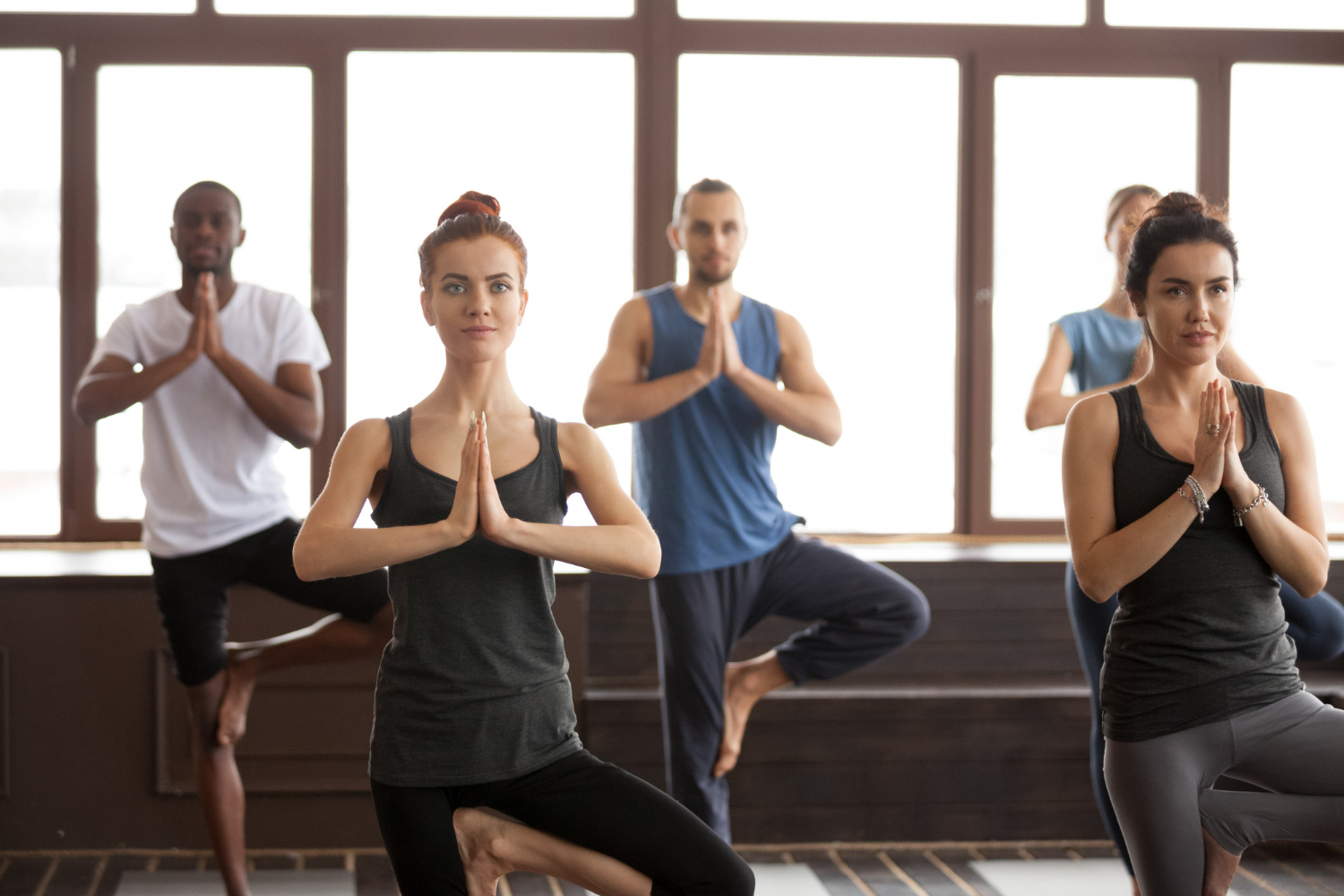
Yoga poses for beginners are simple asanas that can be done anywhere – even in a tiny space – without needing any equipment at all. They are designed to:
- Sort out your posture and get your body alignment right.
- Gradually make you more flexible and a bit stronger – but safely so.
- Help you clear your mind and stay calm.
Important factors that make home yoga crucial:
-
Breath Control (Pranayama):
Practising breathing exercises and breathing in sync with your movements helps in having breath control.
-
Getting Your Alignment Right:
Keeping a firm grip of your body alignment so that you don’t hurt yourself.
-
Being Mindful:
Paying attention to how your body feels in harmony with your breath is something calming. You can let go of tension and feel relaxed by the end.
These basics make simple home yoga not only super effective, but also a great habit to get into for the long haul.
Become a Certified Yoga Instructor
Yoga Teacher Training Course by Entri App: Master authentic yoga techniques, earn certification, and build a successful career as a professional yoga instructor.
Join Now!Health Benefits of Beginner Yoga
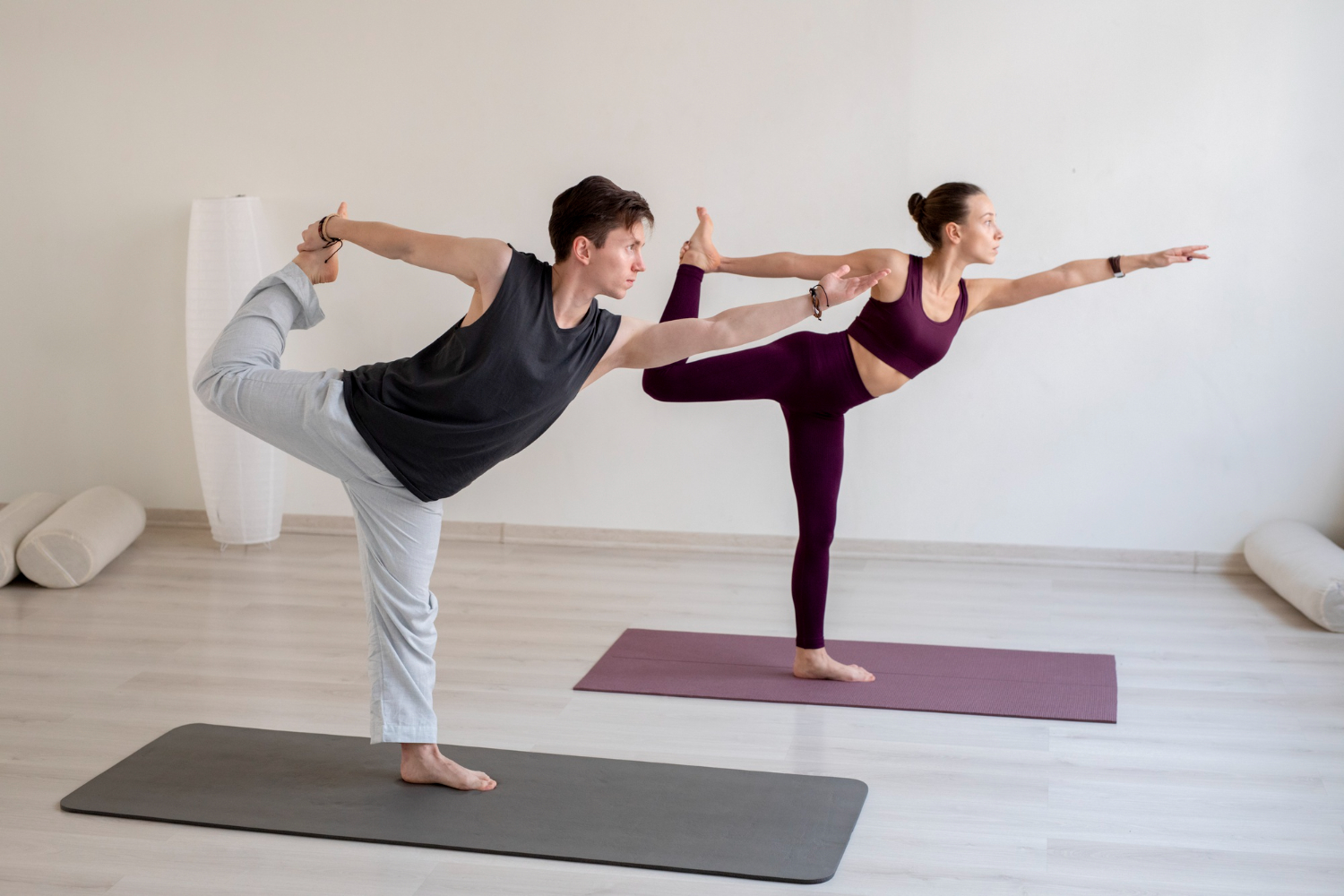
Doing yoga regularly is a lot more than just doing some simple stretches. Studies show that simple yoga is brilliant for sorting out your physical health, getting you feeling mentally well, and keeping you emotionally balanced.
Proven Benefits of Home Yoga
| Benefit | Key Impact | Research Insight |
| Flexibility & Balance | Improves joint mobility and range of motion | International Journal of Yoga study shows 35% increase in flexibility over 10 weeks |
| Stress Reduction | Reduces cortisol, lowers heart rate | 2016 cortisol tests on seniors confirmed stress-lowering effects |
| Strength & Tone | Builds functional muscle strength | 12-week Hatha Yoga study showed comparable results to light gym workouts |
| Immunity & Sleep | Boosts circulation and aids chronic pain | UCLA Kirtan Kriya trials demonstrated improved relaxation and sleep patterns |
Yoga is observed to stimulate our parasympathetic nervous system. This leads to reduced anxiety, calmer heart rate, which in turn improves our overall focus. Regular home practice can help deal with the negative effects of sedentary lifestyles. These include stiff joints, poor posture, back pain – among a whole host of other issues.
Even just 20 minutes a day can have a significant impact – as long as you stick to it. The key is to hold the right alignment & pay attention to your breathing, that’s all.
Top 10 Simple Yoga Poses for Beginners at Home
1. Tadasana (Mountain Pose)
The Mountain Pose might look straightforward but it has a pretty big impact on the way your body moves. Here’s how to do it :
Steps:
- Stand up nice and tall with your feet together, arms relaxed by your sides.
- Take a deep breath in and raise your arms up above your head – stretch those fingers up towards the ceiling.
- Feel like your feet are planted firmly on the ground, squeeze your thighs a bit and lift your chest up.
- Try to breathe deeply and steadily while you focus on feeling calm and stable – like a mountain.
Benefits:
- Enhance posture
- Strengthens legs
- Improves concentration.
Modification:
If you feel difficulty in balancing, keep your feet hip-width apart.
2. Vrikshasana (Tree Pose)
The Tree Pose can be seen as an extension of the Mountain Pose. You will feel a little bit more liberated while practising this one. Here is how it is done:
Steps:
- Stand tall and shift your weight onto one foot.
- Place the other foot on the inner thigh or calf (avoid knee joint).
- Bring palms together in a prayer position. Raising them overhead will also work well.
- Maintain your gaze on a fixed point for a better balance.
Benefits:
This pose helps improve –
- Balance
- Ankle strength
- Focus
- Body awareness
Modification:
If you feel like you need some support, use a wall.
3. Adho Mukha Svanasana (Downward Dog)
Downward Dog is yet another simple pose. But you might find a little bit of difficulty in holding the pose. Here is how you need to do it:
Steps:
- Begin by being on all fours (on hands and knees).
- Lift your hips upward in a way it forms an inverted V.
- Press your palms firmly into the mat and stretch your spine.
- Breathe deeply and allow your heels to move gently toward the floor.
Benefits:
This pose helps stretch your
- Hamstrings and calves
- Shoulders and spine
- Strengthens arms and core.
Modification:
In order to reduce strain, keep your knees slightly bent.
4. Balasana (Child’s Pose)
Balasana is one of the most relaxing yoga poses that does immense stretching. Let’s see how you can hold this pose:
Steps:
- Kneel on the floor with your big toes touching.
- Sit back on your heels and fold forward.
- Extend your arms forward and rest alongside the body.
- Relax your forehead on the mat and maintain calm breathing.
Benefits:
- Relieves tension in the back, shoulders, and neck
- Promotes relaxation and mental calm.
Modification:
For added comfort, place a cushion under your chest or forehead.
5. Bhujangasana (Cobra Pose)
Cobra Pose is a little bit more of a stretch, but not so demanding. Here’s how it is done:
Steps:
- Lie with your face down on the mat and palms under your shoulders.
- Press the tops of your feet into the floor.
- Inhale and lift your chest gently while keeping your elbows slightly bent.
- Keep your shoulders away from your ears. Fix your gaze forward or slightly upward.
Benefits:
- Strengthens spine
- Opens chest and lungs
- Improves posture.
Modification:
As a beginner you can low cobra with minimal lift. This will reduce strain on the lower back.
6. Marjaryasana-Bitilasana (Cat-Cow)
Cat-Cow pose can work wonders with stiffness in the back, especially, lower back. You feel a sort of flexibility within a short time period of practising this pose. Here are the steps:
Steps:
- Start in a tabletop position, wrists under shoulders, knees under hips.
- Inhale and drop your belly down while arching your back (Cow Pose).
- Exhale, round your spine upward and tuck your chin toward chest (Cat Pose).
- Repeat 5 to 10 cycles and remember to sync your movement with your breath.
Benefits:
- Increases spinal flexibility
- Relieves back tension
- Improves posture.
Modification:
You can try performing while seated if the tabletop position feels uncomfortable.
7. Virabhadrasana I (Warrior I)
Warrior I is another pose to do in a simple standing position. Here is how it is done:
Steps:
- Step one foot back into a lunge and your front knee bent at 90°.
- Raise your arms overhead and palms facing each other.
- Square your hips forward and engage your core.
- Focus your gaze forward while holding a steady breath.
Benefits:
- Strengthens legs and core.
- Improves endurance and stability.
Modification:
If you find it difficult to balance, reduce lunge depth or shorten stance.
8. Setu Bandhasana (Bridge Pose)
Bridge Pose might feel something of a challenging one at the beginning. But not after the fresher phase. Here is how it is done:
Steps:
- Lie on your back with your knees bent and feet hip-width apart.
- Press your heels and arms into the mat.
- Lift your hips toward the ceiling while engaging your glutes and thighs.
- Hold for a few breaths (based on your capacity), then slowly lower the position.
Benefits:
- Strengthens glutes
- Opens your chest
- Stretches spine and hip flexors.
Modification:
If felt necessary, place a cushion under your hips.
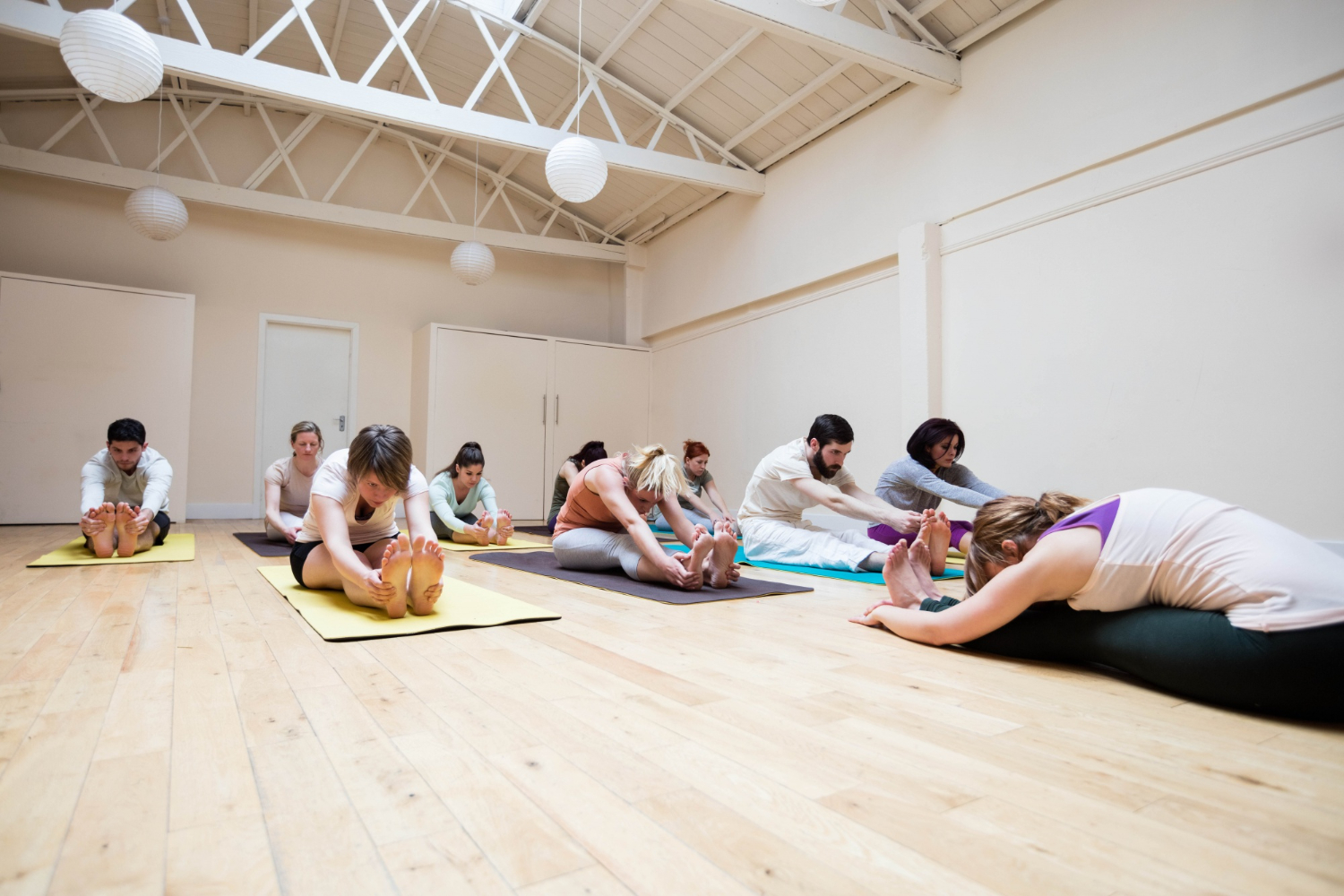
9. Paschimottanasana (Seated Forward Bend)
Here is a pose in a seated position. Seated Forward Bend, as the name suggests, is about stretching your spine. Let’s see how it is done.
Steps:
- Sit with your legs extended forward.
- Inhale deeply to lengthen your spine, and then exhale folding forward.
- Keep your chest lifted initially, then relax your shoulders toward legs.
- Breathe deeply and then relax.
Benefits:
- Stretches hamstrings
- Soothes the nervous system
- Reduces anxiety.
Modification:
If you feel great strain in the hamstring, slightly bend your knees to reduce it.
10. Shavasana (Corpse Pose)
Corpse Pose is the least demanding and the most relaxing pose. It needs to be performed at the end of every session for ultimate relaxation and stretch. Here are the steps for the simplest pose:
Steps:
- Lie flat on your back with your legs slightly apart.
- Leave your arms relaxed and palms facing upward.
- Close your eyes and focus on your natural breath for straight 5 minutes.
- Let the body fully relax.
Benefits:
- Deep relaxation.
- Stress relief.
- Enhances sleep quality.
20-Minute Home Yoga Routine
If you are in with the plan to have overall wellness, you need to make consistency the priority.
| Time | Poses | Focus |
| 0 to 3 min | Tadasana + Cat-Cow | Warm-up, prepare joints and spine |
| 3 to 8 min | Downward Dog + Cobra | Strengthen arms, core, back |
| 8 to 12 min | Tree + Warrior I | Balance, leg strength, mental focus |
| 12 to 17 min | Bridge + Forward Bend | Stretch spine, hamstrings, and chest |
| 17 to 20 min | Child’s Pose + Shavasana | Cool-down, deep relaxation |
Become a Certified Yoga Instructor
Yoga Teacher Training Course by Entri App: Master authentic yoga techniques, earn certification, and build a successful career as a professional yoga instructor.
Join Now!Things To Avoid
- Don’t push yourself into pain or discomfort – that’s just not going to help you out in the long run.
- Don’t skip those warm-ups and cool-downs – they’re just as important as the actual practice itself.
- And for goodness sake don’t compare yourself to others – everyone’s journey is unique, so just focus on your own.
- And remember not to hold your breath while you’re in a pose – that’s just going to make things worse.
Before you even think about starting, if you’ve got any pre-existing injuries, high blood pressure, chronic pain or mobility issues, you really should chat to your doctor about it first.
Want to step up? Join our Yoga Instructor Course Online!
Conclusion
With this all sunk in, you should’ve got enough motivation to get on the mat and start giving it a crack. While home practice is a great way to keep yourself well rounded, there’s still loads to be learned from taking a few classes with a pro. Plus, with some proper guidance you’ll be able to dive deeper into the world of asanas and learn the really advanced poses without risking injury.
And let’s not forget the potential to turn your love of yoga into a career – can you imagine getting paid to share that sense of calm with others? Which is why we think you should jump into Entri’s Yoga Training Programme – they’ve got a clear step by step curriculum, real mentors to guide you, support for getting certified and opportunities to build your career. Turn your passion for yoga into a career that makes you happy while keeping you feeling zen.
|
RELATED ARTICLES |
|
| Important Mudras of Yoga | |
| 10 Yoga Poses for Anxiety Relief | How an Advanced Yoga Course Can Boost Your Teaching Career |
Become a Certified Yoga Instructor
Yoga Teacher Training Course by Entri App: Master authentic yoga techniques, earn certification, and build a successful career as a professional yoga instructor.
Join Now!Frequently Asked Questions
Can beginners start doing yoga at home without supervision?
Yes, beginners definitely can. Just start off with some really simple poses – you can always modify them as you see fit and figure things out for yourself as you go along.
What is the ideal time duration to practice on a daily basis?
The ideal amount of time to be practicing yoga each day is probably around 20 minutes – and if you can manage to do it 5 days a week consistently, you’ll probably notice some pretty noticeable results.
Is it mandatory to practise yoga on a mat?
You’re probably best off using a yoga mat – it gives you a bit of a grip and helps prevent slipping around, but if it doesn’t work for you and you’re fine on a carpet or even bare floors, that’s okay.
What is the best time of the day to practise yoga?
If you’re looking to get the most out of your practice, mornings do work out pretty well – if you can do it on an empty stomach that’s probably even better. Evenings work pretty well too, though.
Does yoga have a better impact than workouts?
Well, they’re pretty different things – yoga is more about improving flexibility and getting a handle on your mental wellbeing, whereas a hardcore workout is going to give you a different kind of result altogether.
How soon will results from the practice start showing?
The flexibility is probably the first thing you’ll notice changing – we’re talking 3-4 weeks or so. As for stress relief, that can be immediate if you let it.
Can elderly people practise these yoga poses?
Of course elderly people can do yoga – you might need to make a few adjustments and find a bit more support here and there, but that’s okay.
Should I eat before practising yoga?
You should probably try to do it on an empty stomach – though if you really can’t manage that, doing it 3 hours after a meal is almost as good.
Is it important to have a trainer for practising yoga poses?
Not particularly for basic stuff – but if you’re looking to get into some of the more advanced poses, it’s probably worth having someone show you the ropes.
Is Shavasana a mandatory pose to end the practice with?
Absolutely – that’s a good way to wrap up your practice and really make the most of it.