Table of Contents
Sink or float experiments show kids the ropes of density, buoyancy and observing the world around them with some simple, hands-on fun – no lab required.
In Montessori Training classrooms, these activities really knock it out of the park when it comes to helping young children build their vocabulary, concentration and independent thinking using regular, child-friendly stuff they can use every day.
All the research in early childhood science education says that when you get pre-schoolers doing hands-on projects, after just 2 to 4 tries they can show real improvements in the way they use language to describe what they observe and really get what’s going on in science.
Register for the Entri Elevate Montessori Teacher Training Program! Join Now!
Key Takeaways
- Sink or float: ideal intro science for 3 to 6; uses visible outcomes to build abstract thinking.
- Supports Montessori: cognitive, sensorial, language, practical life.
- 20 to 30 min, 8 to 12 objects, groups of 3 to 4.
- Always predict before testing.
- Assess observation language and prediction accuracy.
- Adaptable: measurements for older kids, visual cards for toddlers.
- Build safety and inclusivity in the design.
What is a Sink or Float Experiment?
1: What is the primary focus of the first plane of development in the Montessori method?
A sink or float experiment is a basic science activity where you and the kids get to try out different objects in the water, see if they sink or float, then have a chat about it.
The basic science behind it is to do with density and buoyancy. The objects less dense than water float while denser objects sink. For children aged 3 to 6, this abstract principle becomes tangible and memorable through direct sensory experience.
In Montessori education, this kind of activity is called a “sensorial experience” – something designed to really engage a child’s senses and help them figure out how to sort, compare and talk about the world around them.
Get Certified & Start Your Montessori Career
Montessori Teacher Training Course by Entri App: Gain expert skills, earn certification, and kickstart your teaching career.
Join Now!Learning Goals: Montessori Curriculum Alignment
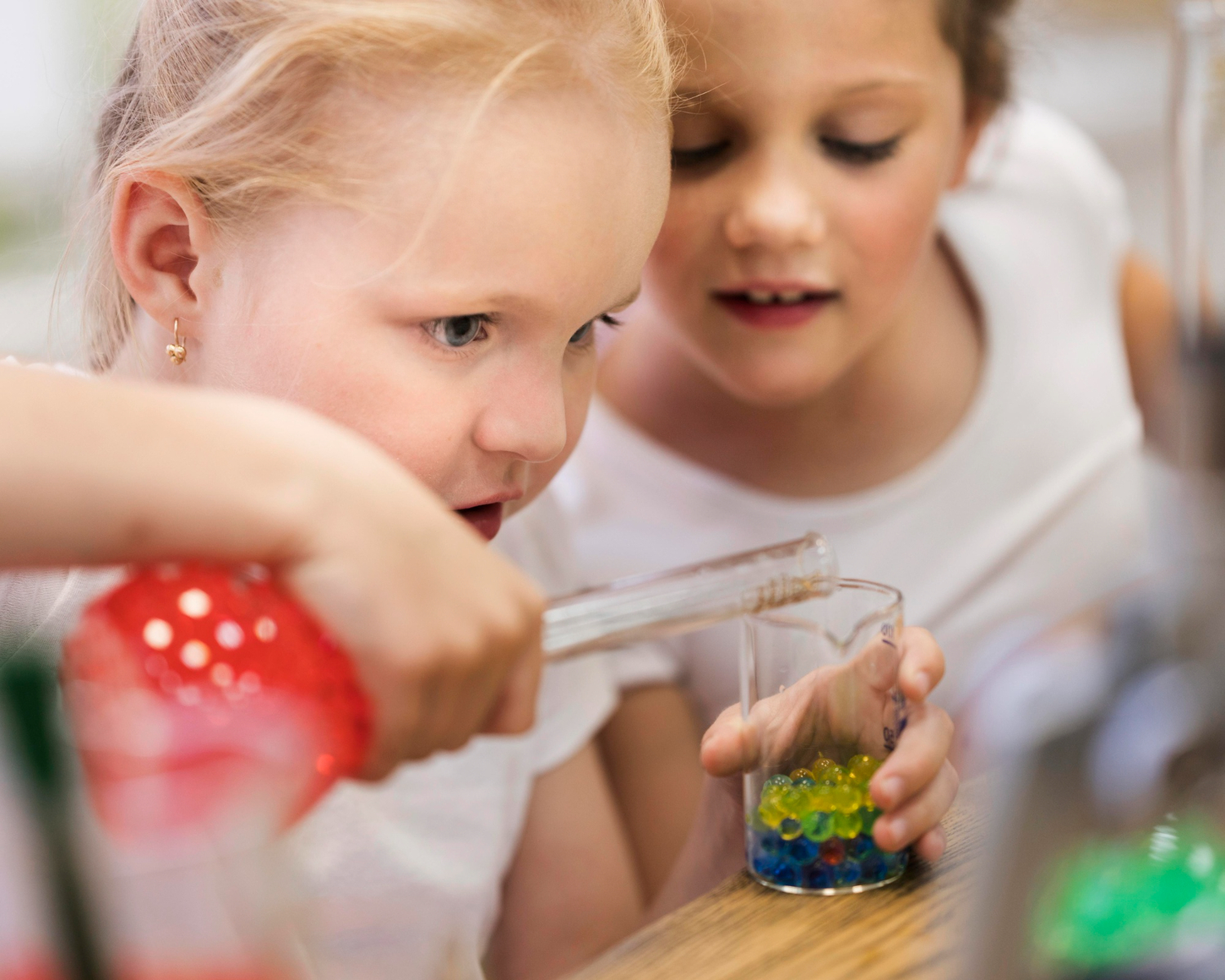
Before setting up the activity, TTC trainees should understand what children are actually developing. Sink or float experiments are multi-domain by design.
Cognitive development:
Children begin to form an understanding of why some objects sink and others float moving from “it just does” to “it’s heavy for its size” over repeated guided sessions.
Sensorial refinement:
Placing objects carefully in water, observing what happens, and noticing differences between items sharpens visual discrimination and fine motor control simultaneously.
Language acquisition:
Children are introduced to vocabulary that they genuinely need. These include sink, float, buoyant, heavy, light, predict, observe, hypothesis. Using these words in context, during the experiment, is far more effective than flashcard learning.
Practical life and social skills:
Turn-taking, careful handling of materials, pouring water responsibly, and cleaning up afterward are all embedded in the activity structure. These are not separate lessons.
Assessment aim:
The teacher’s role is formative observing whether children can predict, explain what they see, and use scientific vocabulary. It is not just testing whether they know the outcome.
Materials and Setup
The table below is a ready-reference checklist for TTC trainees preparing the activity for a group of 3 to 4 children.
| Item | Quantity per Group | Notes |
| Transparent water tub (clear plastic, wide) | 1 | Clear sides allow children to observe from different angles |
| Basin or tray to contain spills | 1 | Place under the tub before filling |
| Assorted test objects (see list below) | 10–12 | Mix materials: wood, metal, plastic, sponge, clay, cork |
| Tongs or scoops | 2 | Supports fine motor practice and maintains hygiene |
| Prediction cards (laminated “sink”/”float” icons) | 4–6 | Children hold up cards before each test |
| Observation recording sheet + pencil | 1 set per child | Use stickers or stamps for non-writers |
| Small drying towels | 2–3 | For cleanup and object drying |
| Measuring cup (optional, for extension) | 1 | Introduce volume measurement with older children |
Suggested test objects (non-toxic, washable, age-appropriate):
Coin, bottle cap, small rubber duck, wooden cube, cork, sponge ball, plastic spoon, marble, empty sealed plastic bottle, metal washer, grape (halved), piece of foam/Styrofoam, compact clay ball.
Provide a balanced mix. Do not select only objects that float or only those that sink. The contrast is what generates curiosity and discussion.
Age Group and Group Size
This little experiment is designed for little ones – 3 to 6 years old. For the younger kids (3 & 4 years old) it’s best to keep it simple and let them explore first. They’ll learn a lot just by messing about.
For the older ones (5 & 6) you can start to introduce some of the big science words like “predict”, “hypothesis”, and “density” but only after you’ve had a chance to chat about it a bit.
The ideal group size for this is usually 1 teacher to 4 kids. That way you can supervise and guide the activity without getting too overwhelmed. In a Montessori classroom, this kind of thing usually works really well as a classroom activity where the kids rotate through different stations on their own.
Get Certified & Start Your Montessori Career
Montessori Teacher Training Course by Entri App: Gain expert skills, earn certification, and kickstart your teaching career.
Join Now!Step-by-Step Lesson Plan (20–30 Minutes)
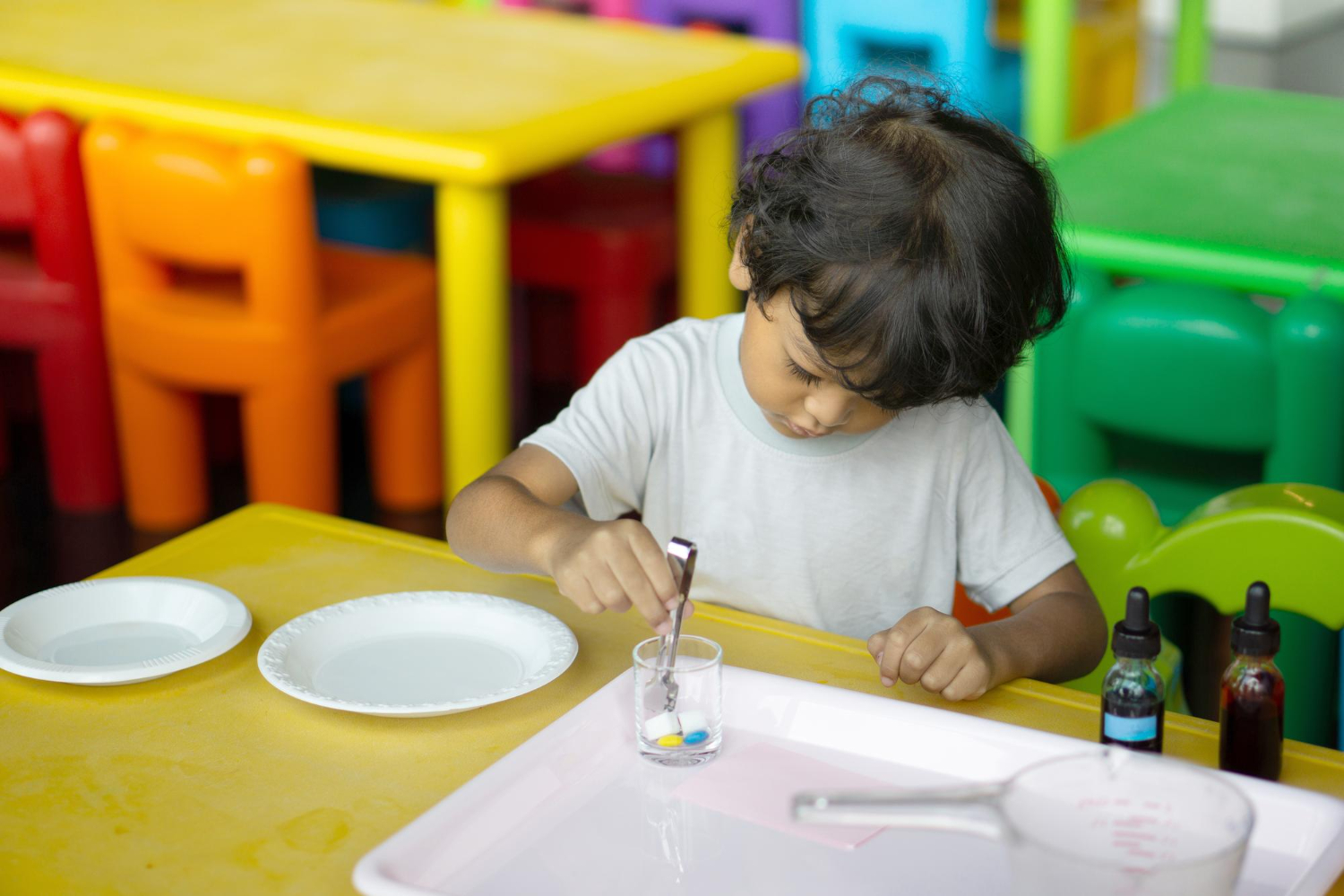
Step 1 – Preparation (5–7 minutes)
Fill the tub with enough water to cover the objects and put the test things out on a tray next to it. Give each kid a prediction card and an observation sheet to write on.
Step 2 – Introduction (2–3 minutes)
Start with one object – a cork is a great one. The teacher picks up the cork, says something like “I think this will float because it feels so light”, puts it in the water, and then talks about what happens – this shows the kids how you do science.
Step 3 – Exploration Phase (10–12 minutes)
Each kid gets to pick an object, hold up their prediction card (will it sink or float) and then put it in the water using some tongs. As they do this, they record what happens on their sheet using stickers, stamps or whatever. Try to get to at least 3 or 4 objects per kid.
Step 4 – Group Discussion (3–5 minutes)
Bring the group together to compare predictions and results. Ask:
- “Which surprised you the most?”
- “Did anything sink that you thought would float?”
- “Why do you think the marble sank but the cork floated?”
Try to keep your explanations pretty simple and based on what the kids have just seen – you don’t want to confuse them.
Step 5 – Extension / Challenge (Optional)
Test a sealed empty plastic bottle vs. the same bottle filled with water, or compare a compact ball of clay vs. the same clay shaped into a flat boat. These comparisons introduce shape and air as variables — a gentle entry into engineering thinking.
Step 6 – Cleanup (2–3 minutes)
Children dry objects with towels and return materials to the tray. This is a practical life integration — caring for the learning environment is part of the lesson.
Sample timeline at a glance:
| Phase | Duration |
| Preparation | 5–7 minutes |
| Introduction & modelling | 2–3 minutes |
| Exploration (prediction + testing) | 10–12 minutes |
| Group discussion | 3–5 minutes |
| Cleanup | 2–3 minutes |
| Total | 20–30 minutes |
Guided Questioning for the Classroom
The quality of teacher questioning determines how much conceptual learning happens. The following prompts are structured for different stages of the activity.
Before testing (prediction):
- “Do you think this will sink or float? Why?”
- “How does it feel in your hand – light or heavy?”
During observation:
- “What do you notice happening right now?”
- “Did it do what you expected?”
After testing (reflection):
- “What was the same about all the objects that floated?”
- “How could we make this sinking object float?”
These open-ended questions move children from observation to inference. The real goal of early science education.
Observation and Recording
TTC trainees should offer two recording formats to accommodate different developmental stages:
For non-writers (ages 3–4): A picture grid with 6 object illustrations. Children place a “sink” sticker or “float” sticker below each image after testing. Simple, tactile, and self-correcting.
For early writers (ages 5–6): A four-column table:
| Object | My Prediction | What Happened | Why? (1–2 words) |
| Cork | Float | Float | Light, air |
| Marble | Sink | Sink | Heavy |
| Rubber duck | Float | Float | Hollow |
The “Why?” column, even if filled with a single word, is where scientific reasoning begins.
Assessment and Learning Outcomes
Use this rubric to evaluate child progress. It is designed for formative, observation-based assessment and not graded testing.
| Skill Area | Observable Indicator | Level 1 – Emerging | Level 2 – Developing | Level 3 – Proficient |
| Prediction accuracy | Predicts sink/float before testing | Random guesses with no reasoning | Some correct; needs teacher prompts | Correctly predicts most items with reasoning |
| Scientific language | Uses target vocabulary | No or incorrect use of terms | Uses words occasionally during activity | Uses terms accurately when explaining results |
| Observation quality | Describes what they saw | Vague (“it moved”) | Basic (“it sank”) | Detailed (“it sank because it’s heavy and solid”) |
| Independence & motor skills | Uses tongs, records, cleans up | Needs significant help throughout | Needs some assistance | Independent and careful in all steps |
Variations and Extensions
Sensory variation:
Use coloured water or add ice cubes. Watching ice float and then melt introduces change of state alongside buoyancy. It is a gentle STEM connection for 5 to 6 year olds.
Measurement extension:
For older preschoolers or lower primary children, introduce a simple balance scale before testing. Weighing objects and then predicting creates a bridge between weight, density, and flotation outcomes.
Cross-curricular connection:
Read a picture book about boats or rivers before the activity. Design a “raft” using clay and craft sticks after. Science becomes a story.
Home extension:
Send a short caregiver note listing 4 to 5 kitchen-safe items (bottle cap, grape, spoon, cork) for children to test at home with a plastic basin. Include prediction prompts so families can participate meaningfully.
Safety, Accessibility, and Inclusivity
Safety:
Never use objects smaller than 3.5 cm with children under 3 (choking hazard). Using shallow tubs with 15 to 20 cm of water is sufficient. Supervise at all times. Avoid glass objects entirely.
Motor accessibility:
For children with fine motor challenges, offer larger tongs, adaptive scoops, or allow hand-placement instead of tool use. The learning is in the observation, not the tool.
Visual accessibility:
For children with visual impairments, prioritise objects with distinct tactile differences (smooth coin vs. rough sponge). Describe observations aloud with detail: “The cork is on top of the water – it’s floating.”
Language inclusivity:
Prepare bilingual vocabulary cards where relevant. For example, English and Malayalam for classrooms in Kerala, or English and Tamil for Tamil Nadu-based TTC programmes. Multilingual labels make the learning accessible without changing the concept.
Register for the Entri Elevate Montessori Teacher Training Program! Join Now!
Conclusion
Sink or float experiments might look super simple at first. Just a tub of water and some random objects. But the learning that happens from it is by no means simple. You get kids building the foundations of scientific thinking by making predictions, testing them, looking at what happens and working out if they were right, and then going back to the drawing board to get it right next time.
For training Montessori teachers, getting this one right means understanding not just how to set it up, but also what’s driving every question they ask, every object they choose, and every conversation they have with the kids.
The thing is, this experiment works because it meets the kids exactly where they are at – curious, loving to use their senses and eager to just go out there and test the world – and that’s exactly what they do.
When TTC educators approach it with intention, it becomes one of the most memorable and transferable science experiences in the early childhood classroom.
Get Certified & Start Your Montessori Career
Montessori Teacher Training Course by Entri App: Gain expert skills, earn certification, and kickstart your teaching career.
Join Now!Frequently Asked Questions
What do children learn from sink or float experiments?
They learn basic density and buoyancy while building observation skills and scientific vocabulary. The activity also supports sensorial refinement and practical life habits.
What is the ideal age group for sink or float activities?
Best for ages 3 to 6. Younger children need simpler language and close guidance; 5 to 6-year-olds can handle vocabulary and light measurement.
How long should each sink or float session last?
About 20 to 30 minutes including setup and cleanup. This keeps attention steady and allows discussion.
How many objects should be used per session?
Use 8 to 12 varied objects. Fewer limits learning; more can be overwhelming.
Can toddlers under 3 do this experiment?
Yes, only with one-on-one supervision and adapted materials. Ensure objects >3.5 cm and very shallow water.
How does this activity align with Montessori principles?
It promotes self-directed, hands-on learning from concrete to abstract. The teacher observes and guides with questions.
What materials are safest for sink or float experiments?
Use non-toxic, washable, large items: corks, wooden blocks, plastic spoons, rubber ducks, sealed bottles, sponges, metal washers, foam pieces. Avoid glass, sharp edges, and items <3.5 cm.
How do I handle a child who consistently guesses wrong?
Treat wrong guesses as useful data and ask why they think it happened. Encourage reflection rather than correction.
How should a TTC trainee assess learning from this activity?
Use formative observation with a simple checklist. Track prediction accuracy, scientific language, observation detail, and independence.
How should I handle children with different motor abilities during this activity?
Provide adaptive tools (wider tongs, larger scoops) or let them place objects by hand. Focus assessment on predictions and observations, not tool use.