Table of Contents
Montessori Number Rod activities help children understand numbers through hands-on learning. Children see, touch, and compare quantities directly. The rods connect numbers with actual amounts. Learning becomes concrete and meaningful. Early math concepts become easier to understand. Confidence develops through active exploration and practice.
Key Takeaways
- Introduces numbers through concrete learning experiences.
- Connects quantities with number symbols clearly.
- Supports early mathematics learning and understanding.
- Encourages hands-on exploration through meaningful activities.
- Develops concentration skills through focused practice.
- Strengthens number sequencing through repeated activities.
- Improves visual discrimination between different quantities.
- Builds logical thinking through mathematical exploration.
- Encourages independent learning through self-discovery.
- Makes mathematics enjoyable through active participation.
Unlock your passion for education and shape young minds as a Montessori teacher!
🌟 Introduction
Early math learning builds strong foundations. Children encounter numbers every day. Understanding numbers requires meaningful experiences. Concrete materials make learning easier. Confidence develops through practice. Learning becomes more enjoyable.
Montessori education uses hands-on materials extensively. Children learn through observation and exploration. Mathematical concepts become easier to understand. Learning remains active and engaging. Understanding develops naturally. Success occurs more frequently.
Montessori Number Rods introduce quantities concretely. Children see and feel numerical differences. The rods connect numbers with amounts. Learning becomes meaningful and memorable. Strong foundations support future mathematics. Confidence grows through discovery.
Why Number Rods Matter
- Introduce numbers concretely.
- Connect quantity and symbols.
- Support early math learning.
- Encourage active exploration.
- Develop concentration skills.
- Strengthen logical thinking.
Skills Children Develop
- Number recognition.
- Quantity awareness.
- Counting skills.
- Visual discrimination.
- Problem-solving abilities.
🔢 What are Montessori Number Rods?
1: What is the primary focus of the first plane of development in the Montessori method?
Montessori Number Rods are foundational math materials. They introduce quantities through hands-on experiences. Children see numerical differences clearly. They also feel these differences physically. Learning becomes concrete and meaningful. Understanding develops naturally through exploration.
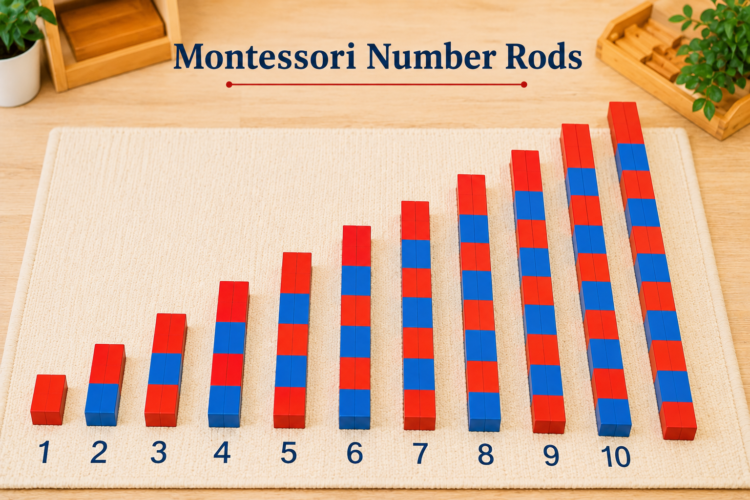
The rods consist of alternating red and blue sections. Each section represents one unit. The shortest rod represents one. The longest rod represents ten. Length increases systematically. Quantities become easy to compare.
Children work with the rods independently. They arrange rods in sequence. They compare lengths carefully. Children count each section accurately. Mathematical relationships become visible. Learning feels engaging and enjoyable.
🌟 Key Features of Number Rods
- Represent quantities from one to ten.
- Use alternating red and blue sections.
- Provide concrete math experiences.
- Support visual and tactile learning.
- Encourage hands-on exploration.
- Build strong number foundations.
🎯 What do Children Learn?
- Quantity recognition through observation.
- Number sequencing through arrangement.
- Counting skills through repetition.
- Comparison of different quantities.
- Mathematical order and patterns.
- Early number sense development.
🧠 Why are Number Rods Effective?
- Make abstract concepts concrete.
- Improve understanding of quantity.
- Strengthen mathematical thinking skills.
- Support concentration and focus.
- Encourage independent discovery.
- Build confidence in mathematics.
🌈 What Makes Number Rods Unique?
Number Rods differ from ordinary materials. They represent quantity physically. Children can see numbers. They can touch quantities. Learning involves multiple senses. Understanding becomes stronger.
The rods combine visual learning. They also support tactile learning. Children experience concepts directly. Abstract ideas become concrete. Learning feels meaningful. Retention improves naturally.
Each rod has specific length. Length represents quantity accurately. Children notice differences immediately. Comparisons become simple. Understanding develops naturally. Confidence grows steadily.
Children arrange rods independently. They compare lengths carefully. Patterns become visible. Relationships become easier. Learning becomes interactive. Motivation remains high.
The rods also encourage self-correction. Mistakes become noticeable. Children identify errors independently. Confidence remains protected. Learning stays positive. Progress develops naturally.
Unique Features
- Alternating red and blue sections.
- Quantities from one to ten.
- Visual quantity representation.
- Hands-on mathematical learning.
- Self-correcting opportunities.
- Strong foundation building.
👐 Why does Hands-On Learning Matter?
Young children learn through action. Concrete experiences remain important. Abstract concepts feel difficult. Physical materials improve understanding. Learning becomes meaningful. Concepts become easier.
Children touch every rod. They carry materials carefully. They arrange rods independently. Participation remains active. Understanding develops naturally. Confidence increases gradually.
Hands-on learning strengthens memory. Experiences become memorable. Concepts remain meaningful. Retention improves significantly. Learning lasts longer. Success becomes frequent.
Physical exploration encourages curiosity. Children investigate relationships. They compare quantities. They notice patterns. Learning becomes engaging. Motivation grows naturally.
Hands-on learning also improves concentration. Children remain focused longer. Activities feel enjoyable. Learning becomes productive. Understanding deepens steadily. Confidence continues growing.
Hands-On Learning Benefits
- Improves engagement.
- Supports memory retention.
- Encourages exploration.
- Builds confidence.
- Strengthens understanding.
- Makes learning enjoyable.
Get Certified & Start Your Montessori Career
Montessori Teacher Training Course by Entri App: Gain expert skills, earn certification, and kickstart your teaching career.
Join Now!🎯 Objectives of Number Rod Activities
Number Rod activities have clear goals. Children learn quantities first. Understanding develops gradually. Learning remains meaningful. Confidence grows steadily. Mathematical foundations become stronger.
The activities introduce quantity concepts. Children see numerical differences. They compare amounts directly. Relationships become visible. Understanding develops naturally. Learning becomes effective.
Number Rod activities also improve observation. Children notice patterns. They compare lengths carefully. Visual discrimination improves. Learning becomes more accurate. Understanding deepens steadily.
The activities support concentration. Children focus on materials. They complete tasks carefully. Attention improves gradually. Learning becomes productive. Confidence increases naturally.
Logical thinking develops through exploration. Children analyze relationships. They identify patterns. They make comparisons. Mathematical reasoning improves. Understanding becomes stronger.
The activities also encourage independence. Children work with materials. They make discoveries independently. Confidence develops naturally. Learning becomes self-directed. Motivation remains strong.
🔢 Understanding Quantity
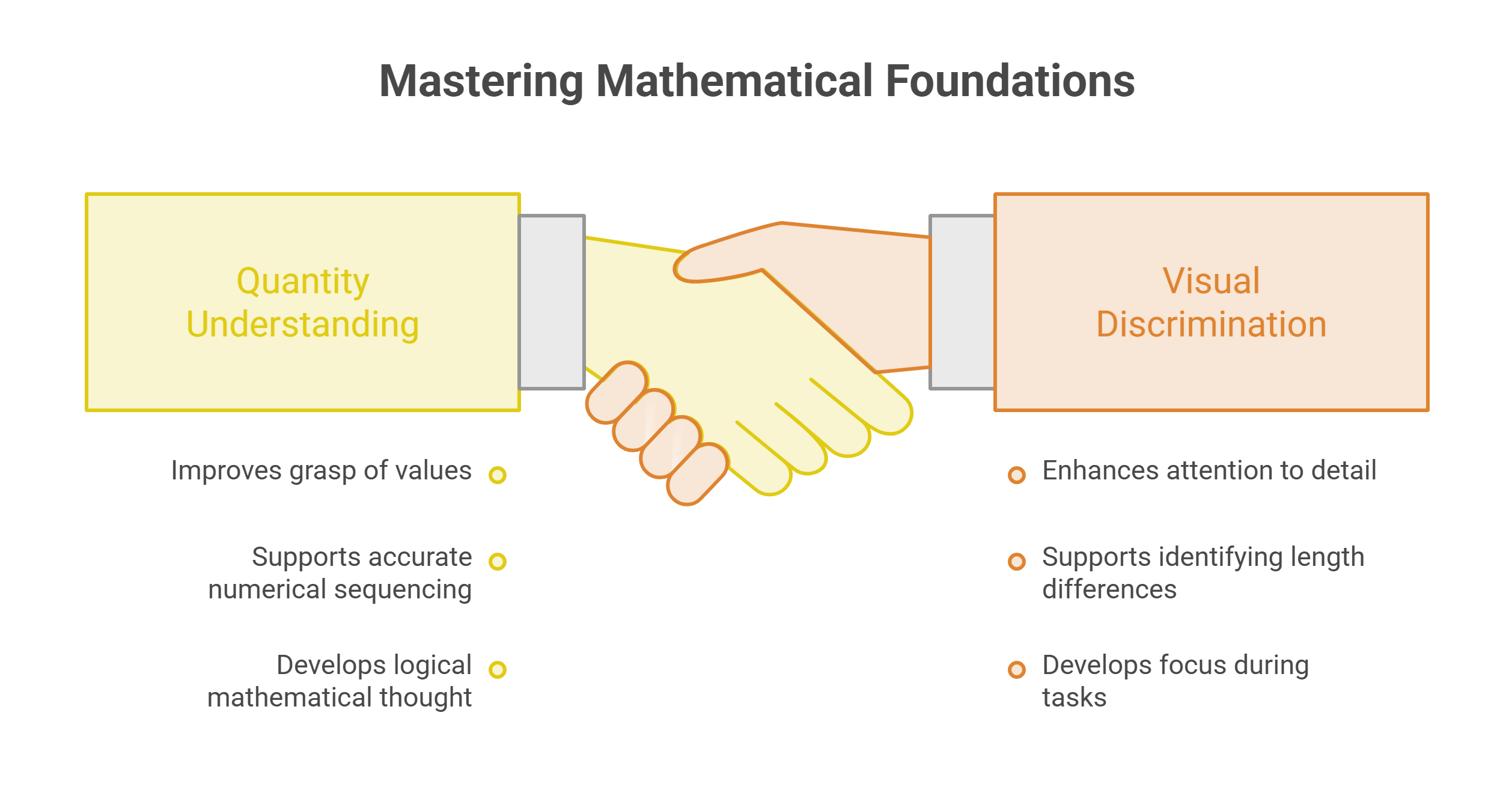
Quantity forms mathematical foundations. Children need concrete experiences. Number Rods provide visual support. Quantities become understandable. Learning feels meaningful. Understanding develops naturally.
Children count sections carefully. They compare quantities directly. Larger amounts appear longer. Smaller amounts appear shorter. Relationships become clear. Learning becomes effective.
Understanding quantity supports future mathematics. Children develop number sense. Mathematical readiness improves steadily. Confidence grows naturally. Learning becomes easier. Success becomes more frequent.
Quantity Learning Benefits
- Improves number awareness.
- Supports counting skills.
- Strengthens understanding.
- Encourages observation.
- Builds confidence.
- Develops reasoning.
👀 Developing Visual Discrimination
Visual discrimination remains important. Children compare rod lengths. Differences become noticeable. Observation improves steadily. Understanding develops naturally. Learning becomes meaningful.
Children identify similarities and differences. Comparisons strengthen thinking. Relationships become clearer. Learning becomes accurate. Confidence increases gradually. Success develops naturally.
Visual skills support future learning. Mathematics requires observation. Number Rods strengthen this ability. Learning becomes easier. Understanding improves steadily. Confidence remains strong.
Visual Learning Benefits
- Improves observation.
- Supports comparison skills.
- Develops concentration.
- Encourages attention.
- Strengthens understanding.
- Builds confidence.
📊 Number Rod Skills Overview
| Skill Area | Benefit |
|---|---|
| Counting | Improves number awareness. |
| Observation | Strengthens attention. |
| Comparison | Develops reasoning. |
| Sequencing | Supports mathematical order. |
| Concentration | Improves focus. |
| Confidence | Encourages participation. |
👶 Introducing Number Rods to Children
Introducing Number Rods requires patience. Children should explore freely first. Observation remains very important. Learning should never feel rushed. Curiosity guides the process. Confidence develops naturally.
Teachers begin with simple presentations. Children observe the rods carefully. Length differences become noticeable. Colors attract attention immediately. Learning feels interesting. Engagement remains high.
Children usually start with ordering. They arrange rods by length. The shortest rod comes first. The longest rod comes last. Patterns become visible. Understanding develops gradually.
The introduction should remain simple. Too much information creates confusion. Few concepts work best. Repetition improves understanding. Learning feels manageable. Confidence increases steadily.
🎯 How Should Teachers Present Number Rods?
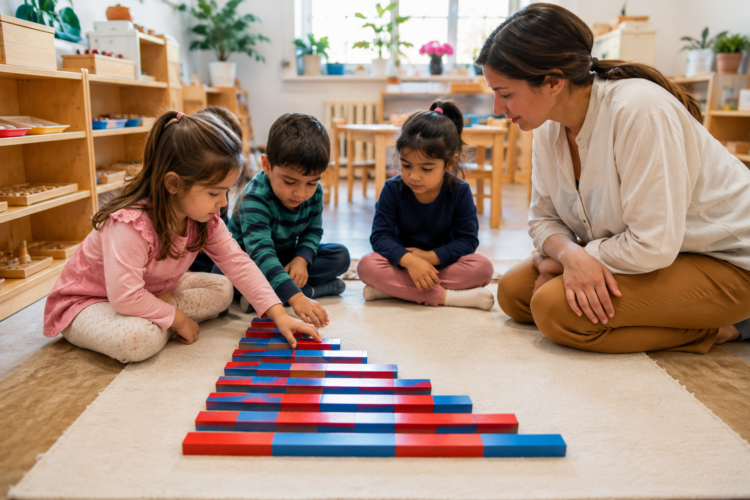
The presentation should remain clear. Materials should appear organized. Children need space. The environment should remain calm. Focus improves naturally. Learning becomes effective.
Presentation Steps
- Place rods on a mat.
- Arrange rods randomly.
- Introduce one rod initially.
- Compare rod lengths.
- Encourage observation.
- Allow independent exploration.
Introduction Benefits
- Reduces confusion.
- Builds curiosity.
- Encourages observation.
- Supports independence.
- Strengthens understanding.
- Builds confidence.
🎲 Basic Number Rod Activities
Basic activities create strong foundations. Children need simple experiences first. Learning develops gradually. Understanding becomes stronger. Confidence increases steadily. Success occurs naturally.
These activities focus on quantity. Children compare lengths carefully. They count sections repeatedly. Relationships become visible. Learning remains concrete. Understanding develops naturally.
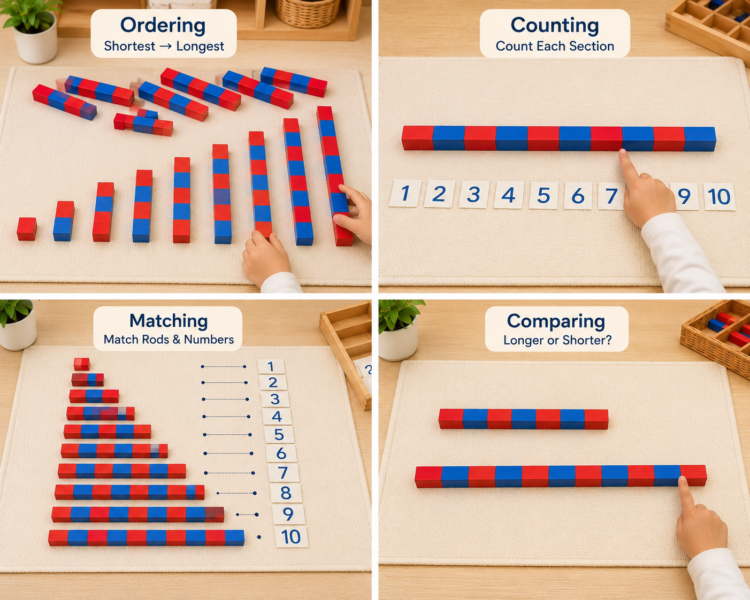
🔢 Rod Ordering Activity
Rod ordering remains essential. Children arrange rods correctly. Length comparisons become easier. Patterns become obvious. Learning remains visual. Confidence grows steadily.
How to do it
- Place rods randomly.
- Find shortest rod.
- Add remaining rods.
- Arrange sequentially.
- Check order carefully.
Skills Developed
- Sequencing skills.
- Observation abilities.
- Concentration skills.
- Logical thinking.
- Number awareness.
- Independence.
🧮 Counting Sections Activity
Counting sections introduces quantity. Children count each segment. Numbers gain meaning. Learning becomes concrete. Understanding improves naturally. Confidence develops steadily.
Activity Steps
- Choose a rod.
- Count every section.
- Repeat slowly.
- Compare quantities.
- Discuss observations.
Skills Developed
- Counting accuracy.
- Quantity awareness.
- Memory skills.
- Concentration.
- Observation.
- Confidence.
🎯 Matching Number Cards
This activity introduces symbols. Children connect quantities and numbers. Learning becomes meaningful. Mathematical understanding improves. Confidence grows gradually. Readiness increases naturally.
Activity Steps
- Arrange Number Rods.
- Place number cards nearby.
- Match cards correctly.
- Check answers independently.
- Repeat regularly.
Skills Developed
- Number recognition.
- Quantity understanding.
- Symbol association.
- Memory development.
- Concentration.
- Independence.
📊 Basic Activities Overview
| Activity | Main Skill |
|---|---|
| Rod Ordering | Sequencing. |
| Counting Sections | Quantity awareness. |
| Number Matching | Symbol recognition. |
| Rod Comparison | Observation skills. |
| Rod Arrangement | Logical thinking. |
Get Certified & Start Your Montessori Career
Montessori Teacher Training Course by Entri App: Gain expert skills, earn certification, and kickstart your teaching career.
Join Now!🚀 Advanced Number Rod Extensions
Once foundations develop, extensions begin. Children explore deeper concepts. Learning becomes more challenging. Understanding grows steadily. Confidence remains strong. Mathematical thinking improves.
Advanced activities should remain enjoyable. Challenges should feel manageable. Success remains important. Learning should stay positive. Curiosity drives participation. Motivation remains high.
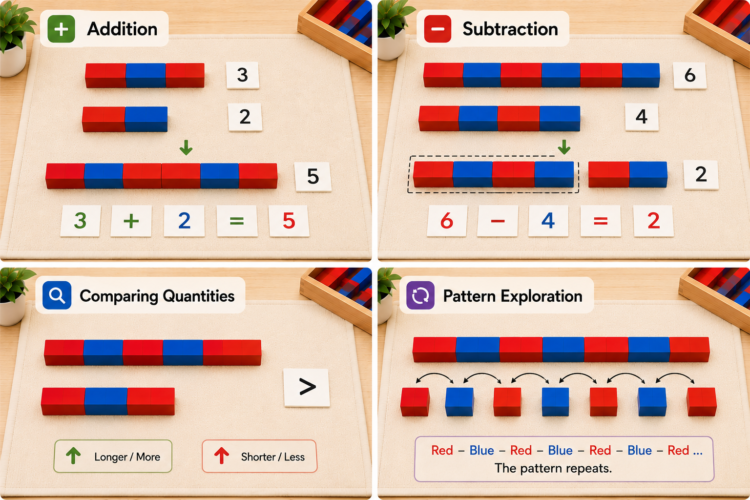
➕ Addition With Number Rods
Number Rods support addition naturally. Children combine quantities physically. Abstract concepts become concrete. Understanding develops gradually. Learning remains meaningful. Confidence increases steadily.
Example Activity
- Select rod three.
- Select rod two.
- Place rods together.
- Compare with rod five.
- Observe relationships.
Skills Developed
- Addition readiness.
- Problem-solving skills.
- Logical reasoning.
- Mathematical thinking.
- Observation abilities.
- Confidence.
➖ Subtraction With Number Rods
Subtraction becomes easier visually. Children see differences clearly. Quantities remain concrete. Understanding improves naturally. Learning feels meaningful. Confidence grows steadily.
Example Activity
- Select rod six.
- Compare with rod four.
- Identify difference.
- Discuss findings.
- Repeat regularly.
Skills Developed
- Subtraction readiness.
- Comparison skills.
- Quantity understanding.
- Observation.
- Reasoning.
- Confidence.
📏 Comparing Quantities
Comparison strengthens mathematical thinking. Children analyze relationships. Larger and smaller become clearer. Understanding improves steadily. Learning remains engaging. Confidence develops naturally.
Comparison Questions
- Which rod appears longer?
- Which rod appears shorter?
- Which quantity seems larger?
- Which quantity seems smaller?
Skills Developed
- Analytical thinking.
- Visual discrimination.
- Comparison skills.
- Observation.
- Concentration.
- Reasoning.
🔄 Pattern Exploration
Patterns appear throughout mathematics. Number Rods reveal patterns clearly. Children notice relationships. Curiosity increases naturally. Learning becomes meaningful. Understanding deepens steadily.
Pattern Activities
- Observe color sections.
- Compare rod lengths.
- Identify repeating patterns.
- Discuss observations.
- Explore relationships.
Skills Developed
- Pattern recognition.
- Logical reasoning.
- Observation skills.
- Mathematical thinking.
- Concentration.
- Problem-solving.
Unlock your passion for education and shape young minds as a Montessori teacher!
👨🏫 Tips for Teachers and Parents
Adults play important roles. Guidance should remain gentle. Children need opportunities. Independence should remain encouraged. Patience supports learning. Success develops naturally.
Number Rod activities work best calmly. Children need focus. Organized environments help greatly. Learning becomes easier. Confidence improves steadily. Understanding becomes stronger.
🌟 Create a Prepared Environment
A prepared environment supports learning. Materials should remain accessible. Organization reduces distractions. Focus improves naturally. Learning feels comfortable. Participation increases steadily.
Environment Tips
- Keep rods organized.
- Provide sufficient space.
- Reduce distractions.
- Maintain cleanliness.
- Encourage independence.
🗣️ Use Clear Language
Children need simple explanations. Clear instructions reduce confusion. Understanding improves naturally. Confidence develops steadily. Learning becomes effective. Participation increases regularly.
Communication Tips
- Speak clearly.
- Demonstrate slowly.
- Use simple words.
- Encourage questions.
- Repeat when needed.
🎉 Encourage Exploration
Children learn through discovery. Exploration supports understanding. Curiosity improves engagement. Learning becomes meaningful. Confidence develops naturally. Motivation remains strong.
Encouragement Tips
- Praise effort.
- Celebrate progress.
- Encourage observation.
- Support independence.
- Value discoveries.
🎯 Conclusion
Montessori Number Rod activities provide strong mathematical foundations. Children learn quantities through concrete experiences. Hands-on exploration makes learning meaningful. Understanding develops gradually through observation and practice. Confidence grows through successful experiences. Mathematics becomes enjoyable and accessible.
The rods support counting, sequencing, comparison, and problem-solving skills. Children build number sense before abstract learning begins. Teachers and parents can easily adapt activities. Consistent practice strengthens mathematical understanding. Learning remains engaging and rewarding. Strong foundations support future mathematical success.
Get Certified & Start Your Montessori Career
Montessori Teacher Training Course by Entri App: Gain expert skills, earn certification, and kickstart your teaching career.
Join Now!Frequently Asked Questions
What are Montessori Number Rods?
Montessori Number Rods are hands-on math materials that help children understand quantities from one to ten. They use different rod lengths and colored sections to make numbers visible, concrete, and easier to understand.
At what age can children start using Number Rods?
Children typically begin using Number Rods between three and six years of age. The activities can be adapted according to a child’s developmental stage, readiness, and previous mathematical experiences.
Why are Number Rods important in Montessori education?
Number Rods help children build a strong mathematical foundation through concrete learning experiences. They allow children to see, touch, compare, and count quantities before working with abstract number symbols.
How do Number Rods help children understand quantity?
Each rod represents a specific quantity through its length and colored sections. Children can physically compare rods and count segments, helping them develop a clear understanding of numerical values.
What skills do children develop through Number Rod activities?
Children develop counting skills, number recognition, sequencing abilities, concentration, logical thinking, and visual discrimination. The activities also support independence, observation, and early problem-solving skills.
How do Number Rods prepare children for future math learning?
Number Rods introduce important mathematical concepts such as quantity, order, comparison, and number relationships. These foundational skills make later concepts like addition, subtraction, multiplication, and division easier to understand.
Can Number Rods be used to teach addition and subtraction?
Yes, Number Rods are excellent tools for introducing basic operations. Children can combine rods to explore addition or compare rods to understand subtraction through concrete and visual experiences.
How should Number Rods be introduced to children?
The rods should be introduced gradually through simple presentations and exploration. Children should first become familiar with the rods before moving to counting, ordering, and matching activities.
Can parents use Montessori Number Rod activities at home?
Yes, parents can use Number Rods at home to support early math learning. Simple activities such as rod ordering, counting, quantity comparison, and number matching help reinforce mathematical understanding.
What makes Number Rods different from traditional math materials?
Number Rods allow children to physically experience mathematical concepts rather than simply memorizing numbers. Their hands-on nature makes learning more meaningful, engaging, and effective for young learners.