Table of Contents
Fashion illustration blends creativity with strong visual understanding. It transforms clothing ideas into expressive artistic visuals. The fashion industry relies heavily on illustration communication. Many designers begin concepts through illustrated sketches. Skills Required to Become a Fashion Illustrator shape professional success. These skills help convert imagination into wearable designs. Both artistic and technical abilities work together. Learning fundamentals builds confidence from the beginning.
Fashion illustration careers continue growing globally today. Digital platforms have expanded creative career possibilities. Illustrators now work with brands and freelancers. Strong drawing skills remain essential despite technology. Understanding fabrics improves illustration accuracy greatly. Colour knowledge enhances design presentation quality. Regular practice sharpens visual storytelling abilities. With guidance, beginners can progress steadily.
Learn Advanced Designing & Boutique Skills with Experts. Join Now!
Introduction
Fashion illustration helps show clothing ideas visually. It turns fashion concepts into clear drawings. Designers use sketches to plan their collections. These drawings guide the garment creation process. Illustration makes fashion ideas easy to understand. It connects creativity with practical design work. Without sketches, design communication becomes difficult.
Fashion illustration is more than drawing outfits. It shows style, mood, and personality. Each illustration tells a fashion story. It highlights shape, fabric, and movement. Illustrators help designers present ideas clearly. Their work supports planning and development teams. Good illustrations reduce confusion during production.
The fashion industry depends on strong visuals. Brands need fast and clear design presentations. Illustrations help teams make quick decisions. They are used before actual samples are created. Many brands plan collections using sketches. Retail and design teams rely on visual concepts. This makes illustration an important skill.
Technology has changed modern fashion illustration. Hand drawing remains very important. Digital tools now support faster design work. Many illustrators combine both methods. This approach improves speed and creativity. It also increases job opportunities. Remote work has become more common.
Learning fashion illustration requires practice. Talent alone is not enough. Basic skills build strong foundations. Regular drawing improves accuracy slowly. Understanding garments improves illustration quality. Fabric knowledge adds realism. Colour skills improve presentation.
Beginners often feel unsure initially. However, anyone can learn with practice. Skills grow step by step. Daily drawing improves confidence. Simple sketches lead to better results. Observation helps improve drawing quickly. Guided learning makes progress easier.
Fashion illustrators need multiple skills. Creativity and technique work together. Each skill supports professional artwork. Weak basics limit improvement. Strong fundamentals create better illustrations. Industry expectations continue increasing. Learning skills becomes essential.
Why fashion illustration skills are important
-
Helps express fashion ideas clearly
-
Improves outfit visualization
-
Builds strong design portfolios
-
Supports teamwork with designers
-
Enhances creativity and confidence
-
Increases career opportunities
-
Enables freelance and remote work
Fashion illustration remains a valuable creative skill. Learning it opens many fashion career paths.
What Does a Fashion Illustrator Do?
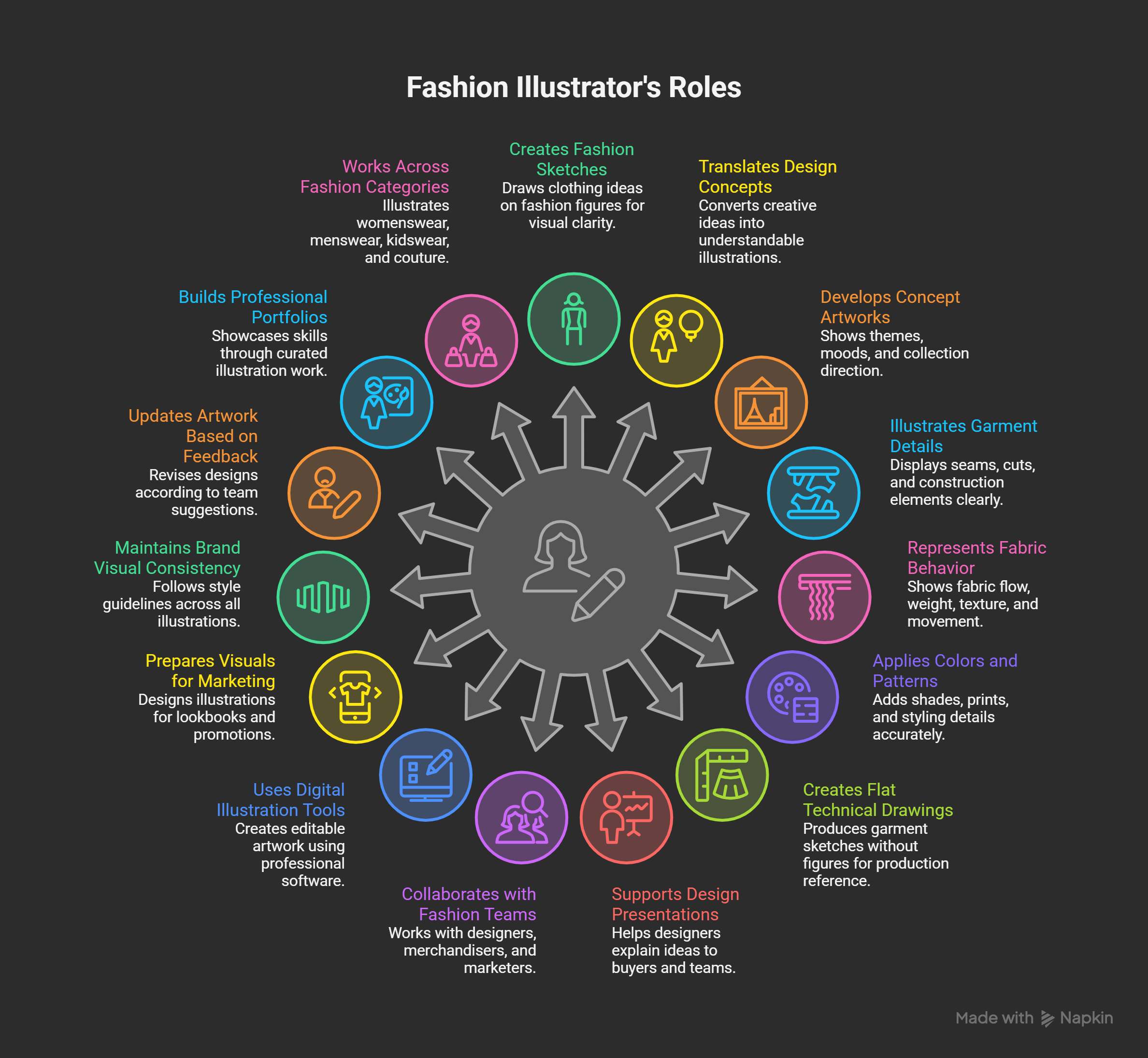
A fashion illustrator creates visual representations of clothing ideas. These visuals communicate design concepts clearly. Illustrations help convert thoughts into understandable images. They support the early stages of fashion development. Illustrators focus on style, appearance, and presentation. Their work guides design decisions effectively. They translate creative ideas into visual formats.
Fashion illustrators work closely with fashion professionals. They support designers, merchandisers, and marketing teams. Their drawings explain design details visually. Illustrations reduce confusion during planning stages. They help align creative vision across teams. Clear visuals improve communication accuracy.
Creating Fashion Sketches
Sketching is a primary responsibility. Illustrators draw clothing on fashion figures. These figures follow industry-standard proportions. Sketches show garment shape and structure. They highlight how outfits look when worn.
Sketches usually include:
-
Front and back views
-
Side-angle perspectives
-
Outfit layers and styling
-
Accessories and footwear
These sketches act as visual references.
Developing Concept Illustrations
Concept illustrations express creative direction. They present themes, moods, and inspiration. These visuals support collection storytelling.
Concept artwork may include:
-
Seasonal themes
-
Cultural inspirations
-
Colour directions
-
Fabric moods
They help define overall collection identity.
Showing Fabric and Texture Details
Fashion illustrators display fabric behaviour visually. Different materials fall differently on bodies. Illustrators represent these differences through drawing.
They illustrate:
-
Soft fabric movement
-
Heavy fabric structure
-
Shiny or matte surfaces
-
Transparent material layers
Accurate textures improve realism.
Adding Colour and Styling Elements
Colour application enhances illustration clarity. It shows final garment appearance. Illustrators apply shades carefully.
They include:
-
Colour blocking
-
Print placement
-
Pattern repetition
-
Contrast detailing
This helps visualize finished outfits.
Creating Flat Sketches
Flat sketches show garments without body figures. They focus on construction details only. These drawings appear technical and precise.
Flat sketches display:
-
Stitch lines
-
Seam placements
-
Button positions
-
Pocket styles
They support sampling and production teams.
Supporting Design Presentations
Illustrations strengthen fashion presentations. They help explain ideas visually. Designers use them during meetings.
Illustrations support:
-
Buyer presentations
-
Collection reviews
-
Client approvals
-
Internal planning discussions
Strong visuals improve decision confidence.
Collaborating With Fashion Teams
Fashion illustration is collaborative work.
Illustrators communicate with multiple departments.
They coordinate with:
-
Fashion designers
-
Pattern makers
-
Merchandisers
-
Marketing teams
Team alignment improves collection quality.
Using Digital Illustration Tools
Modern illustrators work digitally. Digital tools speed up revisions. They allow flexible editing.
Common digital outputs include:
| Output Type | Purpose |
|---|---|
| Line sketches | Basic garment outlines |
| Colored illustrations | Final design visuals |
| Flat drawings | Technical references |
| Presentation boards | Collection overview |
Digital files support faster sharing.
Preparing Visual Content for Marketing
Illustrators assist fashion marketing teams. Their artwork enhances promotional visuals. Illustrations appear across platforms.
They contribute to:
-
Social media visuals
-
Lookbook artwork
-
Website graphics
-
Advertising concepts
Illustrations improve brand aesthetics.
Maintaining Design Consistency
Fashion illustrators ensure visual consistency. They follow brand design guidelines. This keeps collections visually unified.
Consistency includes:
-
Figure proportions
-
Line thickness
-
Colour usage
-
Illustration style
Uniform visuals strengthen brand identity.
Updating and Revising Illustrations
Design ideas often change. Illustrators revise artwork accordingly. They adjust designs based on feedback.
Revisions may include:
-
Colour corrections
-
Silhouette adjustments
-
Detail additions
-
Styling changes
Flexibility is essential.
Building Fashion Illustration Portfolios
Illustrators create artwork for portfolios. Portfolios show skills and creativity. They represent professional capability.
Portfolio content often includes:
-
Fashion figures
-
Concept illustrations
-
Flat sketches
-
Styled outfits
Strong portfolios attract opportunities.
Working Across Different Fashion Segments
Fashion illustrators work across categories. Their skills adapt to various styles.
They may illustrate:
-
Womenswear
-
Menswear
-
Kidswear
-
Sportswear
-
Couture collections
Each segment requires visual adaptation.
Role Summary Table
| Responsibility | Purpose |
|---|---|
| Sketch creation | Visualize clothing ideas |
| Concept development | Communicate design themes |
| Fabric illustration | Show texture and movement |
| Flat drawings | Support garment production |
| Presentation visuals | Assist decision-making |
| Marketing artwork | Enhance brand visuals |
Fashion illustrators play a central creative role. They transform ideas into clear visuals. Their work supports design, planning, and promotion. Through illustration, fashion concepts become understandable realities.
Master Fashion Designing and Create Your Signature Style
Unlock your creative potential with our expert-led Fashion Designing course. Build in-demand skills and step confidently into the world of fashion!
Begin Your Fashion Career Today!Essential Drawing & Artistic Skills
Strong drawing skills form the base of fashion illustration. These skills help create clear and attractive visuals. They allow ideas to appear professional and readable. Without fundamentals, illustrations look incomplete. Artistic skills improve accuracy and confidence. They support both traditional and digital illustration. Every successful illustrator masters these abilities.
1. Fashion Figure Drawing Skills
Figure drawing is the foundation skill. Illustrators draw elongated fashion body proportions. These figures differ from realistic anatomy.
Key elements include:
-
Head-to-body proportion understanding
-
Balanced body posture
-
Smooth body alignment
-
Expressive fashion poses
Proper figures improve garment presentation.
2. Understanding Body Movement and Pose
Poses create energy in illustrations. Static poses appear lifeless. Movement makes outfits look wearable.
Illustrators practice:
-
Walking poses
-
Standing editorial poses
-
Sitting fashion stances
-
Dynamic runway movements
Correct posing enhances garment flow.
3. Line Quality and Control
Lines define illustration clarity. Clean lines look professional. Shaky lines reduce visual appeal.
Good line skills include:
-
Light sketch outlines
-
Confident final strokes
-
Controlled pressure usage
-
Consistent line thickness
Line quality shows experience level.
4. Garment Construction Awareness
Drawing clothes requires structure knowledge. Garments follow construction rules. This knowledge prevents unrealistic drawings.
Illustrators understand:
-
Seam placement
-
Dart positioning
-
Sleeve attachment
-
Collar construction
Correct structure improves realism.
5. Fabric Behaviour and Drape Skills
Every fabric reacts differently. Illustrators must show fabric characteristics.
They learn to draw:
-
Flowing fabrics with soft folds
-
Stiff fabrics with sharp angles
-
Heavy fabrics with weight
-
Stretch fabrics with tension lines
Fabric drawing adds authenticity.
6. Shading and Depth Techniques
Shading creates three-dimensional appearance. It adds volume to garments. Important shading methods include:
-
Light and shadow placement
-
Highlight positioning
-
Gradual tone blending
-
Depth around folds
Proper shading improves realism.
7. Texture Rendering Skills
Texture separates materials visually. It shows fabric surface quality. Common textures include:
-
Denim grain
-
Leather shine
-
Knit patterns
-
Embroidery detailing
Texture skills enhance illustration richness.
8. Color Theory Knowledge
Color selection impacts design emotion. Understanding color theory is essential.
Illustrators learn:
-
Color harmony principles
-
Warm and cool balance
-
Seasonal palette selection
-
Contrast management
Strong colors improve design impact.
9. Print and Pattern Drawing
Fashion uses prints widely. Illustrators must draw patterns accurately.
This includes:
-
Floral repeats
-
Geometric patterns
-
Stripes and checks
-
Motif placement
Correct scale improves realism.
10. Proportion and Balance Understanding
Proportion controls visual harmony. Balanced illustrations appear pleasing.
Key focus areas include:
-
Garment length accuracy
-
Sleeve proportion control
-
Waistline placement
-
Accessory sizing
Balanced drawings look professional.
11. Observation and Reference Skills
Observation strengthens artistic accuracy. Illustrators study real garments.
They observe:
-
Fabric folds on movement
-
Stitch placement details
-
Real runway silhouettes
-
Clothing fit on bodies
References improve drawing quality.
12. Visual Composition Skills
Composition organizes visual elements. It guides viewer attention.
Strong composition includes:
-
Centered focal points
-
Clean layout spacing
-
Proper figure placement
-
Balanced empty space
Good layout improves readability.
13. Artistic Consistency
Consistency defines illustration style. It helps build personal identity.
Consistency applies to:
-
Figure proportions
-
Line thickness
-
Color application
-
Shading style
Consistency improves brand recognition.
Skill Importance Overview
| Skill Area | Purpose |
|---|---|
| Figure drawing | Forms illustration base |
| Line control | Improves clarity |
| Fabric rendering | Adds realism |
| Shading techniques | Creates depth |
| Color theory | Enhances appeal |
| Pattern drawing | Shows design details |
| Composition | Improves presentation |
Strong artistic skills support fashion illustration success. Each skill builds upon another. Practice strengthens control and confidence. Mastery comes through repetition and observation. With solid drawing skills, creativity becomes visible.
Learn Advanced Designing & Boutique Skills with Experts. Join Now!
Tips to Improve Skills Quickly
Improving fashion illustration skills requires focused practice. Progress becomes faster with the right approach. Random drawing often slows improvement. Structured learning builds skills efficiently. Small daily efforts create visible growth. Consistency matters more than long practice hours. The following tips support faster skill development.
1. Practice Drawing Every Day
Daily practice builds muscle memory. Even short sessions create improvement.
Helpful habits include:
-
Drawing for thirty minutes daily
-
Practicing simple poses repeatedly
-
Redrawing the same figure multiple times
-
Focusing on accuracy over perfection
Regular practice strengthens hand control.
2. Start With Basic Shapes
Complex drawings begin with simple forms. Shapes help maintain correct proportions.
Practice using:
-
Circles for joints
-
Ovals for body mass
-
Lines for posture alignment
-
Boxes for garment structure
Simple shapes improve drawing stability.
3. Use Fashion Croquis Templates
Croquis templates guide beginners. They teach standard fashion proportions.
Benefits include:
-
Faster sketching speed
-
Improved pose understanding
-
Better garment placement
-
Reduced proportion mistakes
Gradually shift to freehand drawing.
4. Study Real Clothing Carefully
Observation improves accuracy. Real garments reveal construction details.
Focus on:
-
Seam placement
-
Fabric folds
-
Stitch direction
-
Clothing fit
Real-life study builds realism.
5. Practice Drawing Fabrics Separately
Fabric drawing needs special attention. Practicing separately improves control.
Work on:
-
Fold patterns only
-
Draping on mannequins
-
Fabric weight variations
-
Light reflection effects
This builds confidence faster.
6. Copy Professional Illustrations
Copying improves technique understanding. It helps analyze professional styles.
While copying, observe:
-
Line direction
-
Shading placement
-
Proportion control
-
Color blending
Copying is learning, not stealing.
7. Limit Tools During Practice
Too many tools cause confusion. Start with basic materials.
Recommended tools include:
-
Pencil and eraser
-
Black fine liner
-
Limited color palette
-
One digital brush
Simple tools improve skill focus.
8. Learn Digital Tools Gradually
Digital illustration improves efficiency. Learning slowly prevents overwhelm.
Begin with:
-
Basic brush control
-
Simple coloring methods
-
Layer management
-
Clean line tracing
Digital confidence develops steadily.
9. Build a Weekly Practice Plan
Planning prevents inconsistency. Structure improves learning speed.
Example weekly focus:
| Day | Practice Area |
|---|---|
| Monday | Figure drawing |
| Tuesday | Poses and movement |
| Wednesday | Fabric folds |
| Thursday | Garment details |
| Friday | Coloring practice |
| Saturday | Digital skills |
| Sunday | Review and improvement |
Routine creates discipline.
10. Create a Personal Reference Library
References guide improvement. Collect helpful visual materials.
Include:
-
Fashion runway images
-
Fabric close-up photos
-
Pose references
-
Technical garment drawings
References reduce guesswork.
11. Accept Mistakes Positively
Mistakes are part of learning. They highlight improvement areas.
Benefits of mistakes include:
-
Better understanding of proportions
-
Improved hand coordination
-
Stronger problem-solving skills
Progress follows repeated correction.
12. Track Your Improvement
Review older sketches monthly. Visible growth increases motivation.
Track changes in:
-
Line cleanliness
-
Pose accuracy
-
Fabric realism
-
Coloring quality
Tracking encourages consistency.
13. Learn From Feedback
Feedback speeds improvement. Others notice overlooked errors.
Useful feedback sources include:
-
Mentors
-
Instructors
-
Online art communities
-
Peer groups
Constructive advice strengthens skills.
14. Focus on One Skill Weekly
Trying everything slows progress. One-skill focus improves mastery.
Examples include:
-
Only figure proportions
-
Only fabric folds
-
Only shading techniques
-
Only digital coloring
Focused learning brings faster results.
Quick Improvement Summary
| Tip | Benefit |
|---|---|
| Daily practice | Builds consistency |
| Shape-based drawing | Improves proportions |
| Croquis use | Speeds learning |
| Fabric practice | Adds realism |
| Digital learning | Increases efficiency |
| Feedback | Corrects mistakes |
| Skill focus | Accelerates growth |
Improvement comes through simple disciplined habits. Small steps produce strong long-term results. With focused practice, skills grow rapidly. Consistency transforms beginners into confident illustrators.
Conclusion
Fashion illustration is a blend of creativity and technique. Strong basics create confident visual communication. Regular practice improves accuracy and artistic control. Understanding figures strengthens garment presentation. Fabric knowledge adds realism to every sketch. Color skills enhance overall visual appeal. Digital tools increase speed and flexibility. Consistent learning leads to steady improvement.
Mastering the Skills Required to Become a Fashion Illustrator takes dedication. Progress grows through patience and daily effort. Each skill supports long-term creative success. Mistakes help refine drawing ability. Observation strengthens artistic awareness. Practice builds confidence gradually. With discipline, improvement becomes visible. Fashion illustration offers endless creative opportunities.
Master Fashion Designing and Create Your Signature Style
Unlock your creative potential with our expert-led Fashion Designing course. Build in-demand skills and step confidently into the world of fashion!
Begin Your Fashion Career Today!Frequently Asked Questions
Who can become a fashion illustrator?
Anyone with an interest in fashion and drawing can become a fashion illustrator. You do not need prior professional experience to start learning. With regular practice, proper guidance, and basic art understanding, beginners can gradually develop strong illustration skills.
Do I need to be good at drawing before learning fashion illustration?
No, advanced drawing skills are not mandatory at the beginning. Basic sketching ability is enough to start. Fashion illustration skills improve through structured practice, observation, and consistent training over time.
How long does it take to learn fashion illustration properly?
Learning time depends on practice consistency and learning method. Basic skills usually develop within three to six months. Professional-level illustration may take one to two years of regular practice and portfolio development.
Is fashion illustration different from fashion design?
Yes, fashion illustration focuses on visual representation of clothing ideas. Fashion design includes fabric selection, pattern making, and garment construction. Illustrators mainly communicate design concepts through artistic visuals.
Can fashion illustration be learned online?
Yes, many learners successfully study fashion illustration online. Digital courses, guided tutorials, and structured programs allow flexible learning. Online practice combined with feedback can produce strong results.
Which tools are best for beginners in fashion illustration?
Beginners can start with pencils, erasers, sketchbooks, and black pens. Digital beginners often use tablets with simple software. Starting with limited tools helps improve fundamentals faster.
What career options are available for fashion illustrators?
Fashion illustrators can work as design assistants, technical sketch artists, freelance illustrators, fashion content creators, visual merchandisers, or brand illustrators across fashion houses and retail companies.
Is digital illustration mandatory for fashion illustrators today?
Digital illustration is not mandatory but highly recommended. Most brands prefer digital files for easy revisions and sharing. Combining hand drawing with digital coloring provides better career opportunities.
What should a fashion illustration portfolio include?
A strong portfolio should include fashion figures, garment sketches, fabric textures, flat drawings, colored illustrations, and concept artworks. Quality matters more than quantity, and consistency is important.
How can beginners improve their fashion illustration skills faster?
Beginners improve faster by practicing daily, studying real garments, using references, learning fundamentals, accepting feedback, focusing on one skill at a time, and maintaining consistency without long breaks.