Table of Contents
Introduction
Are you someone who is working on making a career in fashion designing? Then you surely have to figure out the basics of stitching. Choosing the right stitch is not a minor technical decision as it directly affects how a garment looks, feels, and lasts. In fashion designing, picking the right stitch type results in seam strength and overall finish. Of all the stitch types in sewing, the straight stitch and zigzag stitch can be seen as the backbone of garment construction. Mastering these two types of stitches is inevitable if you are serious about sewing.
Whether you are a complete beginner, a fashion designing student, or an aspirant looking to build your career in fashion designing, this guide has got it covered for you. Go after clarity and steer clear of any confusion. This read will give you a break down of how each stitch works, where it performs best, and why professionals rely on both. If you’re building strong fundamentals in fashion designing basics or learning sewing stitches in particular, this comparison will help you make informed, professional choices – every time you sit at the machine.
Learn Advanced Designing & Boutique Skills with Experts. Join Now!
What is a Straight Stitch in Sewing?
Definition of Straight Stitch
A straight stitch is the most basic type of stitch and the one anyone begins with learning. It is also the widely used stitch in sewing. It is done with the needle moving in a straight up-and-down motion, forming a continuous line of stitches along the fabric.
This stitch is formed using a standard sewing machine set to straight stitch mode, with adjustable stitch length depending on fabric type and purpose. Almost all domestic and industrial sewing machines work along straight stitching. This makes it the foundation of garment construction.
Key Characteristics
- Stitch structure: Linear, uniform stitches
- Strength and durability: Very strong on non-stretch fabrics
- Appearance: Clean, neat, and professional on the fabric surface
The precision with which it works makes the straight stitch the industry standard for structural seams.
Common Uses of Straight Stitch in Fashion Designing
As anyone who is into stitching uses the straight stitch you should not take it as an easy job. There are particular instances when the straight stitch comes in handy. Straight stitch uses include:
- Making seams intact and joining panels
- Sewing pleats and tucks
- Topstitching for decorative as well as functional purposes
- Hemming trousers, skirts, or dresses
Garments like shirts, formal trousers, blouses, and other structured dresses need straight stitching.
Fabrics Best Suited for Straight Stitch
- Any woven fabric
- Cotton, linen, denim, silk, wool
When not to use it: Avoid straight stitch on a stretch or knit fabric. Only use it on them when combined with stabilizers or specialty techniques.
Advantages of Straight Stitch
- High precision and control
- Produces a polished, professional finish
- Simple to execute, ideal for beginners
Limitations of Straight Stitch
- No elasticity
- Seams are more likely to break when used on stretch fabrics under tension
Master Fashion Designing and Create Your Signature Style
Unlock your creative potential with our expert-led Fashion Designing course. Build in-demand skills and step confidently into the world of fashion!
Begin Your Fashion Career Today!What is a Zigzag Stitch in Sewing?
Definition of Zigzag Stitch
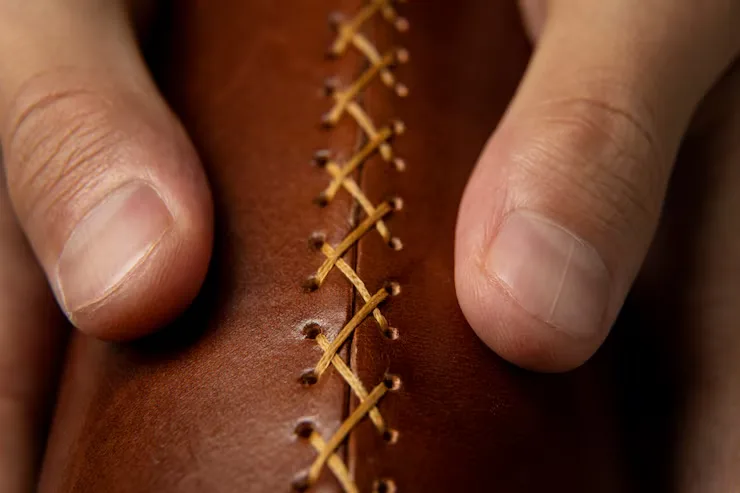
A zigzag stitch is the next most used stitch. It is done with the needle moving side to side while stitching forward. It creates a zigzag pattern right on the fabric, exactly as the name suggests. This stitch is used for flexibility and prevents fabric edges from fraying.
Most modern sewing machines offer adjustable zigzag width and length, allowing customization for different sewing needs.
Key Characteristics
- Stitch width and length: Adjustable
- Elasticity: High flexibility
- Appearance: Functional
Common Uses of Zigzag Stitch in Fashion Designing
Zigzag stitch uses include:
- To finish raw fabric edges
- Sewing stretch and knit fabrics
- To attach elastic waistbands with the fabric
- Decorative stitching on casual garments
Fabrics Best Suited for Zigzag Stitch
- Knit fabrics
- Jersey, lycra, spandex
- Lightweight and stretch materials
Advantages of Zigzag Stitch
- Prevents fabric fraying
- Allows stretch and movement
- Extremely versatile
Limitations of Zigzag Stitch
- Less clean-looking than straight stitch
- Not a suitable option for load-bearing or structural seams
Straight Stitch vs Zigzag Stitch – Key Differences Explained
 Once you’re comfortable with both the straight stitch and zigzag, it’s time to figure out when to use each one. Knowing the difference can make a huge difference in the quality of your garments and help you avoid those rookie mistakes that come with learning to stitch.
The Stitch Structure Breakdown
- Straight stitch: This stitch is a straightforward affair, moving in a linear, fixed motion – you get where you’re going in a pretty direct line.
- Zigzag stitch: With zigzag, its side-to-side motion is what gives it its flexibility and what makes it so suitable for certain fabrics.
Fabric Compatibility Showdown
- Straight stitch: Stick with woven fabrics for this one – straight stitch does its thing best on traditional weaves.
- Zigzag stitch: Go for knit and stretch fabrics – zigzag is the way to go when you’re working with materials that need to move freely.
Strength, Elasticity and Everything in Between
- Straight stitch: Its strength is one thing – but, it comes at a cost: straight stitch can get a bit too rigid for some uses.
- Zigzag stitch: Its weakness is actually its strength too – flexible, but not always the most durable option.
Looks Matter Too
- Straight stitch: This stitch is as clean and professional as it gets – perfect for formal wear maybe, but a bit too much for some casual designs.
- Zigzag stitch: It may not be the most polished looking stitch – but, its functionality and casual vibe can be just what a garment needs.
When to Use Each Stitch in Your Garment Construction
- Straight stitch: Construction and shaping are where this stitch really shines – it’s perfect for when you need to make sure a garment takes its intended form.
- Zigzag stitch: Finishing and flexibility are what zigzag does best – it’s ideal for adding that extra bit of give to a garment that needs to move freely.
Straight Stitch vs Zigzag Stitch – Comparison Table
| Feature | Straight Stitch | Zigzag Stitch |
| Stitch Type | Linear | Side-to-side |
| Elasticity | No | Yes |
| Best Fabrics | Woven fabrics | Knit & stretch fabrics |
| Common Uses | Seams, hems, darts | Edge finishing, elastic |
| Durability | High | Moderate |
| Beginner Friendly | Very easy | Easy |
Master Fashion Designing and Create Your Signature Style
Unlock your creative potential with our expert-led Fashion Designing course. Build in-demand skills and step confidently into the world of fashion!
Begin Your Fashion Career Today!When to Use Straight Stitch vs Zigzag Stitch in Fashion Designing
Situations Best for Straight Stitch
- Formal garments
- Tailored pieces
- Structured silhouettes
Situations Best for Zigzag Stitch
- Casual wear
- Stretch garments
- Raw edge finishing
Can Both Stitches Be Used Together?
They surely can. In fact, professionals often use a straight stitch to start from scratch and then a zigzag stitch to finish raw edges. This hybrid approach to stitching facilitates strength and durability. This is done without compromising on the flexibility of the garment.
Straight Stitch and Zigzag Stitch in Fashion Designing Courses
 If you are a beginner, you must have realized that straight and zigzag stitches form the first step to achieve technical mastery in sewing. Fashion designing certification programmes begin with and stress on the use of straight and zigzag stitches. This is because they translate directly to the industry practices. Knowing when and how to use them is the first step to being confident about what you do. Moreover, it ensures an efficient approach as this reduces fabric waste. It also prepares learners for advanced techniques like overlocking and stretch stitching.
Common Mistakes Beginners Make with Straight and Zigzag Stitches
- Using straight stitch on stretch fabric
- Incorrect stitch tension settings
- Choosing the wrong stitch length
- Skipping fabric testing before sewing
Tips to Master Straight and Zigzag Stitches
- Adjust stitch length based on fabric weight
- Test stitches on scrap fabric
- Practice tension control
- Press seams for a professional finish
Consistency and practice matter more than speed.
Learn Advanced Designing & Boutique Skills with Experts. Join Now!
Conclusion
Knowing to sew clothes with straight and zigzag stitch is basic. But using them the right way is meant for a professional approach. You need to understand that straight stitch and zigzag stitch cannot be used in exchange as they serve different and distinct purposes. Having a grasp of which stitch to use, and when, brings a level up from beginners to confident designers. Focus on fabric types and behaviour, garment function, and then finish with quality. Master these fundamentals, and every advanced technique becomes easier to learn.
Begin working around the hybrid approach like a pro and see how it acts as a level up for your sewing and thereby the fashion designing career. Follow what you have read and you will be equipped enough to go ahead with it.
|
RELATED POSTS |
|
|
Top Skills You’ll Gain from an Advanced Fashion Designing Course |
|
Master Fashion Designing and Create Your Signature Style
Unlock your creative potential with our expert-led Fashion Designing course. Build in-demand skills and step confidently into the world of fashion!
Begin Your Fashion Career Today!Frequently Asked Questions
Is zigzag stitch mandatory for knit fabrics?
Yes. Zigzag stitch allows the fabric to stretch without breaking the seams.
Is zigzag stitch used as a decorative one or functional?
Zigzag stitch is primarily functional. But it can be used as a decorative one as well.
Which of the two stitches gives a professional finish to the fabric?
Of the two, straight stitch gives the cleanest professional finish to any fabric.
Can zigzag stitch prevent fraying?
Yes. That is exactly why zigzag is used to stitch the edges of the fabric. It effectively secures raw edges.
Is the zigzag stitch strong enough for seams to stay intact for long?
To an extent, yes. But this applies only for light-stress or stretch seams.
Do the fashion designing courses cover lessons on these stitches?
Yes. As they are core foundational skills, all the fashion designing courses teach these.